3/16/08
When helicopter Ben got his nickname it was based on a remark he made about the Fed’s ability to drop $100 bills on Main Street from helicopters if necessary. He left that job to the President and Congress who will deliver them to your mailbox sometime this summer – timed about right to give a boost to retail sales before the election. Instead he is focused on dropping billion dollar bills on Wall Street in an attempt to prevent a collapse of our financial system.
When Ben injected $200 billion of liquidity into the banking system before the open on day 13, the oversold 13-day cycle began a new rally phase and produced a huge 3-4% bounce on Tuesday. Financials were particularly strong (Bank index up 9.06%, Brokers up 7.29%, and REITs up 6.47%), and why not. After all they now get to borrow lots of very cheap short-term money using their mortgage holdings as collateral and lend it at higher rates while transferring the mortgage risk to the taxpayer. Nice business if you if you are at least moderately prudent in making those loans. Probably they will be more prudent on future loans, but a good portion of their past indiscretions have yet to make themselves felt. Defaults are far from a peak – not only in mortgages (About 1.5 million mortgages face interest rate resets in 2008) and credit cards, but probably in corporate debt as well. By Friday, when most of Tuesday’s gains had evaporated, the Fed stepped in again to guarantee JP Morgan’s loans to Bear Stearns to prevent the collapse of one of the worst offenders in the mortgage derivative debacle. This time, the market did not respond favorably, perhaps having concluded that the continuing assertions of adequate liquidity in the financial system are highly suspect. Despite Tuesday’s huge gains, Financials (http://www.geocities.com/petegersb/Financials.GIF) ended down for the week. Based on the status of the cycles, I suspect the market will also not respond favorably to Fed rate cuts to be announced this week.
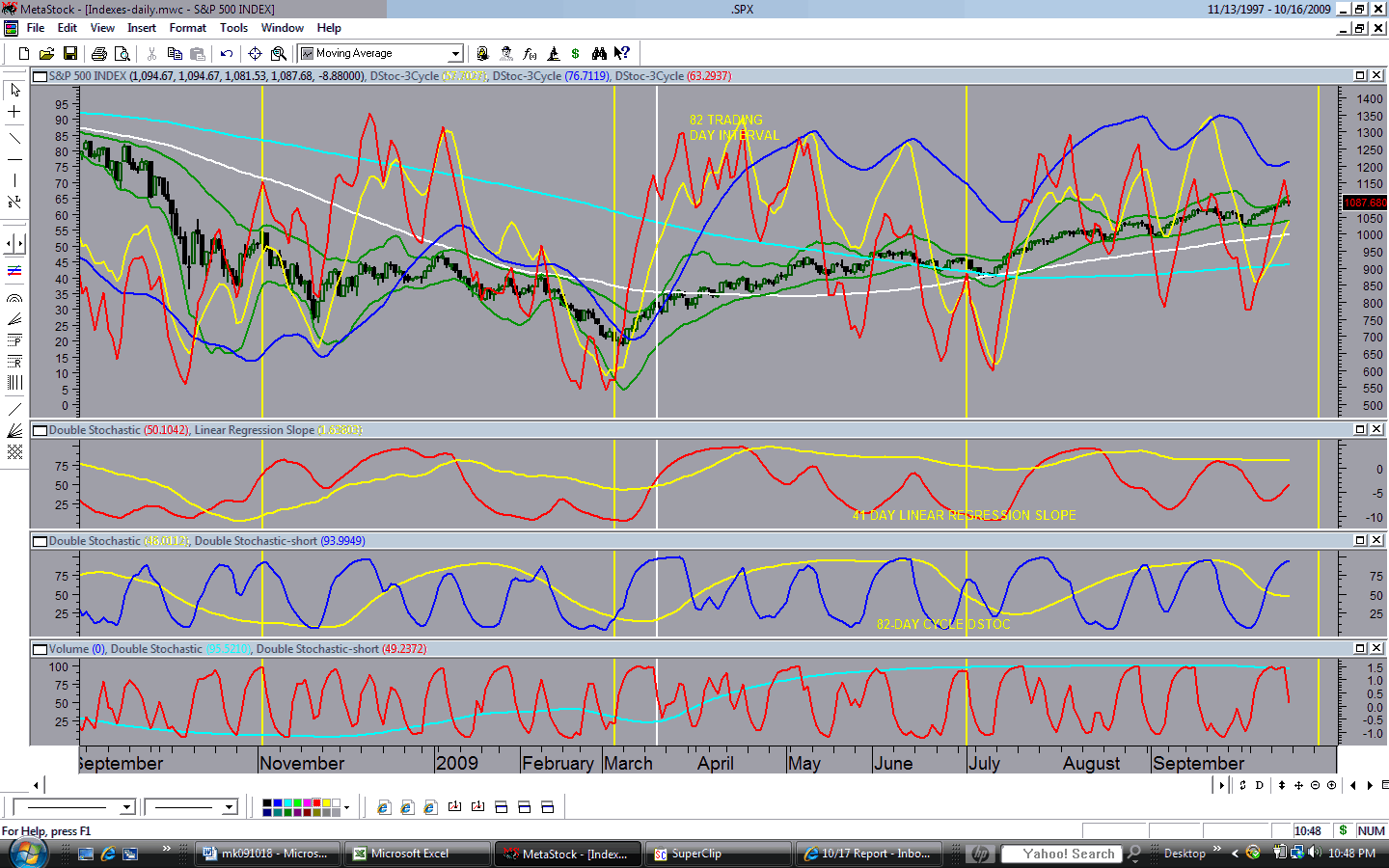
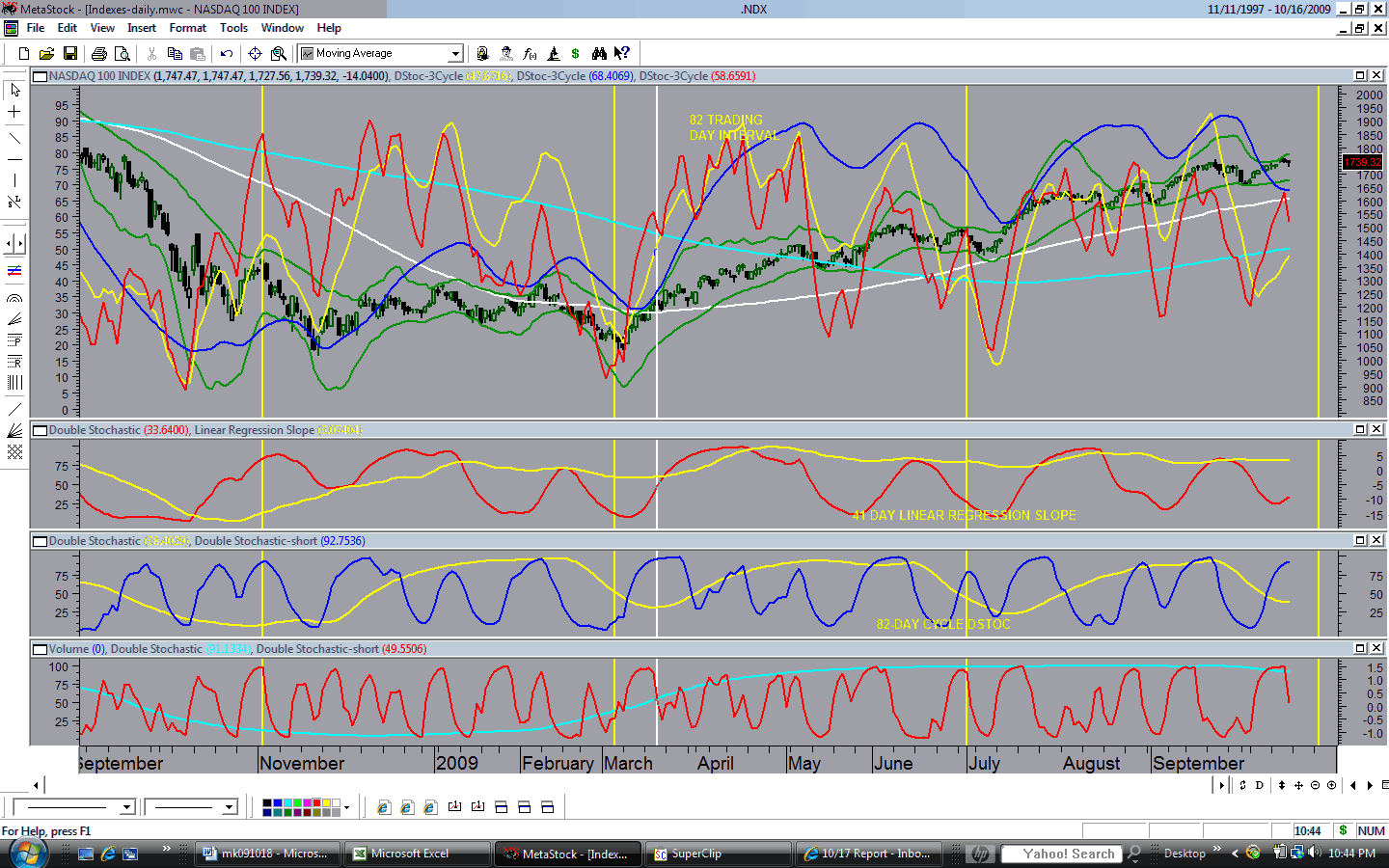
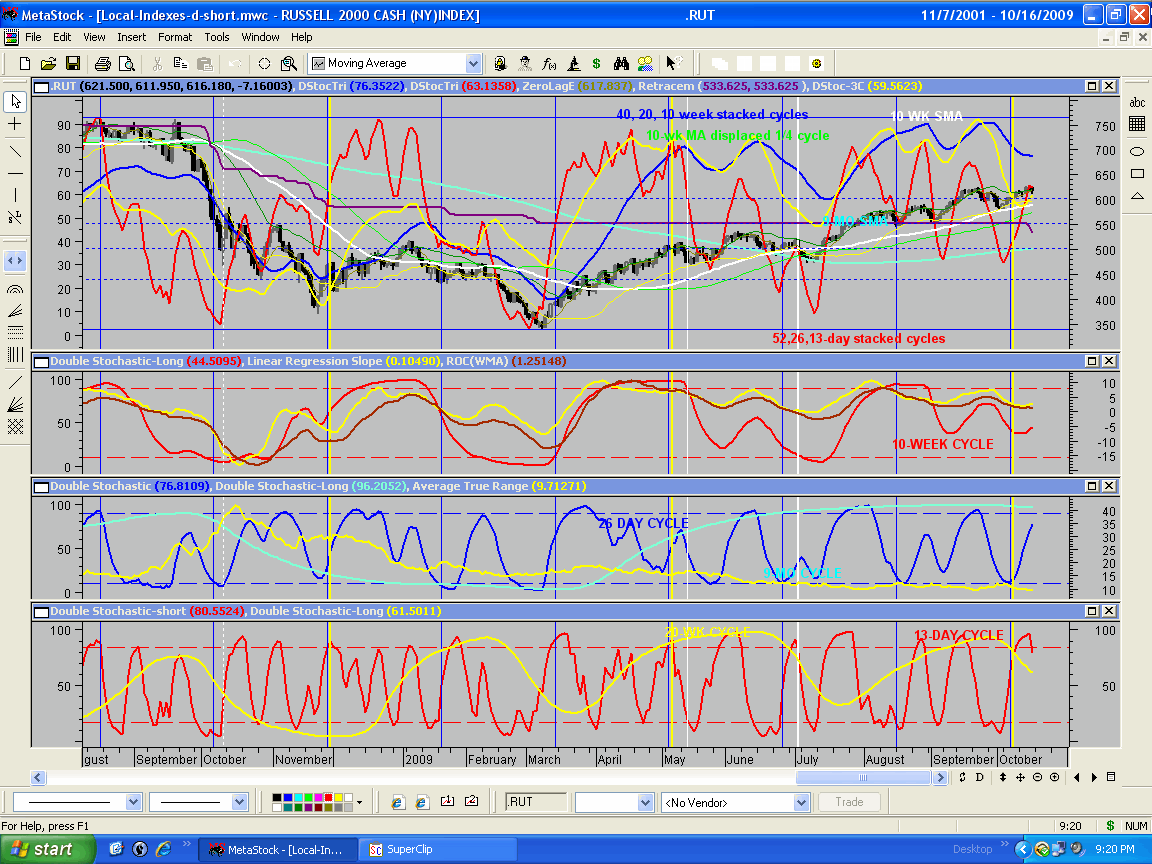
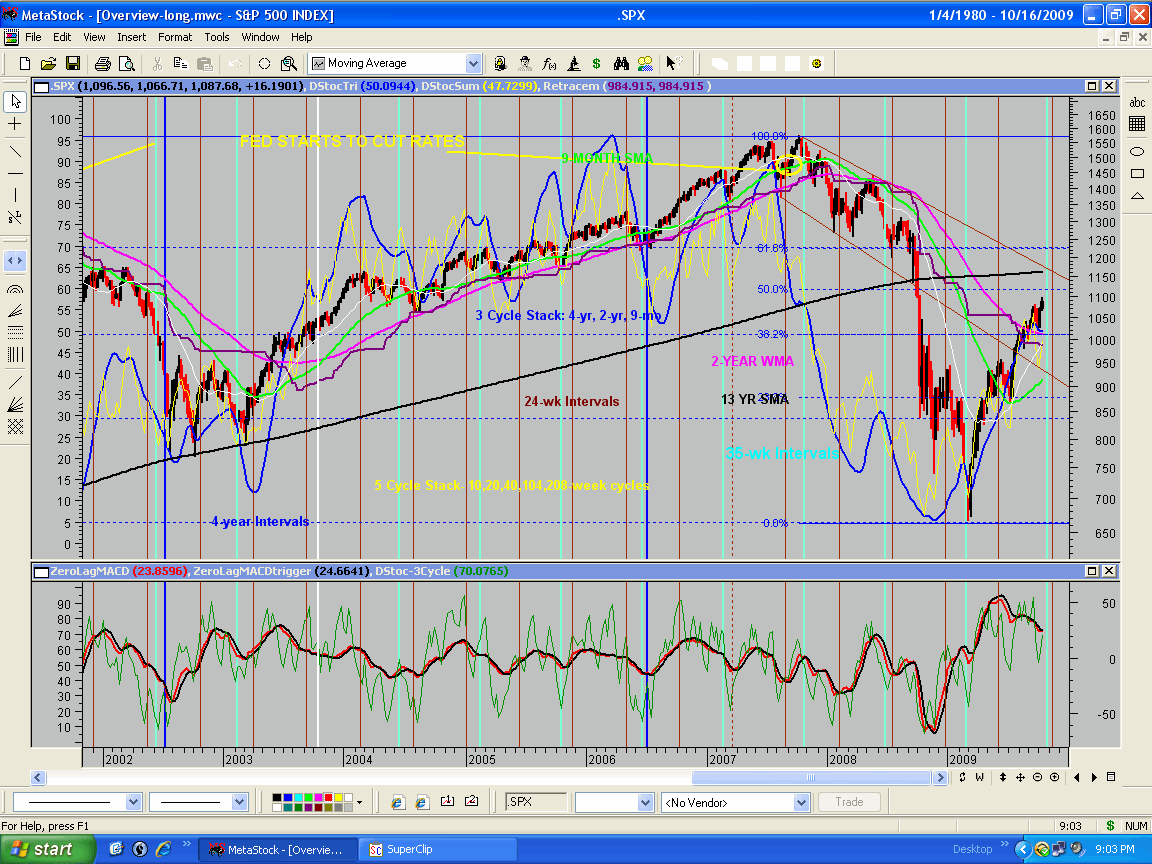
The Tuesday bounce launched essentially at the January lows (slightly above on some indexes (http://www.geocities.com/petegersb/SP500.GIF); slightly below on others (http://www.geocities.com/petegersb/NDX.GIF, http://www.geocities.com/petegersb/Russell2000.GIF)), so it looked like a successful test of that low to many investors. But there remained a few hurdles before we could conclude that the bounce was anything more than the steepest in a series of short-term rallies within an on-going bear market. The rally was touted as the largest since October of 2002. It’s worth noting that stocks tested the October 2002 low again in March 2003 (http://www.geocities.com/petegersb/Overview-long.GIF). More importantly, there was a huge rally in July of 2002 that was only a prelude to the lower lows in October. Similarly, there were huge rallies in April and September of 2001 as the market subsequently moved to lower lows. Ominously, on both Thursday and Friday, Monday’s lows were again tested after the rally phase of the 13-day cycle fizzled in a mere day and half.
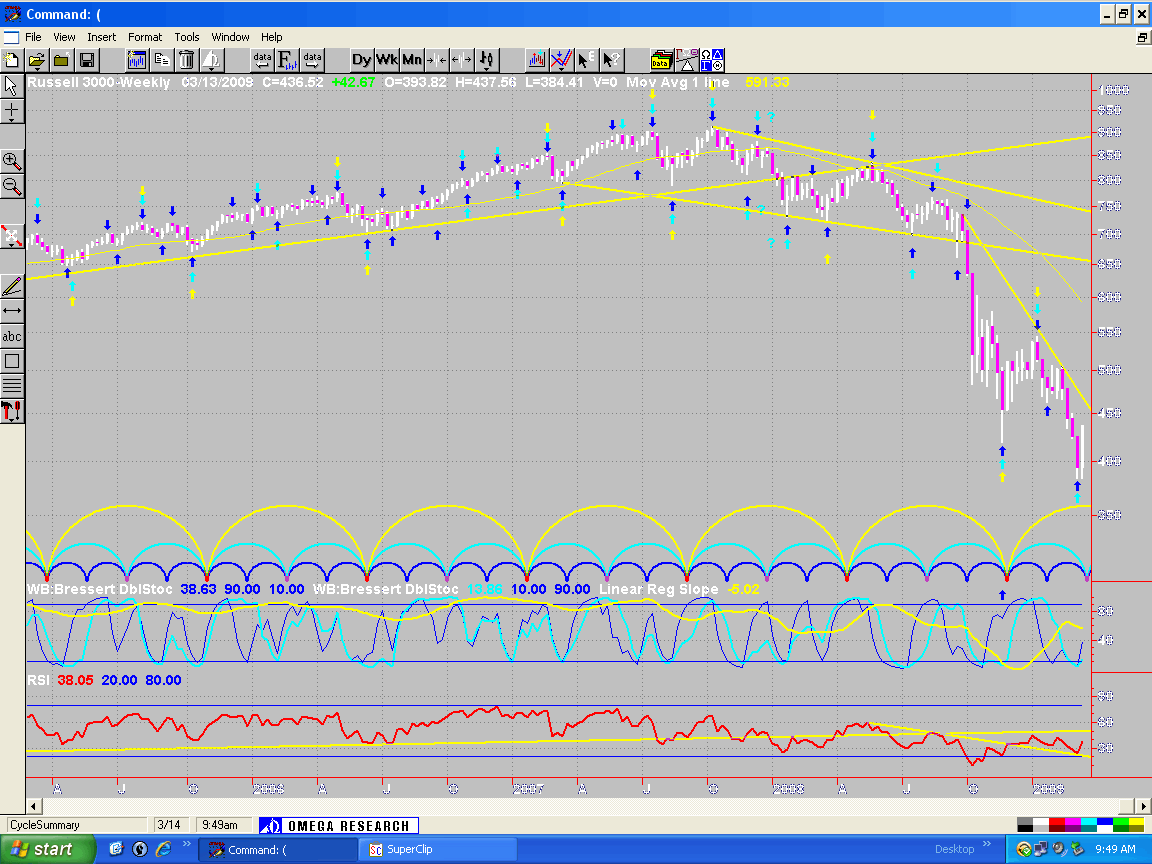
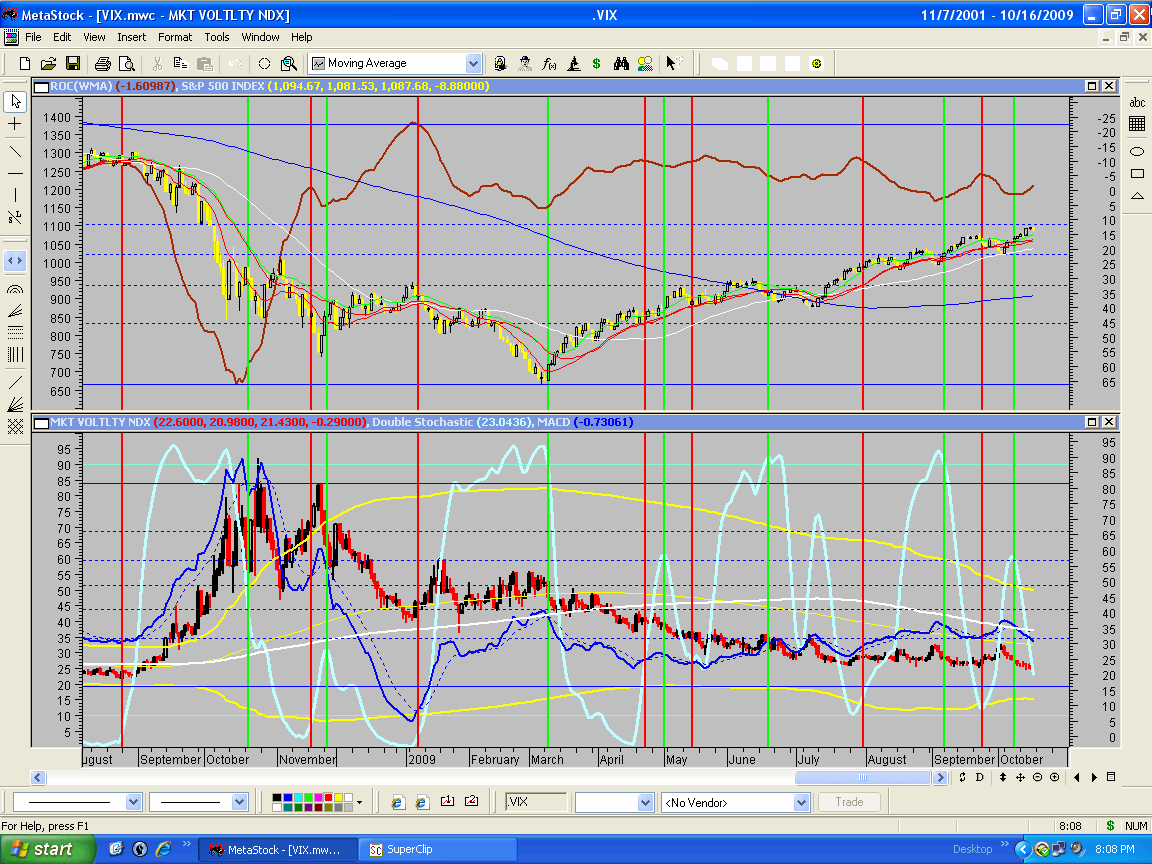
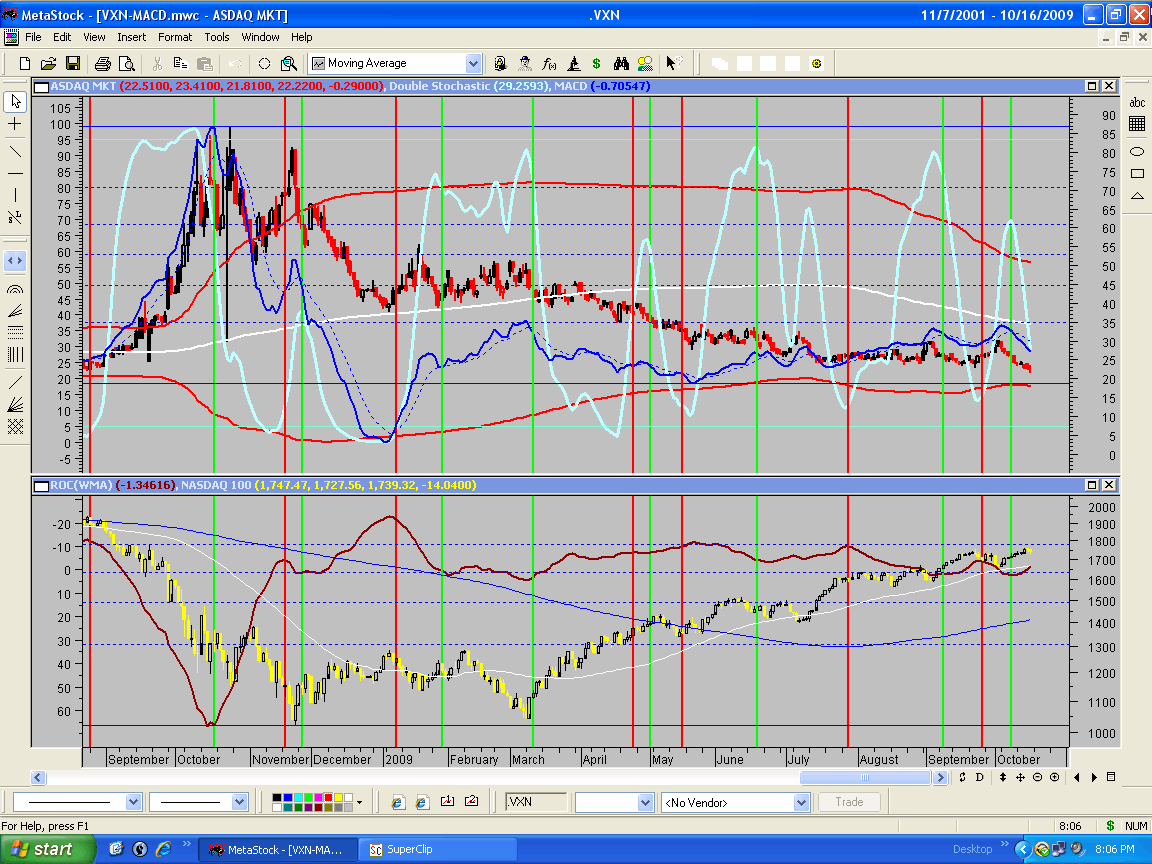
Contrary to popular Wall-Street lore, it’s been profitable to fight the Fed since last October – just as it was during much of 2001 and 2002. There comes a time to stop fighting the Fed, but probably not quite yet. The 4-day-old 13-day cycle ideally will decline for another 9 trading days. At that time the 10-wk cycle will be 10 weeks old and ripe for a bottom as well (http://www.geocities.com/petegersb/Overview-med.GIF, http://www.geocities.com/petegersb/VIX.GIF, http://www.geocities.com/petegersb/VXN.GIF). Based on both the time to go and the downtrends in the longer cycles, the bottoms in the 13-day and 10-week cycles will almost certainly be below the lowest of the January or last weeks lows. Those new lows will then beg for a retest sometime during the subsequent 10-week cycle, which should produce 20-week and 9-month cycle lows as well. That will probably be the time to stop fighting the Fed.
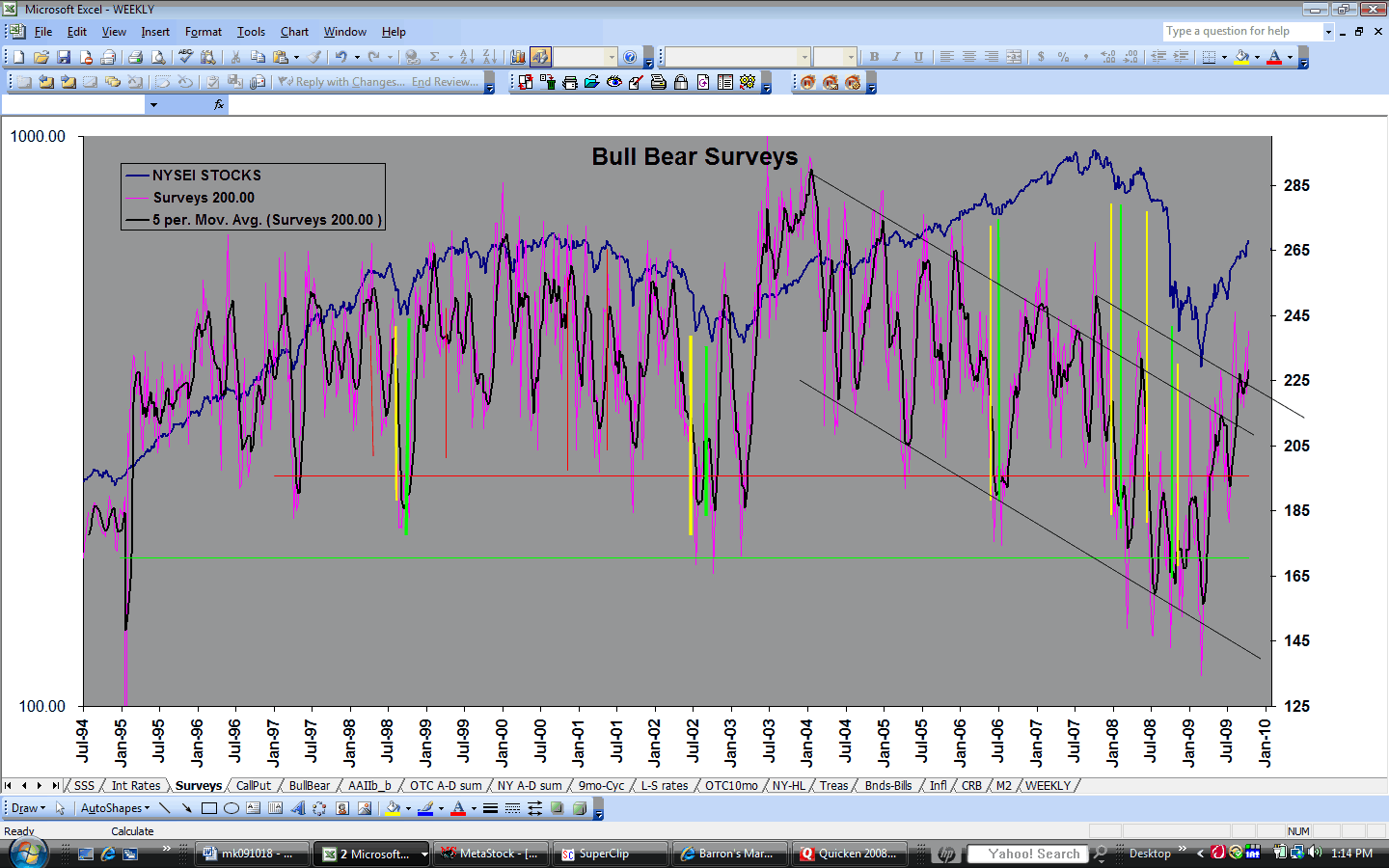
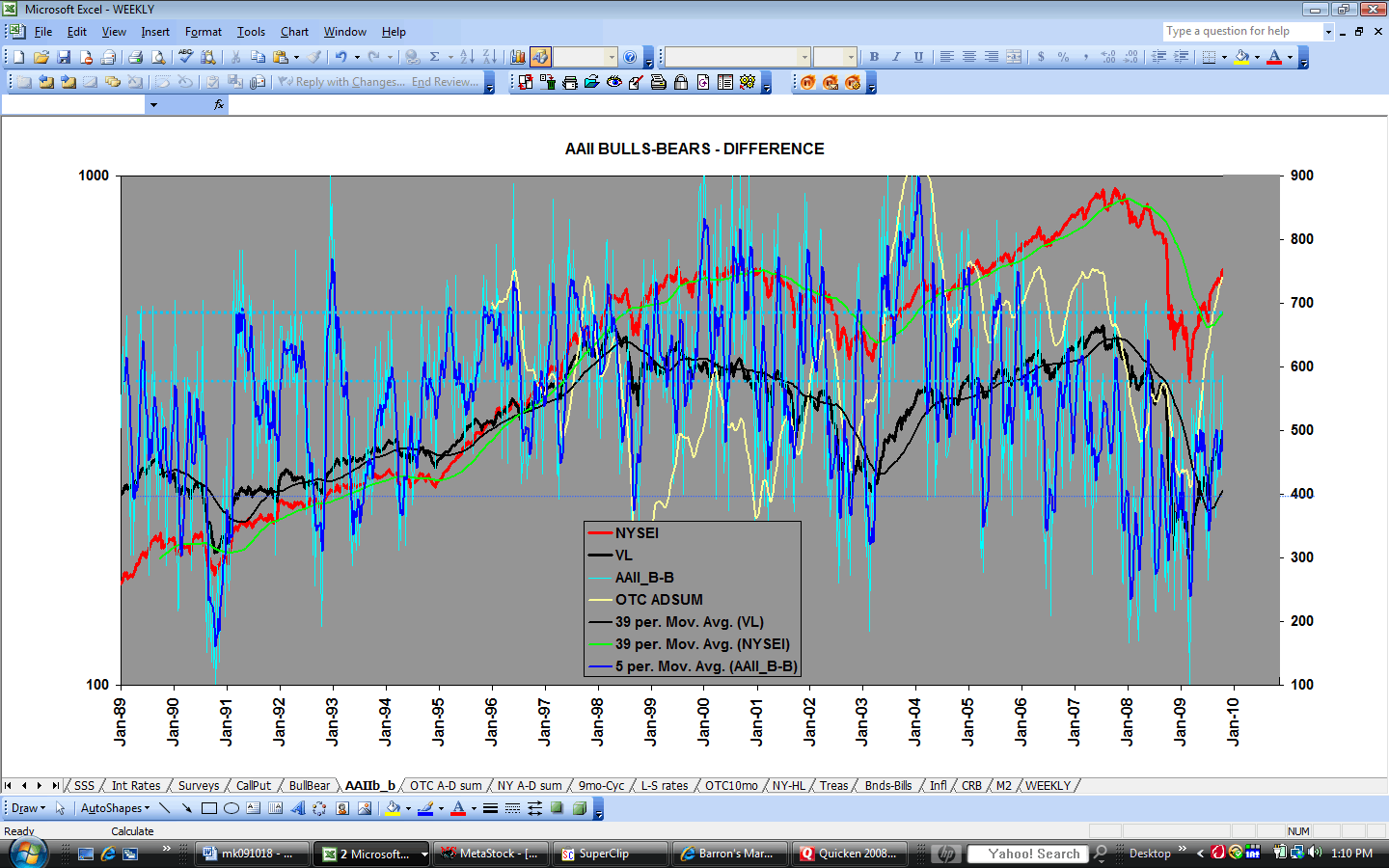
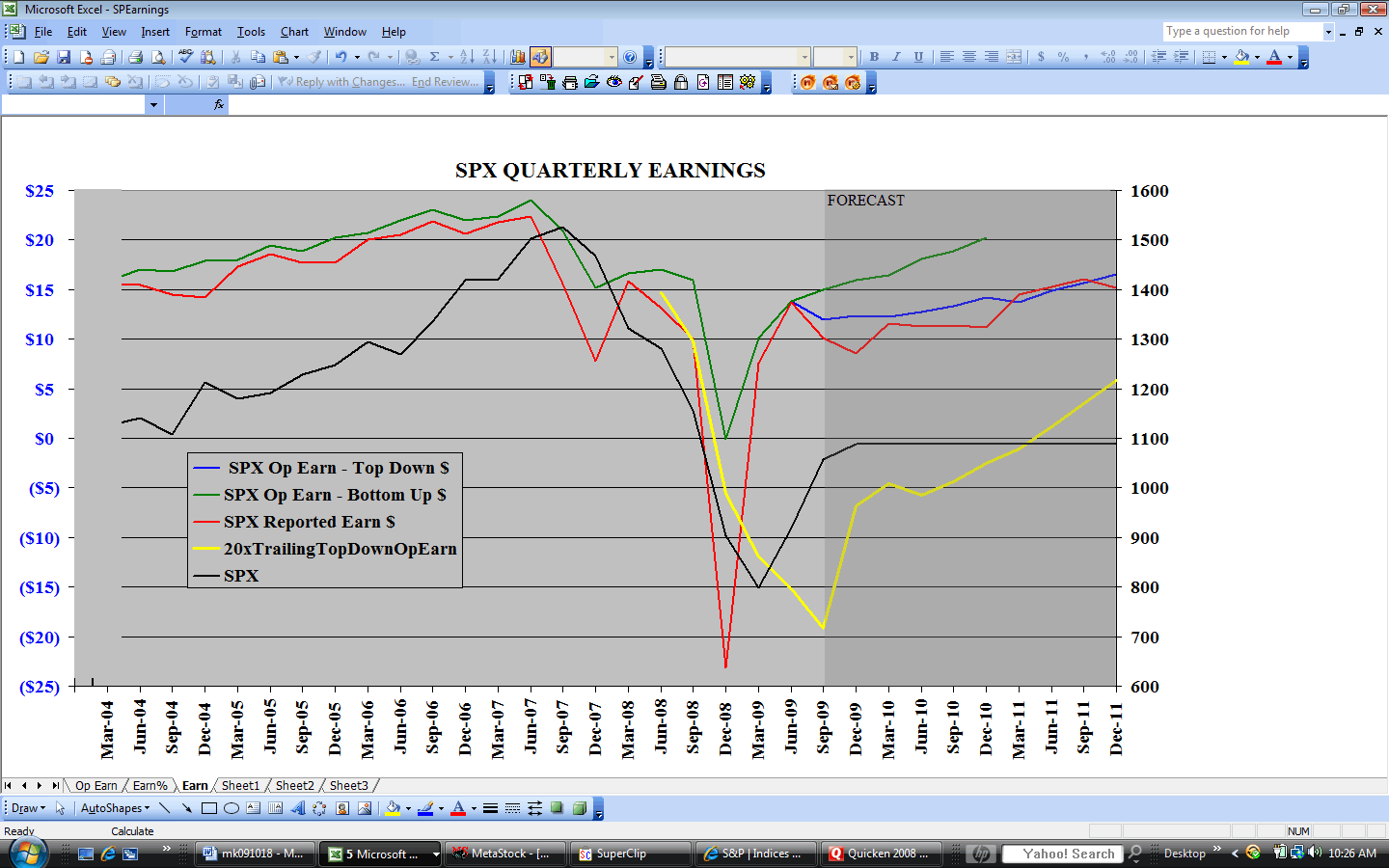
Based on the current level of pessimistic sentiment, the likely 10-wk low near the end of March may look like a tempting buying opportunity in some sectors, and it may be for nimble traders. Pessimistic advisory services finally outnumber the optimists (http://www.geocities.com/petegersb/InvestorsIntelligence.GIF). Their pessimism is not nearly so deep as that of the public as represented by AAII members (http://www.geocities.com/petegersb/AAIIsentiment.GIF), but it’s the deepest since the 2002 low. However, when it first reached this level during the last bear market, it took another year before reaching bottom. Consequently, more time and decline may be required before a final broad market bottom, as suggested by the DStocs on the weekly VIX (http://www.geocities.com/petegersb/VIX-weekly.GIF) and the weekly VXN (http://www.geocities.com/petegersb/VXN-weekly.GIF). They require more time and fear to reach the levels typical of 20-week and 9-month cycles bottoms. Nobody expects good earnings in the first quarter, but I envision a scenario where the 10-wk cycle bottoms in late March, rallies for a couple of weeks, and then gets knocked down for a couple of months as earnings reports turn out to be even worse than expected (http://www.geocities.com/petegersb/EarnY-Y.GIF ).
During the current 9-month cycle and 26-day cycles, Energy and Materials have been the strongest sectors while Financials and Consumer Discretionary were the weakest (http://stockcharts.com/charts/performance/SPSectors.html). During the current 10/20-week cycles, Technology became the weakest sector while Financials improved to the second weakest and Consumer Discretionary and Consumer Staples joined the strongest four. Last week, the longer-term pattern reasserted itself with Energy the strongest sector and Financials and Consumer Discretionary the weakest. Given the rapid growth in the developing world, I suspect that Energy and Materials will remain among the strongest sectors, but their chart patterns suggest that they are not ripe for a March bottom, and the recession likely will interrupt their strong growth temporarily. In contrast, the Financial and Technology charts do look ripe for a bottom. If the Financials have taken adequate write-offs, they should have good earnings comparisons going forward – especially considering the now wide and still widening spread between the long rates at which they lend and the short rates at which they borrow. Financials are frequently among the first sectors to reach bottom during a recession (http://stockcharts.com/charts/performance/SPSectors.html ) – probably largely because of a friendly Fed. When Financials (http://www.geocities.com/petegersb/Financials.GIF) begin to outperform we can take that as a signal that the broad market is near a bottom. They haven’t yet, and their earnings comparisons will still be very bad for the 1st quarter.
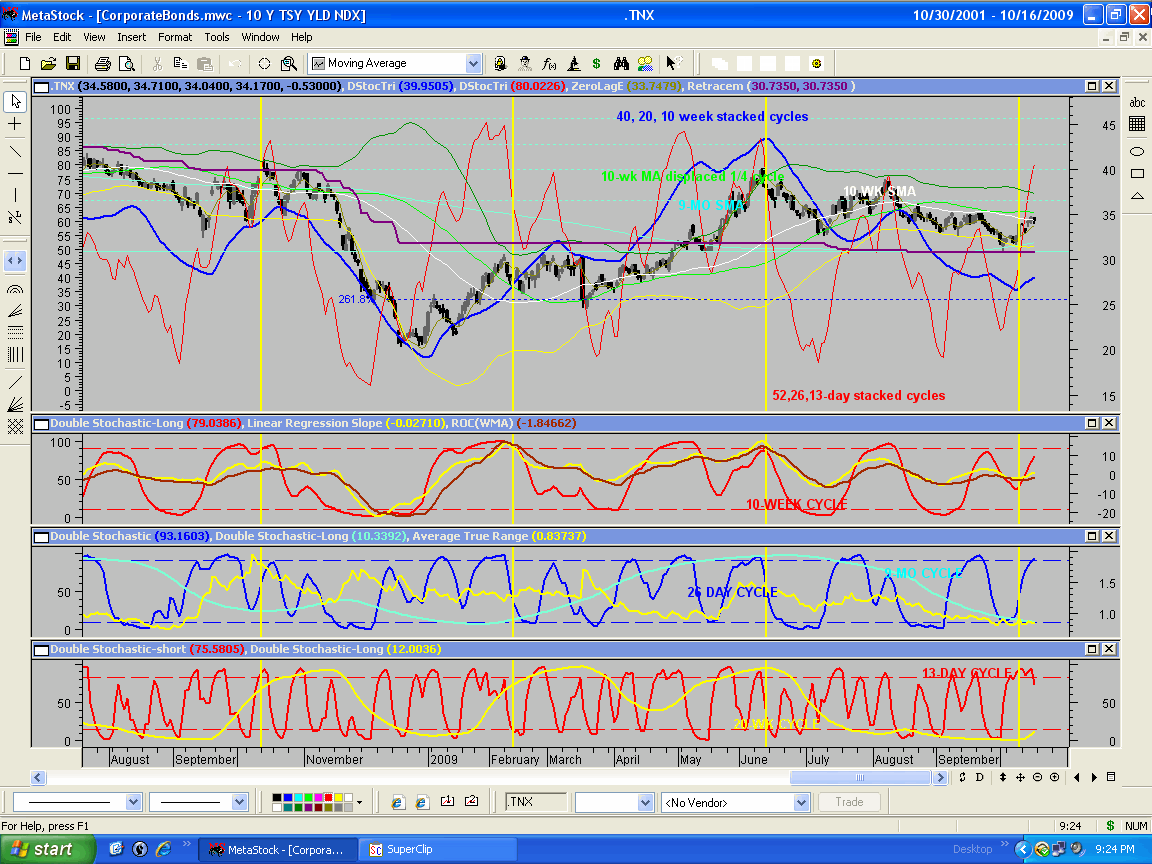
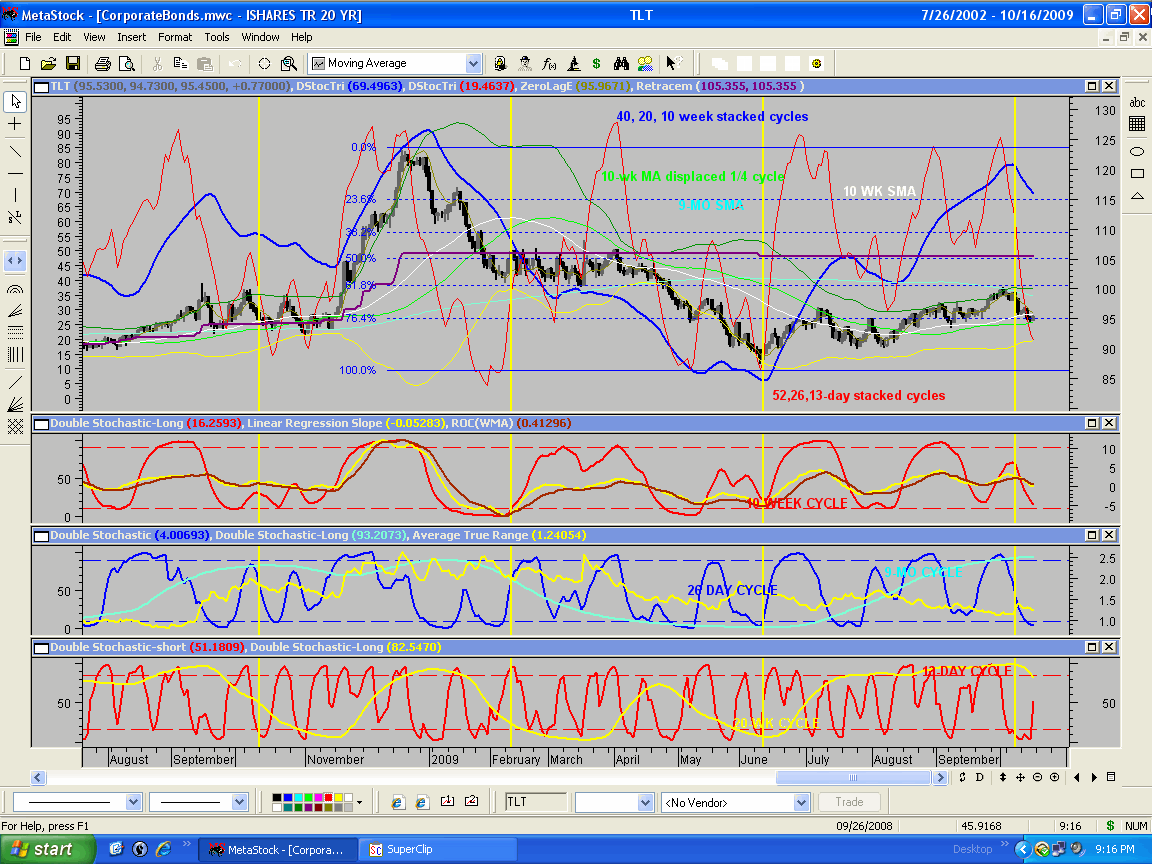
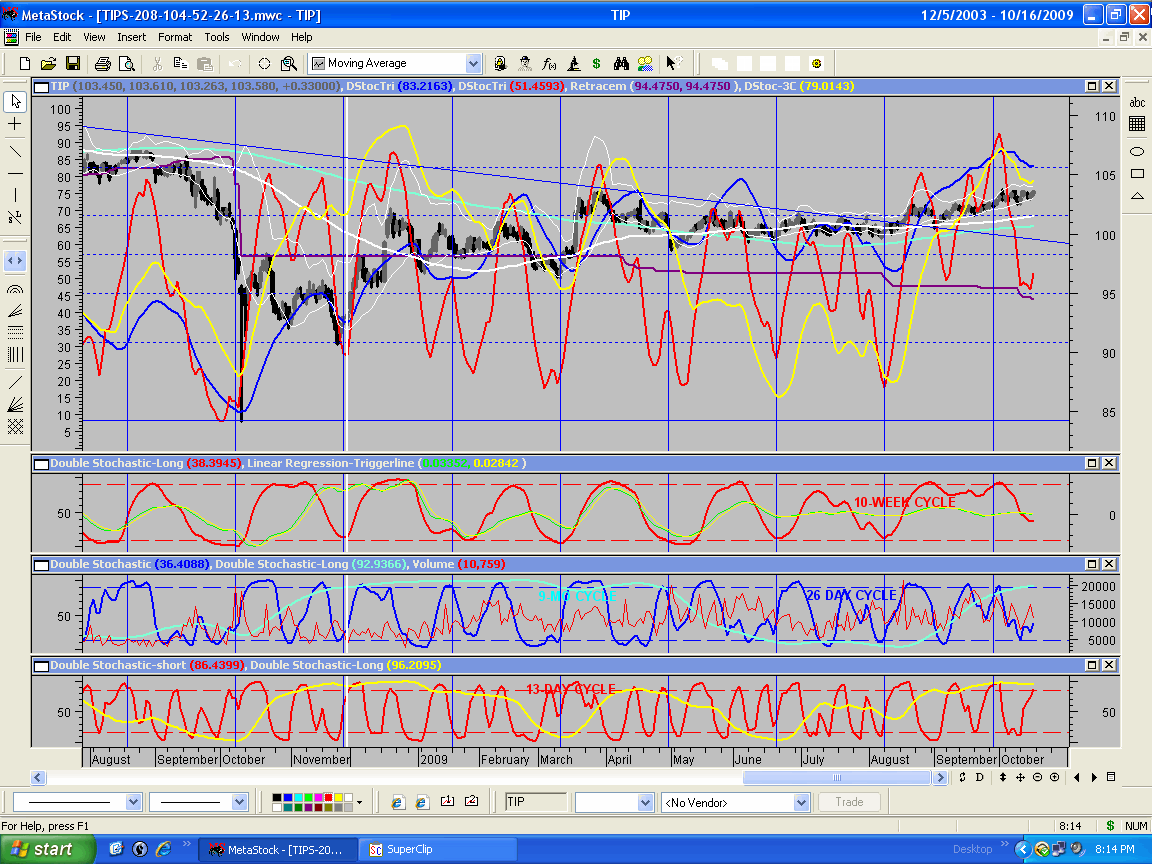
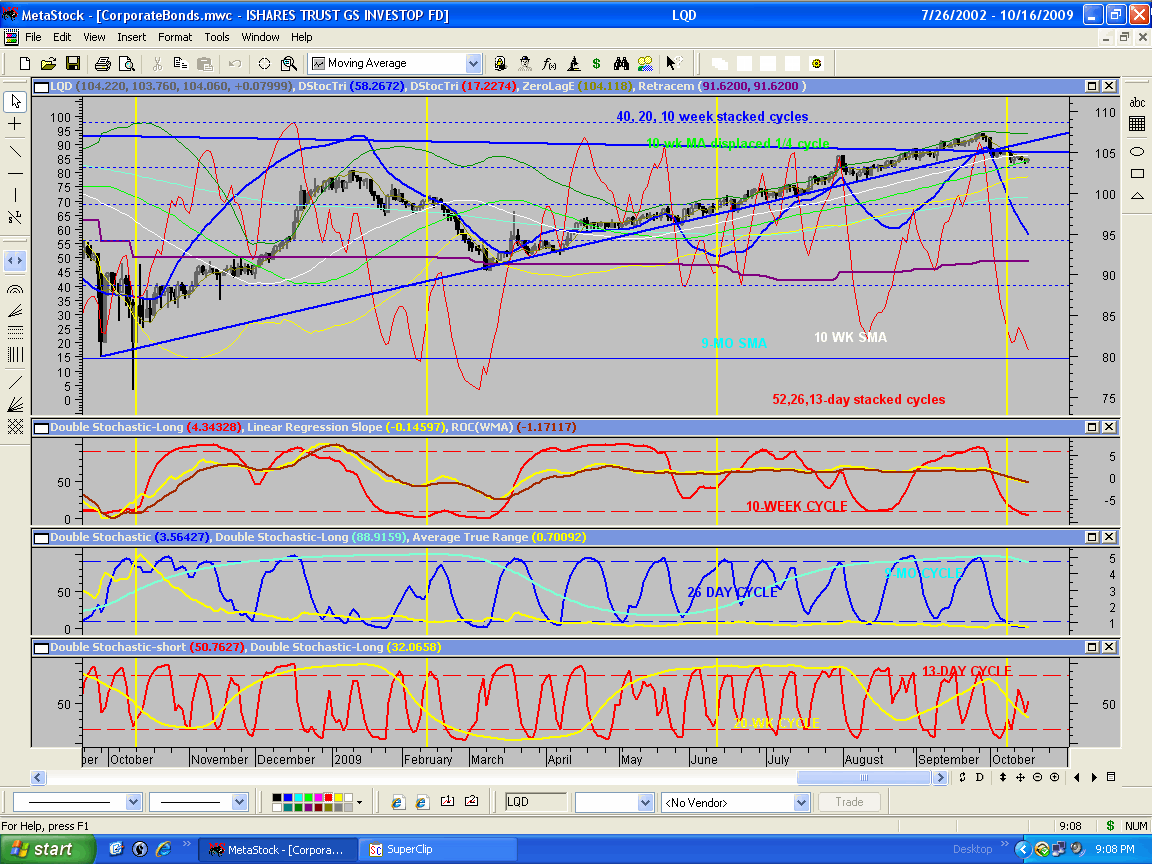
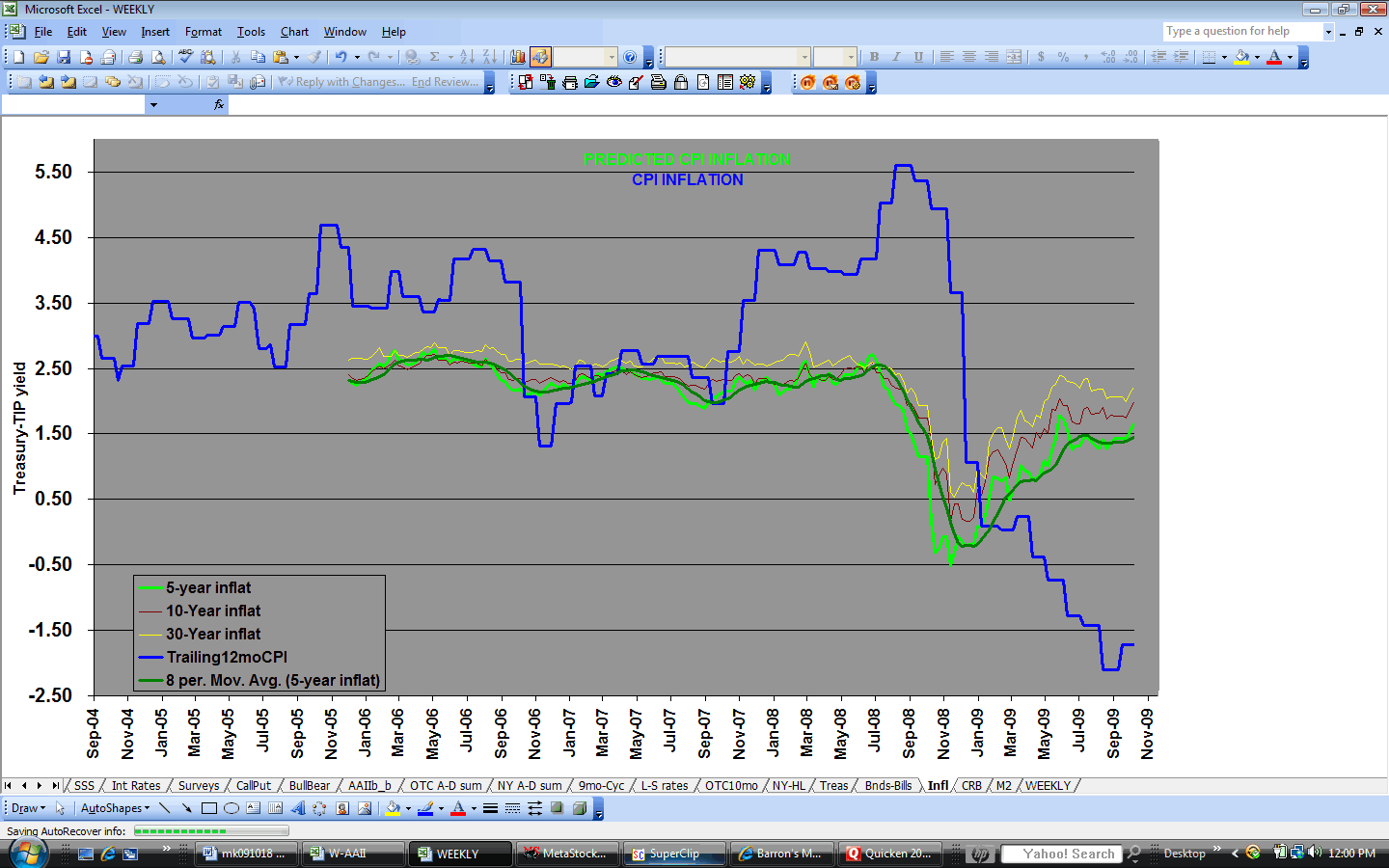
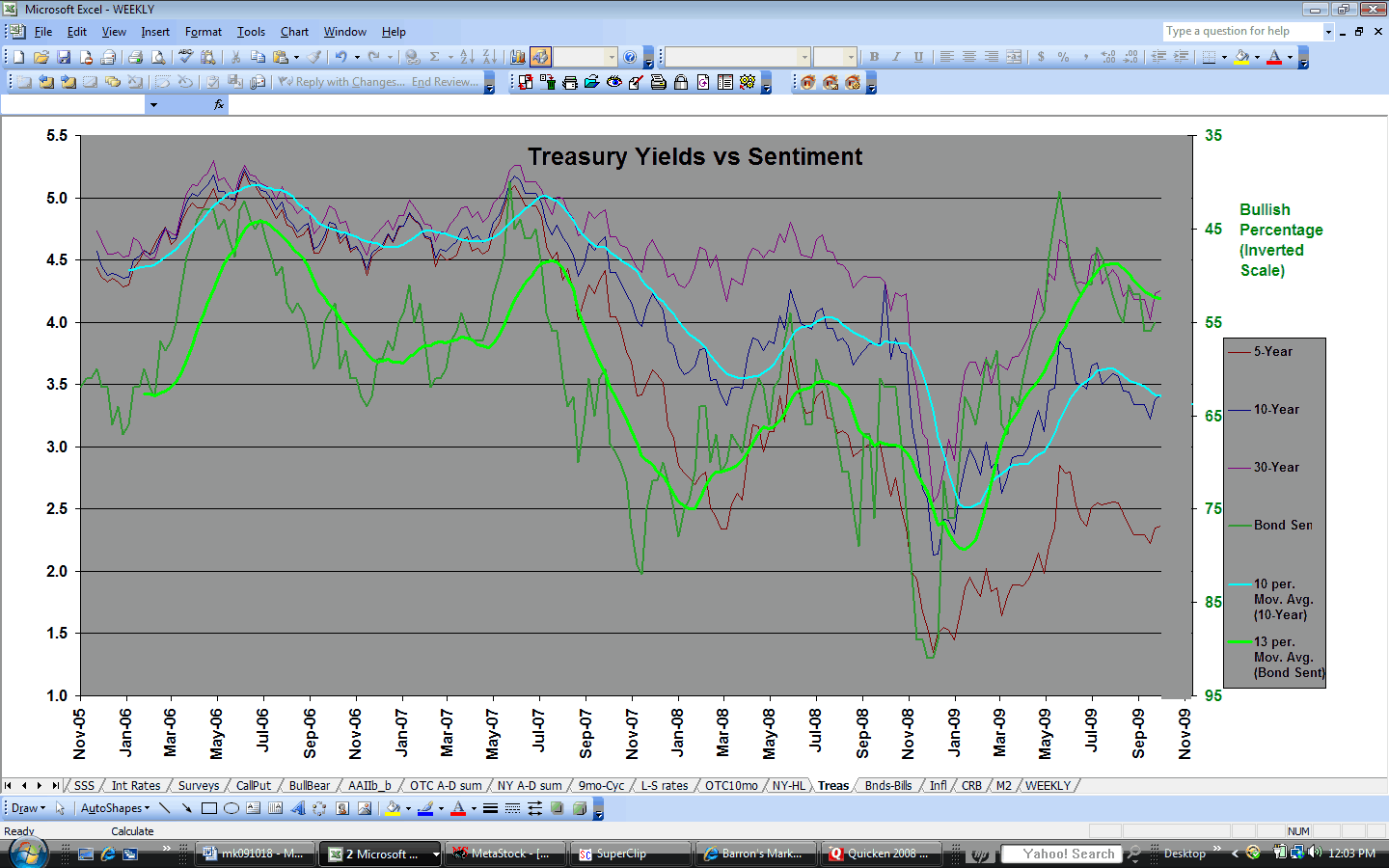
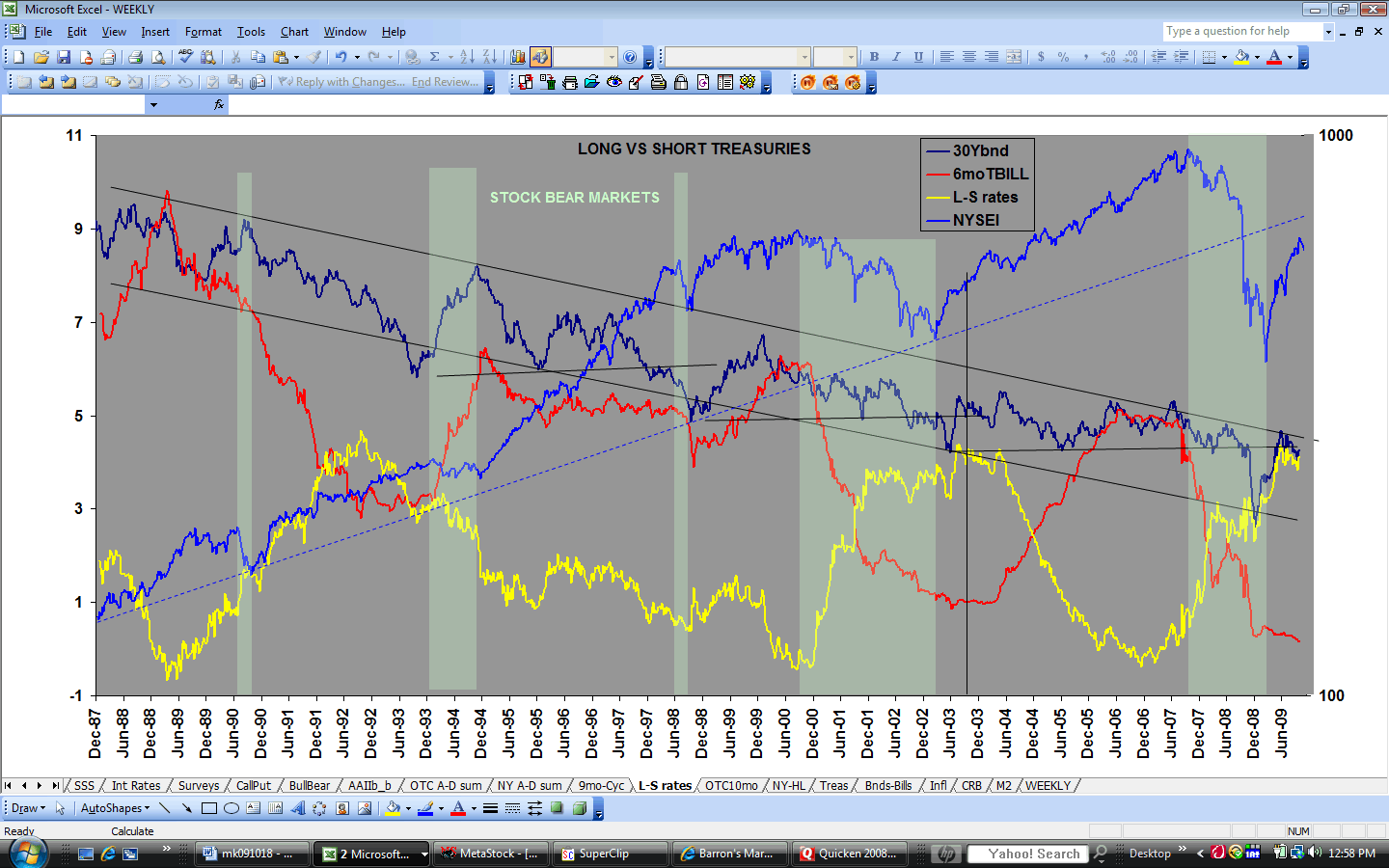
Interest rates moved sharply higher on Tuesday’s injection of liquidity – not surprising because it can only aggravate our spiraling inflation. In that respect, the move appeared to be counterproductive as an economic stimulus. However, rates on conventional treasuries (http://www.geocities.com/petegersb/TreasuryYield-10yr.GIF) subsequently declined into the end of the week. Not so in the other bond sectors. Despite the nice gain for T-bonds (http://www.geocities.com/petegersb/Treasury-20yr.GIF), TIPS (http://www.geocities.com/petegersb/TIPs.GIF) and Corporate bonds (http://www.geocities.com/petegersb/CorporateBonds.GIF) declined for the week. Although over longer periods, TIPS remain the strongest sector. Their poor relative performance last week was probably largely due to an apparently benign CPI report. It was probably a surprise to most consumers to hear the government tell us that there was no inflation during February. Well not exactly. The CPI rose 0.3% for month, but the BLS seasonally adjusted it downward to 0%. The year-over-year rate remained a little over 4% (http://www.geocities.com/petegersb/CPI.GIF), but only because of a temporary 0.6% dip in gasoline prices. If you filled up your tank recently, you know that will reverse big-time when the March figures are released. Corporate bonds remain the weakest bond sector by far. That can probably be attributed to the increasingly shaky financial condition of many of their issuers. The cycles suggest that conventional treasuries will continue their rally until they test their January peak, corporate bonds will bounce off of their August lows before again heading lower, and TIPS will test their Thursday new high as they establish a 10-wk cycle peak. Bond sentiment appears to be peaking (http://www.geocities.com/petegersb/BondSentiment.GIF). If so, we can soon expect at least a 10-week cycle decline, as longer-term interest rates rise to help the Fed produce a steep yield curve (http://www.geocities.com/petegersb/Long-ShortYields.GIF).
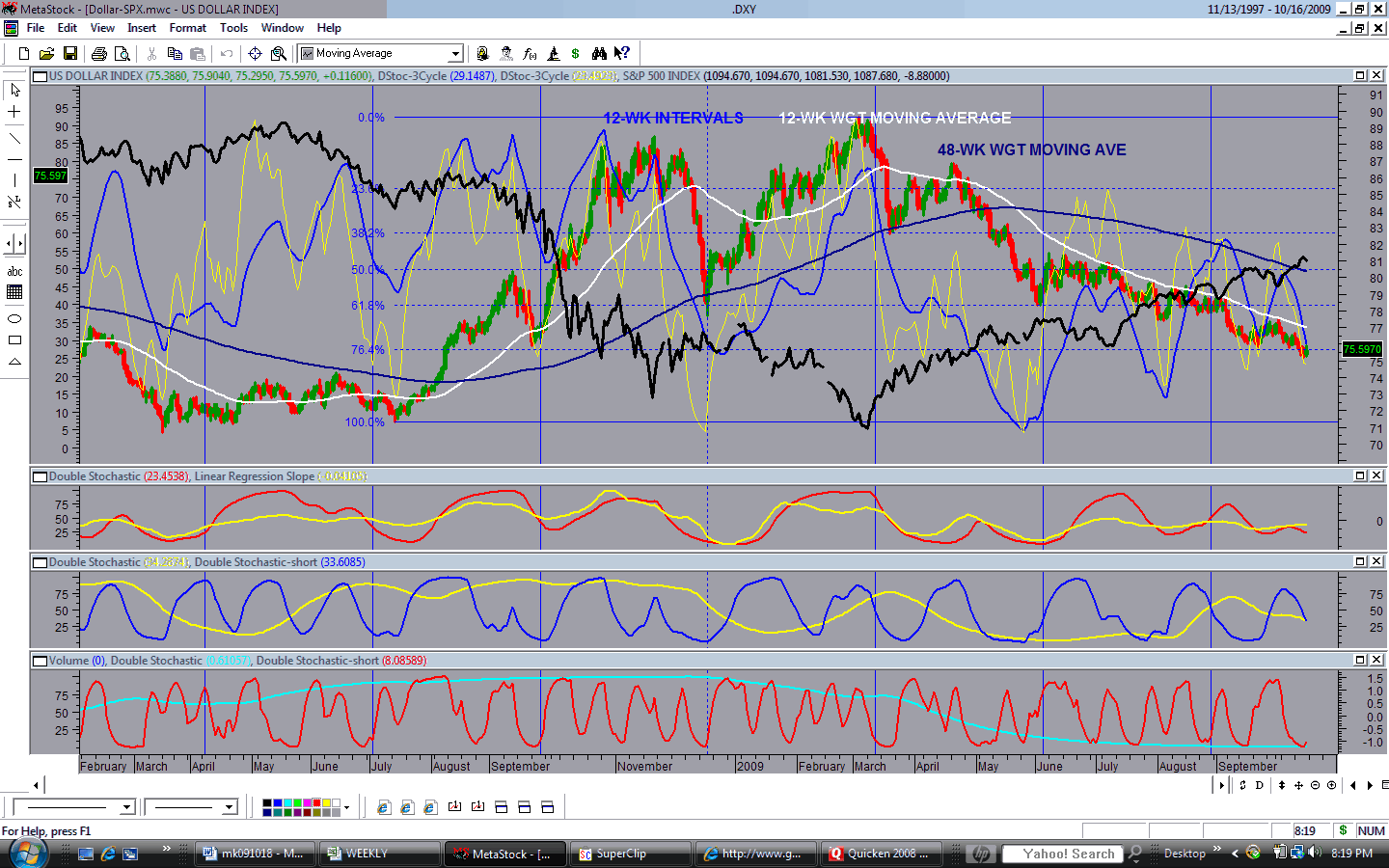
The dollar (http://www.geocities.com/petegersb/Dollar.GIF) continued its steepest
decline since the spring of 2006. The temporary support I envisioned last week
lasted only two days. The cycles suggest more declines this week, with a
possible short-term bottom late in the week. A big Fed rate cut may even
inspire a somewhat climactic intermediate low, but the 9-month cycle is middle
aged, so it will likely provide increasing downside pressure well into the
summer months.
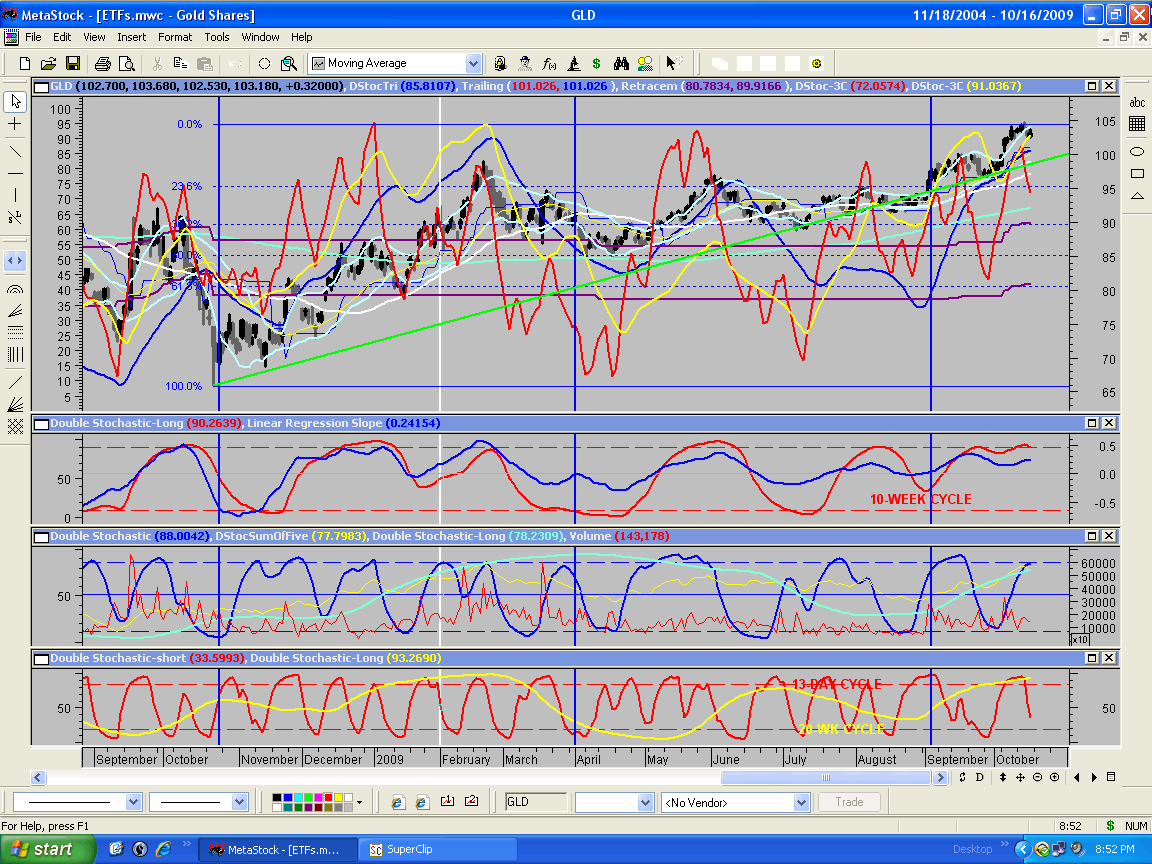
Did I say
$1000 Gold (http://www.geocities.com/petegersb/GoldBullion.GIF)
sometime this month? How about late last week? We need a little more upside this week to reach overbought
conditions in the shorter cycles as well as the longer cycles. There’s no
reason to think we won’t get it, but if the dollar finds a temporary low as
expected, gold would likely make a temporary high as well. Gold is near the top
of the 2nd 10-wk cycle within the 2nd 20-wk cycle of the
current 9-month cycle. The eventual intermediate correction from
right-translated peaks in all of these cycles is likely to be shallow and
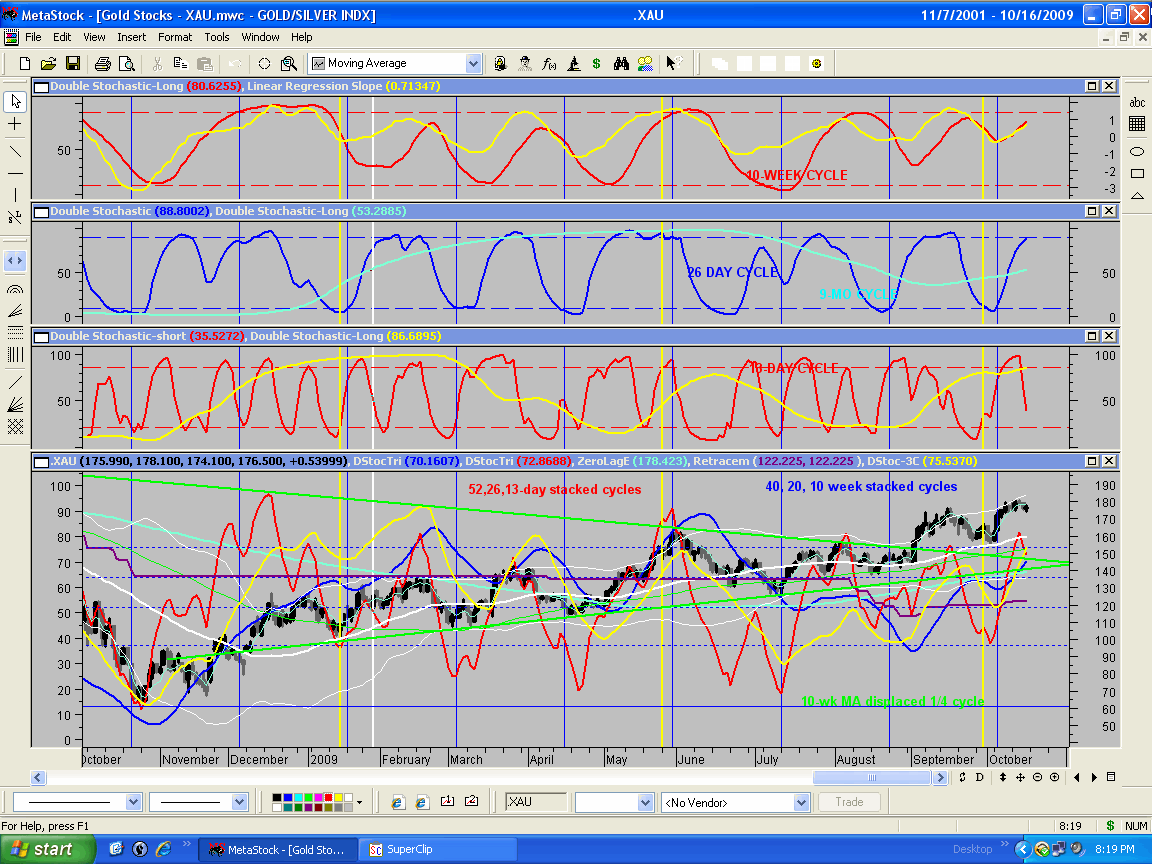
relatively brief, as were the last 3 intermediate corrections. Gold stocks as
represented by the XAU (http://www.geocities.com/petegersb/GoldStocks.GIF) completed a short-term correction on Wednesday and then
followed gold to a new high. The cyclic pattern of the XAU remains very similar
to that of the metal, but the stocks will probably correct a bit more severely
in an intermediate-term correction because of their tendency to move somewhat
in sympathy with other stocks. I
continue to prefer the metal to the stocks.
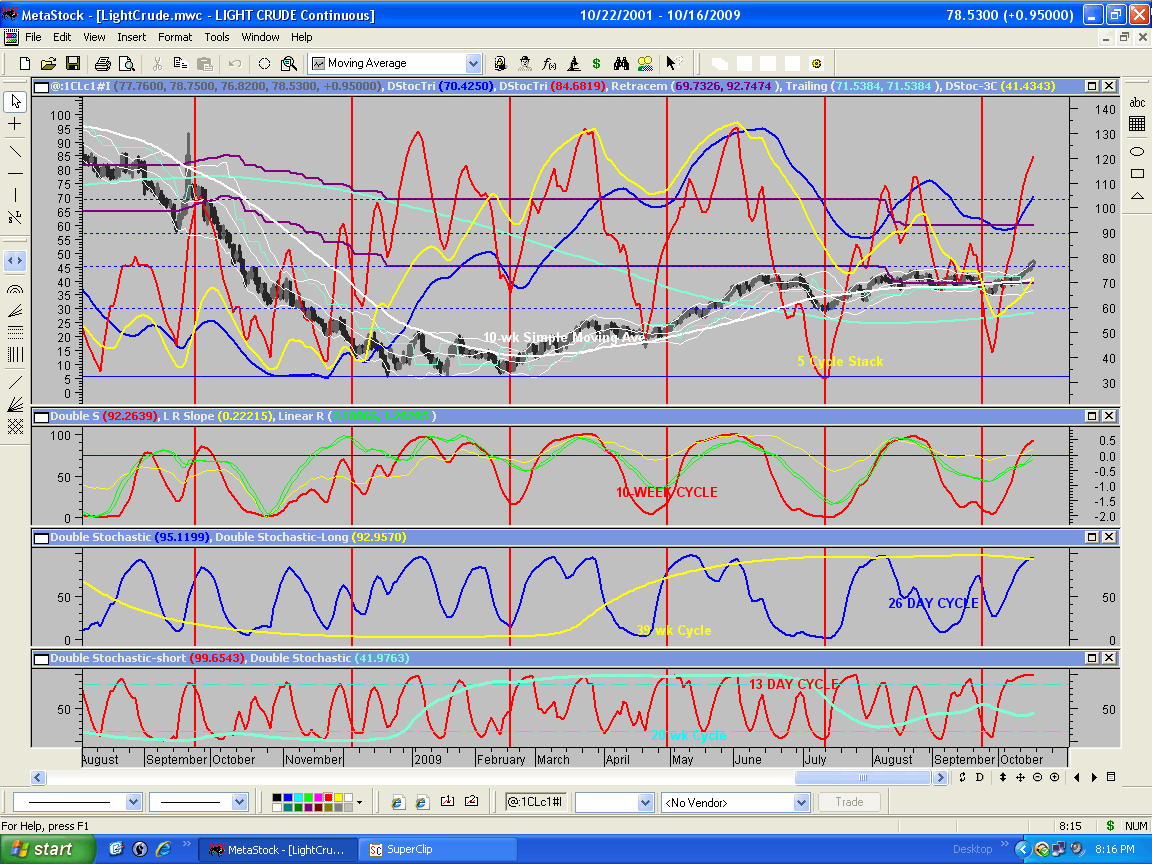
After Crude
oil (http://www.geocities.com/petegersb/CrudeOil.GIF) breached $100/bbl, it took only 3 weeks to reach $110. That
has produced overbought conditions in all of the cycles except the middle-aged
9-mo cycle. The very overbought short-term
composite appears ready for a peak, but a correction should not seriously threaten
the intermediate uptrend.
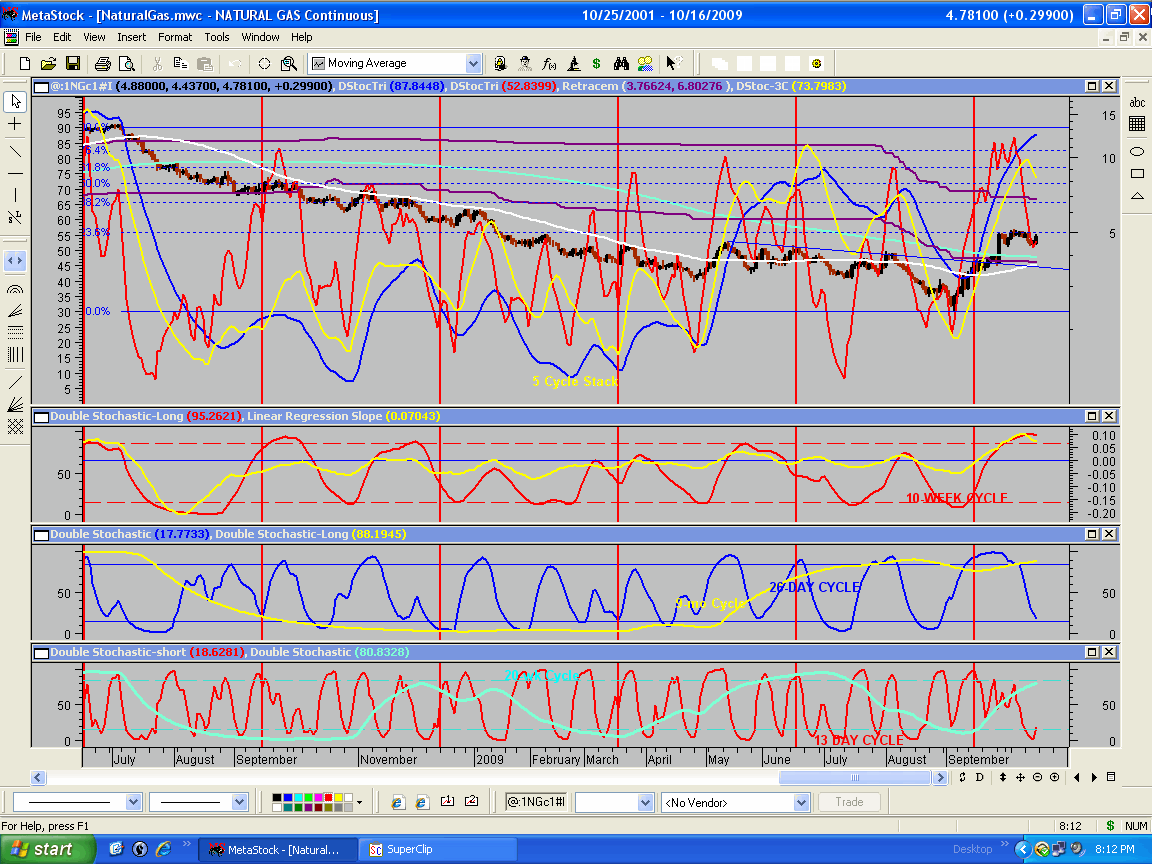
Natural
gas (http://www.geocities.com/petegersb/NaturalGas.GIF) continued its surge last week, making its latest
multi-year high on Friday before the 10-week and shorter cycles turned down.
During the last two years, the 10-week cycle has pretty consistently lasted
about 12 weeks, and it’s already 11 weeks old. Consequently, I don’t expect a
lengthy or deep correction before a resumption of the longer-term uptrend.
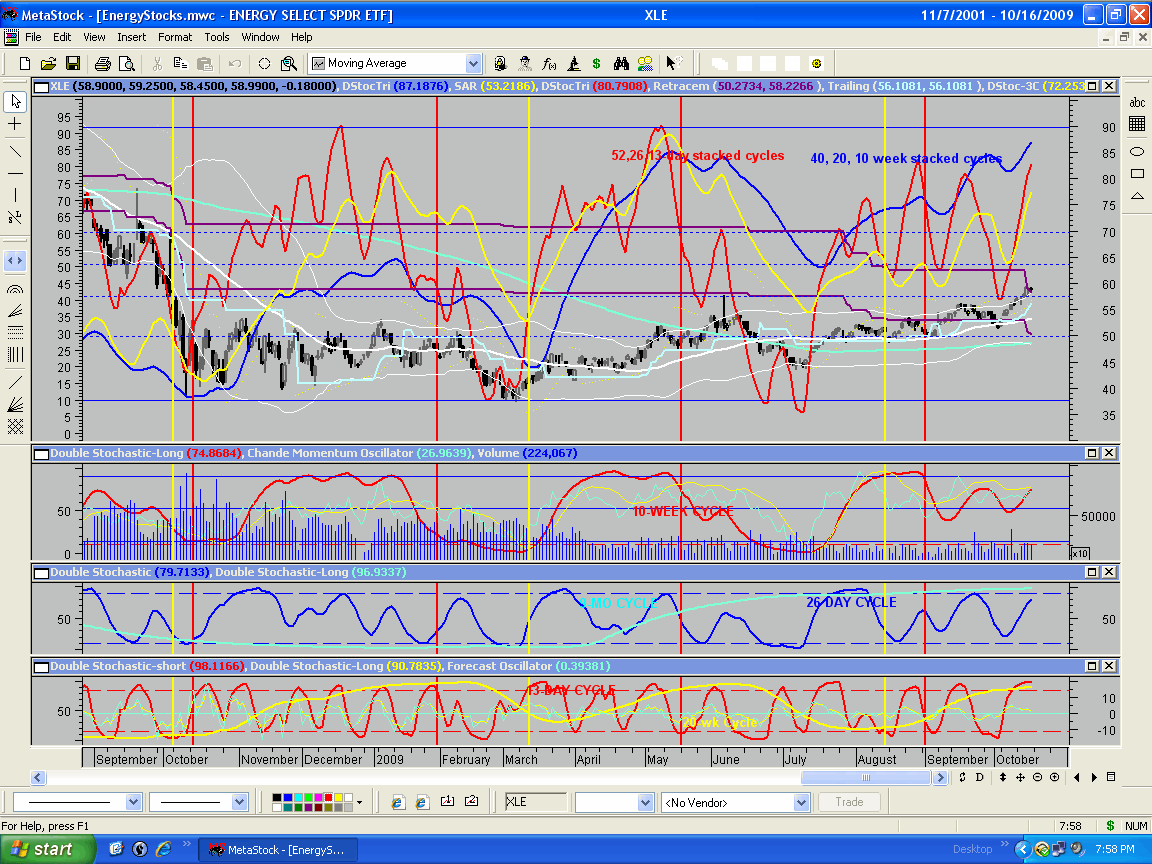
Energy
stocks (http://www.geocities.com/petegersb/EnergySPDR.GIF),
under the continuing influence of a punk stock
market, couldn’t follow the underlying commodities to new highs. Its short-term
correction did, however, bounce off of the 9-month moving average and sustain
the intermediate uptrend. It was the 2nd strongest sector for the week – a little
behind Materials and well ahead of the other sectors. The rising 13-day cycle
and oversold 26-day cycle should conspire this week to drive the XLE higher to
a likely right-translated peak in the 8-wk-old 10-wk cycle.
.