2/10/08
The International Council of Shopping Centers reported that sales at stores open for at least one year at the 43 retail chains that it monitors were the worst since it started keeping track in 1969. But congress is riding to an attempted rescue by distributing a few hundred dollars to most people, improving only slightly on the Bush proposal by including those living on Social Security and disabled Veterans. In order to get the bill passed in time do a little good, Democrats caved in to Republican intransigence by leaving out the most effective stimulus – extending unemployment benefits. (According to the Economic Policy Institute, extended unemployment benefits generate $1.64 of economic growth for every dollar spent compared to 27 cents for each dollar of business tax incentives). Unemployment benefits would be spent ( albeit to some extent on Chinese goods), whereas the checks to those employed or receiving income from another source may be used instead for savings, investment or to pay down debt. Such an offset to the large expansion of government debt would, of course, be a good thing in the long run, but it won’t do much in the short-term to bolster GDP. Now that Republicans have adopted the Keynesian economic policies that they have so long derided, you would hope that they would at least do so in a way that gives it a reasonable shot at success. But rather than look at the data, they go with their gut feel that unemployment benefits discourage the recipients from looking for jobs – never mind that most industries are laying off rather than hiring. Instead, whether wittingly or unwittingly, they did their best to set it up for failure – something that won’t be apparent until the next administration takes over.
Speaking of debt, Bush released his latest budget last week - finally reaching the modern era by distriibuting it electronically. It claims a $410 billion deficit this year. That compares to a $523.6 billion increase in the federal debt during the last 12 months. If enacted as proposed and none of the usual supplementary requests for Iraq or natural disaster relief are granted, debt is likely to rise in excess of $700 billion and hit nearly $10 trillion dollars before that happy day when Bush leaves office. But there are always supplementary requests to continue prosecuting the Iraq war, and that will drive the true deficit higher by another $100 billion or so. If the current fiscal and monetary stimulus does not succeed in righting the economy by the second half, tax receipts will fall far short of the budget projections, and the debt increase will be larger still – probably approaching the trillion dollar milestone..
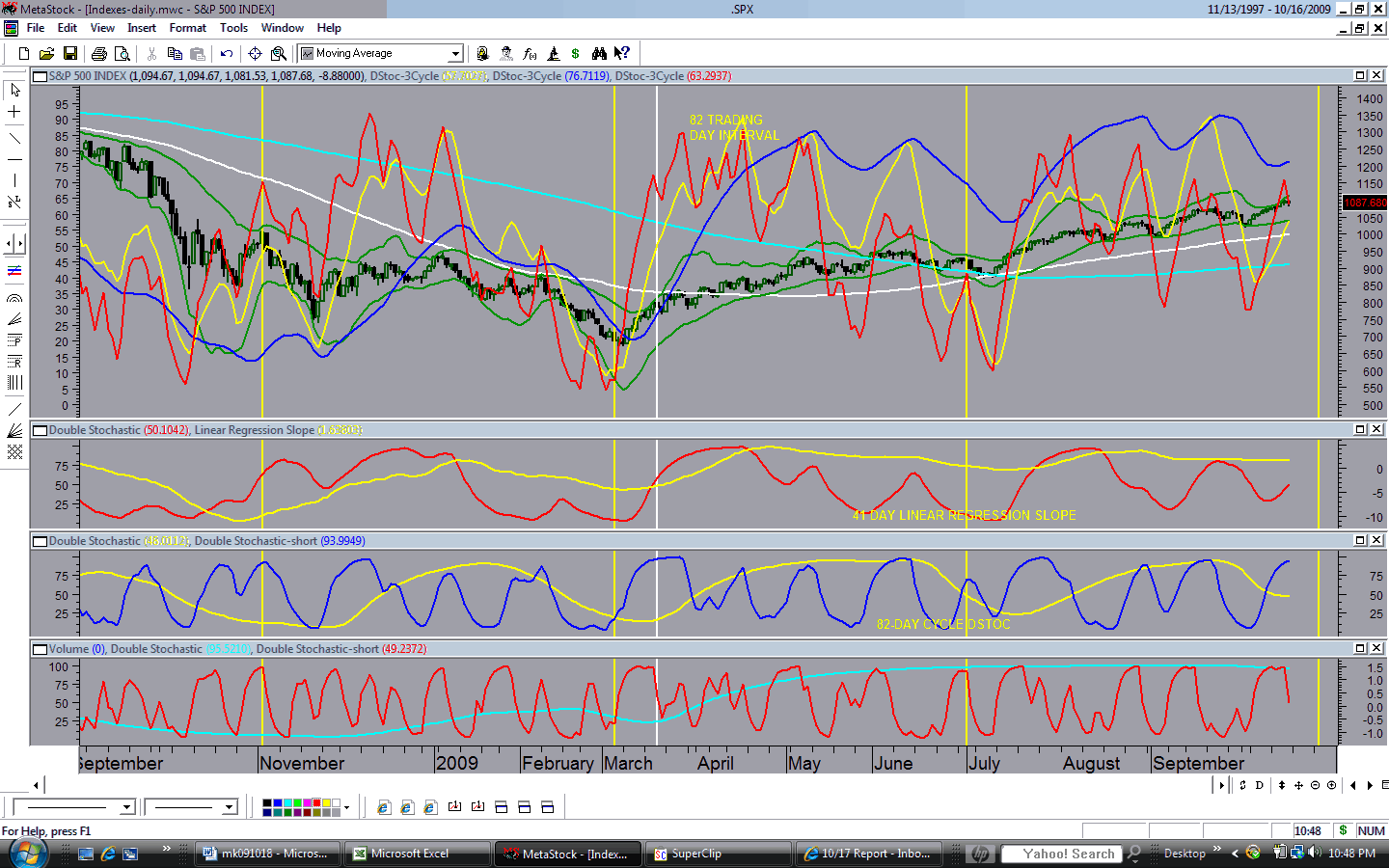
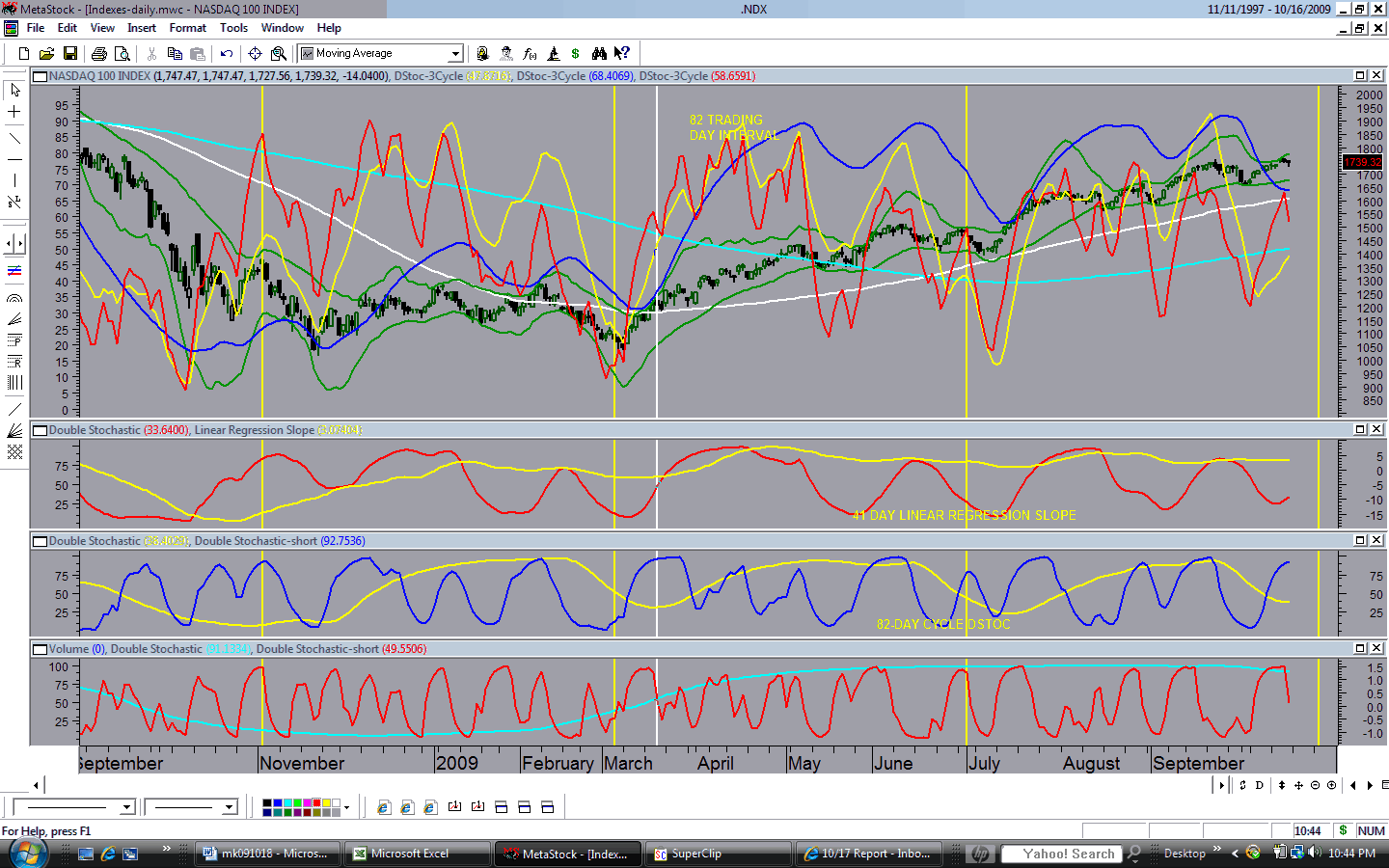
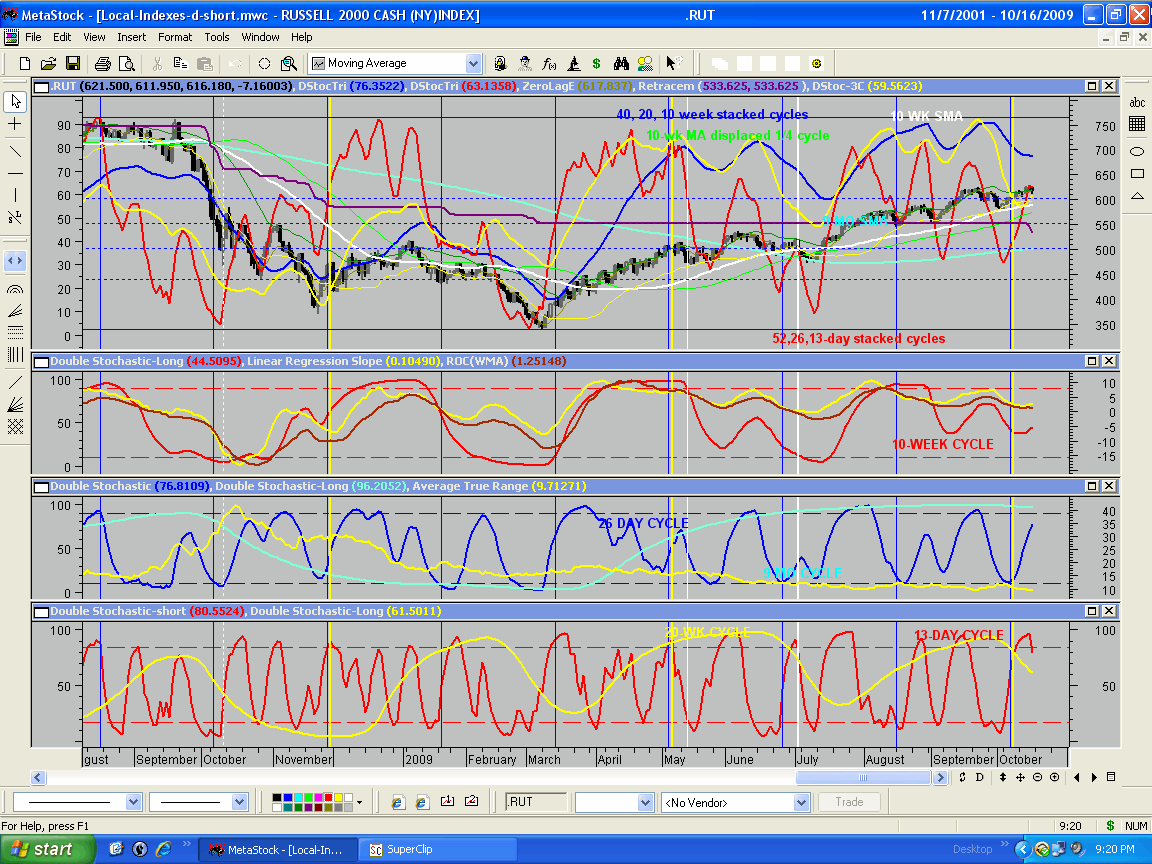
We can probably look to the stock market to anticipate when the economy will hit bottom. The market usually reaches its bottom several months in advance of the bottom in the economy. A week ago its strong performance inspired hope that the market bottom had been established. Last week’s weak performance that gave back the entire prior week’s gain didn’t completely dash those hopes, but it certainly dramatically lowered the expectation. At Thursday’s low, all of the major indexes (http://www.geocities.com/petegersb/SP500.GIF, http://www.geocities.com/petegersb/NDX.GIF , http://www.geocities.com/petegersb/Russell2000.GIF) had given back more than half of the rally off of the January 23 panic lows. On the basis of closing prices rather than intra-day lows, the Nasdaq 100 (NDX) was lower on each of the last 4 days of last week than on January 23, which was the prior low for the current 9-month cycle. The other indexes came close, but haven’t yet caught up to the usually leading NDX. With the 13-day-old 13-day cycle modestly oversold, the market is trying to make a stand here. It may prove to be a successful test of the January lows, but with the 26-day cycle having dealt with its midlife condition by turning down from an overbought condition, support at this level appears more likely to be temporary.
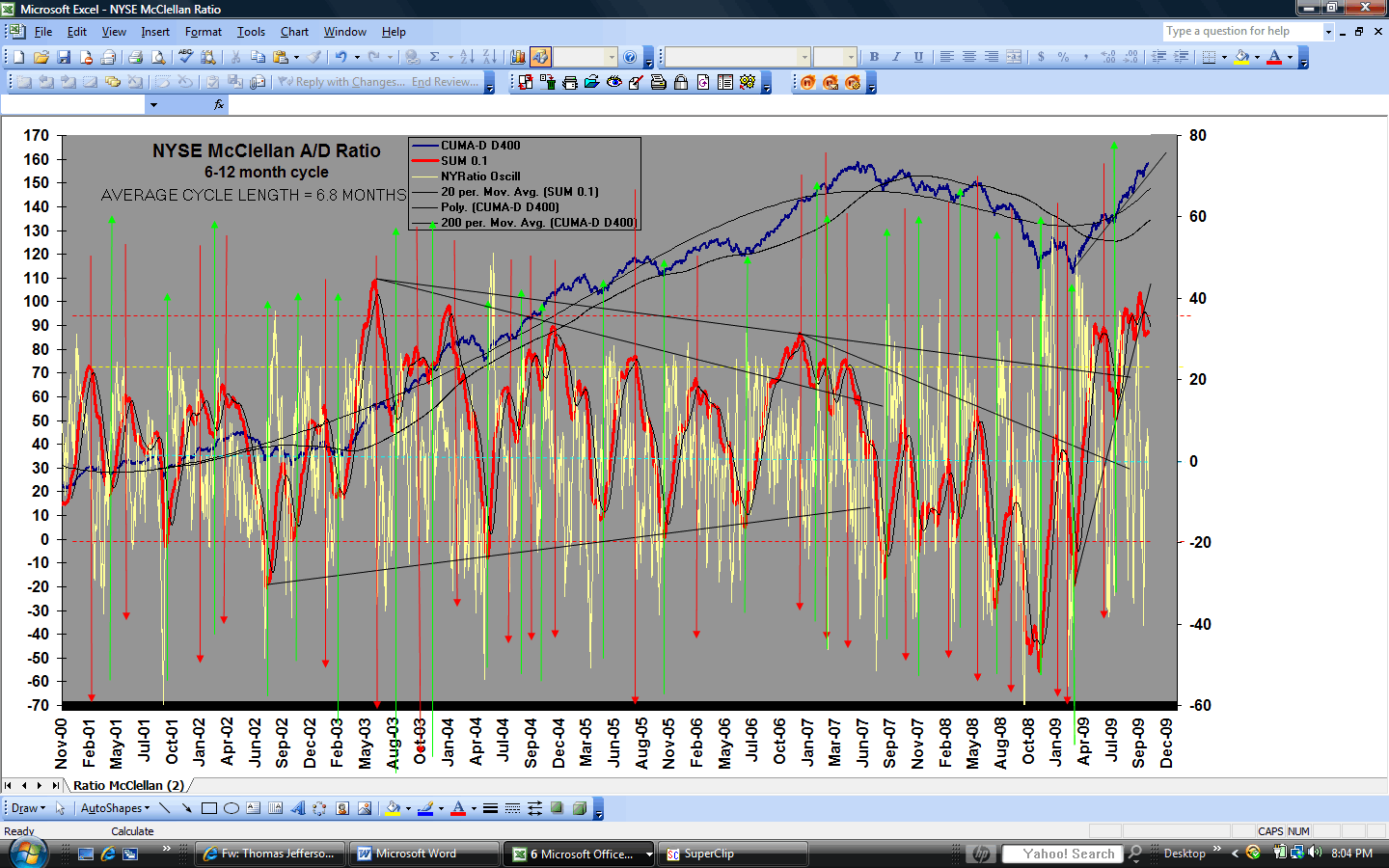
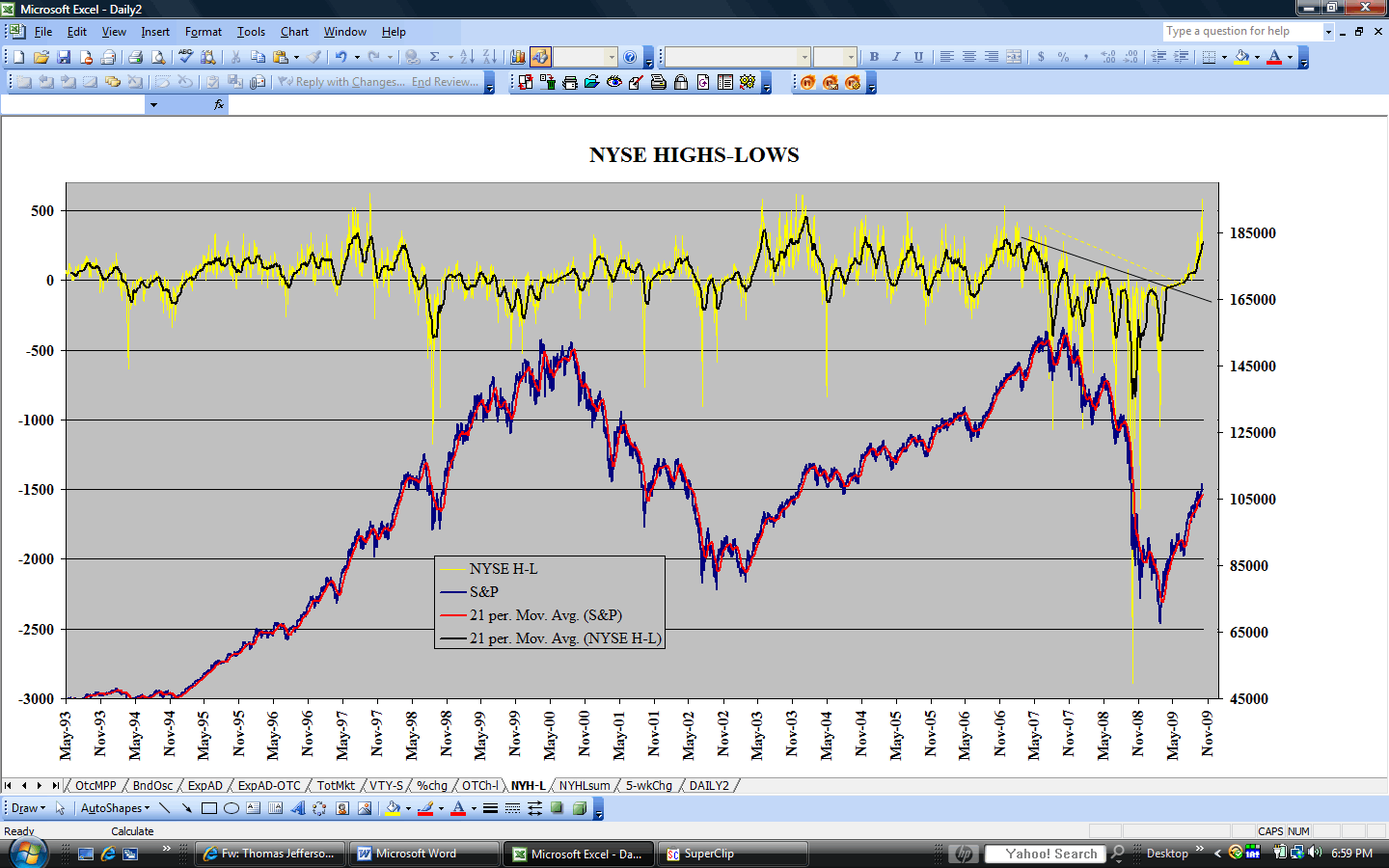
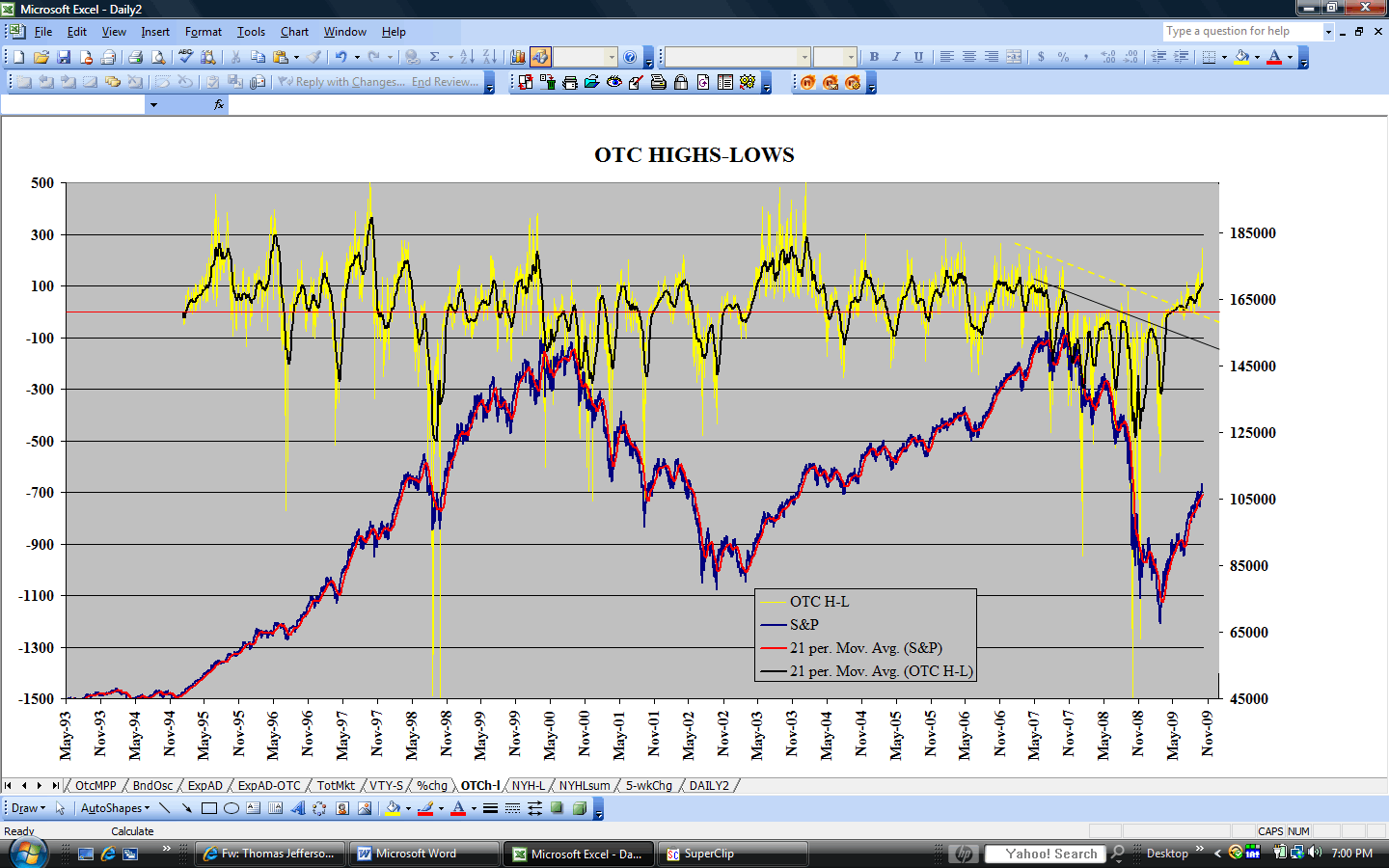
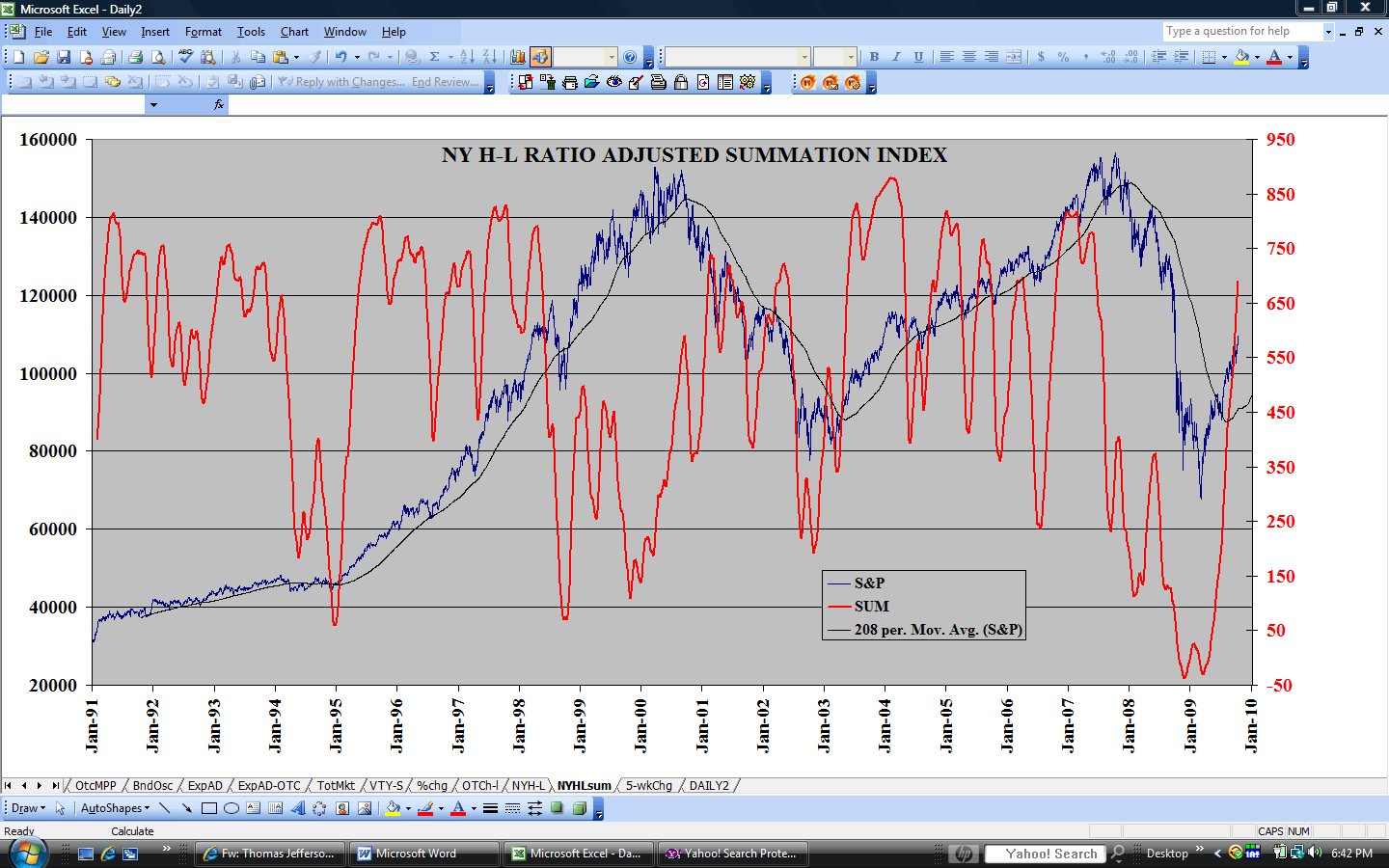
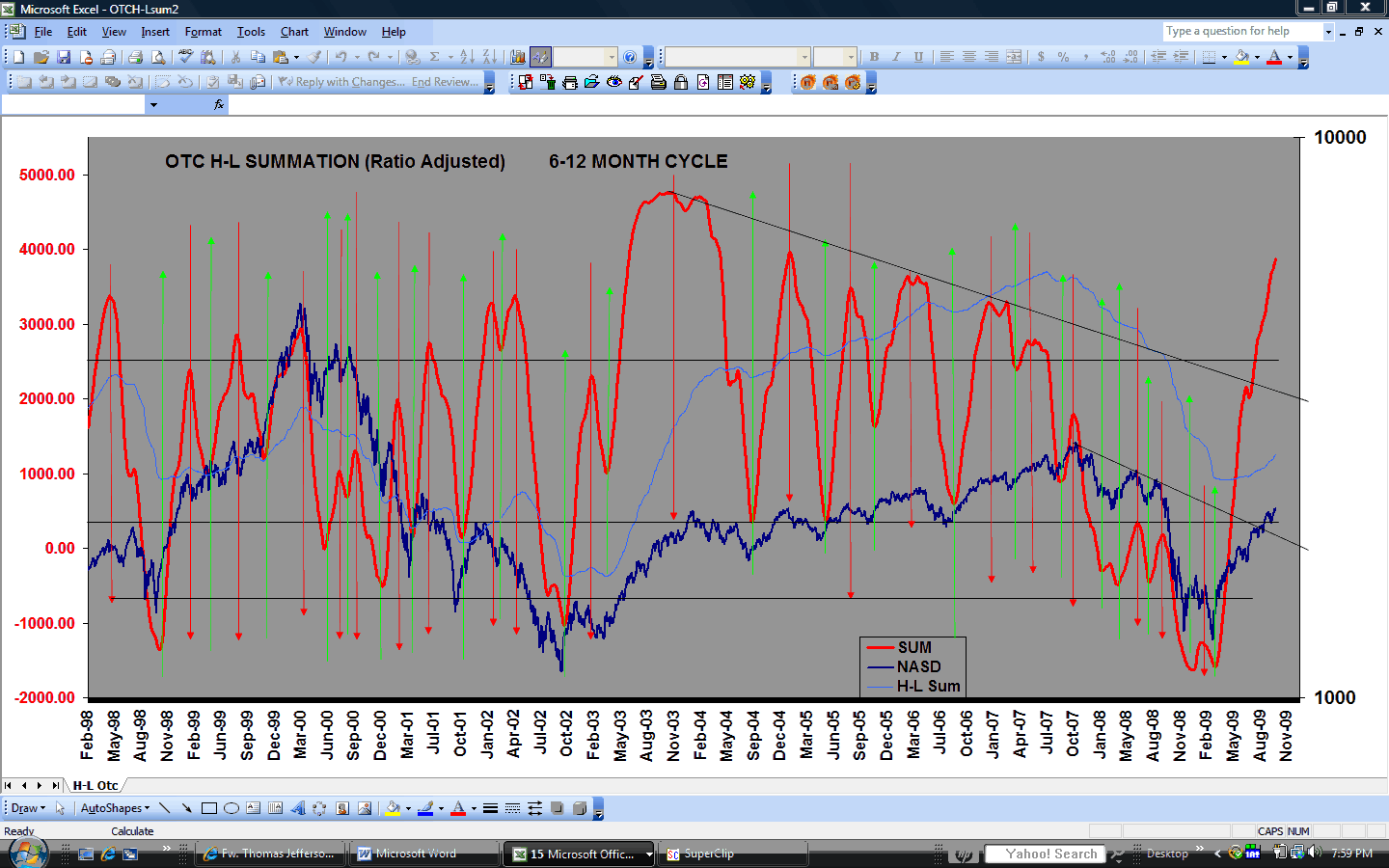
The breadth indicators appear somewhat promising. All have turned up (http://www.geocities.com/petegersb/A-Dsummation-NYSE.GIF , http://www.geocities.com/petegersb/A-Dsummation-OTC.GIF, http://www.geocities.com/petegersb/HighLowNYSE.GIF , http://www.geocities.com/petegersb/HighLowOTC.GIF , http://www.geocities.com/petegersb/H-Lsummation-NYSE.GIF , http://www.geocities.com/petegersb/H-Lsummation-OTC.GIF ) despite continuing more lows than highs and a preponderance of declines over advance on most days. That indicates perhaps we have seen the negative breadth extreme, and are therefore within a few weeks of the likely negative price extreme.
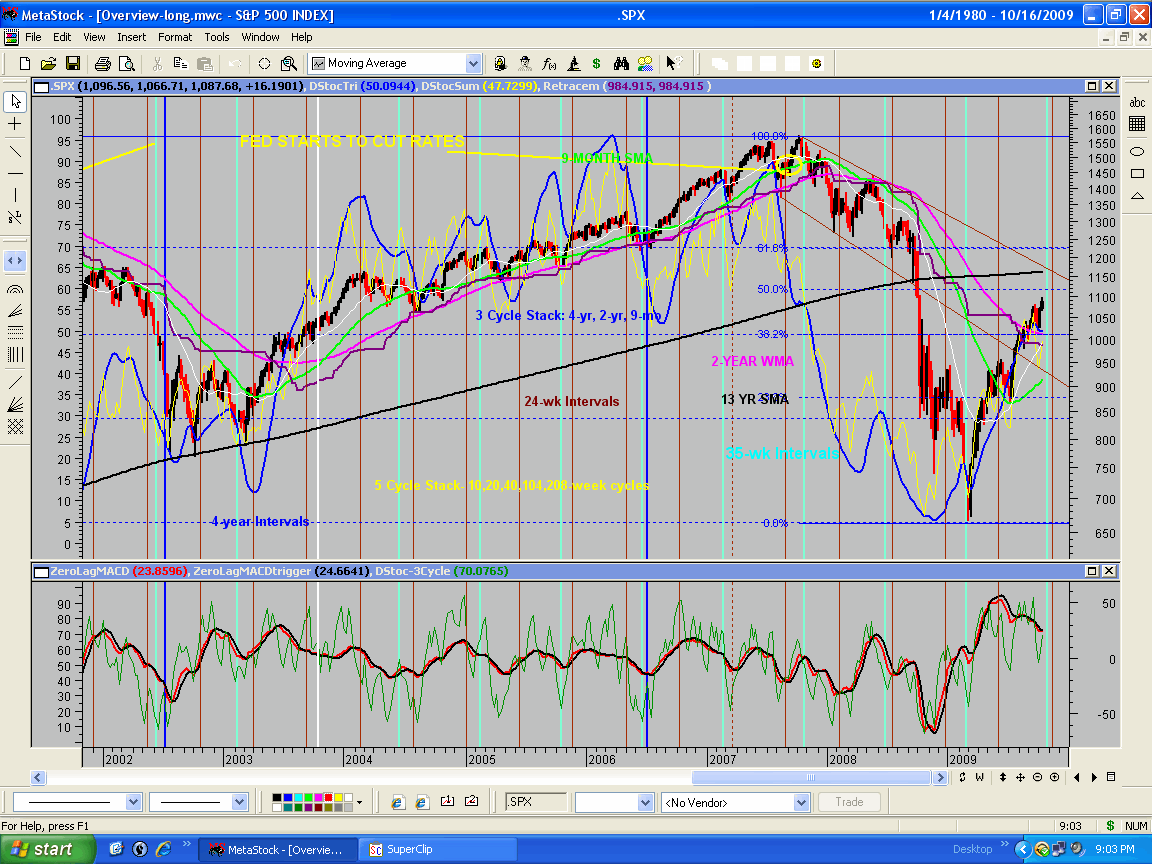
All of the 10-week cycle indicators continue to rise with the lone exception of the DStoc on the NDX. This week we can expect a contest between the downtrending 26-day cycle and a likely upturn in the 13-day cycle to determine if the 3-week-old 10-week cycle can resume its uptrend or it made a left translated peak a week ago. The downtrend in all of the short-term composites suggests the downtrending 26-day cycle will prevail and we will see little more than a hesitation when the 13-day cycle reaches bottom. The 5-cycle stack (yellow line) on the long-term overview chart (http://www.geocities.com/petegersb/Overview-long.GIF ) is on the verge of turning down. Without a good 13-day cycle rally, it will do so next week.
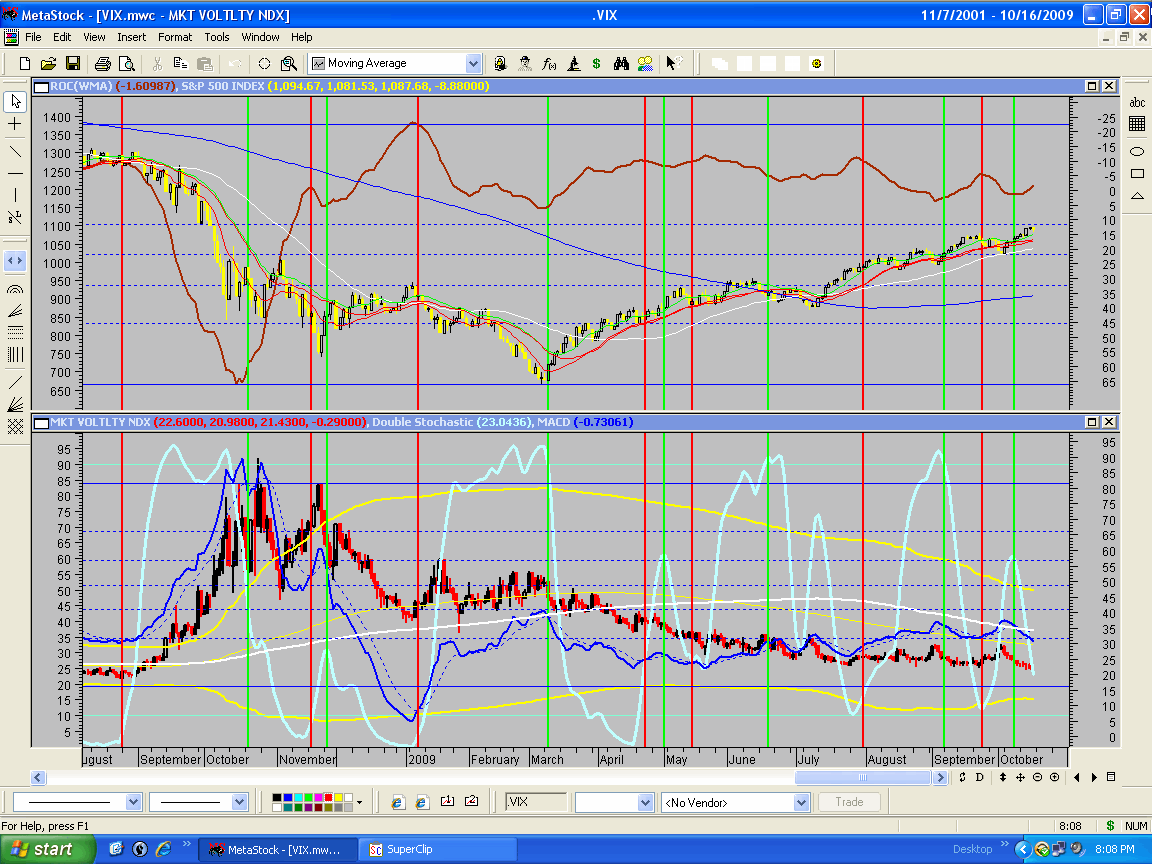
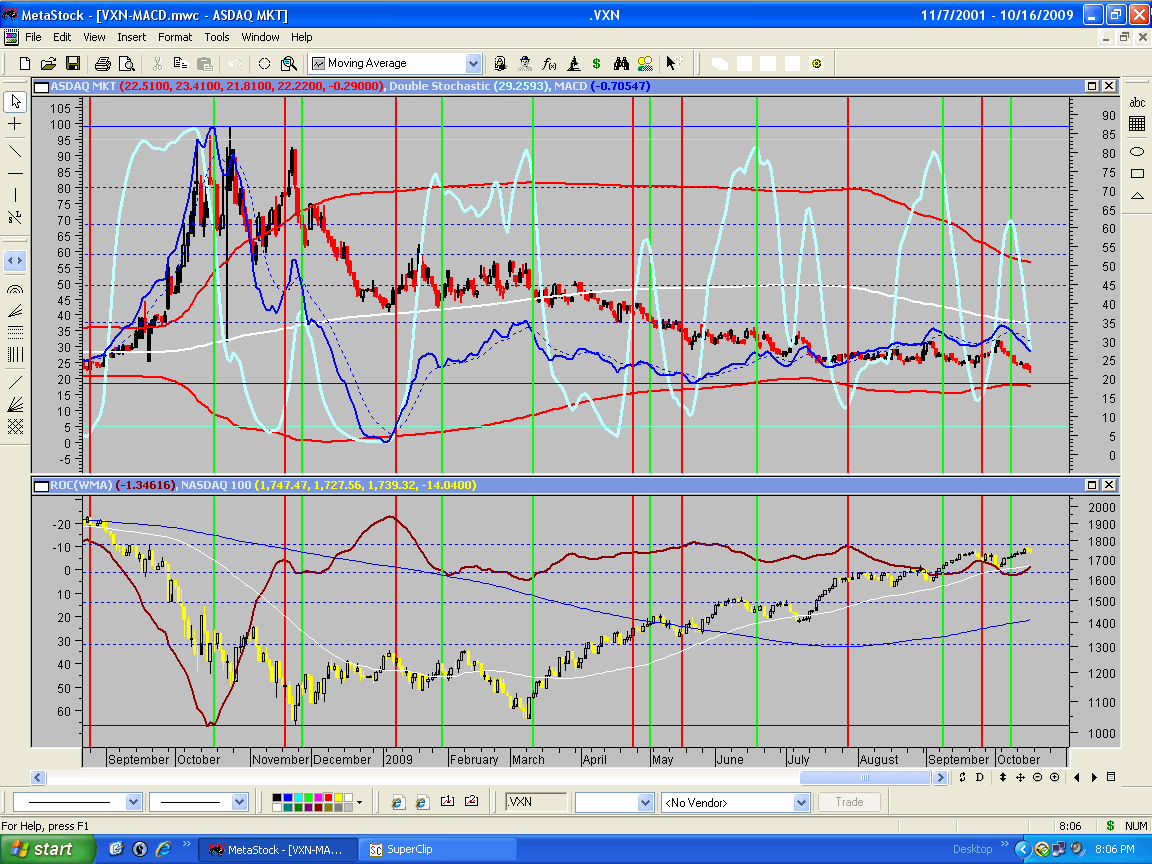
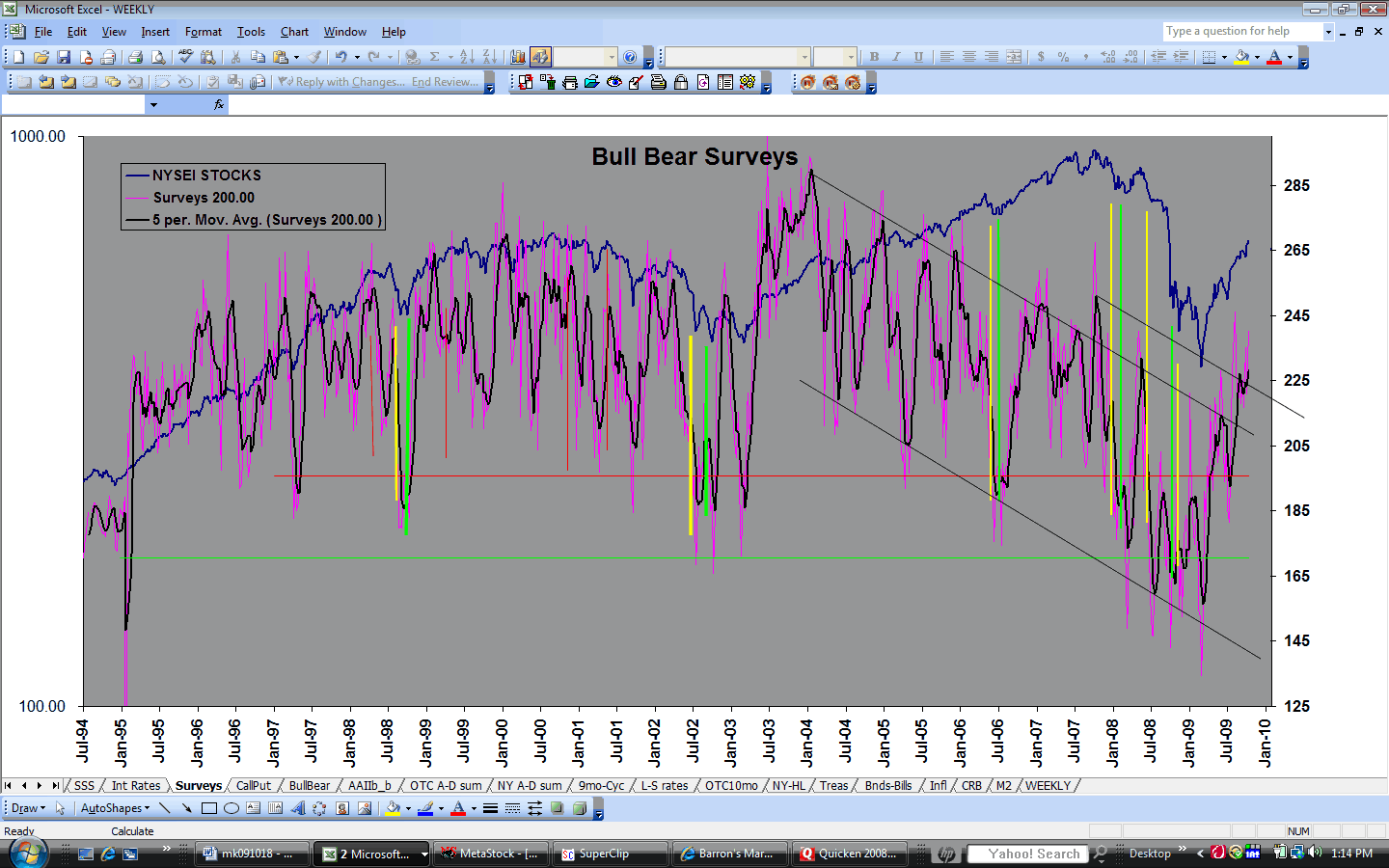
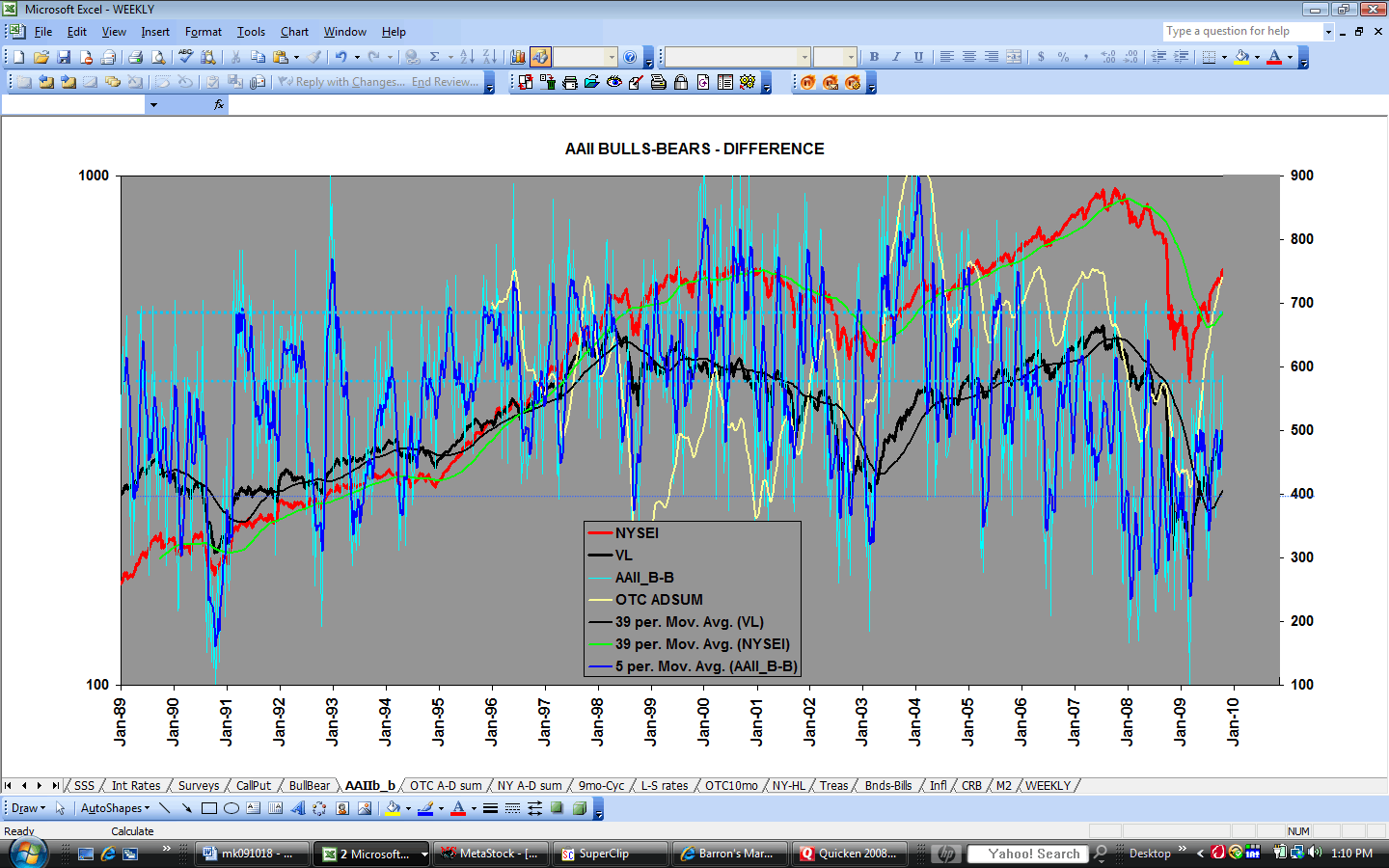
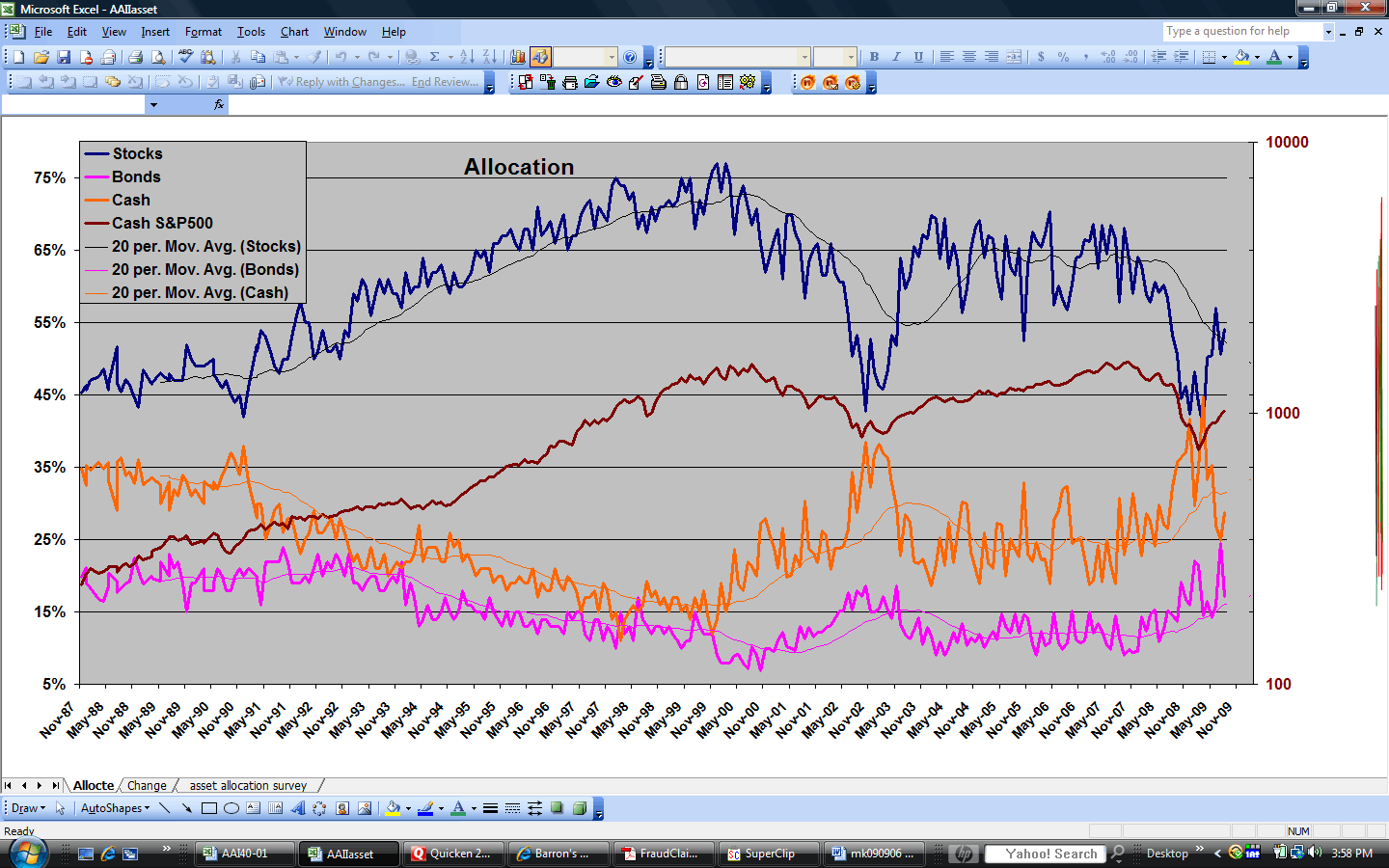
Sentiment indicators didn’t change much last week. You can still find sentiment indicators that support both bullish and bearish scenarios. The daily VIX and VXN (http://www.geocities.com/petegersb/VIX.GIF, http://www.geocities.com/petegersb/VXN.GIF) support the case for a resumption of the rally phase of the 10-week cycle. However, the DStocs on the weekly VIX and VXN (http://www.geocities.com/petegersb/VIX-weekly.GIF, http://www.geocities.com/petegersb/VXN-weekly.GIF) now are moving in opposite directions with the VXN supporting the bull case for the 20-week cycle, and the VIX having reversed course to support the bear case. Advisory services became slightly more optimistic (http://www.geocities.com/petegersb/InvestorsIntelligence.GIF), but not enough to reverse the bearish trend of the 5-week moving average. AAII sentiment (http://www.geocities.com/petegersb/AAIIsentiment.GIF) became slightly less pessimistic to continue the bullish rise in the 5-week moving average from a pessimistic extreme not seen since the 1990 four-year cycle low. That reading would be more convincing if AAII had put their money where their mouth is and allocated their assets accordingly. They did not (http://www.geocities.com/petegersb/AAIIassets.GIF). Their allocation to stocks remained well above the levels seen at all the 9-month cycle lows of this decade.
Another indication of the lack of sufficient pessimism to suggest a major bottom is the contrasting news treatment of a couple of popular but meaningless indicators that surface at this time of year. The mindless bullish bias of CNBC was amply demonstrated on Monday morning when one of its guests actually gave serious credence to the Superbowl indicator, which predicts a positive year for stocks by virtue of the Giants win. By contrast, you heard very little this year about the January Barometer, which predicts a down market for this year. As I’ve pointed out in the past, the January barometer does no better in predicting the next 11 months than merely assuming that the market will conform to the average Feb-Dec period during that time period. So you have two popular irrational indicators that conflict this year. The bullish one, of course, gets the publicity, no matter how irrational.
The Superbowl indicator is perhaps the best example of data mining – finding past correlations that have no basis in cause and effect and therefore are useless for predicting the future. It’s a trap that many trading system developers fall into. There is no sure way to avoid that trap, but there are some ground rules to minimizes the chances of being caught in it. First, you have to take the available data and cut it into at least two parts, then develop the system based on one part and test its performance on the other. Second, you have to make sure that each period includes several bear and several bull markets. When anybody makes a forecast based on a continuation of a pattern that persisted for only a few months or a few years encompassing only one type of market, take it with more than one grain of salt.
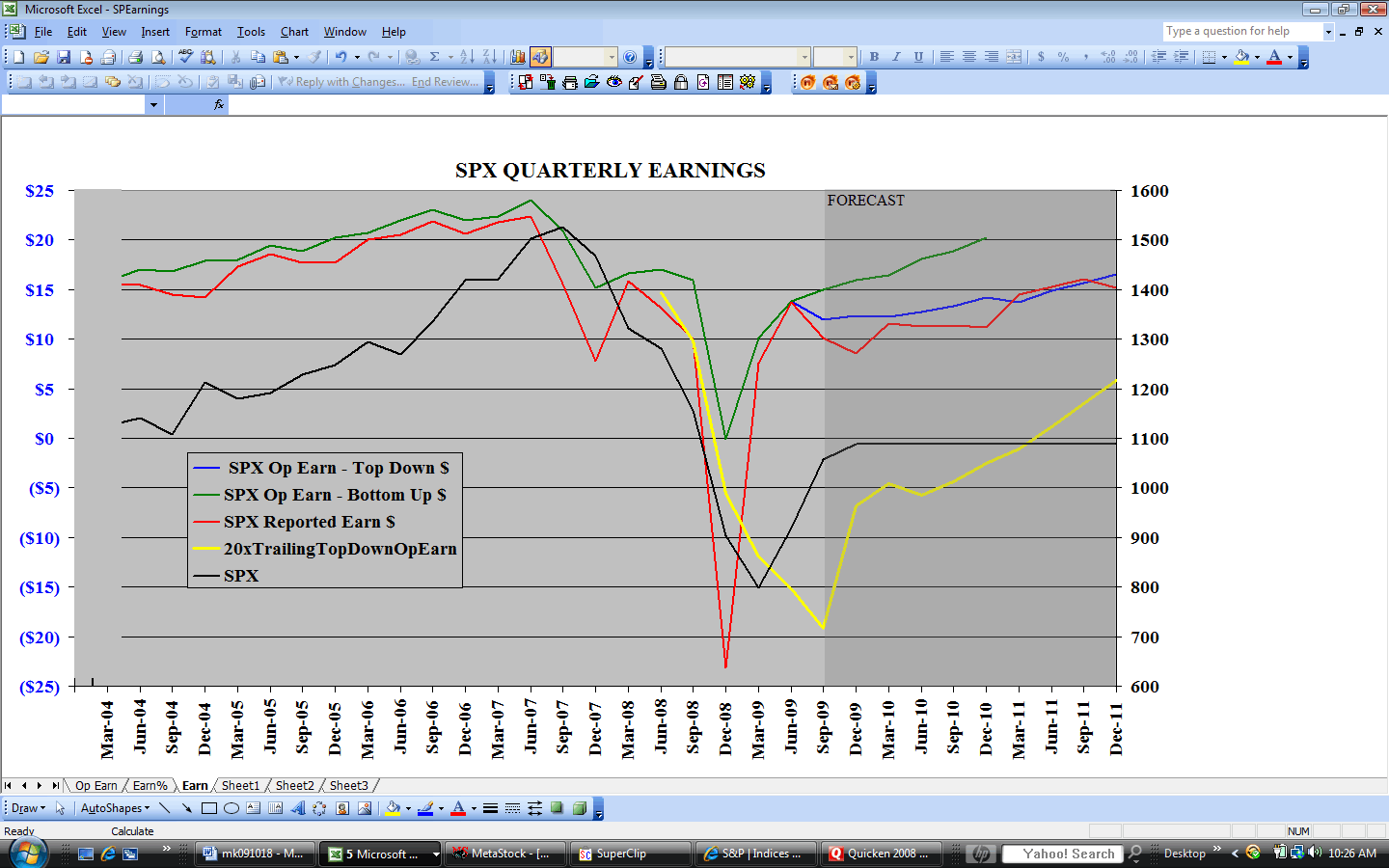
Fundamentals continue to deteriorate. I had to adjust the chart scale again to accommodate S&P’s latest downward revision of last year’s 4th quarter earnings (http://www.geocities.com/petegersb/EarnY-Y.GIF). However, this year’s 4th quarter projections keep looking better in comparison as last years continue to plunge. If an economic recovery takes hold and the financial institutions adequately write down their losses now, this year’s 4th quarter should look better than last year’s, but S&P probably will be adjusting its nearly 60% projection downward as time goes on and reality sets in.
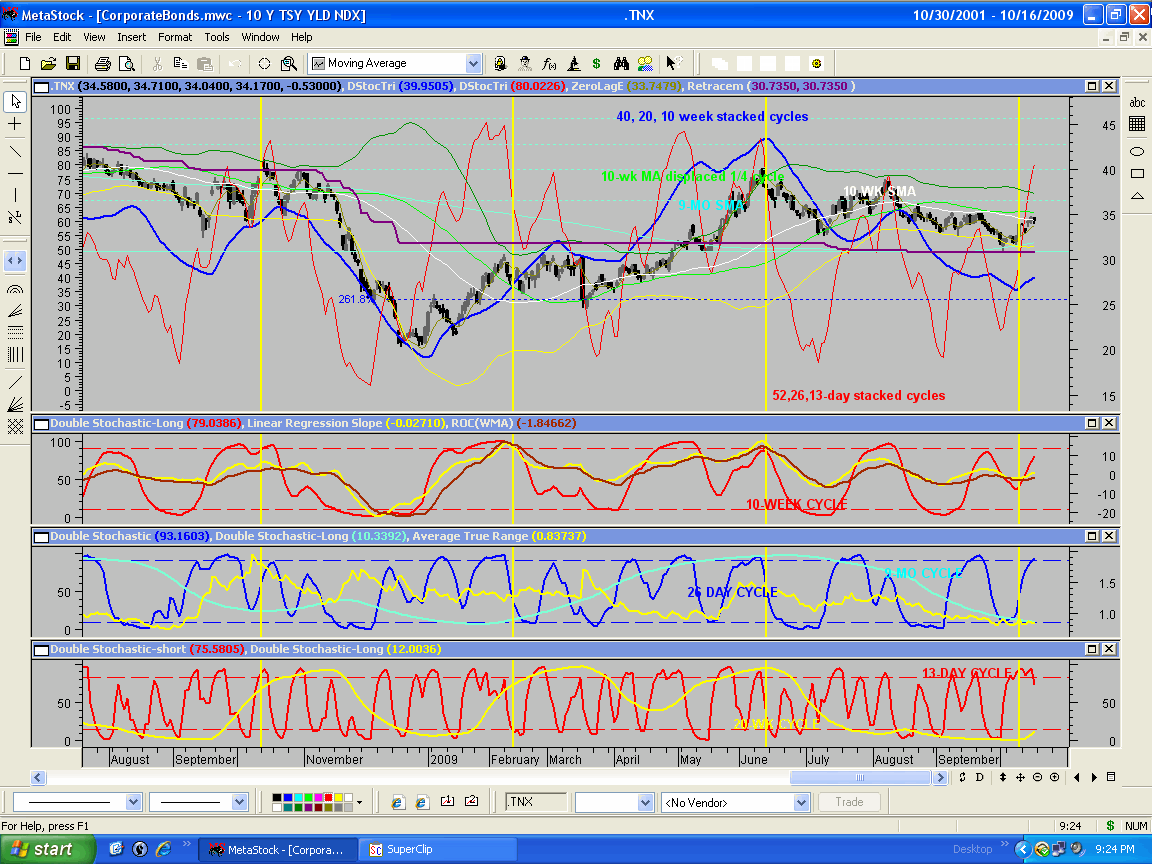
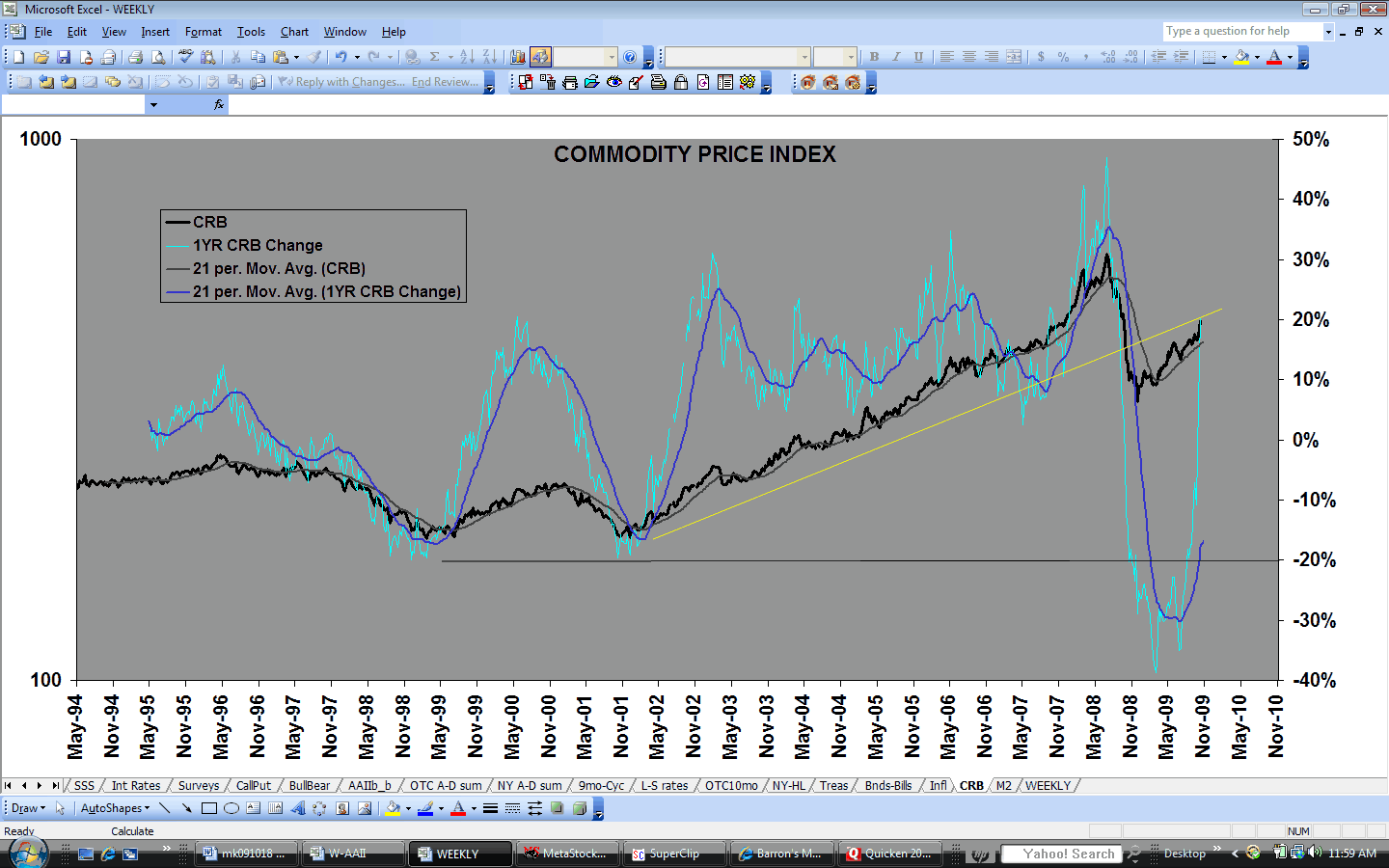
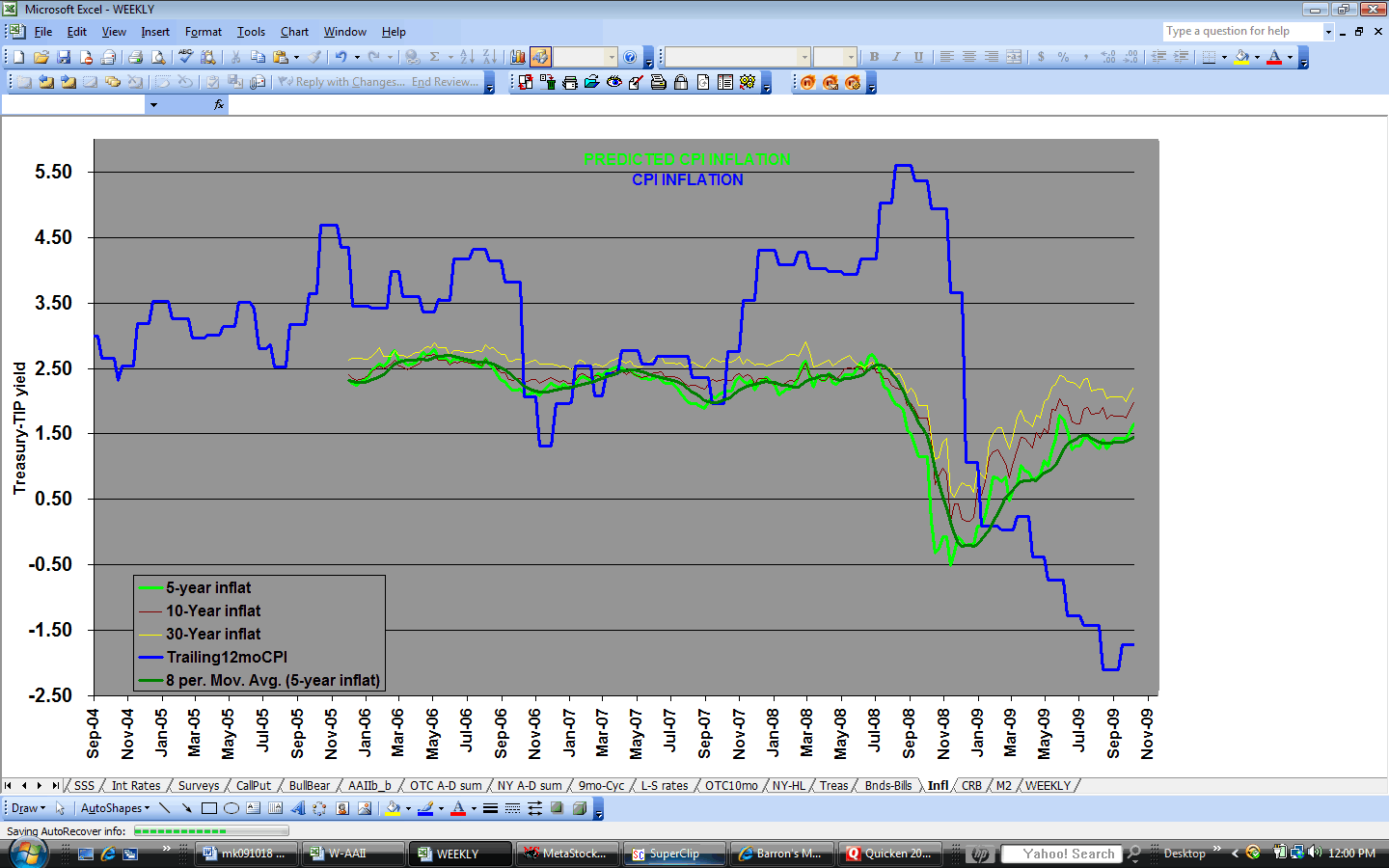
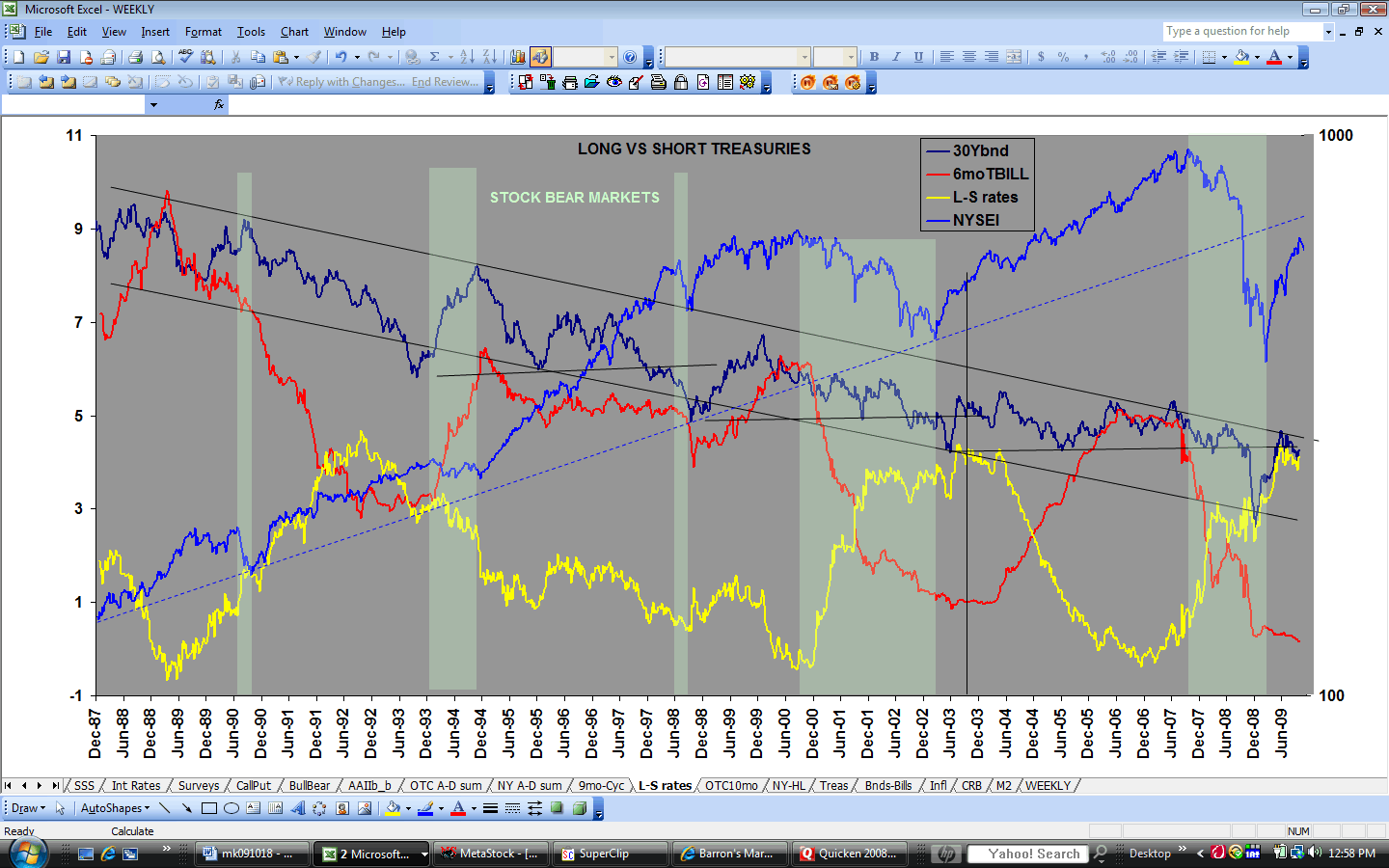
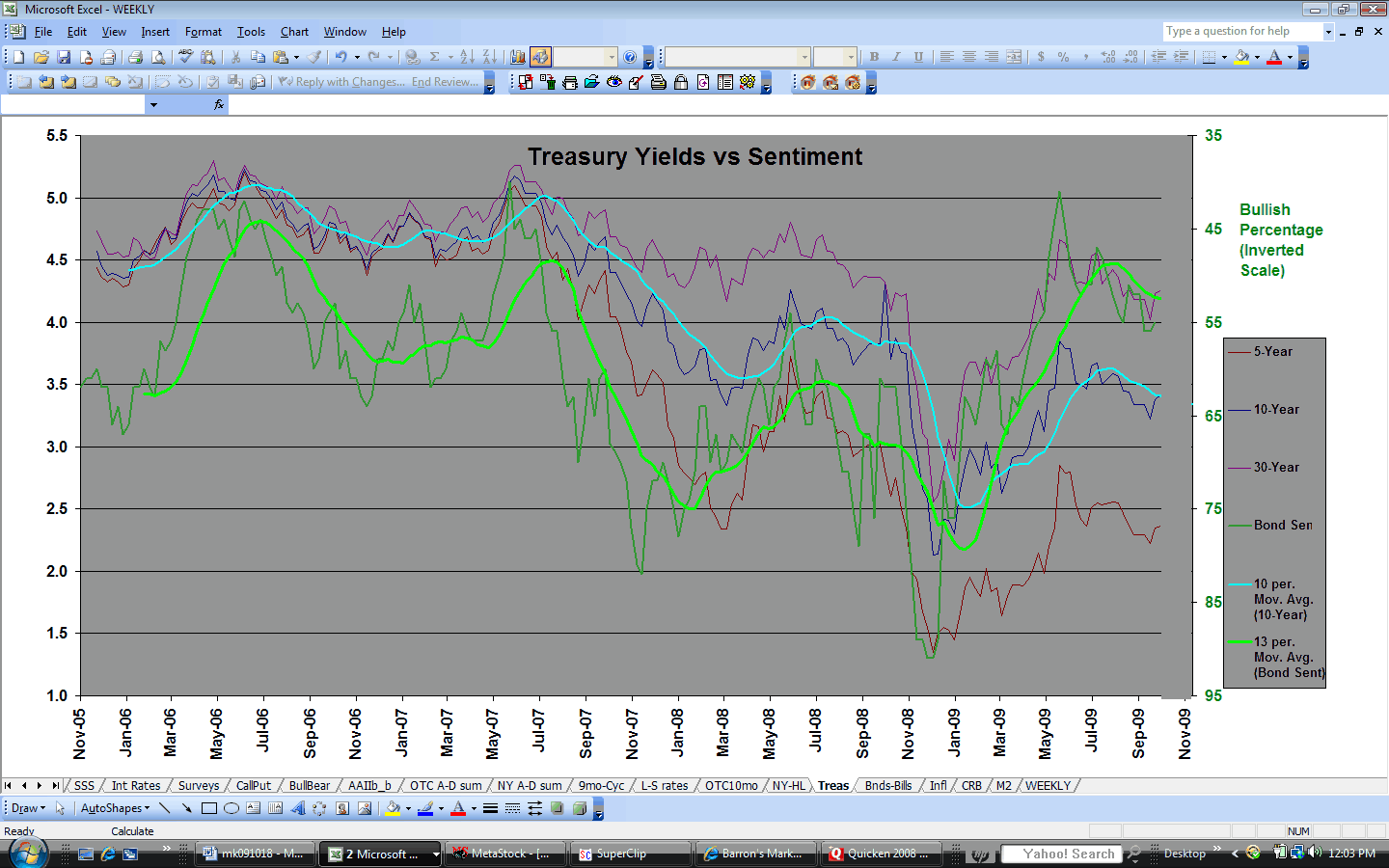
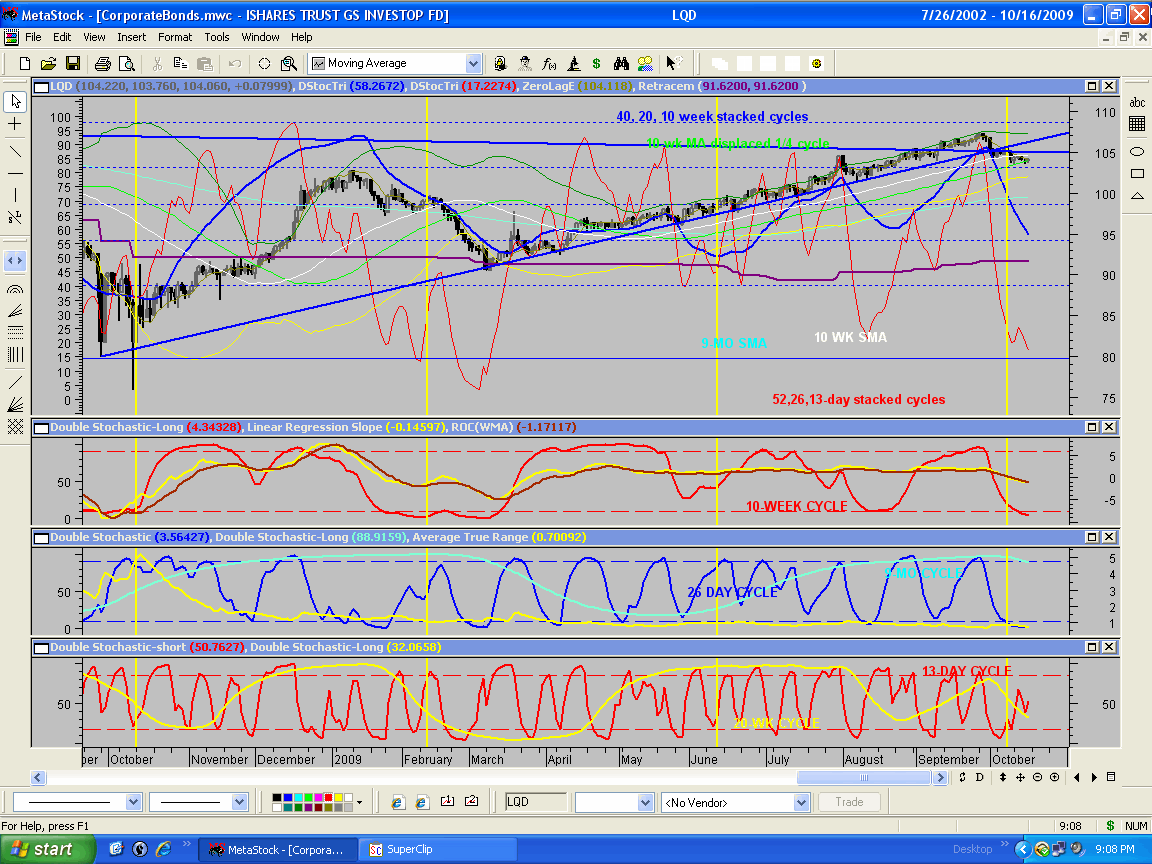
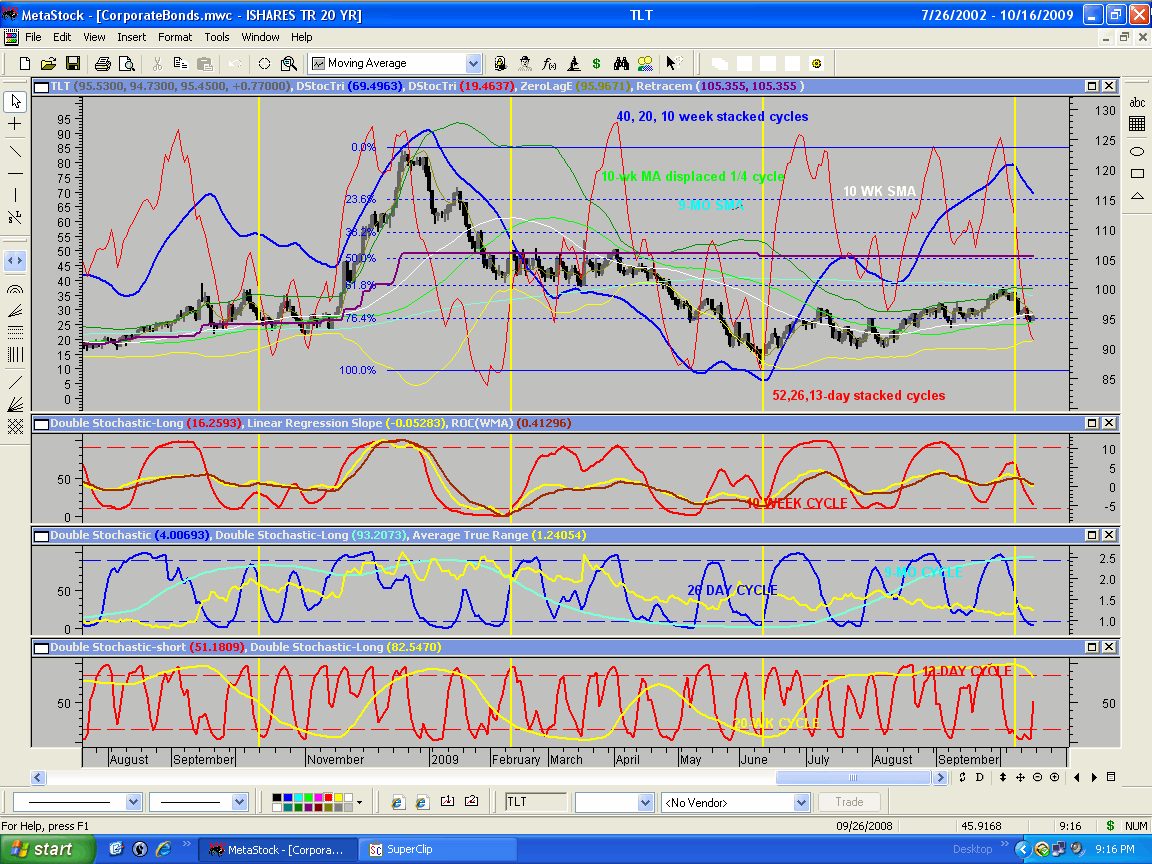
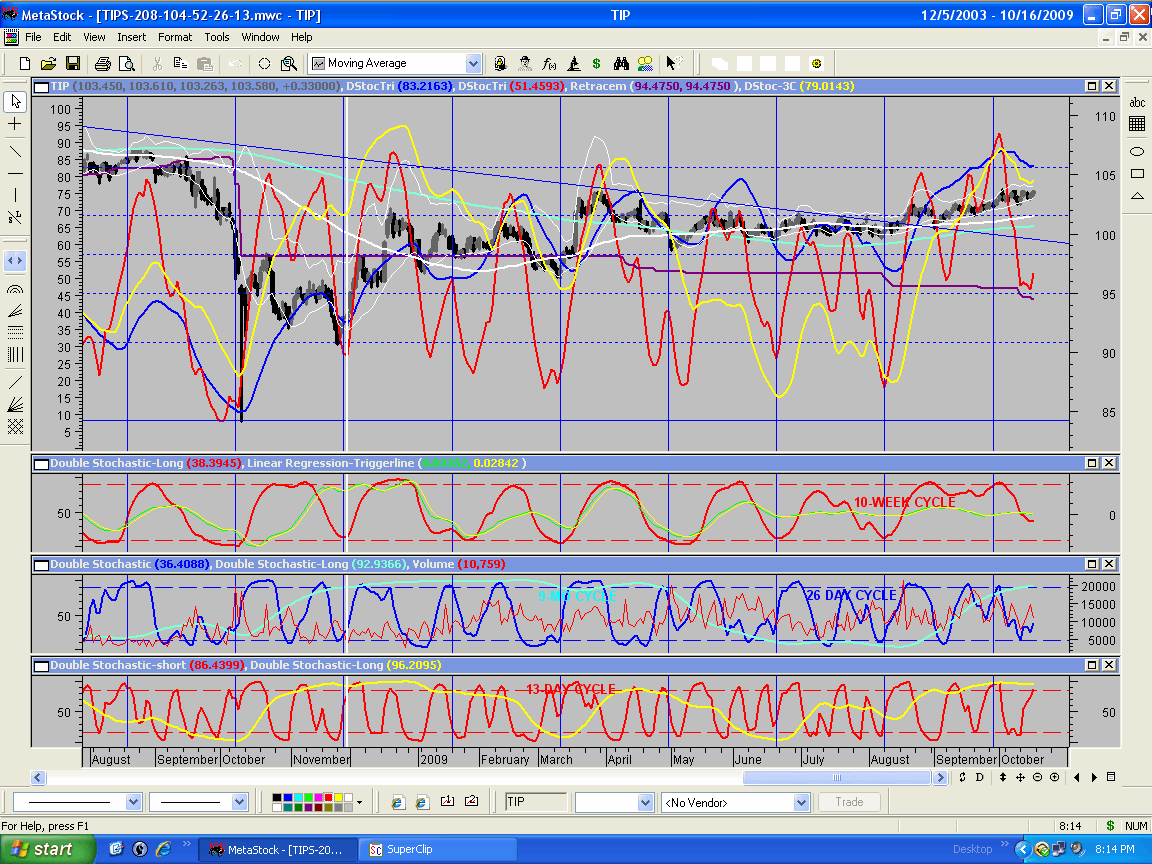
The interest rate picture looks like it has started to deteriorate as well. Both short and intermediate-term composites are now rising on the 10-yr bond rate (http://www.geocities.com/petegersb/TreasuryYield-10yr.GIF) after a climactic low in yields on 1/23 that nearly matched the 2003 low. Congenital bulls, of course, point to rising longer-term interests rates as an indication of a healthy economy. It can be, but it can also be an indication of rising inflation expectations or contracting credit conditions. In the 70’s, the culprit was rising inflation. While rampant commodity inflation (http://www.geocities.com/petegersb/CRB.GIF) suggests that inflation should be an interest rate driver now, the TIP yield spread (http://www.geocities.com/petegersb/CPI.GIF) shows only modest inflation expectations. It should be no surprise that the culprit this time is the dismal financial condition of the lending institutions after their large losses on imprudent loans during the debt bubble – many of which probably have yet to be recognized. Whatever the reason for rising long rates, they will counter the stimulative impact of the Fed’s drive to lower short rates as the yield curve (http://www.geocities.com/petegersb/Long-ShortYields.GIF) continues to trend toward normalization. To reach the level at which stocks finally bottomed in 2003 the spread would have to widen another 2 percentage points. Perhaps the Fed will eventually get to 1% again, but more likely, a large part of the wider spread will come from rising long rates. Bond optimism (http://www.geocities.com/petegersb/BondSentiment.GIF) has turned down (scale inverted) to reinforce my pessimistic outlook for long-term interest rates. While all bond sectors declined a little last week, Corporate bonds (http://www.geocities.com/petegersb/CorporateBonds.GIF), which got no “flight to safety” benefit took a worse licking than Treasury Bonds (http://www.geocities.com/petegersb/Treasury-20yr.GIF) or TIPS (http://www.geocities.com/petegersb/TIPs.GIF).
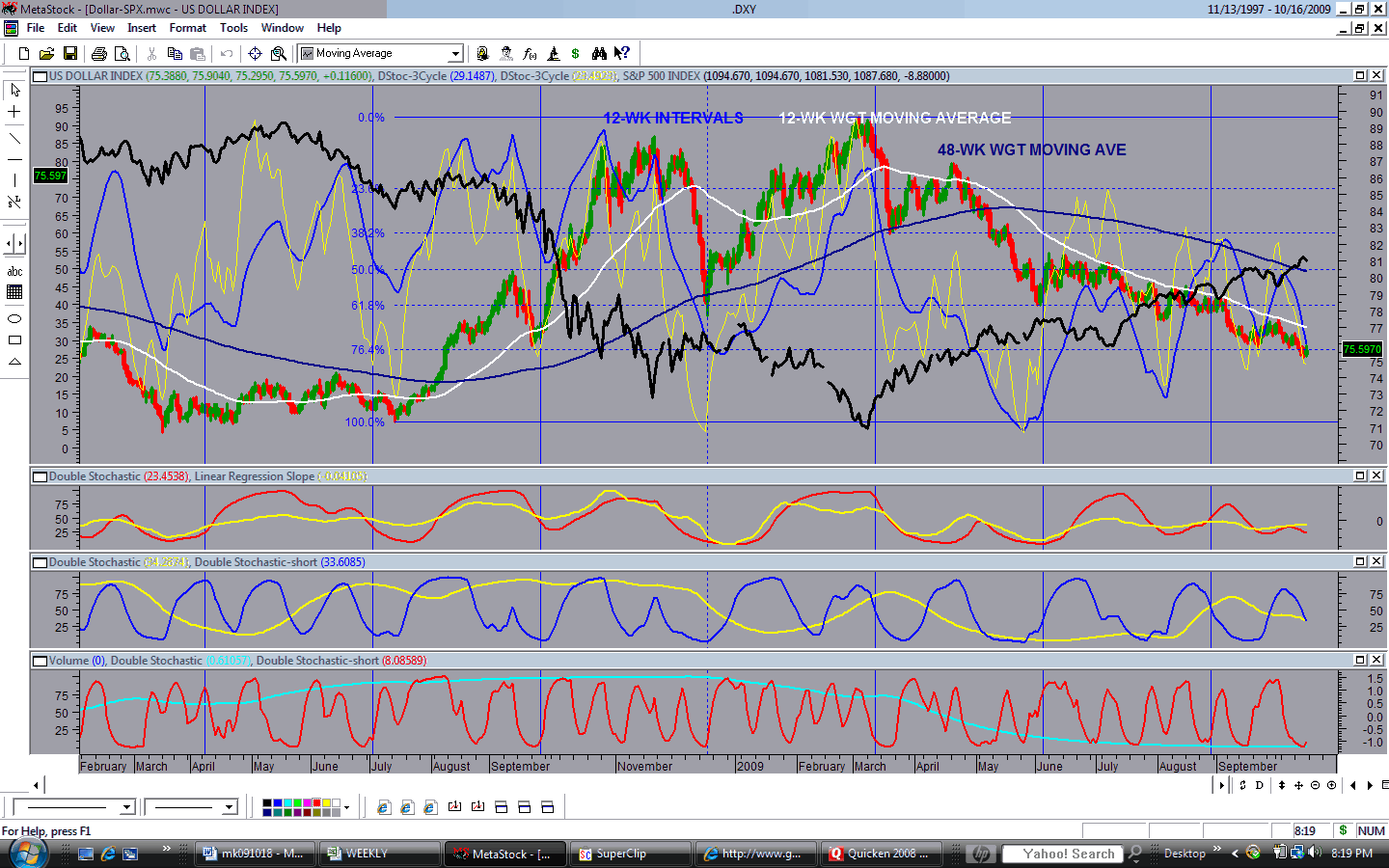
The dollar (http://www.geocities.com/petegersb/Dollar.GIF) established a 10-week
cycle low right on schedule Monday morning. It was marginally higher than the
last 10-week cycle low, which coincided with 20-week and 9-month cycle lows.
The inability of those longer cycles to produce a more robust 1st
10-week cycle reinforces my belief that the slightly left-translated 10-week
cycle peak on 12/20 will prove to be a severely left-translated 20-week cycle
peak. A move above 77.85 would refute that hypothesis. Despite the upturn in
the short and intermediate composites, I expect the rally to peak short of that
level. Indeed, it may have done so on Thursday.
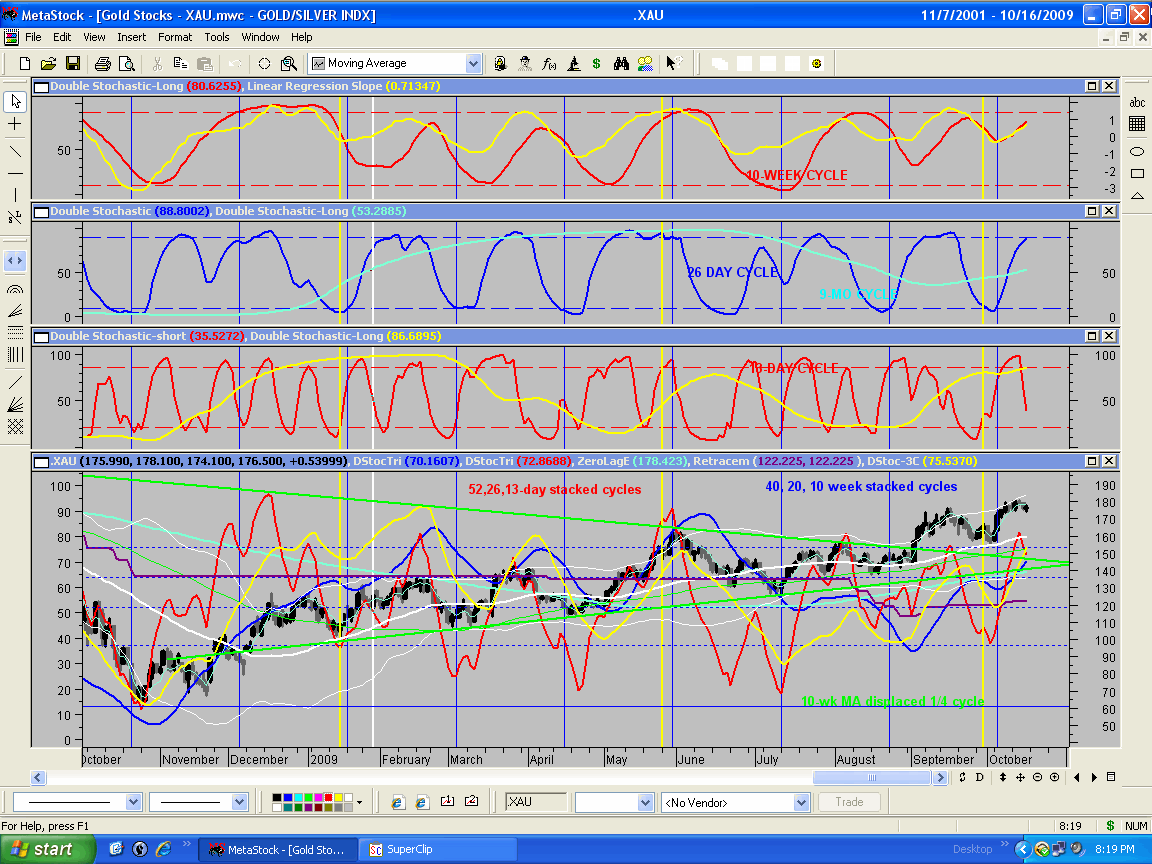
Gold stocks as represented by the XAU (http://www.geocities.com/petegersb/GoldStocks.GIF)
established a higher 13-day cycle low on Thursday.
However, the intermediate composite turned down and the 8-week-old 10-week
cycle probably won’t reach bottom until this young 13-day reaches bottom in
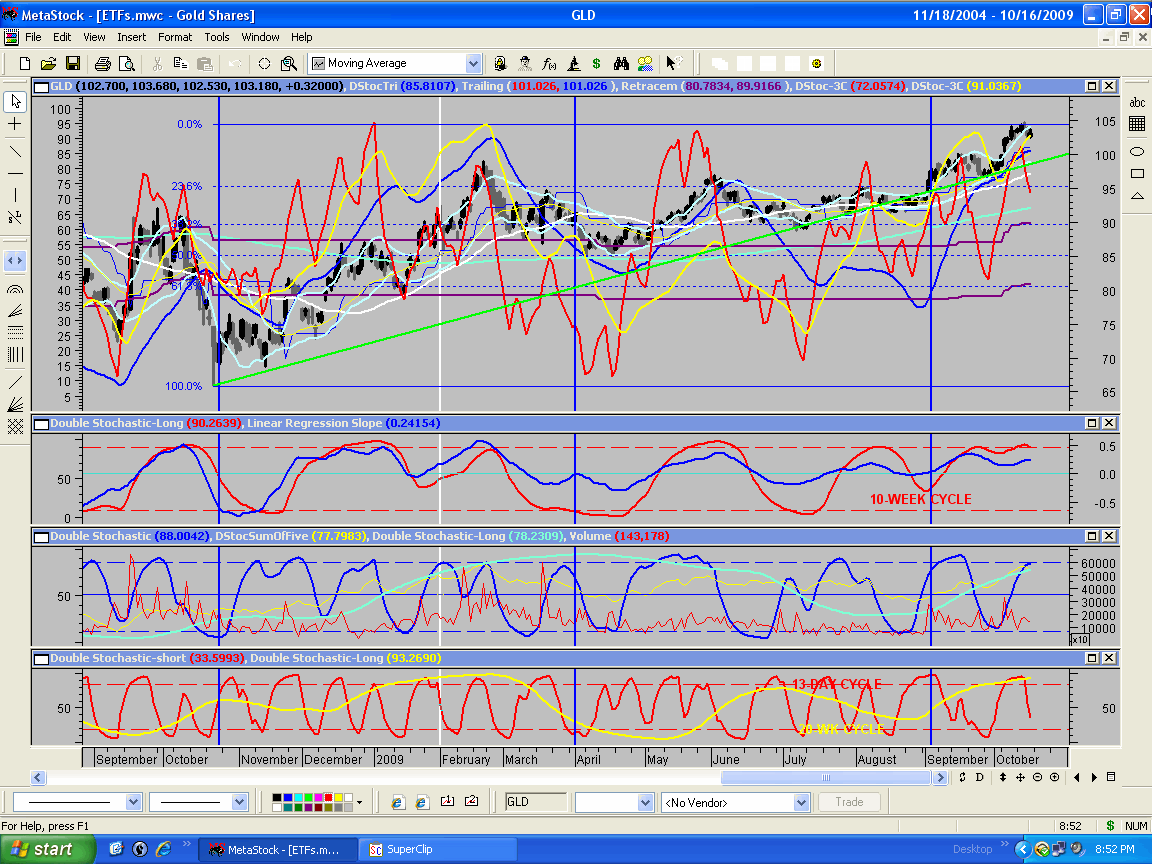
about two weeks. Gold (http://www.geocities.com/petegersb/GoldBullion.GIF)
reached its 13-day cycle low a day earlier and
rallied much more strongly to turn the short-term composite upward.
Nevertheless, the 10-week cycle downtrend is intact and the intermediate
composite has turned downward. While gold remains in a strong long-term
uptrend, this does not appear to be a good time to establish new positions. A
10-week cycle pullback to the 10-week moving average would probably be an
attractive time to do so.
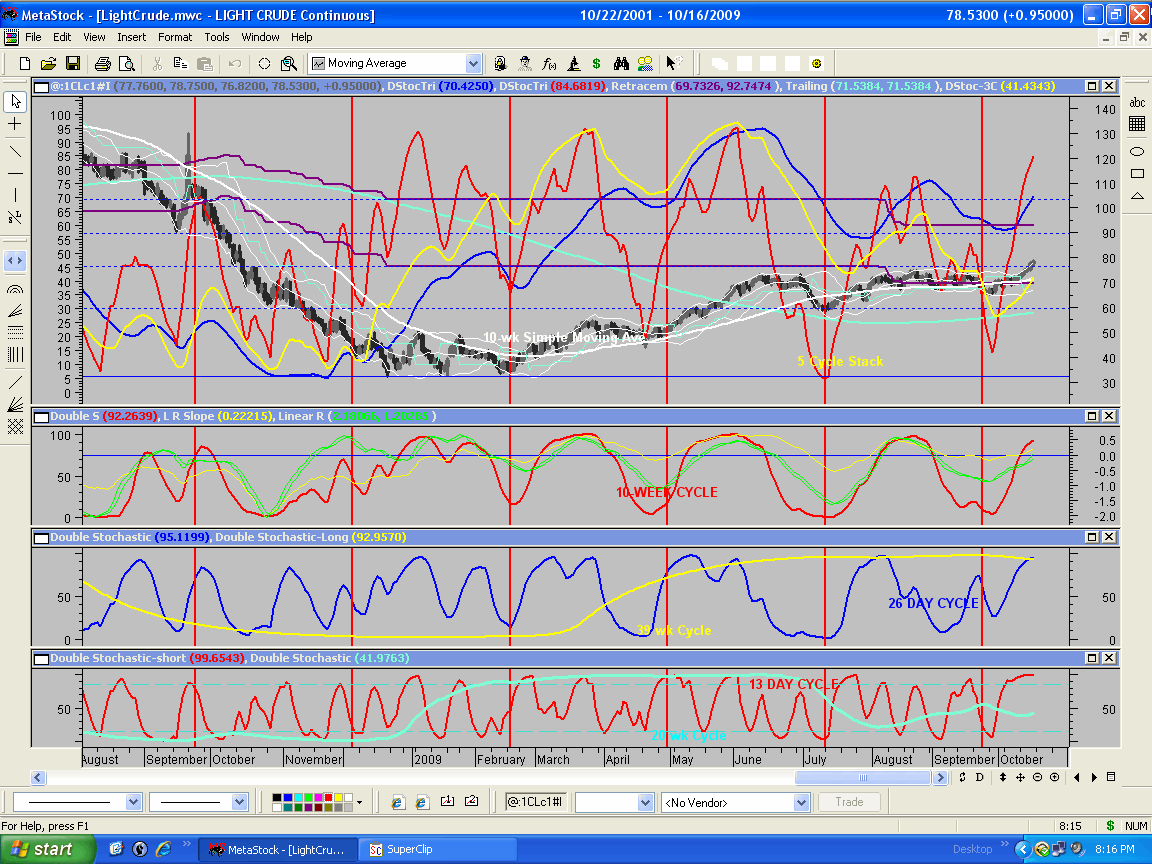
Crude oil (http://www.geocities.com/petegersb/CrudeOil.GIF) held the bottom of the trading range as the 13-day cycle,
the 10-week cycle, and the short-term composite bottomed on Thursday. It will
probably prove to be a 20-week cycle low as well. If there is enough
follow-trough this week to get crude back above its 10-week moving average, and
turn the intermediate composite upward, it looks like it will be off to the
races again.
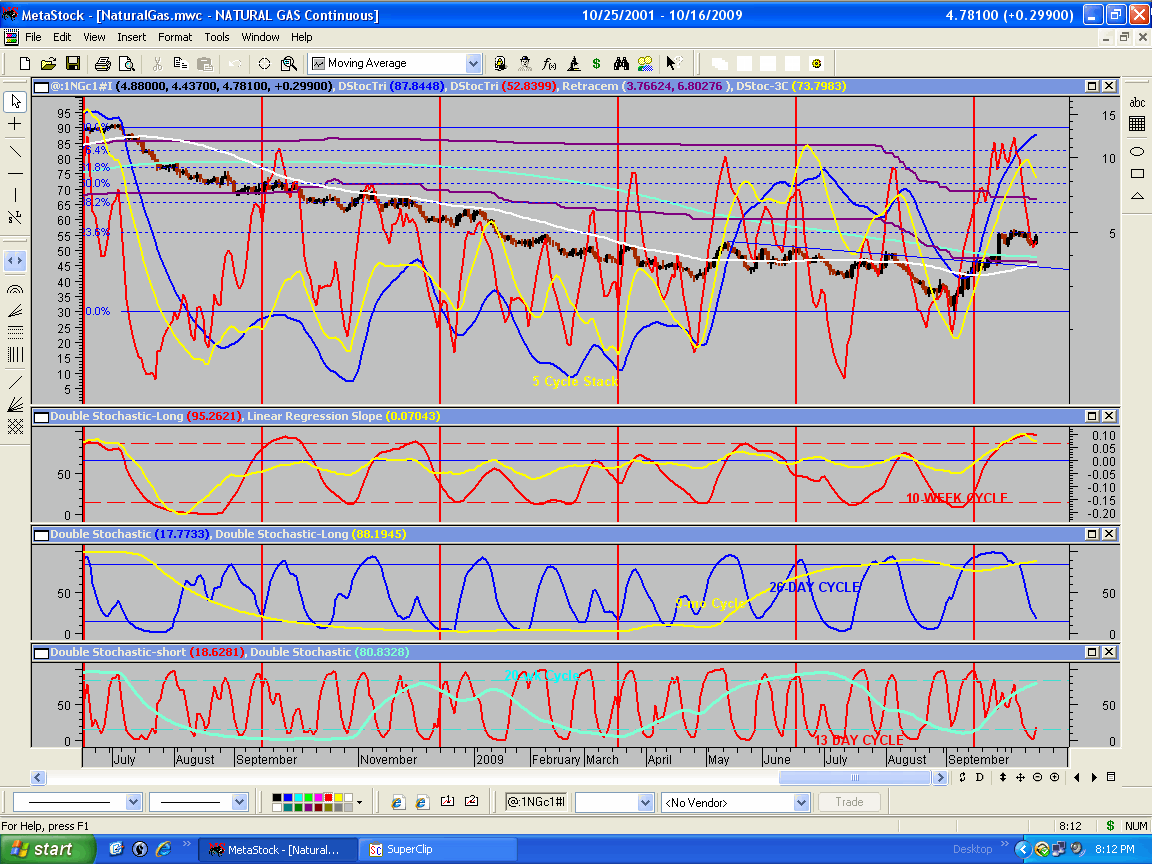
Natural
gas (http://www.geocities.com/petegersb/NaturalGas.GIF) defied my expectations of a lower 13-day cycle low and a
break below the 10-week moving average. Instead, it tested the 10-week moving
average on Monday and rallied strongly for the rest of the week. Now it’s near
the top of the 2-year trading range. The 6-month old 9-month cycle is
overbought, as is the 7-week-old 10-week cycle. But the 7-week-old 20-week
cycle looks healthy, as do the 5-day-old 13 and 26-day cycles. It looks like a
little more upside this week to the top of the trading range before a 10-week
cycle correction sets in.
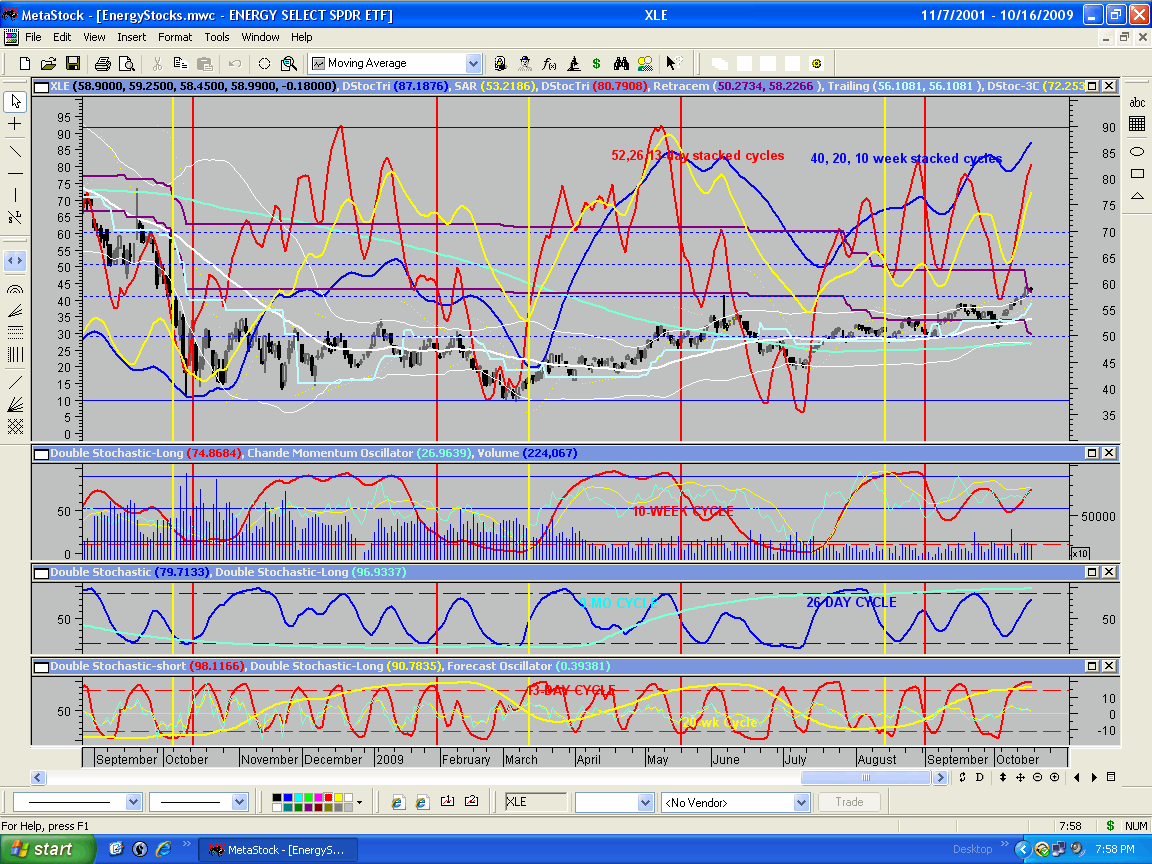
The two-day
rally in Energy stocks (http://www.geocities.com/petegersb/EnergySPDR.GIF)
looks like the beginning of the 2nd
13-day cycle of the 13-day-old 26-day cycle. If the rally can continue above
the 9-month moving average, it will likely belatedly turn the 10-week, 20-week,
and 9-month DStocs upward.
.