12/23/07
MERRY COMMERCIAL CHRISTMAS. Apparently the American consumer is doing her best to make it so for the retailers, spending 1.1% more in November than in October. The inflation adjusted number rose 0.5% - the largest jump in 11 months despite the lowest consumer confidence reading in over two years. After a slow start for the 13-day cycle rally, investors pushed stocks up strongly on Friday in celebration of the latest evidence of continued deficit spending by the consumer (Personal income rose only 0.4%). The Government deficit also got a lift last week as the spineless Democratic Congress again caved into George Bush’s demands that that no revenue raising offsets accompany the loss of revenue from the increase in the alternative minimum tax exemption. The AMT relief is once again only temporary, so the issue will be revisited again next year when Dubya will still wield the veto power. Clearly, the problem won’t be solved until at least 2009 when, thankfully, we will be rid of Bush.
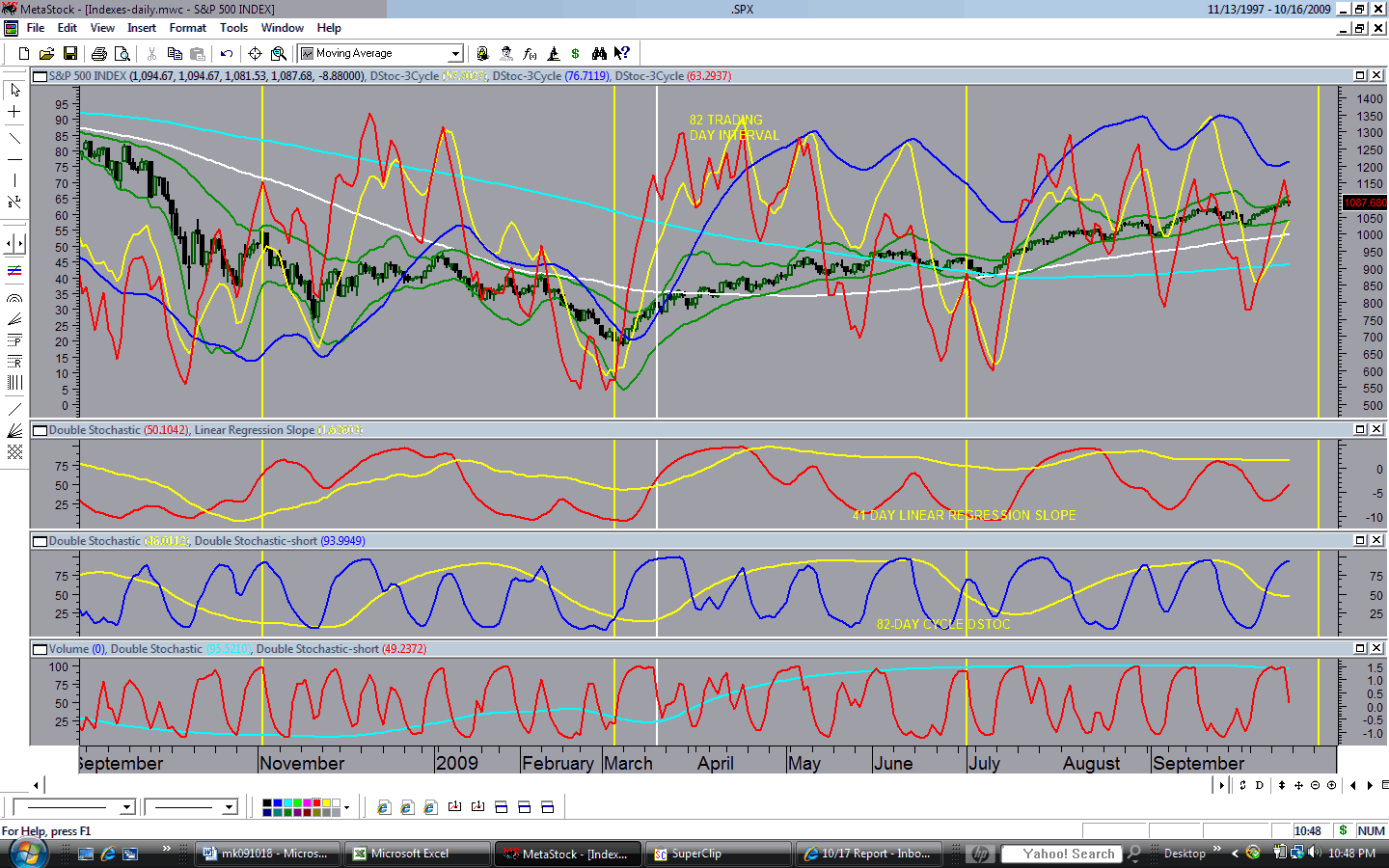
The SPX (http://www.geocities.com/petegersb/SP500.GIF) has rallied up to the downtrending 10-week moving average, which is about to cross below the rising 9-month moving average. Since the 2003 low, the 10-wk MA has dipped below the 9-mo MA on only two occasions – shortly after a 9-month cycle lows in August of 2004 and July of 2006. That small sample may encourage the bulls, but the prior crossing occurred in early November of 2000 at the peak of the first 10-week cycle rally within a fresh bear market. In 2004 and 2006 the intersection of these moving averages provided only brief resistance to a continued rise in prices. In 2000 prices could not advance beyond this resistance despite favorable seasonality. The action during the next couple of weeks should give us another clue as to which path the market will follow this time. In particular, the middle aged 10-week cycles must breach the December 11 rally peak to avoid the likelihood of a left translated peak. Economic indicators and the Fed’s reaction to them bear a strong resemblance to 2000 (early in the rate cute cycle) and no resemblance to 2004 (just starting to raise rates) or 2006 (near the end of the rate rise cycle).
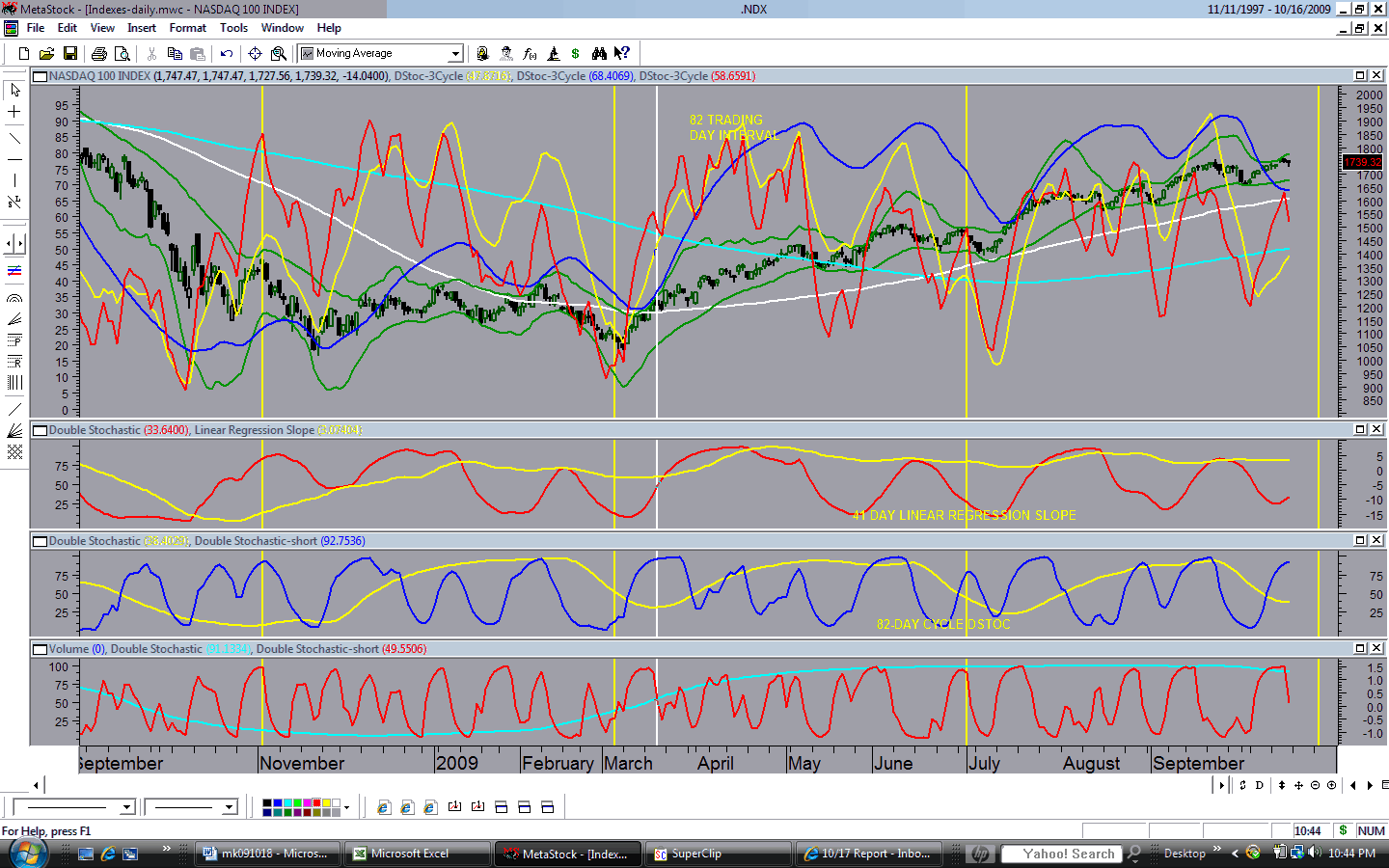
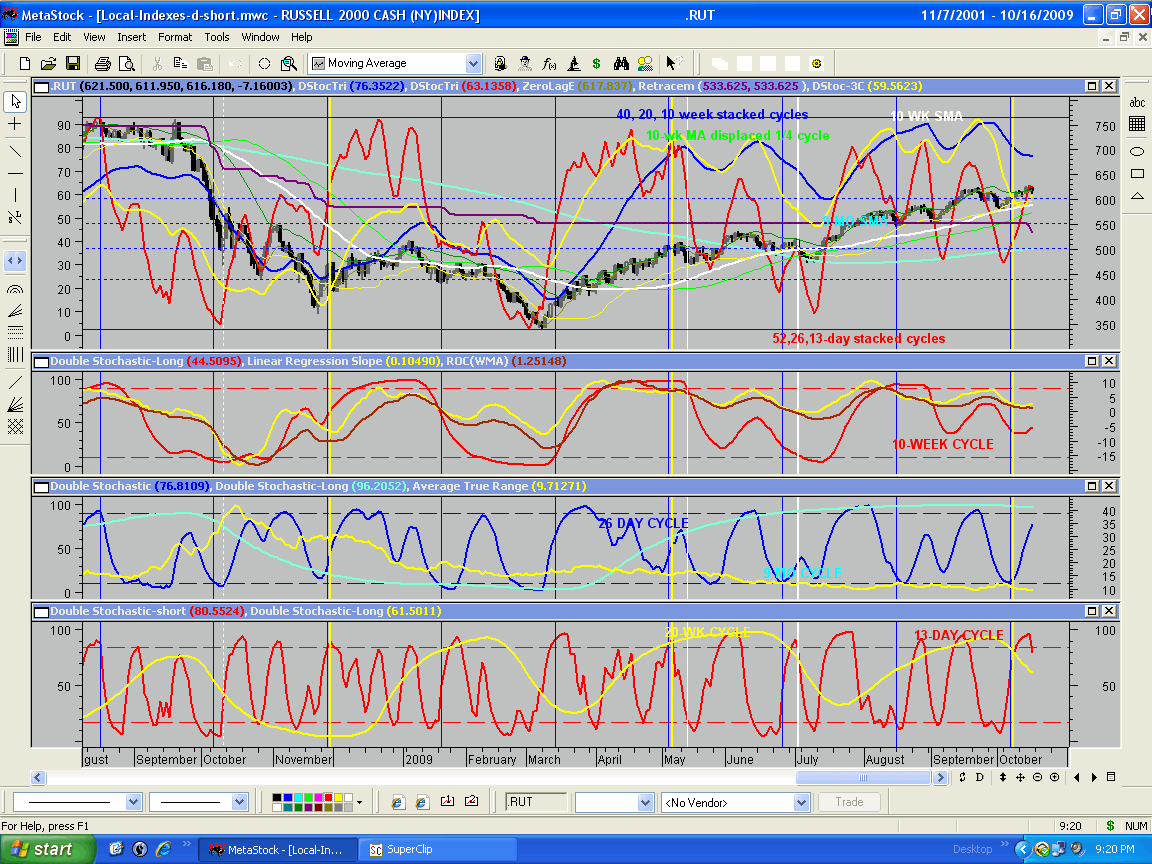
The NDX (http://www.geocities.com/petegersb/NDX.GIF) and RUT (http://www.geocities.com/petegersb/Russell2000.GIF) have also rallied to their downtrending 10-wk moving averages. The large-cap technology-dominated NDX is comfortably above its rising 9-mo MA, suggesting an intact long-term uptrend, but the small-cap RUT is well below its downtrending 9-mo MA, suggesting an intact long-term downtrend that began in July. So which represents the real market: The bullish Nasdaq, the bearish Russell 2000, or the on-the-edge S&P 500? We may not find out until holiday distortions are behind us, but we should know early in the New Year.
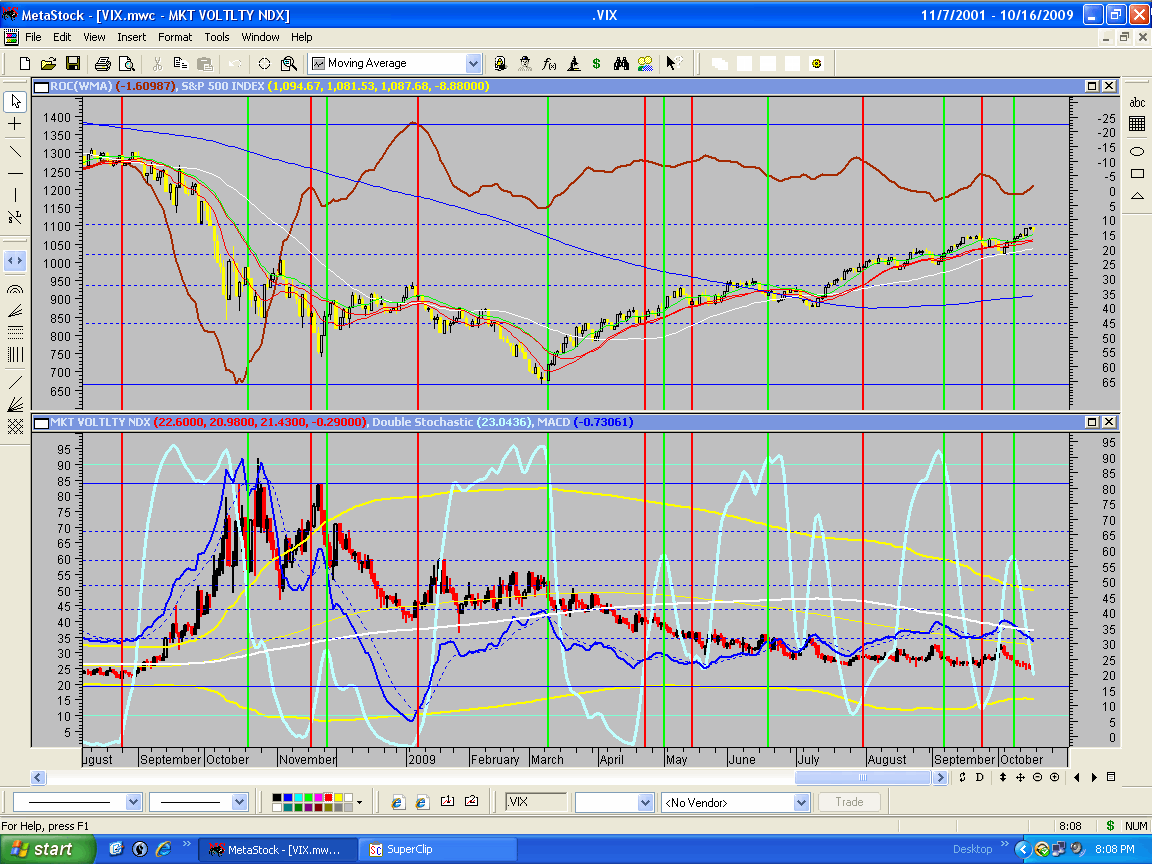
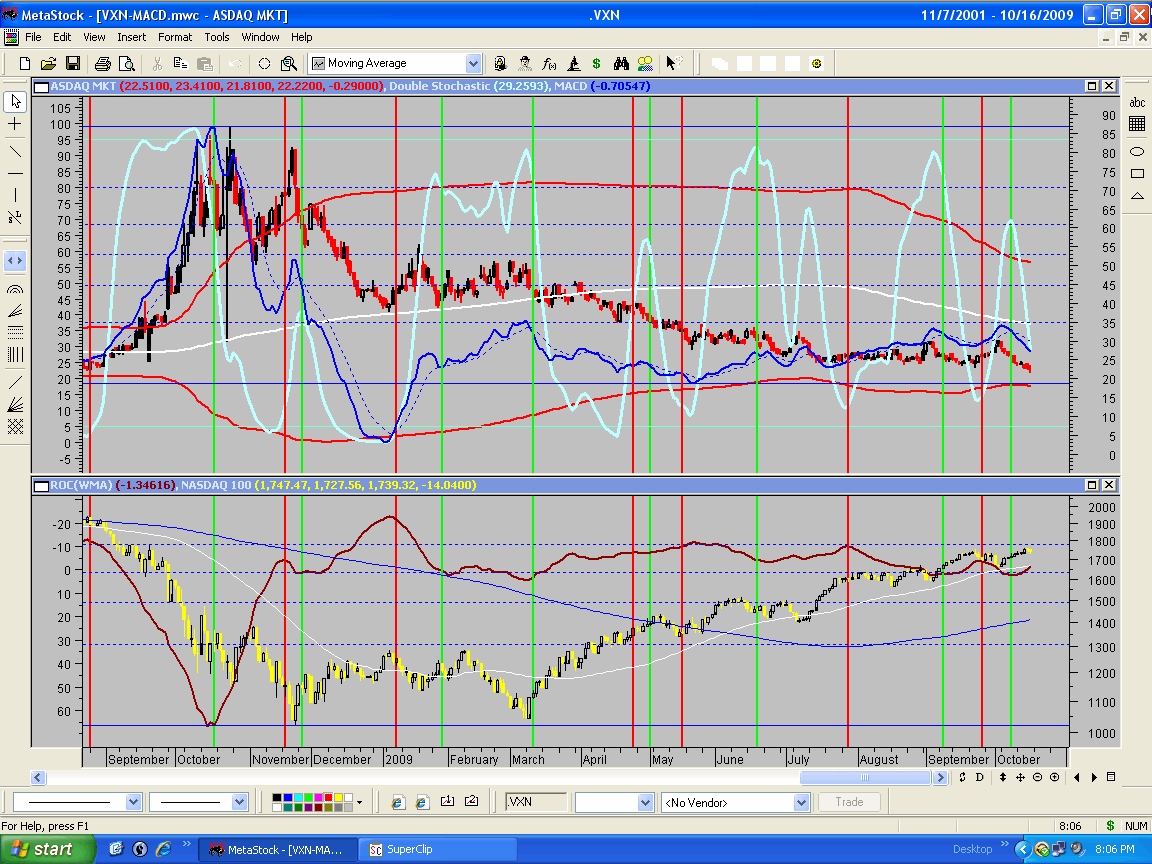
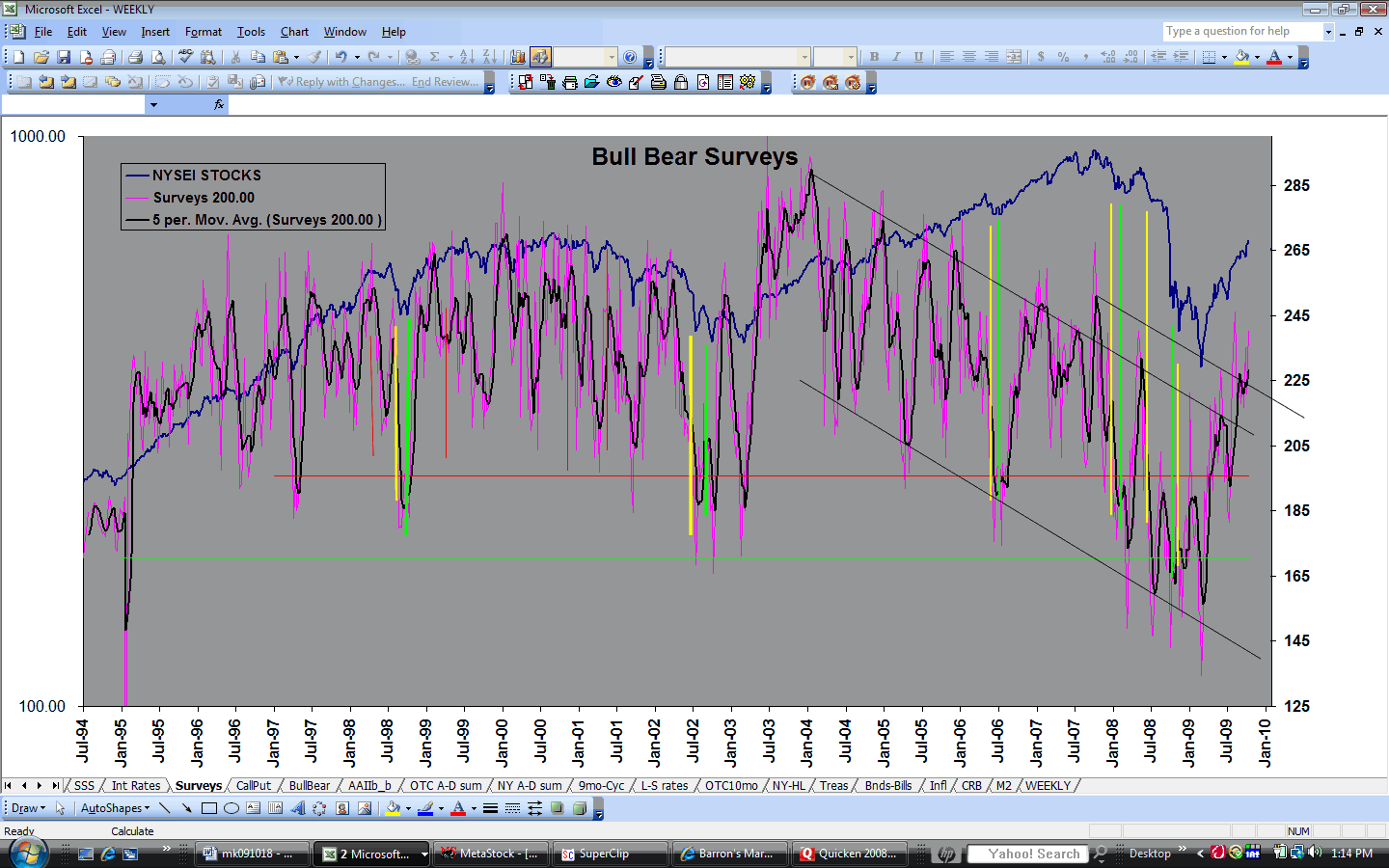
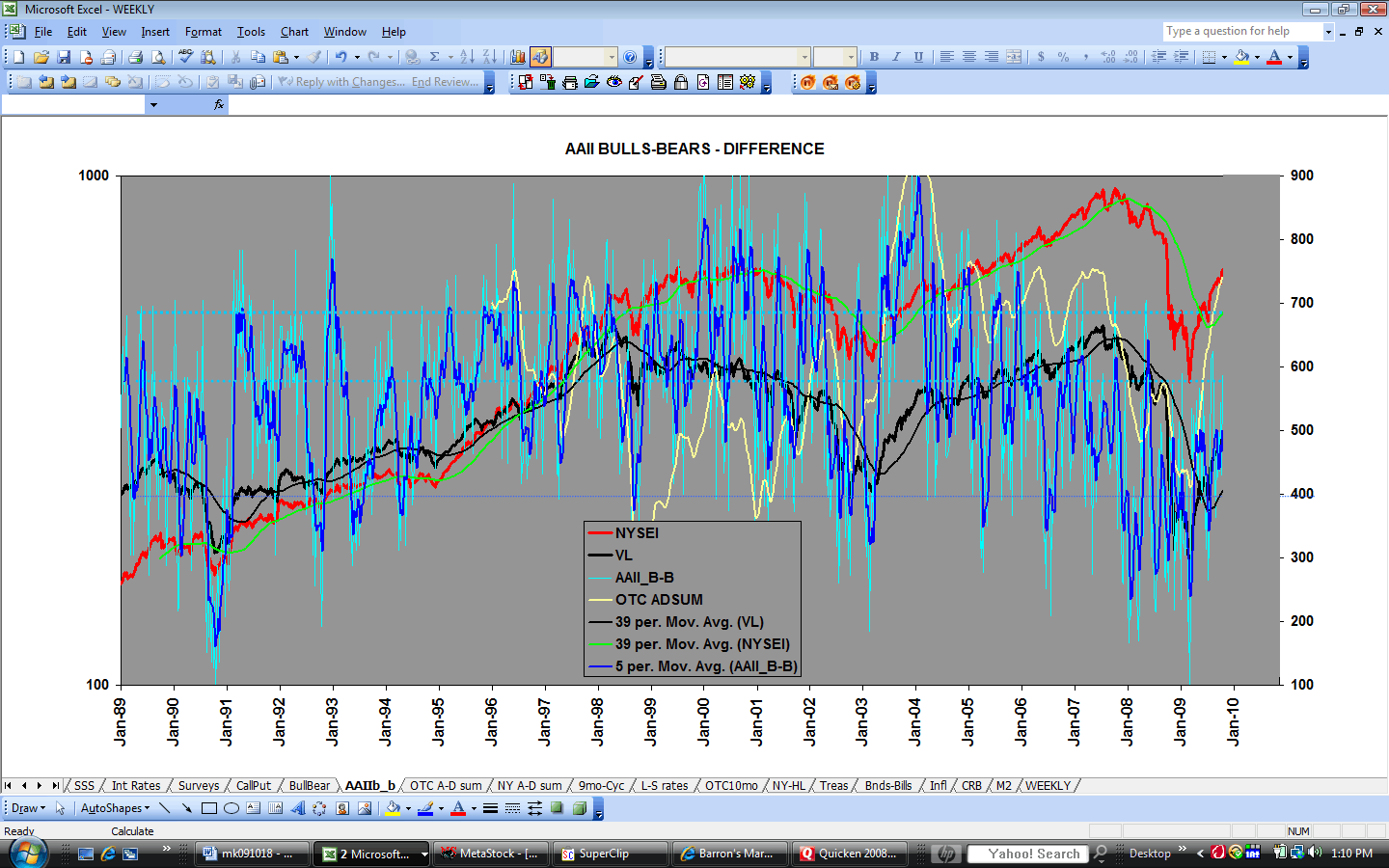
Sentiment indicators remain on buy signals, but most suggest the advance is getting old. The daily VIX and VXN (http://www.geocities.com/petegersb/VIX.GIF, http://www.geocities.com/petegersb/VXN.GIF) narrowly averted a confirmed 10-week cycle sell signal early in the week, but they are now in better position to issue such a signal on any resumption of the pullback. The weekly VIX and VXN (http://www.geocities.com/petegersb/VIX-weekly.GIF, http://www.geocities.com/petegersb/VXN-weekly.GIF) suggest an intact 20-week cycle rally, but they too are positioned for a sell signal if the option players start to abandon their complacency. Advisory service optimism is disturbingly high, but still increasing (http://www.geocities.com/petegersb/InvestorsIntelligence.GIF), while AAII members turned bearish but they are not sufficiently pessimistic to reverse the uptrend in the 5-week MA (http://www.geocities.com/petegersb/AAIIsentiment.GIF).
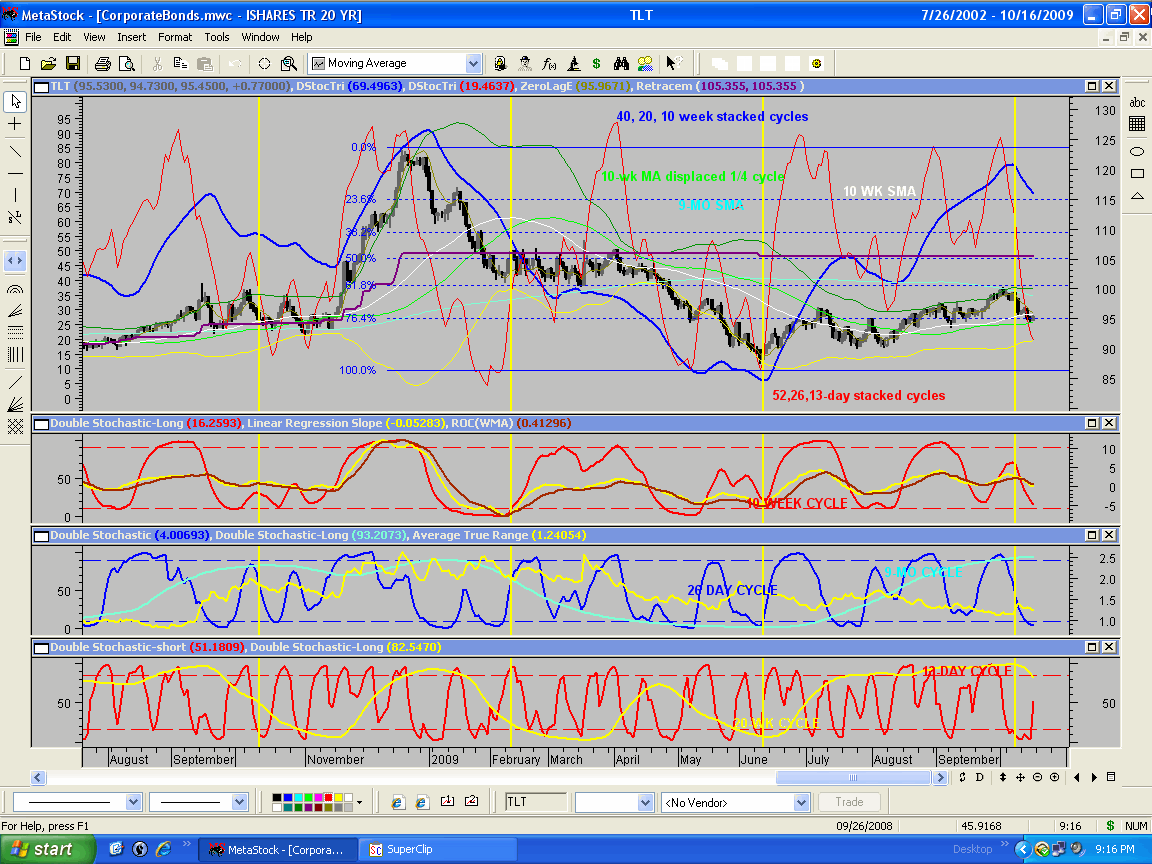
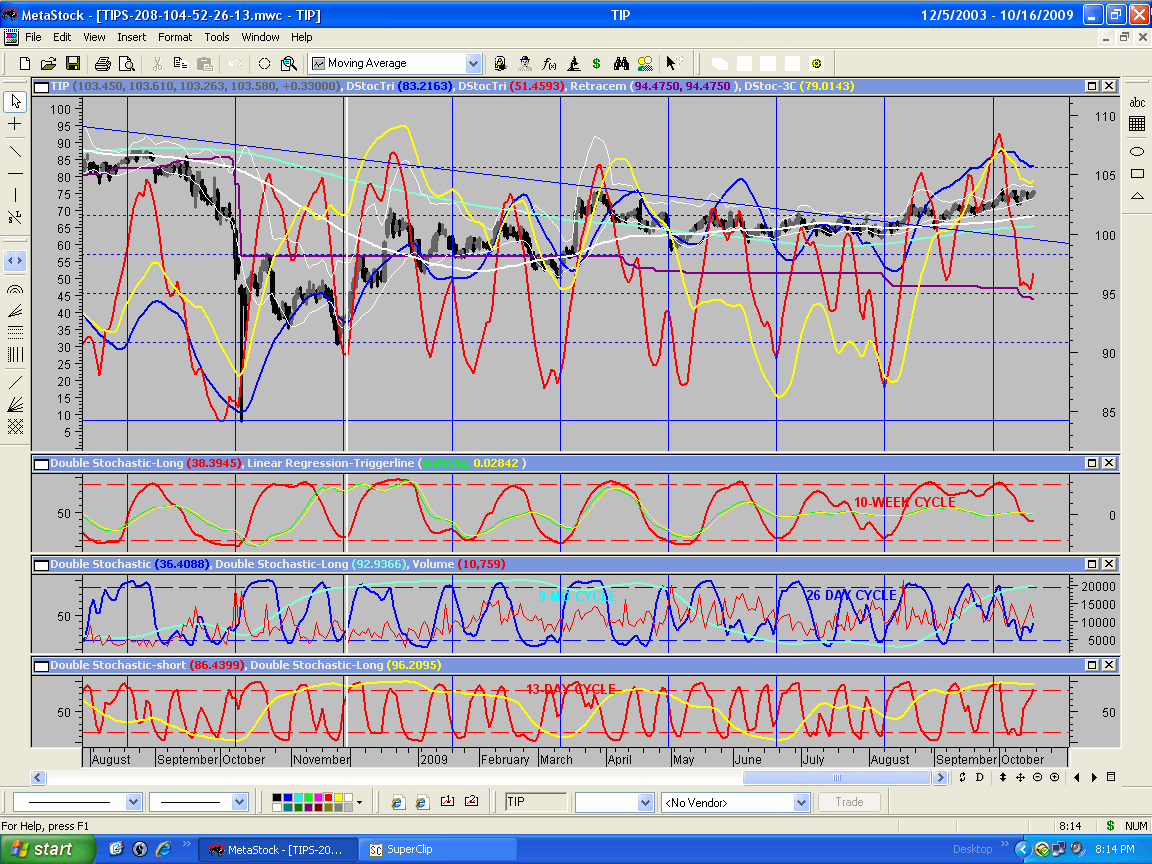
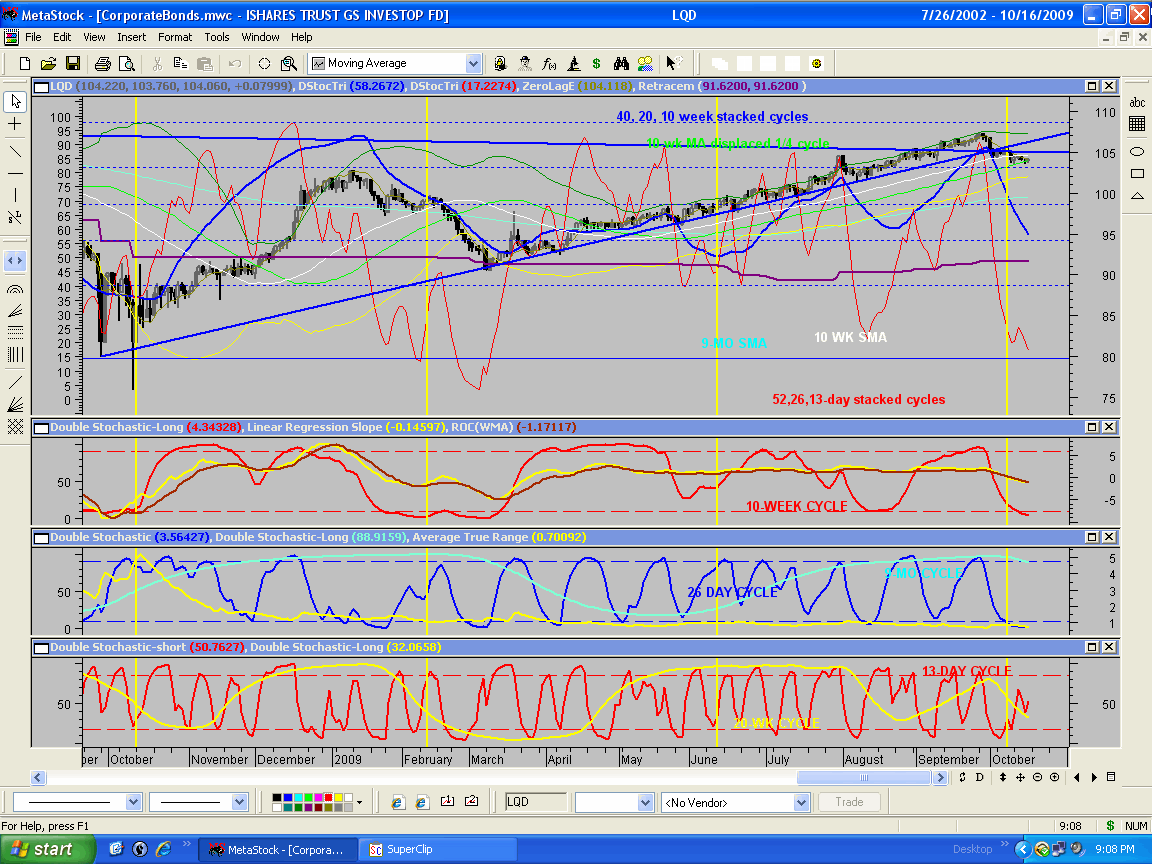
The expected
short-term rally in bonds (government bonds (http://www.geocities.com/petegersb/Treasury-20yr.GIF),
TIPs (http://www.geocities.com/petegersb/TIPs.GIF)
and Corporate bonds (http://www.geocities.com/petegersb/CorporateBonds.GIF)) arrived on Monday. It was quite
strong for the three and a half days that it lasted, but not strong enough to
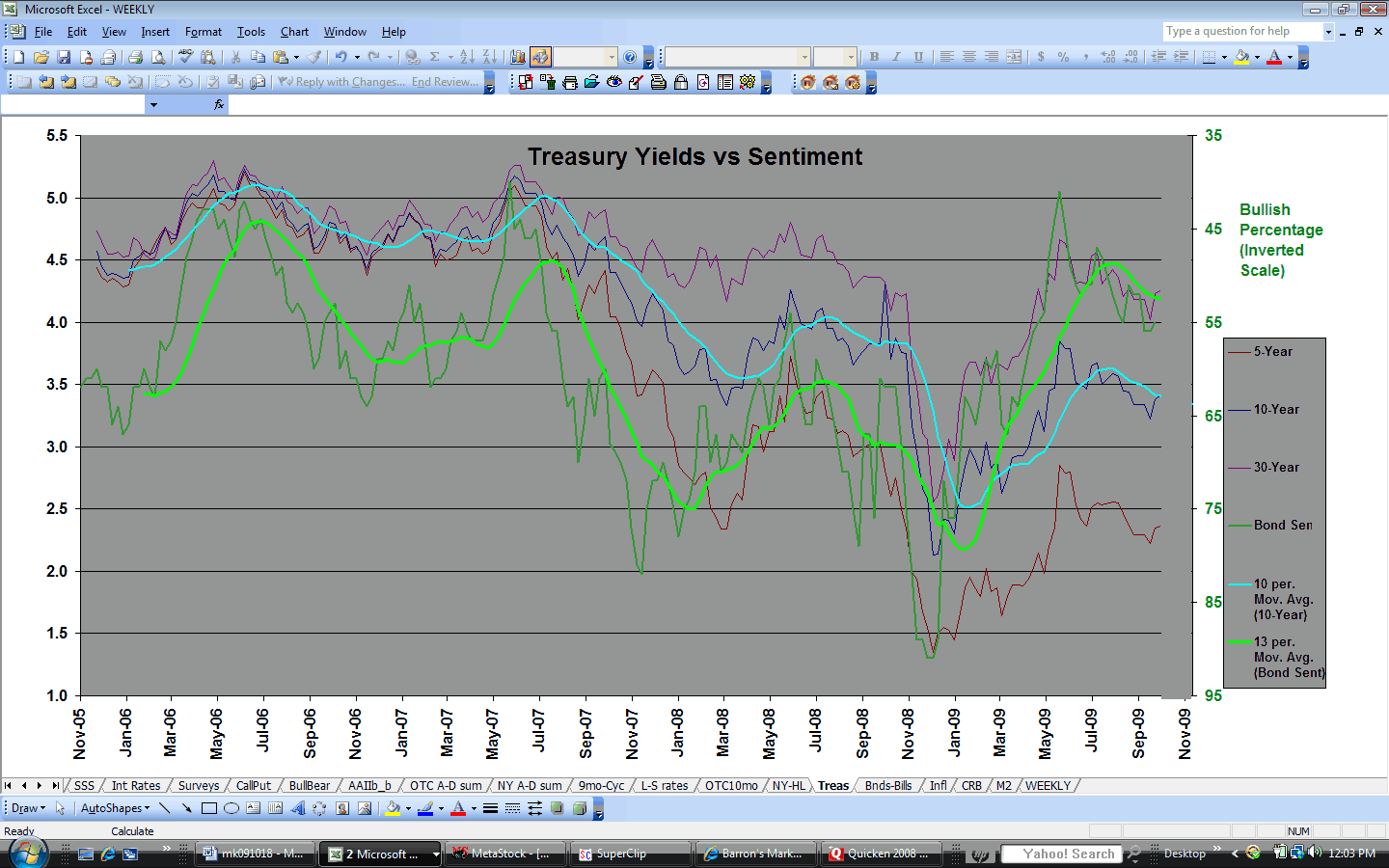
reverse the intermediate downtrend. Expect a continuation of the downtrend this
week as the high level of bond optimism (http://www.geocities.com/petegersb/BondSentiment.GIF)
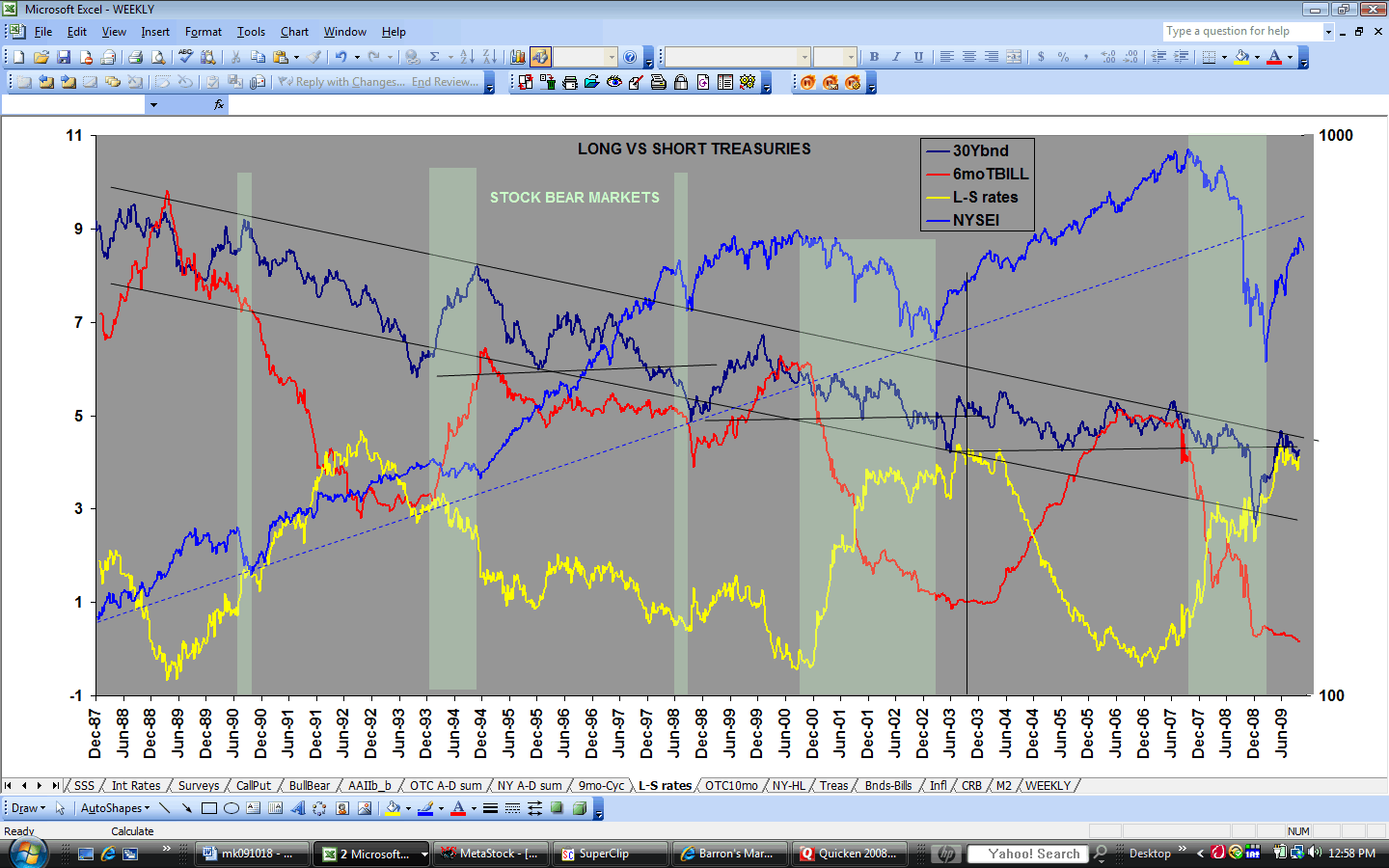
continues to erode and
the yield curve
(http://www.geocities.com/petegersb/Long-ShortYields.GIF) continues its trend toward
normalization. In his latest letter John Mauldin (http://www.2000wave.com/index.asp)
cites Merrill Lynch’s Chief Economist, David Rosenberg, suggesting a 100%
probability of a recession based on the yield curve: "We recently unveiled a new
recession probability indicator that uses the shape of the yield curve (10-year
note/3-month LIBOR) and corporate spreads (Baa) to predict the probability of a
recession within the next 12 months. (The model is based on a recent Fed paper,
which used the 10/2-year yield curve and Aa spreads.) The results are striking:
taking into account corporate spreads, the model is flashing a 100% chance
of a recession in the next year, up from 75% in October and essentially
zero in the summer. Looking at history, the model did a pretty good job
predicting the 1990-91 and 2001 recessions. In December 1989, recession odds
jumped to 95%, and by August 1990 an official recession had set in. Similarly,
the model was showing 100% recession odds in October 2000; by September 2001,
the economy was in an official downturn." Perhaps that’s why Merrill Lynch
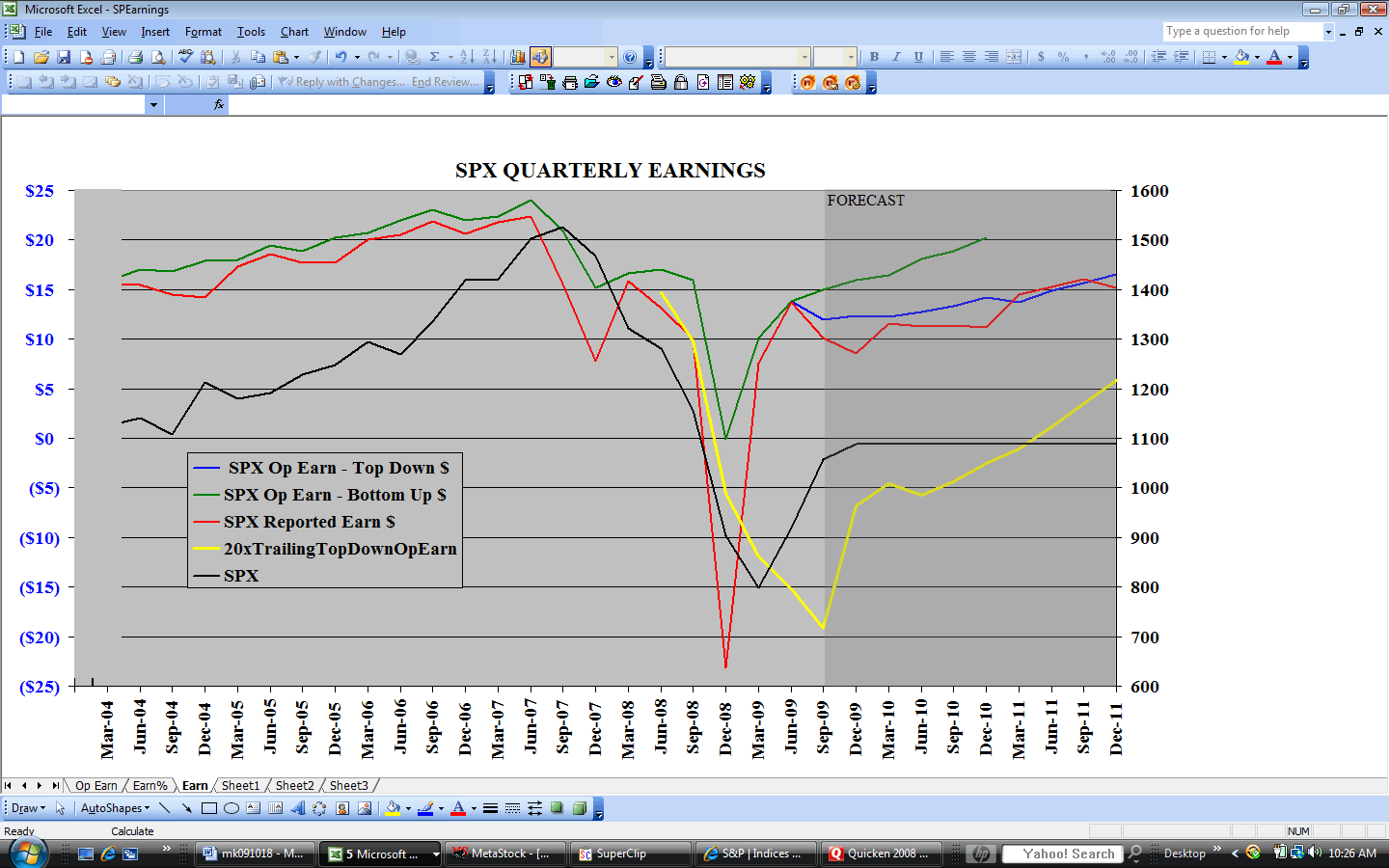
expects a 7% decline in SPX profits in 2008 in contrast to Standard & Poors’
rosy outlook (http://www.geocities.com/petegersb/EarnY-Y.GIF)
for surging profits in the second half. It’s probably noteworthy
that even Standard & Poors has been steadily lowering its 12-month operating
earnings forecast for the last 12 weeks from a high of $102.52 on 9/30 to $95.19
currently for the same 12 months (10/1/07-9/30/08). If Merrill Lynch is
correct, by next September, S&P will have lowered its estimate of trailing
earnings to about $83. At today’s price, that would give the SPX a P/E of about
18, a little high by historic standards but not excessive based on current
interest rates. It may, however, look very high based on next September’s
interest rates.
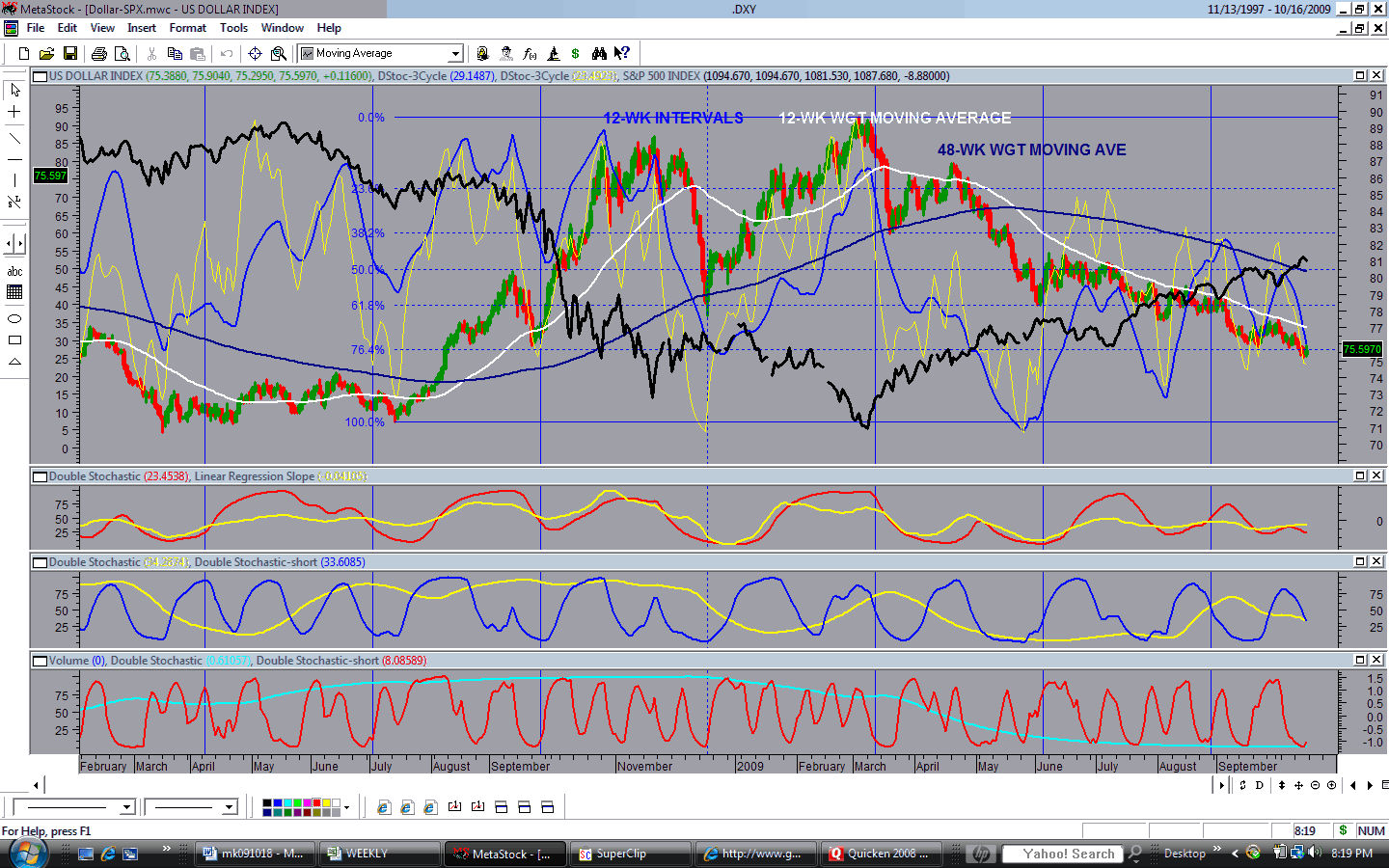
The dollar (http://www.geocities.com/petegersb/Dollar.GIF) continued its intermediate
advance last week, although at a slower pace than during the prior week. It
established a 13-day cycle top on Thursday that will probably prove to have been
a 10-week cycle peak as well, and perhaps a 20-week cycle peak.
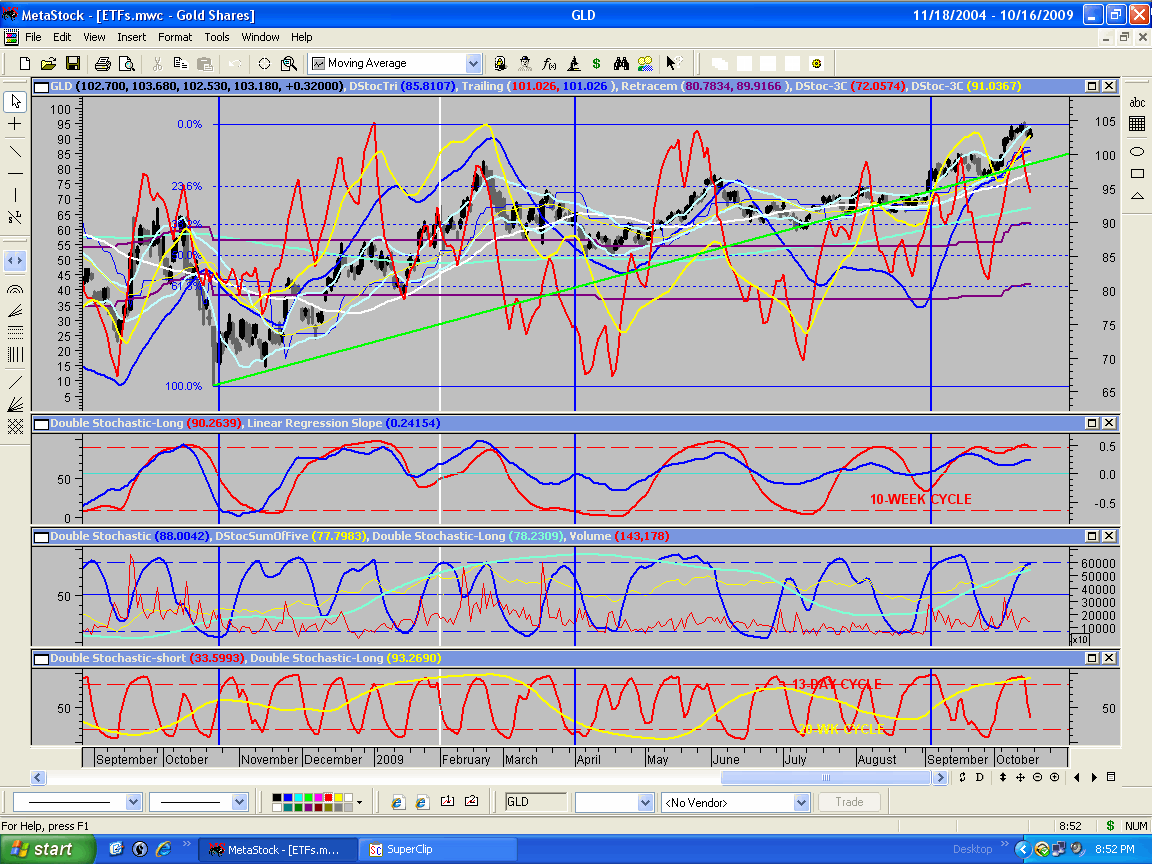
Gold (http://www.geocities.com/petegersb/GoldBullion.GIF) gapped up on Friday to move just above the downtrend line
near the apex of a symmetrical triangle. It’s the beginning of a 13-day cycle
rally, probably a 10-week cycle rally and perhaps a 20-week cycle rally. Gold
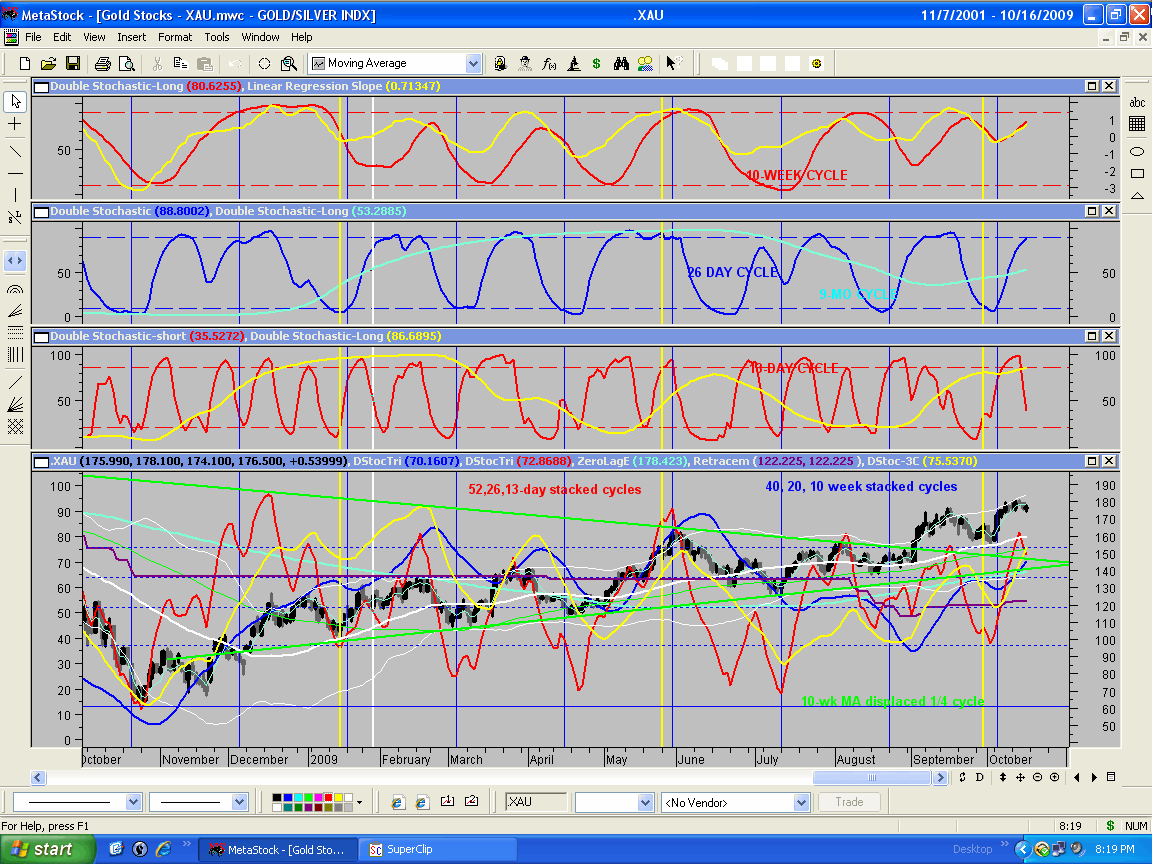
stocks (http://www.geocities.com/petegersb/GoldStocks.GIF)
also were strong on Friday, but the XAU chart continues weaker
than the GLD chart. GLD continues to appear to
have better prospects than the XAU.
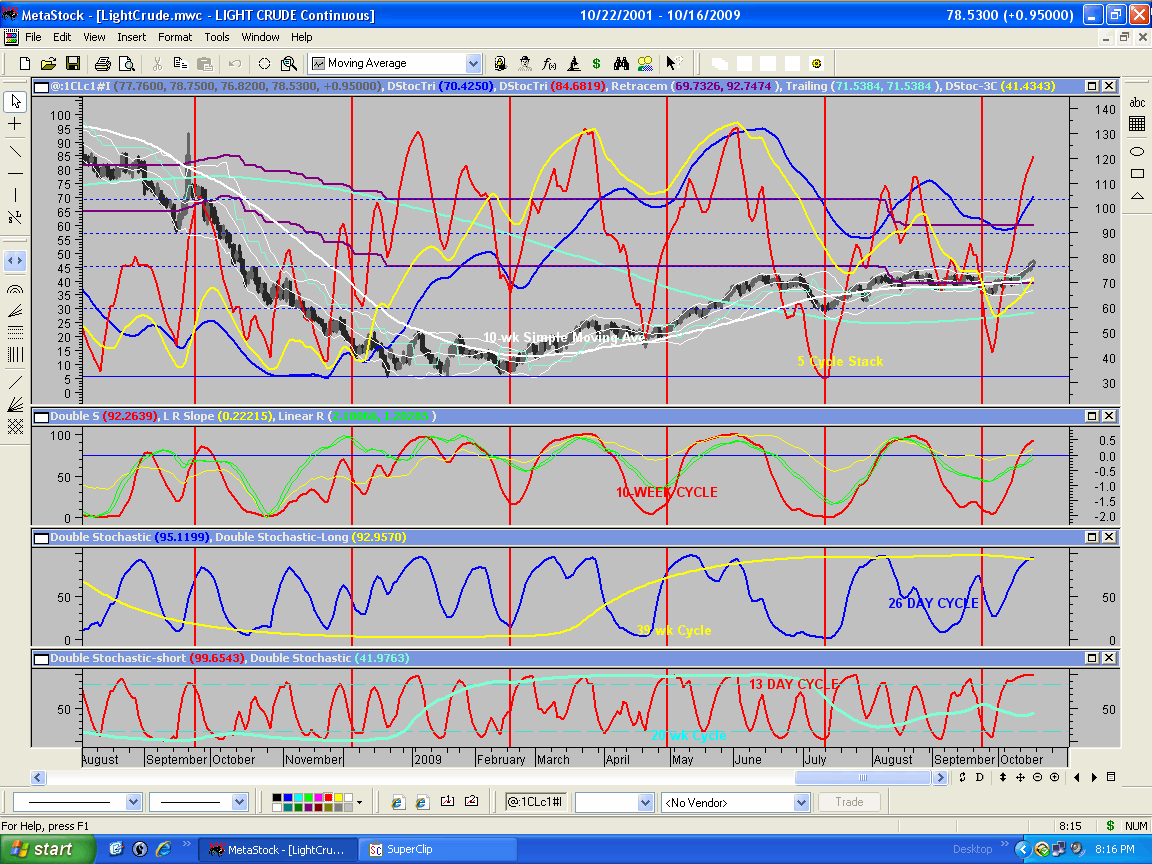
Crude oil (http://www.geocities.com/petegersb/CrudeOil.GIF)
has been hugging the rising 10-week MA
during all of December while it has simultaneously been correcting its November
intermediate overbought condition. The short cycles clearly bottomed on 12/6
and it’s beginning to look like the 20-week cycle did so as well. However, the
20-week cycle DStoc and the intermediate composite haven’t yet turned up. I
expect they will do so this week.
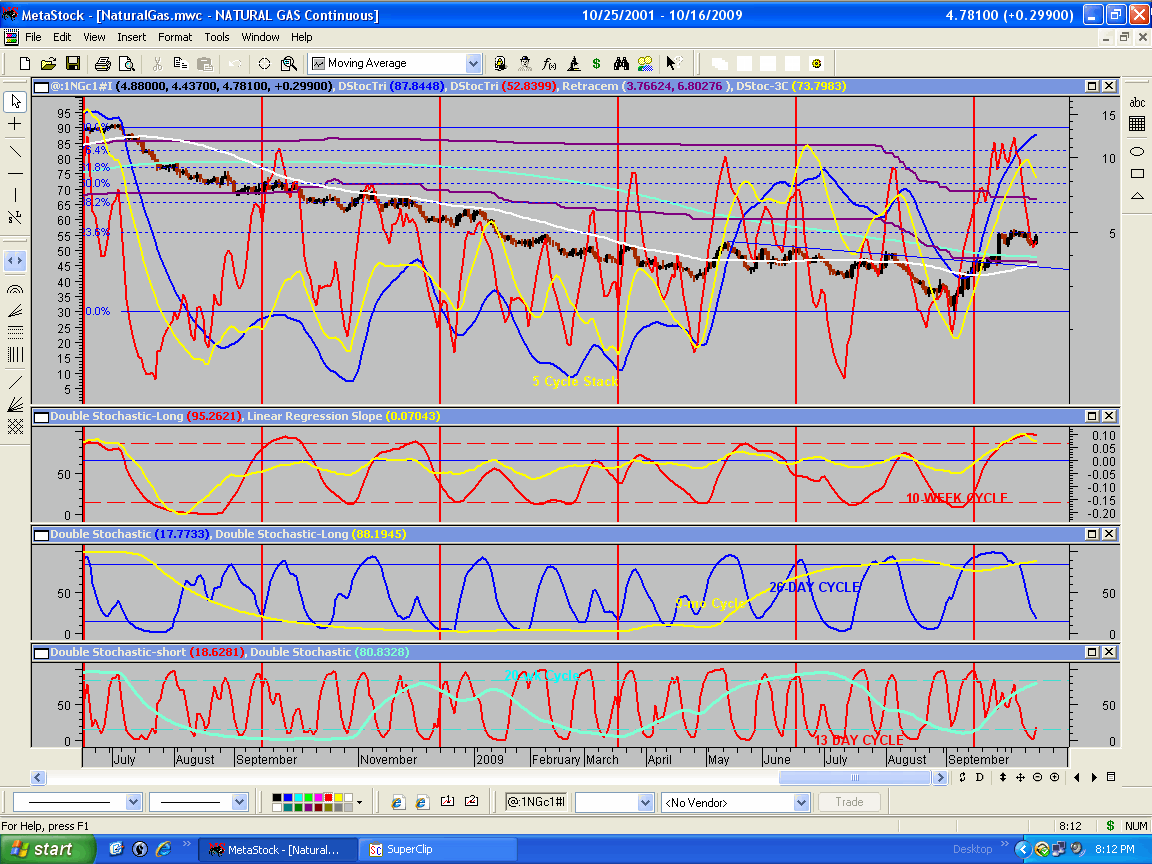
Natural gas (http://www.geocities.com/petegersb/NaturalGas.GIF) gained very slightly last week as rising short cycles bested
the intermediate downtrend. The largely lateral movement will likely continue
this week as favorable short cycles try to overcome the declining 20-week
cycle.
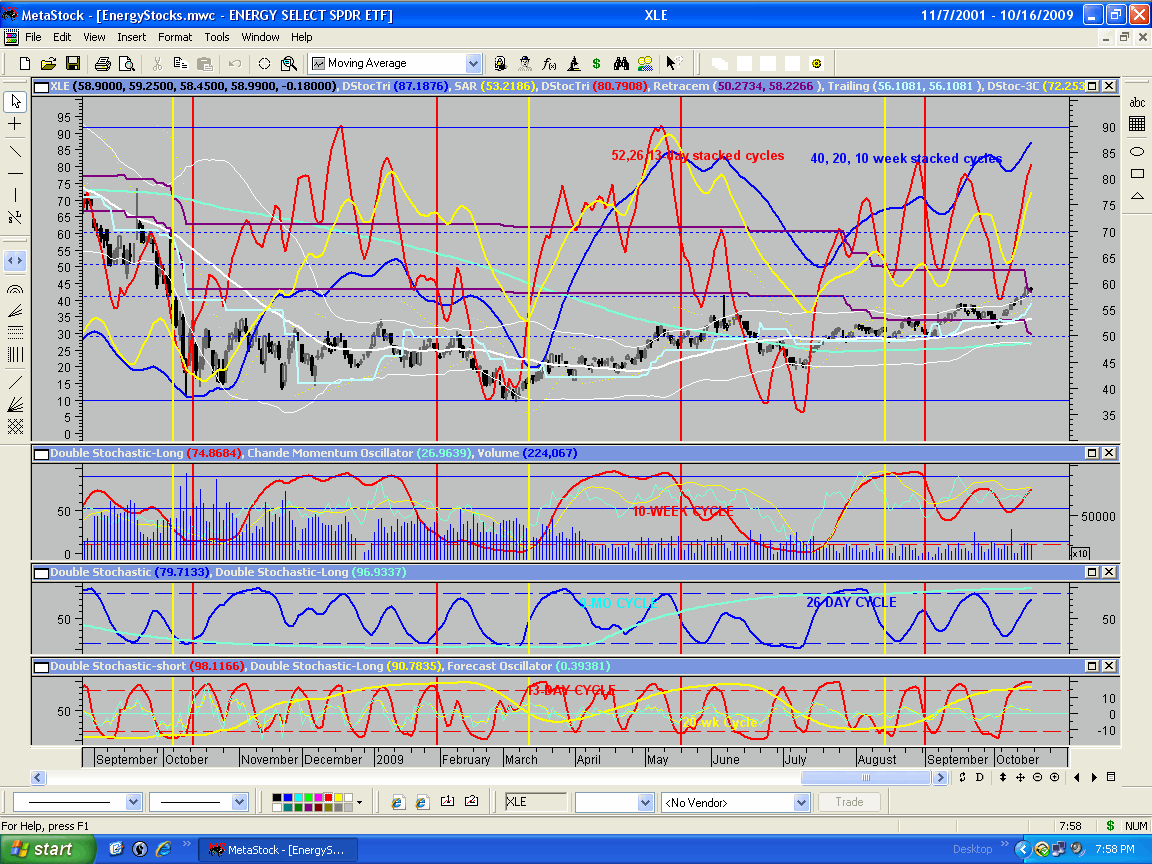
Energy stocks (http://www.geocities.com/petegersb/EnergySPDR.GIF) completed their 13-day cycle correction right on schedule
Monday, and the XLE was again the best performing sector last week as it moved
to another high. It looks like a few more good days are in store before the XLE
becomes short-term overbought. The intermediate uptrend is young and healthy.
.