Although the very old history of man in Iran goes back well beyond the Neolithic period,
around 6000BC when people no longer eked out an existence solely by hunting wild animals
and gathering plants and fruit, but had begun to domesticate animals and plant wheat and barely.
The number of settled communities increased, particularly in the eastern Zagros mountains, and
handmade painted pottery appears at sites such as Tepe Guran in Luristan and Ali Kosh in
Khuzistan, although at Ganj Dareh near Kermanshah, lightly fired pottery probably dates from as
early as the late eighth millennium BC.
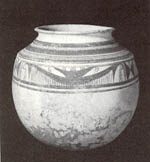
   Throughout the prehistoric period, from the middle of the sixth millennium BC to about 3000BC,
painted pottery is a characteristic feature of many sites in Iran. Forms and decoration differ in
various parts of the country, but often common traits can be observed. Sometimes similarities can
be found with the pottery from neighboring Mesopotamia to the west, but generally these pottery
vessels are distinctive local products that owe much to the inspiration of local potters.
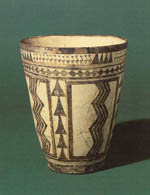
   In the earlier part of this long period, often known as Chalcolithic, the most distinctive pottery
is red or buff ware, painted in black with geometric designs often in combination with cross-hatching.
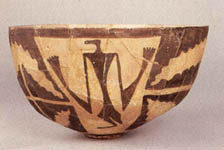
But the high point in the development of prehistoric Iranian painted pottery comes in the fourth
millennium BC, with a greater frequency of animal designs combined with a wide variety of
geometric motifs. This potter, now sometimes made on a wheel, is found at places such as Tepe Sialk
near Kashan, Tepe Hissar near Damghan, Tall-i Bakun near Persepolis and the great mound of Susa
in Khuzistan. Among the animals, which are either in panels or arranged in rows, are goats with
large circular horns and waisted bodies; crane-like birds with long legs and necks; leopards; and
dogs with long thin bodies. Occasionally human figures are also shown.