 |
| Yarrow |
|
| Parts Used: Leaves and Flowers |
| Yarrow is an ancient healing herb. It's recorded to have been used by the Greeks. It's Latin name Achillea comes from the Greek hero, Achilles. Legend has it Achilles treated his soldiers' wounds with yarrow at the battle of Troy. The Chinese considered the herb to be sacred, and the Anglo-Saxons and Vikings used it to treat battle wounds. |
| Yarrow is a great healer. It is known to fight infection and stop inflammation. As a poultice, it is very effective in stopping bleeding, even with nosebleeds. It will shrink hemorrhoids and stop hemorrhages. |
| Achillea millefolium |
| Taken as a hot tea, yarrow is very good for colds and fevers because it helps circulation, perspiration, increases body temperature and opens skin pores. It also has a healing effect on the mucus membranes, and stops nasal drip. As well, yarrow helps eliminate waste and disease from the body because it supports and regulates the liver and pancreas. Yarrow is used to treat digestive problems (such as diarrhea, cramps, and gallbladder problems) and to stimulate the appetite. |
 |
 |
 |
 |
 |
 |
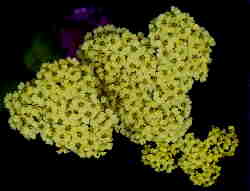 |
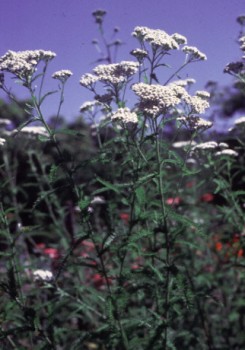
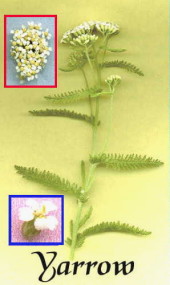
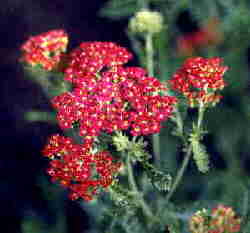
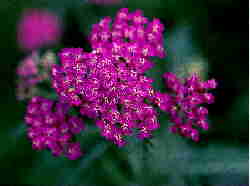
| This is a tall gangly plant (around 3 ft tall), with yellow, white or pink flowers which bloom in mid to late summer, which is the best time for harvesting it. |
| Appearance: |
| History: |
| Uses: |
| Some Other Links: |
| There are hardly any side effects to yarrow. However, use it wisely, as it can cause skin irritation if overused. Pregnant women should avoid yarrow, as it contains thujone, a chemical known to induce misscarriages. |
 |
| Side Effects: |