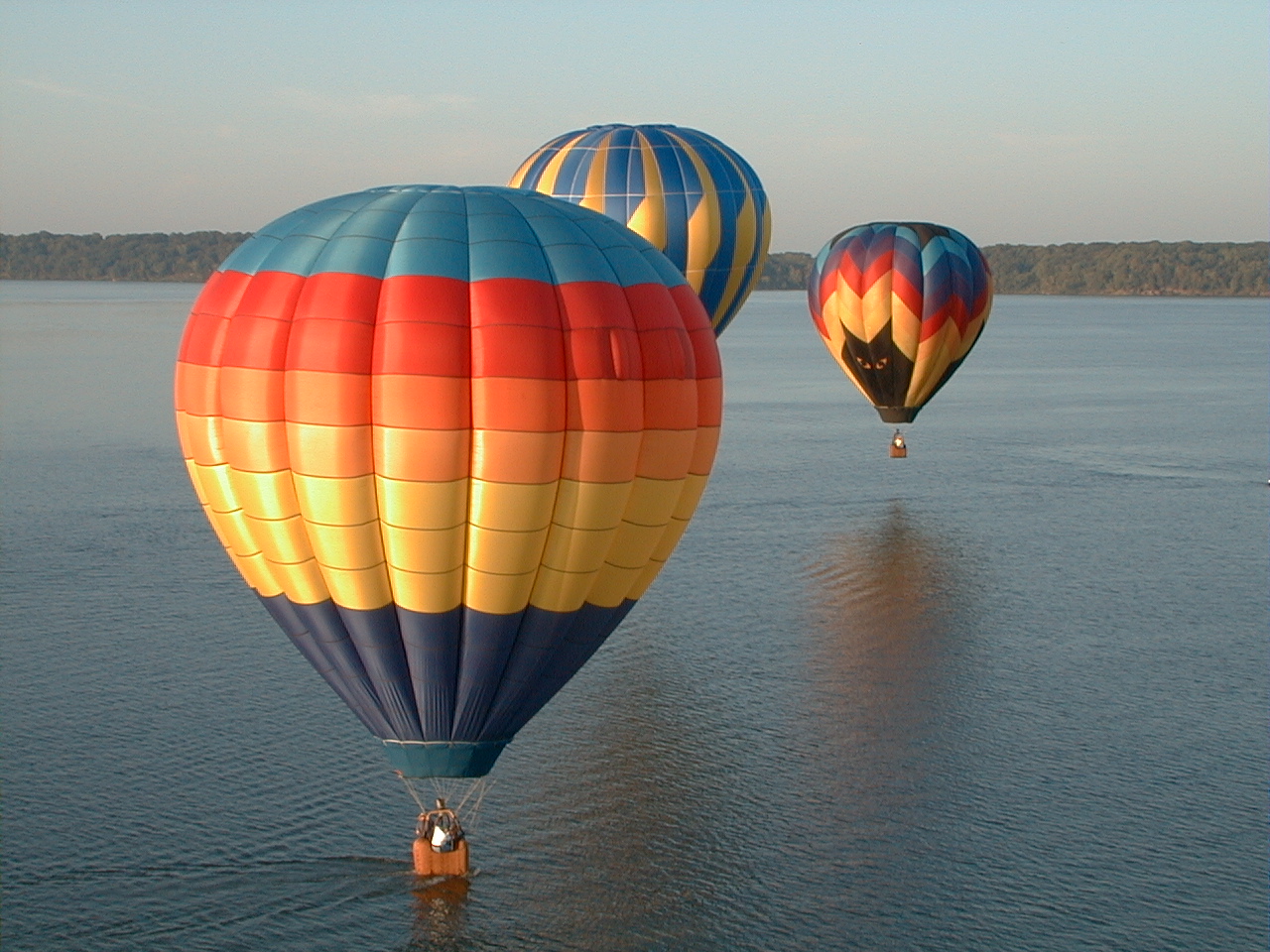
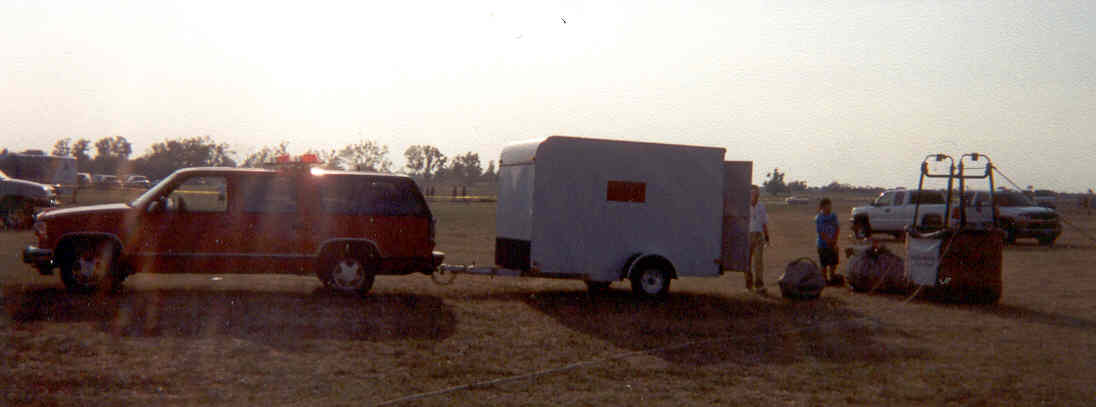
Sadly I don't have any pictures of the hot inflation. At that point I am normally feeling the heat quite literally because I always work the left side of the mouth, and we don't get to move when the pilot starts to burn! :) But what normally happens during this time is the pilot has already checked the balloon to make sure there are no tears or problems with the balloon, and also to make sure that the balloon is packed enough. Wind speeds are VERY important at this stage because one solid gust of wind will cause the balloon side to cave into the flame, not good. Once the pilot has determined that the balloon is ready, he takes his position kneeling behind the burners. (I say 'he' only because that is what I am used to, but there are female pilots) With the burners lit and on, and angled upward pointing into the center of the mouth opening, (with the mouth crew still holding on... ) he will give long burns to begin to heat the air in the balloon.
These burners (Aerostar Zone 5 Turbo Dual Burner with a Glow Burner) can give off as much as 19.3 million BTUs, which is pretty hot! On average to fly, the temperature in the balloon will reach around 210. There are limitations on how hot the balloon can be because the material is only rated for 250 degrees F during flight, 275 degrees F for short bursts.
The pilot will continue to burn at short intervals as the balloon begins to stand up right. Until he decides to launch, the balloon will be attached to two vehicles by teather lines. That way the balloon can't just shoot up off the ground.
Once the balloon is standing up right, the pilot will call "weight on!", signaling all of the crew to grab the basket and add their weight. The flying is a ratio of the air temperature and the weight of the basket, so if we all put on our weight, the basket isn't going anywhere (hopefully!). The crown line is still out at this point, stabilizing the balloon. The pilot will tell the crown line crew member to bring in the crown line (which will be tied onto one of the uprights during the flight) right before he takes off. Now if any passengers are going up, they will get into the basket when the pilot is ready for them to, and then the pilot will have to adjust the temperaure/weight ratio again. He will become "light" when the temperature in the balloon is enough to lift the basket and people.
One thing I forgot to explain, the outside temperature issue. People sometimes assume that if it is hot outside, we get a longer flight. Not so. Actually when it is hot outside, it takes more fuel (propane) to get the air inside the balloon to be hotter than that outside the balloon, therefore making it a shorter flight. If it is cold outside, the air is easier to heat up inside the balloon. So yet another ratio we have to worry about! :) |