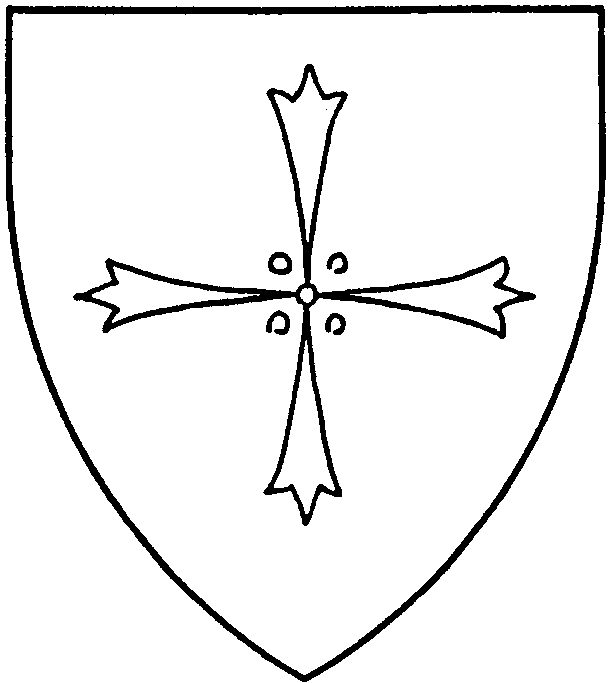
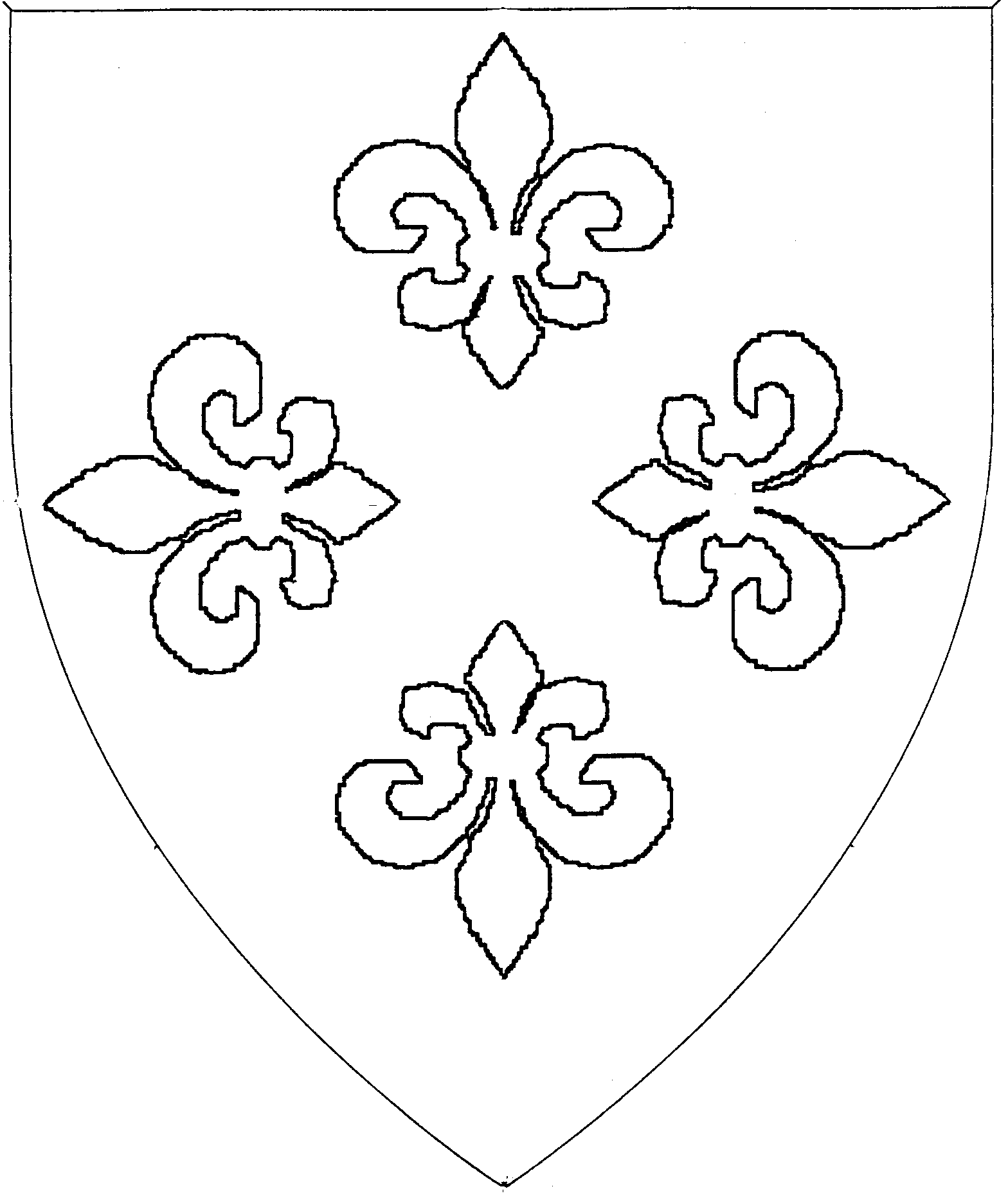
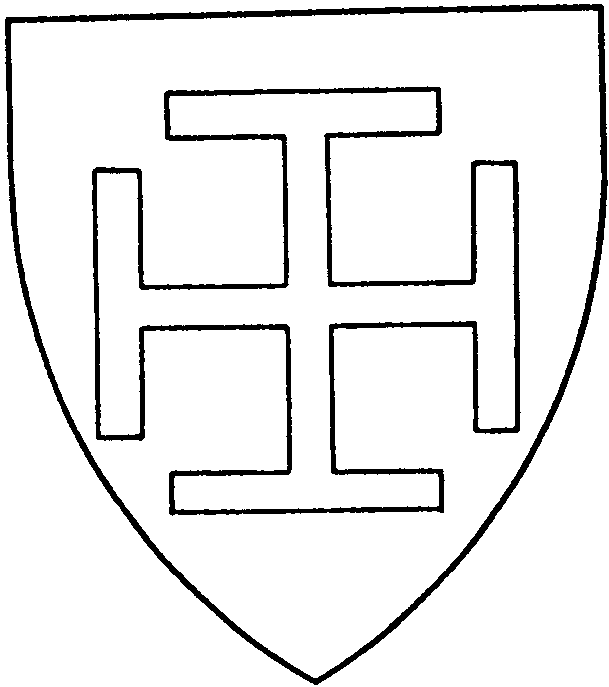
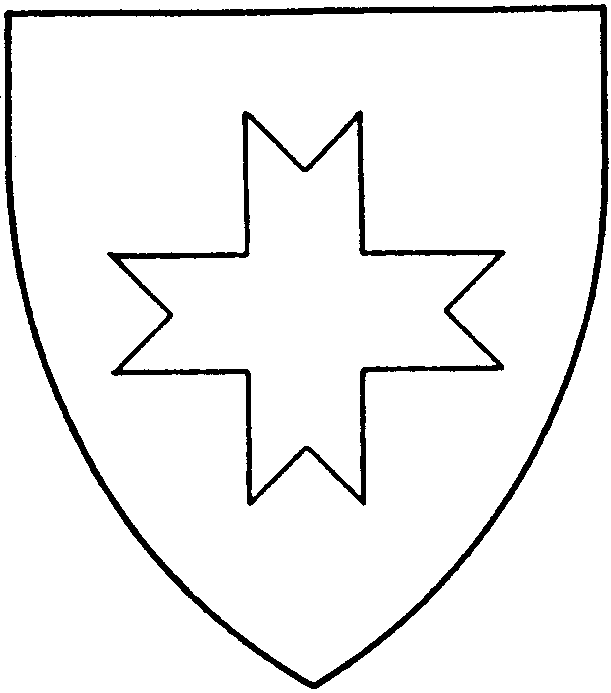
Cross Conflicts
Last updated September 21, 2002
This document is intended to display visually the SCA precedents regarding conflicts of various crosses. All of the relevant precedents are listed at the bottom from the present back to the beginning of the SCA College of Arms. There were no conflict calls regarding crosses in the Early days, the tenure of Karina of the Far West, or the tenure of Wilhelm von Schussel. Modern conflict calls overrule older ones.
The following groups of crosses have been ruled to have no significant difference between them (within each grouping).
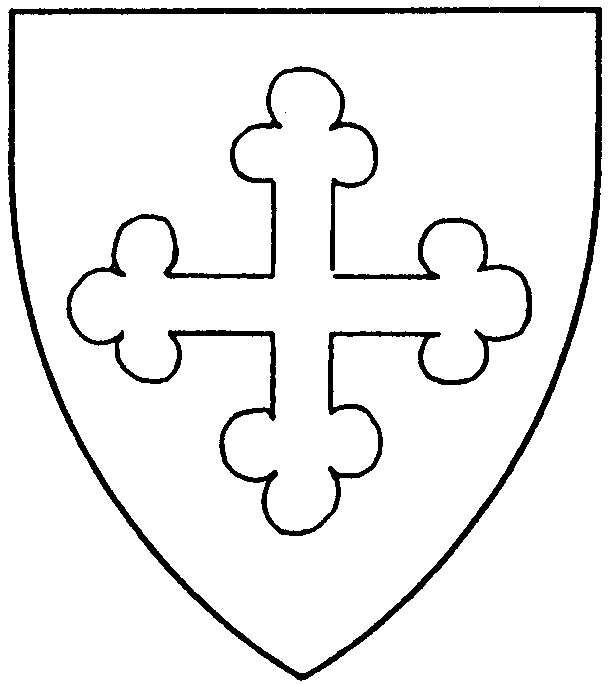
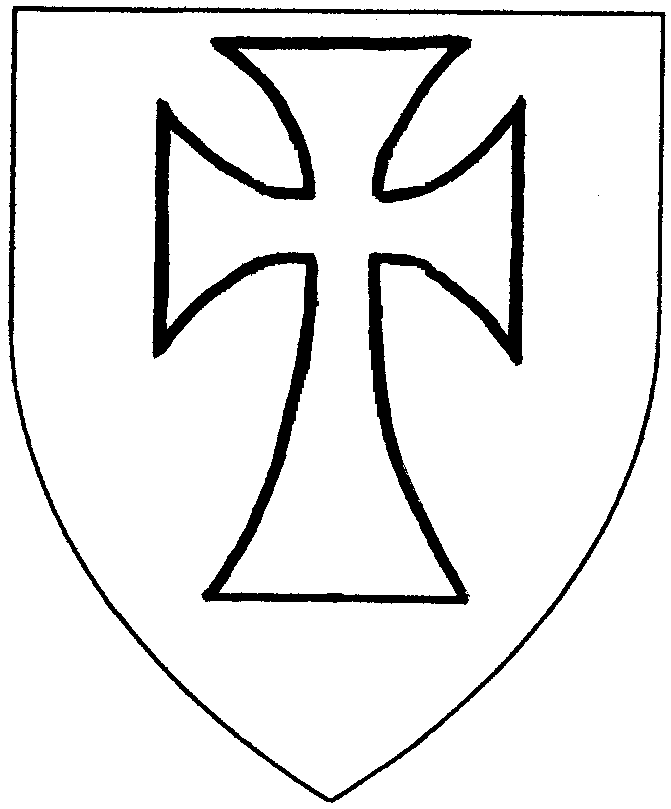
crosslet and bottony are artistic variants of each other. [48],[59]
crosslet vs. bottony.
Fitching does not count for difference. [2] [54]
cross crosslet fitchy vs bottony. [9],[41]
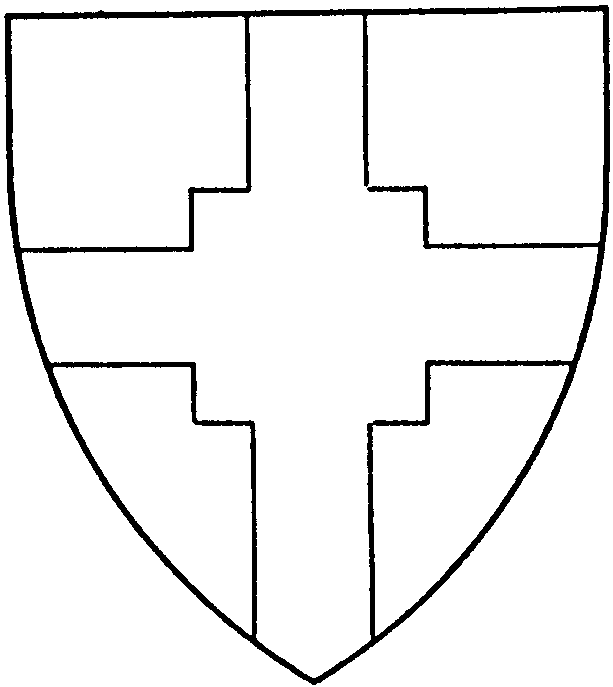
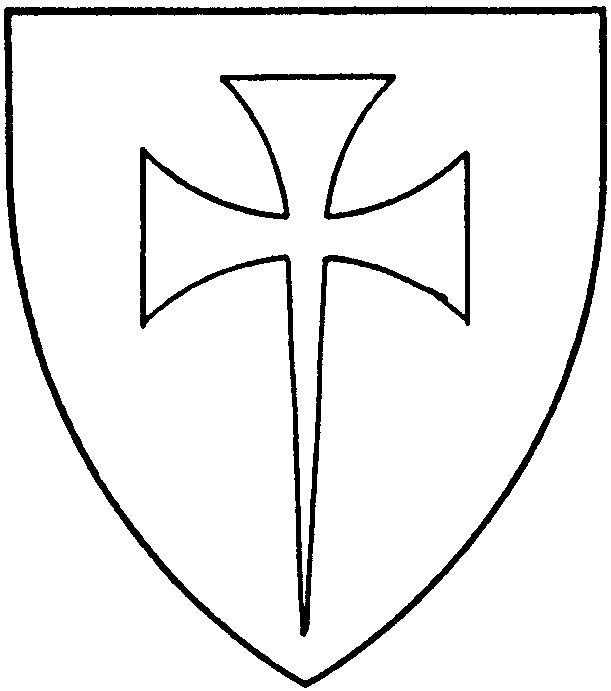
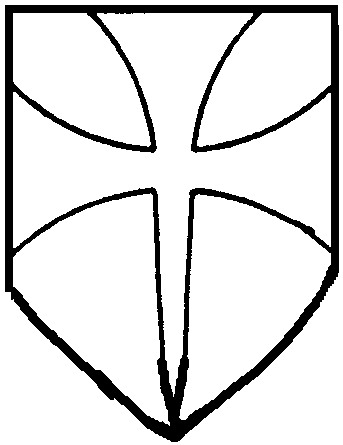
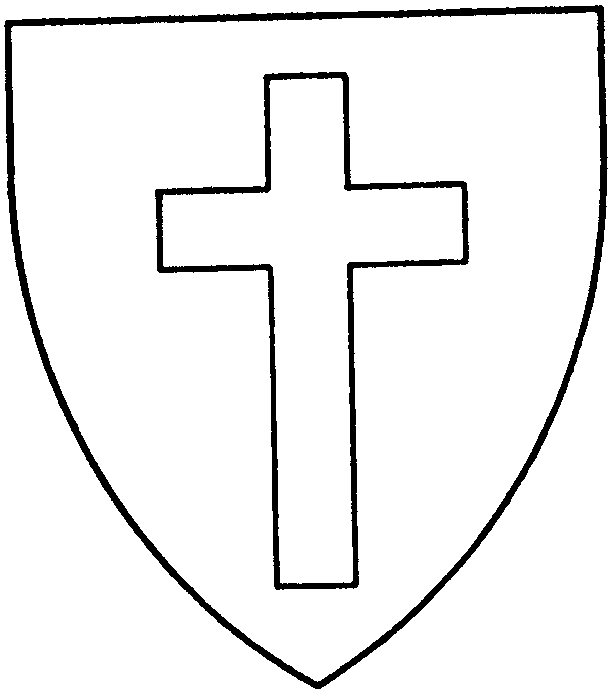
There is no difference granted between an equal armed cross and its latinate form. [49]
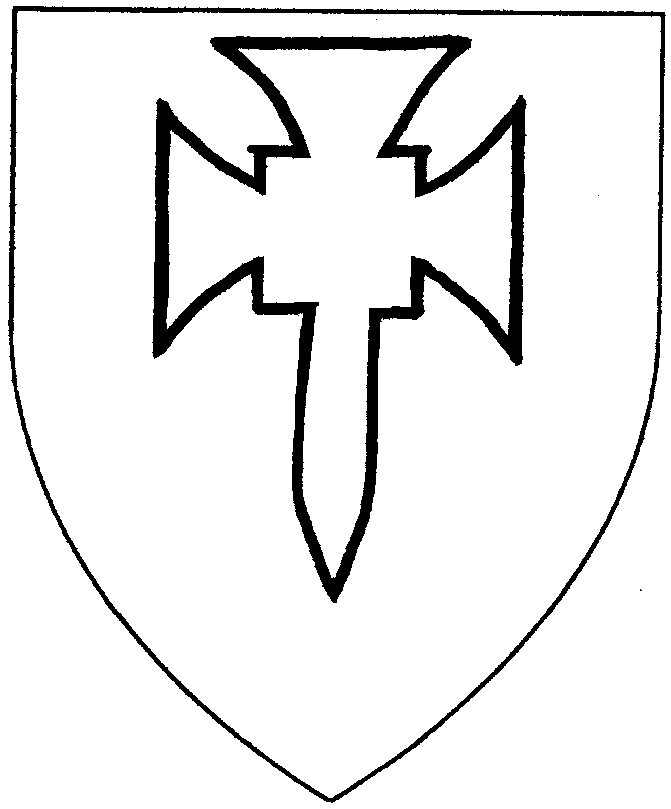
Latin cross bottony fitchy vs. cross bottony fitchy. [7]
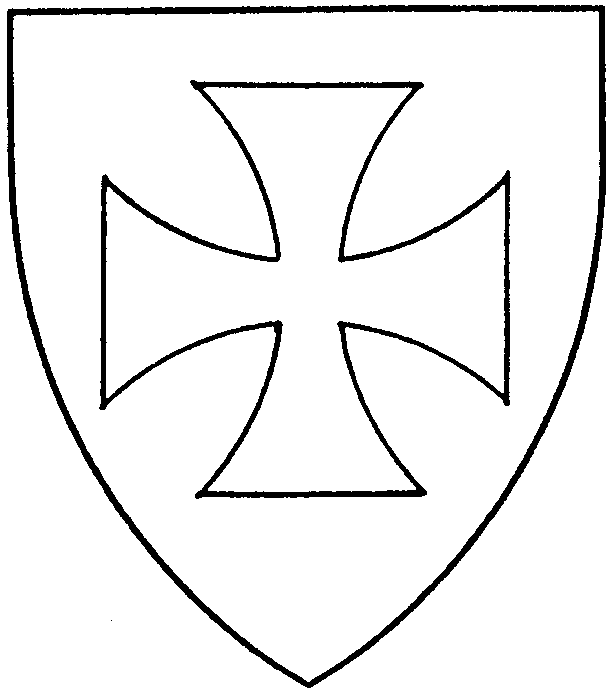
"Formy" and "Patty" are exactly the same.
formy vs. patty.
Cross quadrate formy fitchy vs. cross formy [12]
nowy vs nowy quadrate. [14]
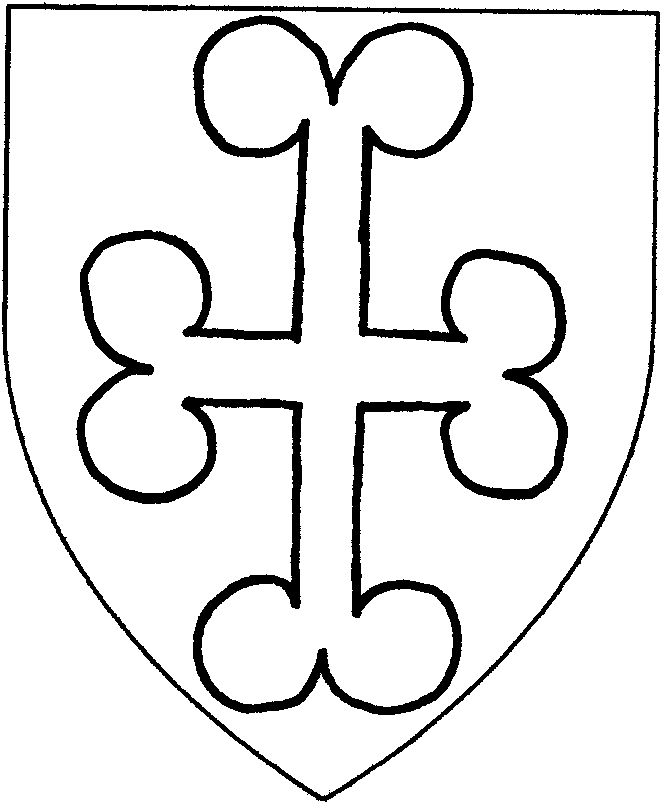
cross doubly pommeled elongated palewise vs. Moline [21]
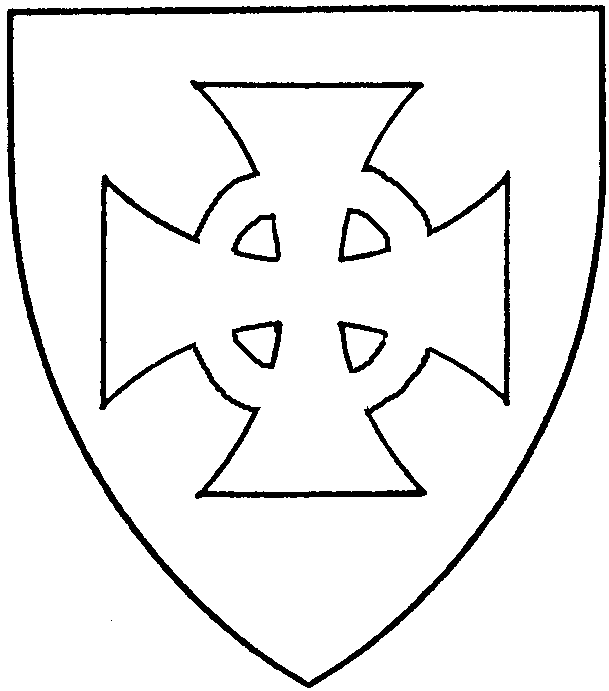
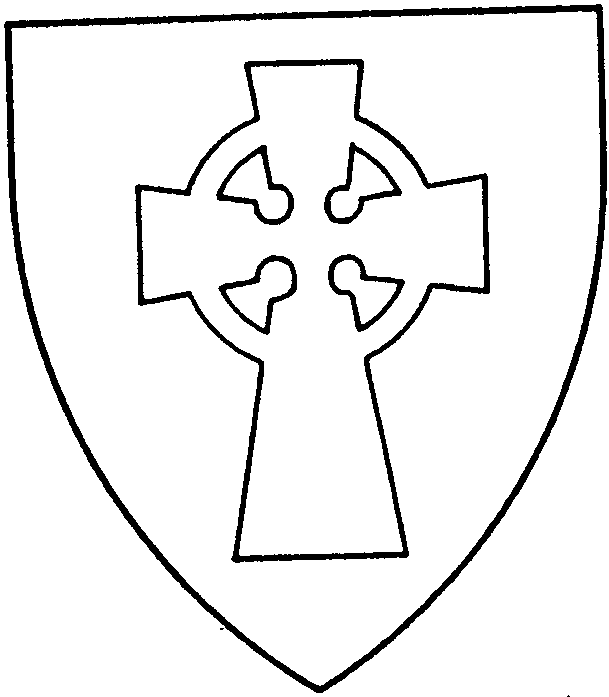
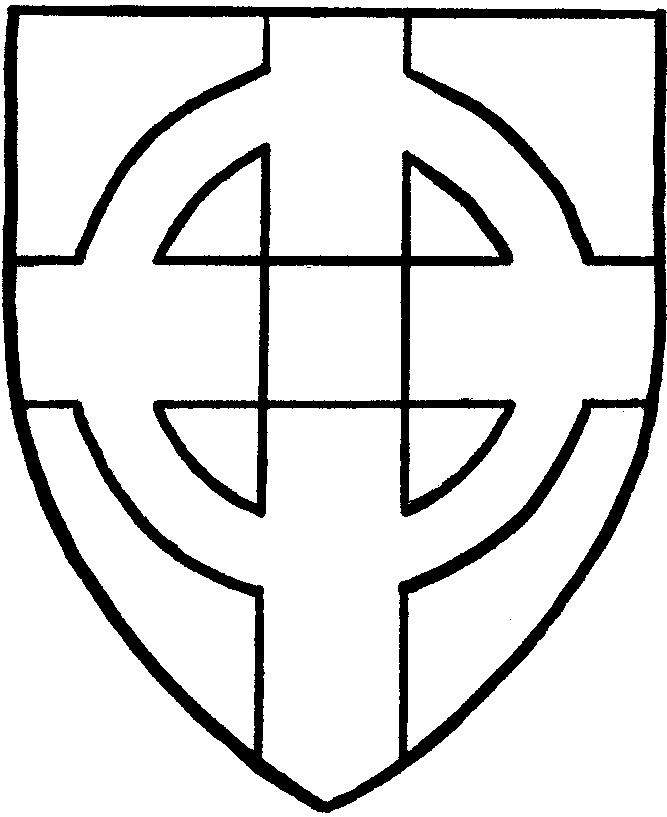
equal armed Celtic cross formy vs. a Celtic cross. [25]
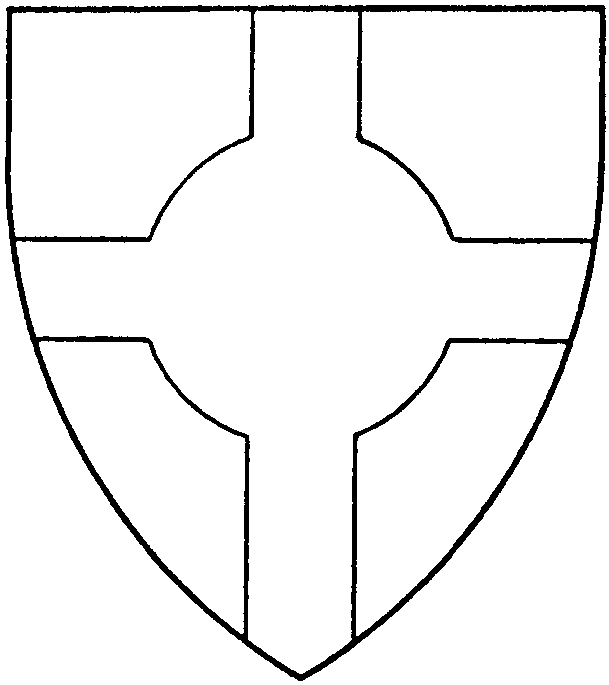
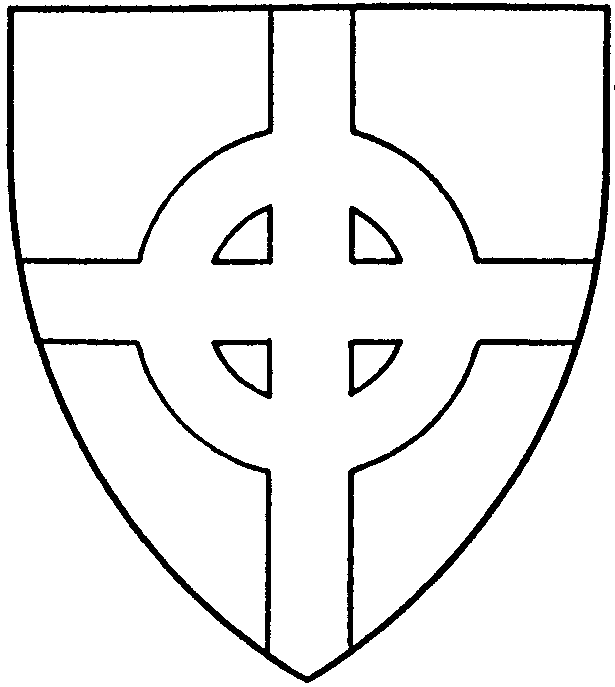
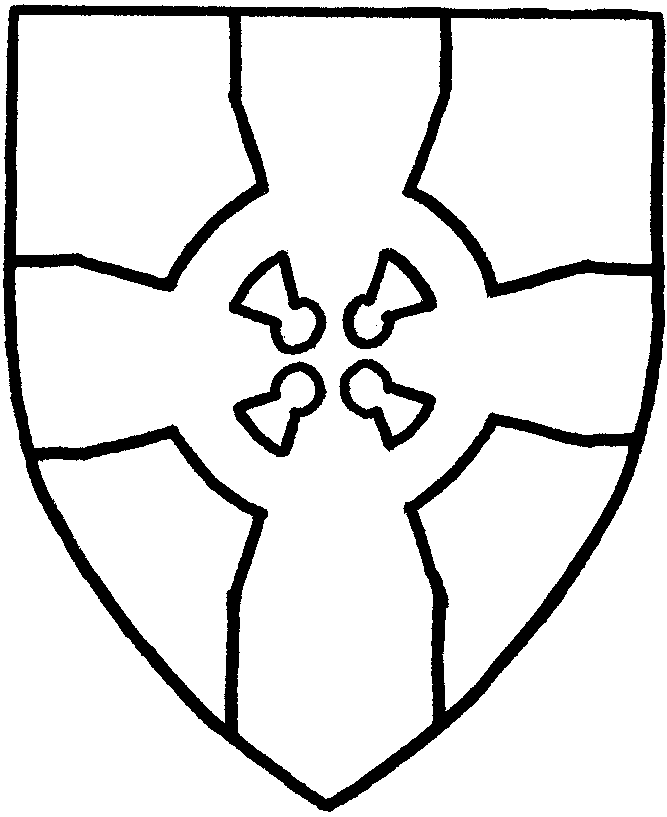
Coldharbour vs. Celtic cross throughout. [27]
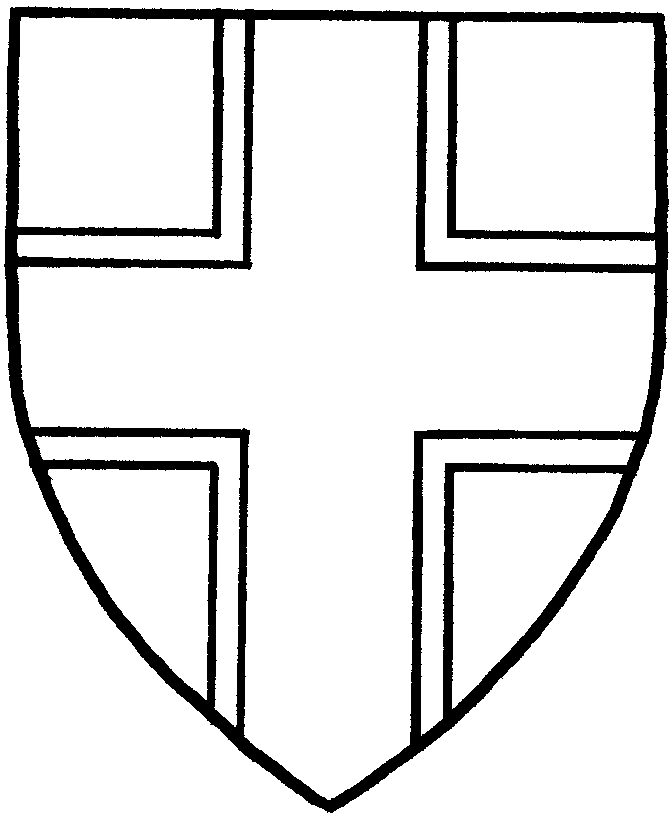
Voided vs Parted & Fretted. [37]
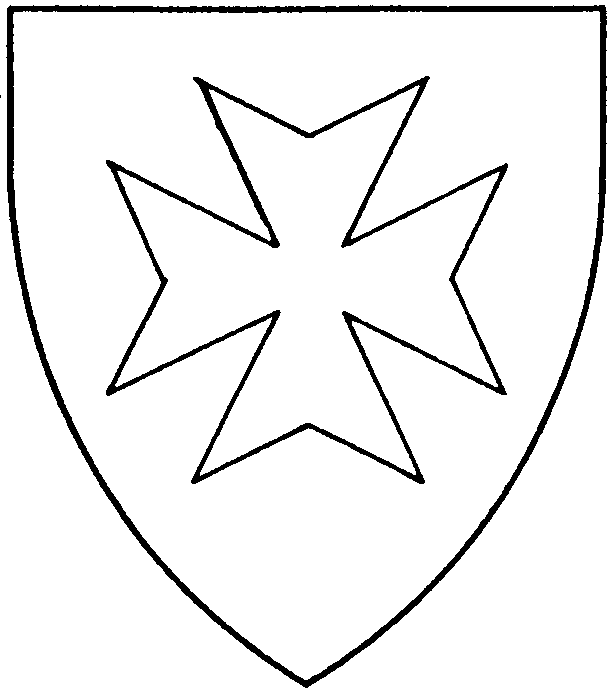
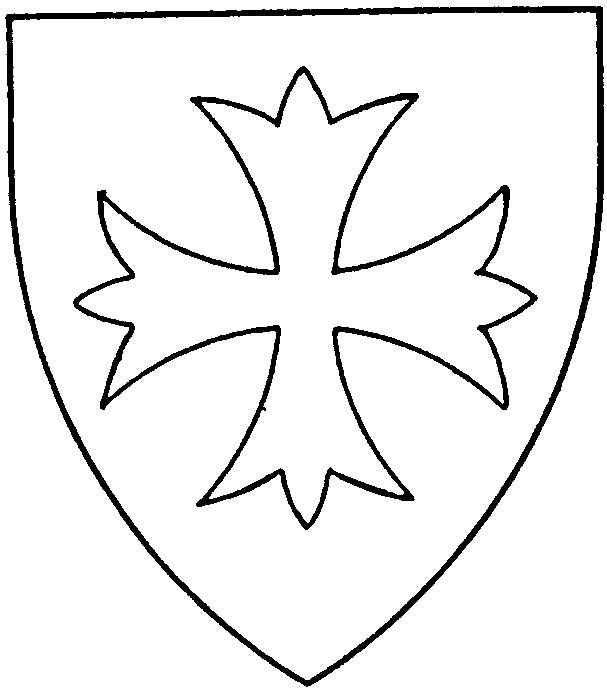
Maltese vs. Patonce. [55]
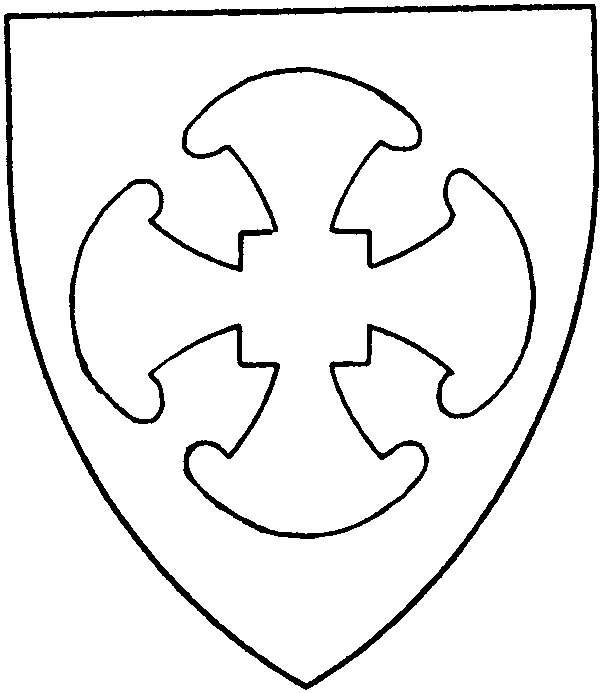
"Millrind" and "Moline" are exactly the same. [60]
Millrind vs. Moline.
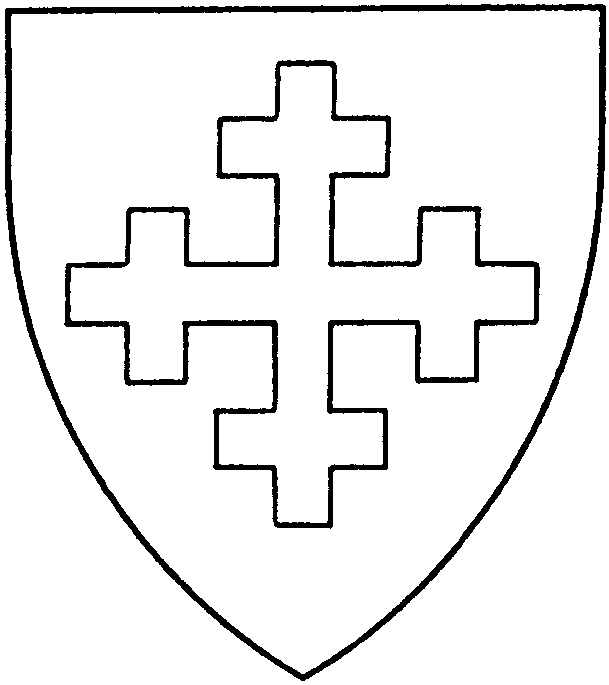
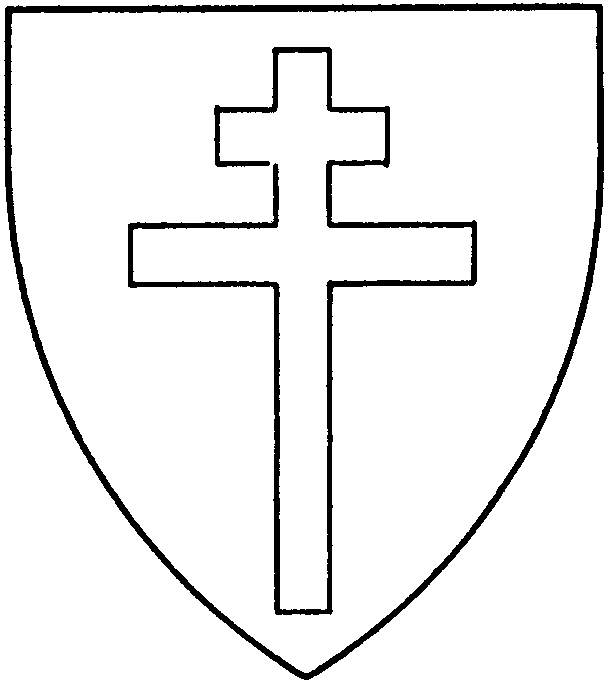
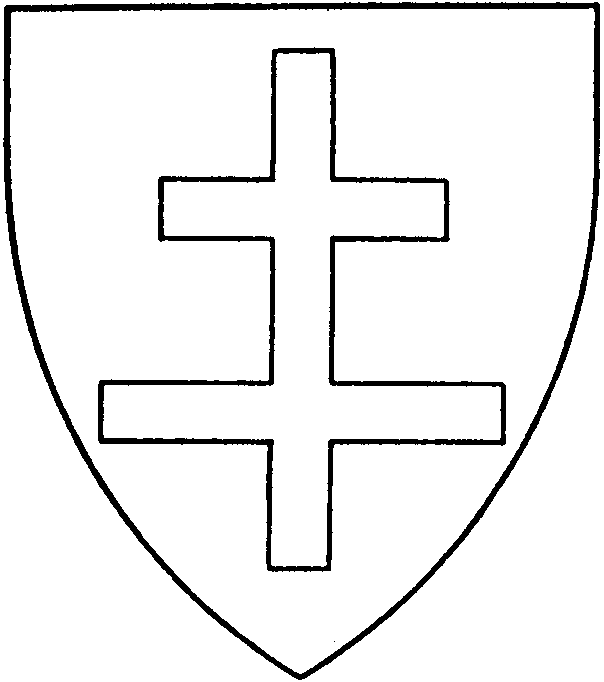
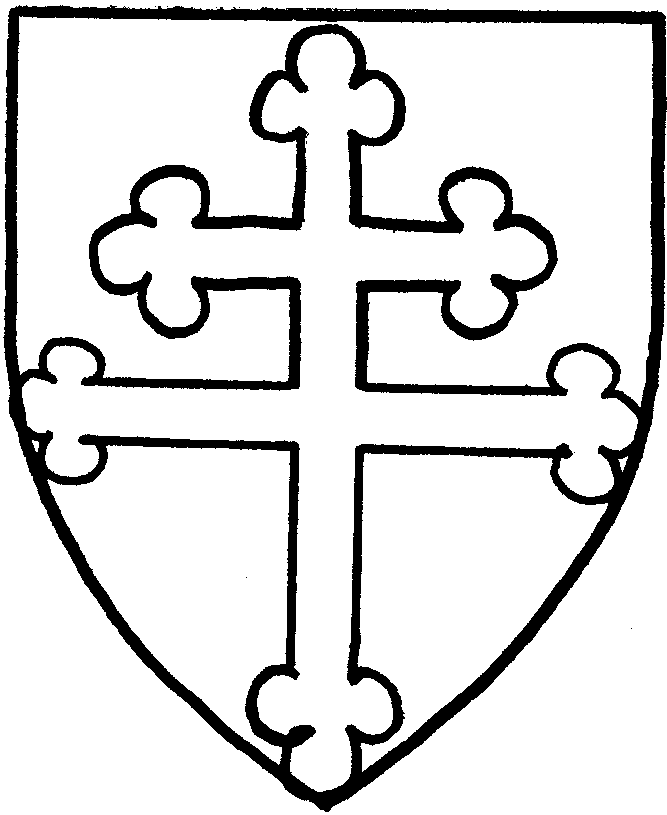
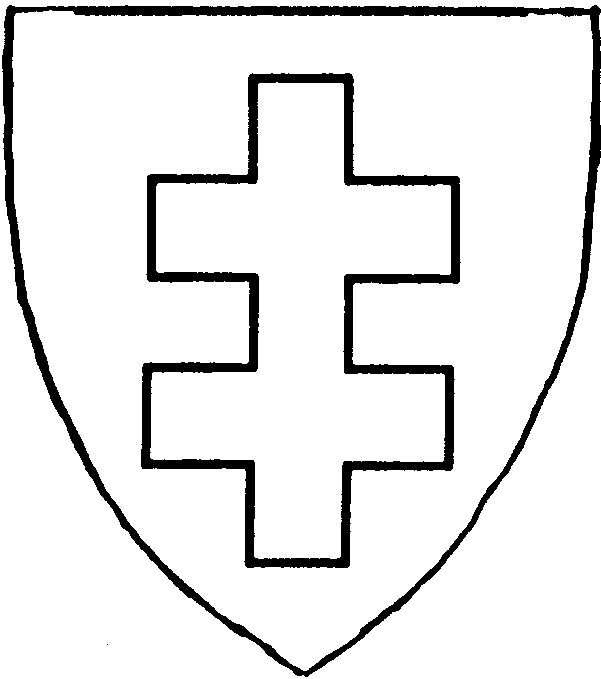
Patriarchal vs. Lorraine. [61]
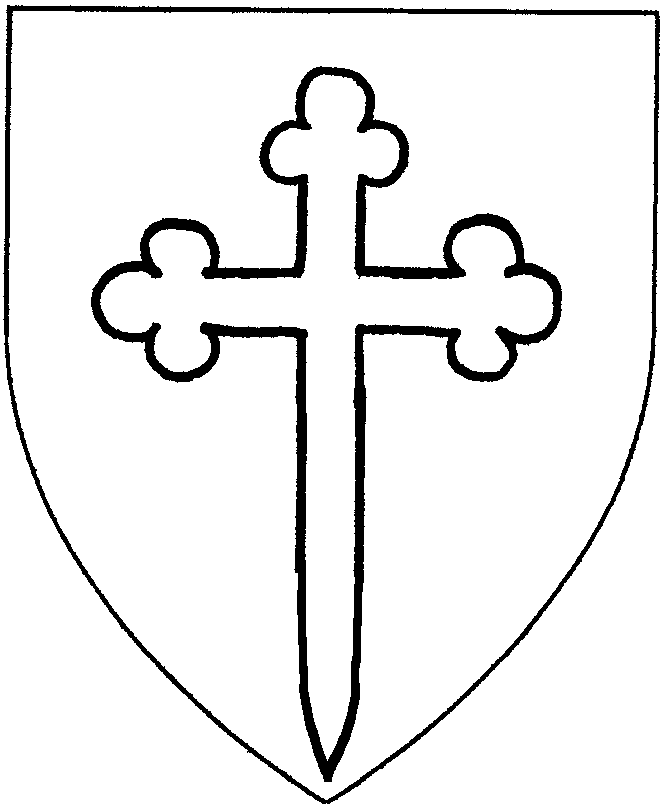
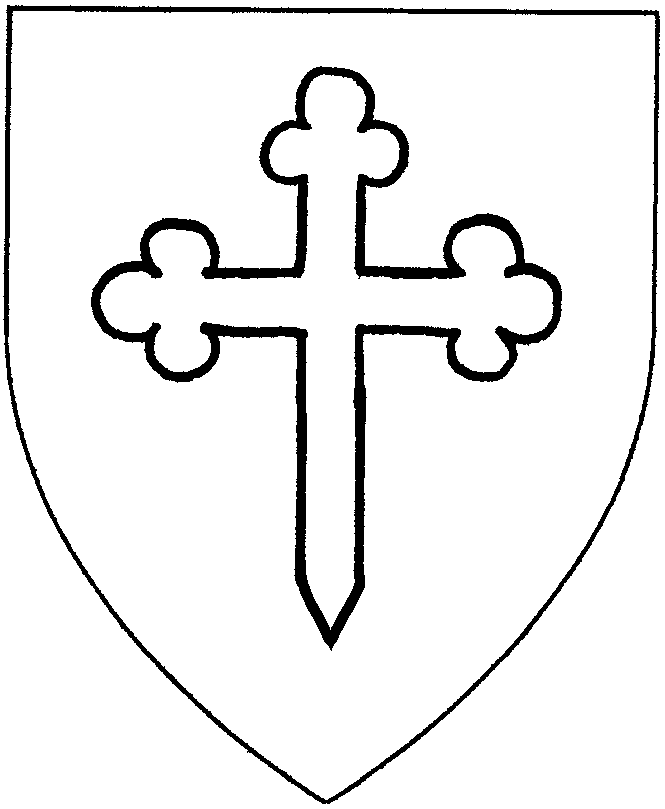
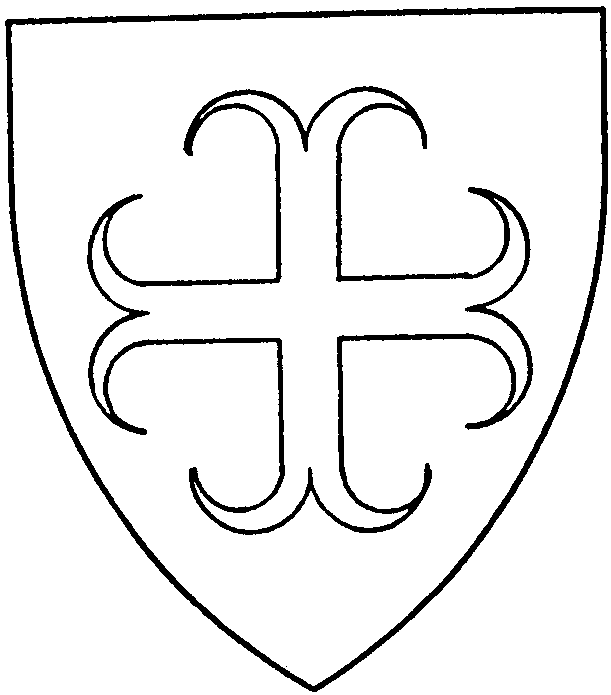
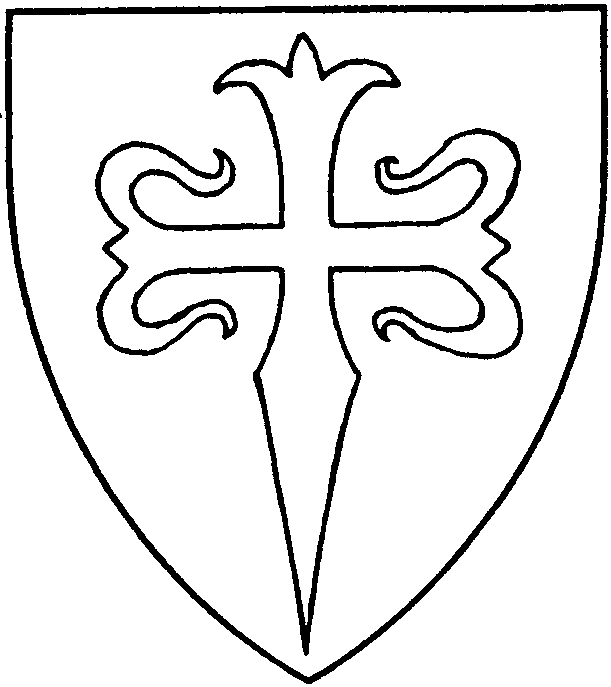
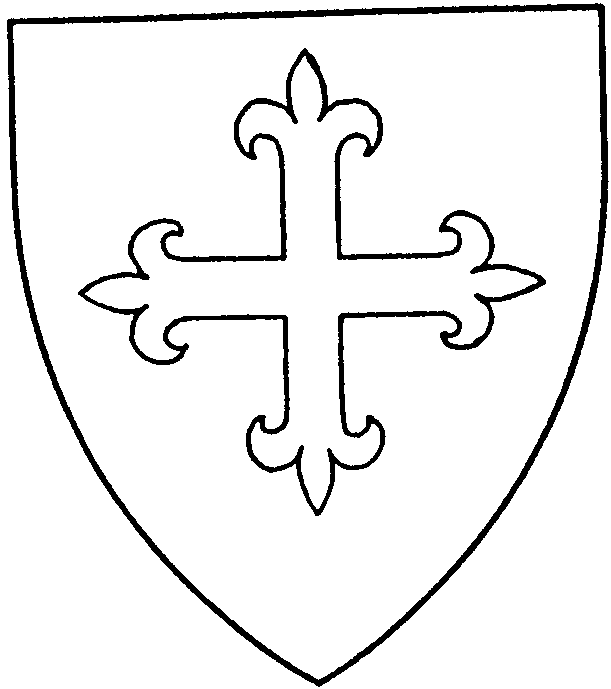
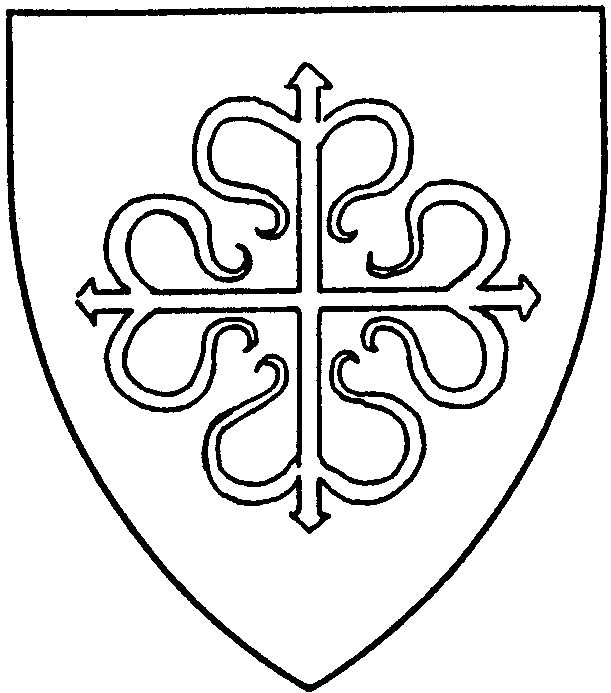
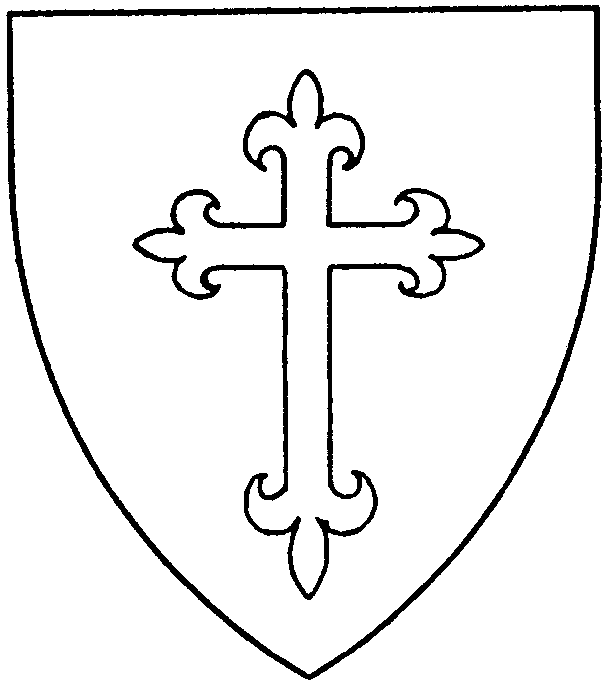
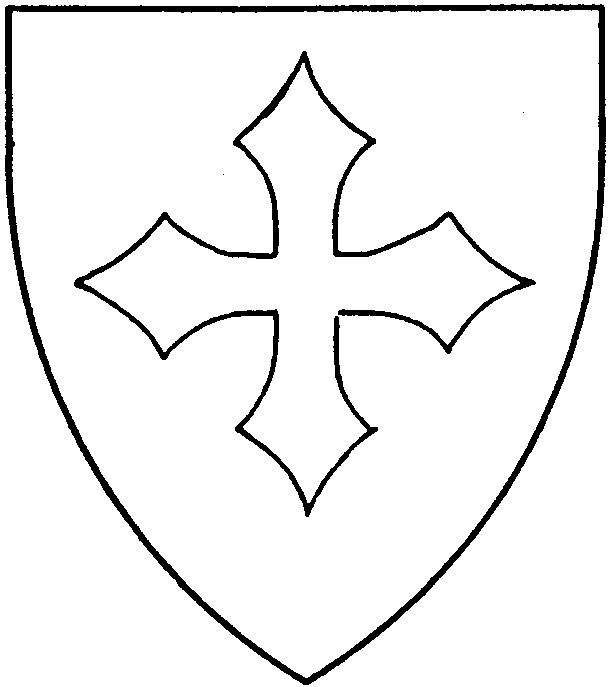
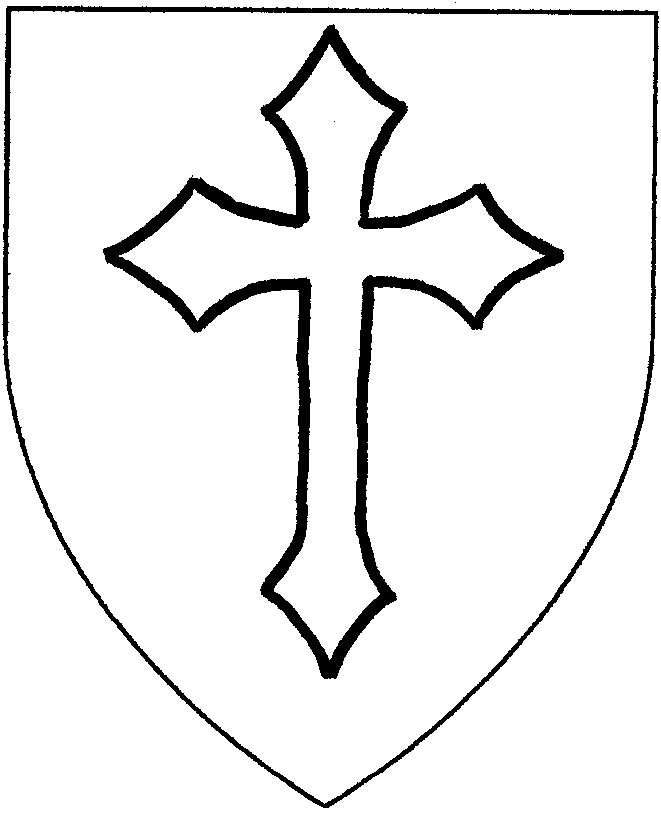
Patonce, Santiago, Flory/Fleury, Calatrava, Cleves/latin cross fleury. [1],[4],[19],[24],[36],[46],[57],[62]
The following crosses have been ruled to be significantly different, worth one CD:
annuletted vs. throughout. [40]
bottony vs. flory. [6]
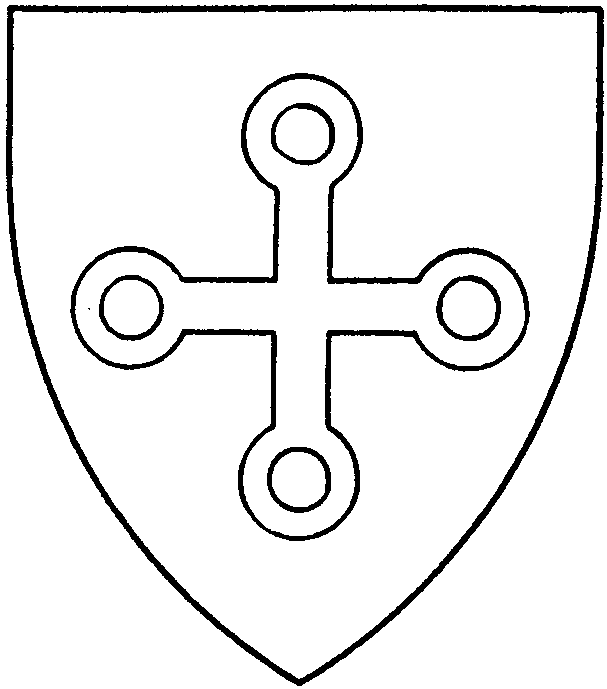
bottony vs. formy. [15]
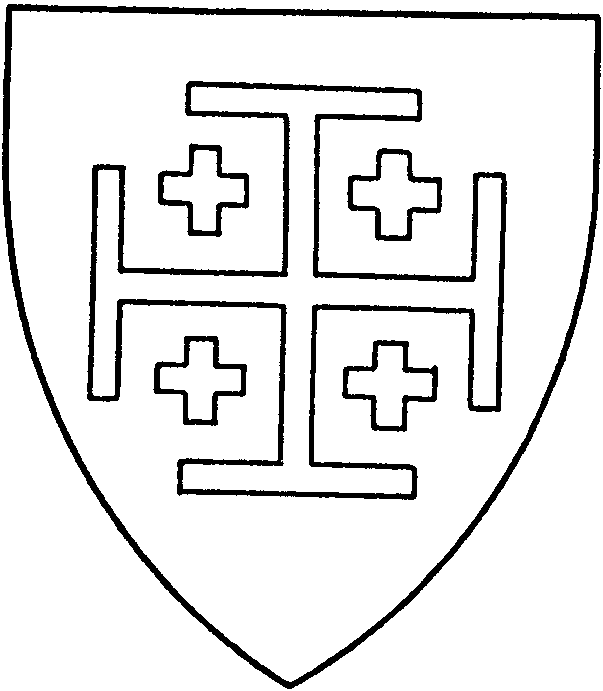
bottony vs. Jerusalem. [17]
bottony vs. patriarchal cross bottony throughout. [38]
bottony fitchy vs. maltese. [20]
Canterbury vs. formy. [29]
Canterbury vs. potent quadrate. [28]
Celtic vs. Celtic equal armed quarterly pierced throughout. [42]
Celtic vs. crosslet. [26]
Celtic vs. flory. [10]
Celtic vs. latin cross formy. [3]
clechy vs. flory. [50]
latin clechy vs. formy. [52]
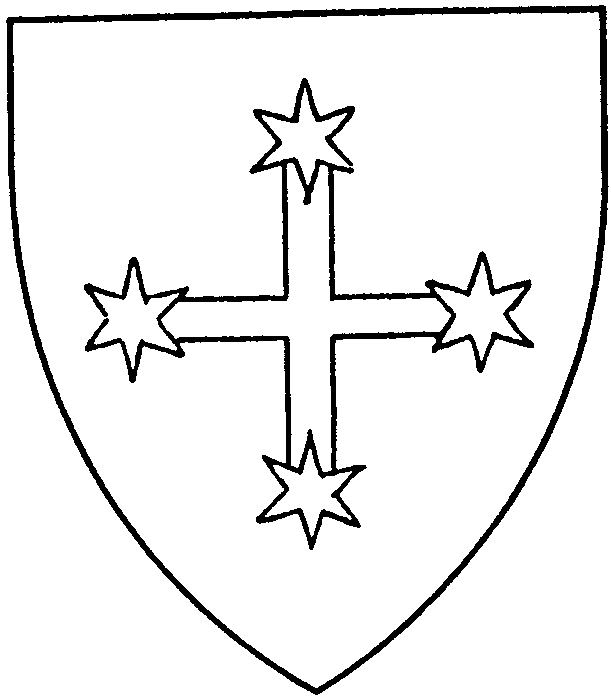
couped vs. crosslet flory. [18]
couped vs. crux stellata. [18]
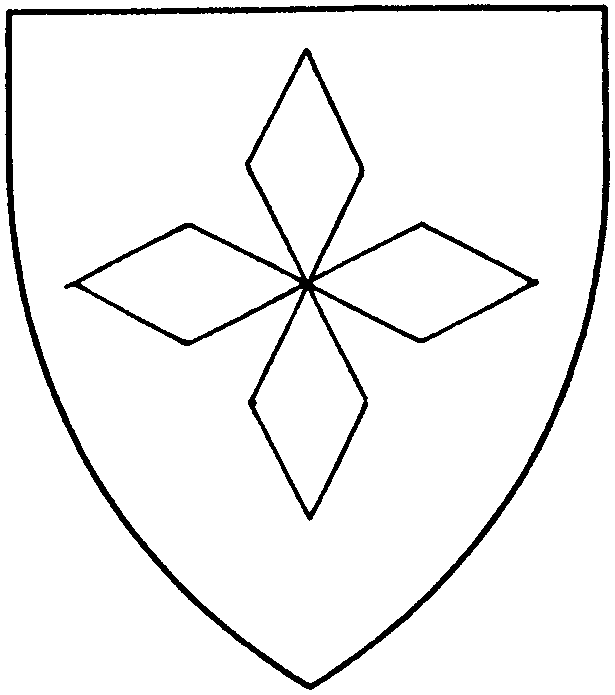
couped vs. four lozenges. [34]
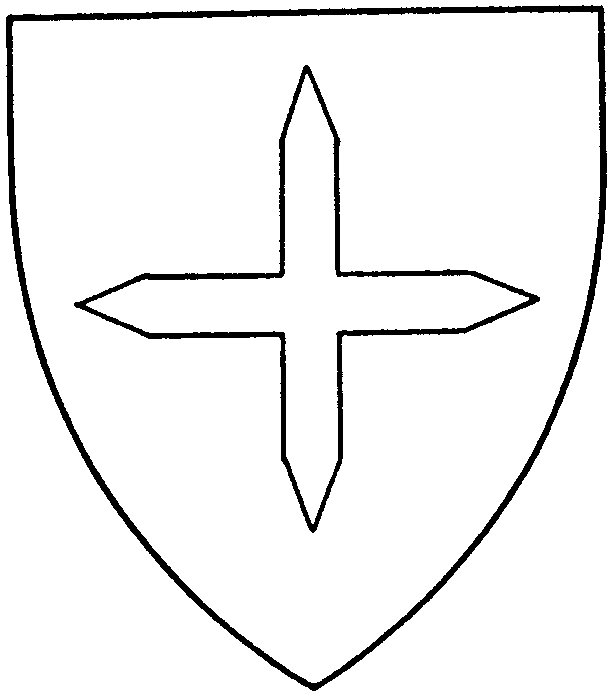
couped vs. maltese. [34]
crosslet vs. Celtic. [26]
crosslet vs. moline. [16]
crosslet fitchy vs. Santiago. [13]
crosslet flory vs. couped. [18]
crosslet flory vs. crux stellata. [18]
crux stellata vs. couped. [18]
crux stellata vs. crosslet flory. [18]
flory vs. bottony. [6]
flory vs. Celtic. [10]
flory vs. clechy. [50]
flory vs. four ermine spots conjoined in cross. [58]
flory vs. four fleurs-de-lys bases to center. [45],[47]
flory vs. potent. [39]
formy vs. bottony. [15]
formy vs. Canterbury. [29]
formy vs. latin clechy. [52]
formy vs. patonce. [30]
formy vs. swallowtailed. [5]
formy fitchy vs. formy fitchy throughout. [23]
formy fitchy vs. maltese. [22]
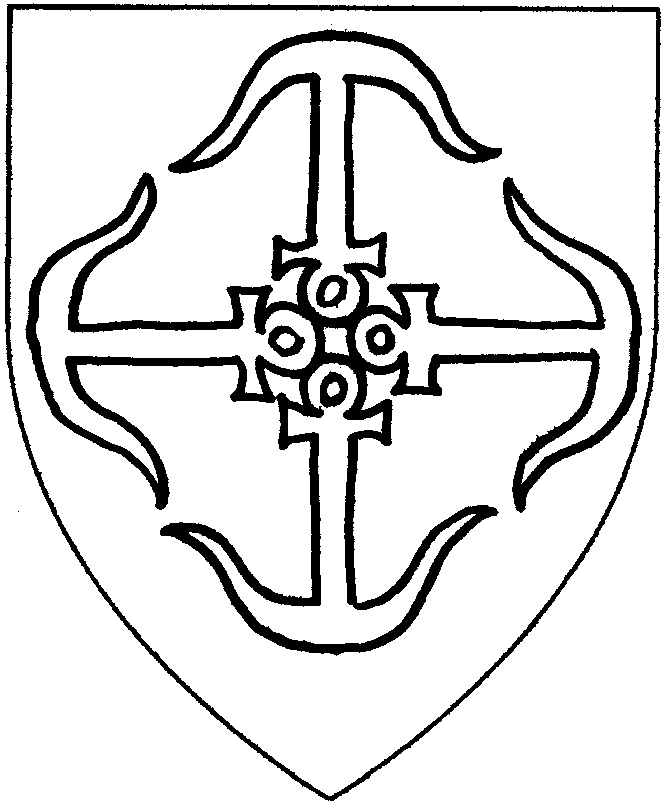
four anchors conjoined in cross vs. potent. [53]
four ermine spots conjoined in cross vs. flory. [58]
four fleurs-de-lys bases to center vs. flory. [45],[47]
four lozenges vs. couped. [34]
four lozenges vs. maltese. [34]
Jerusalem vs. bottony. [17]
latin vs patonce. [33]
latin cross formy vs. Celtic cross. [3]
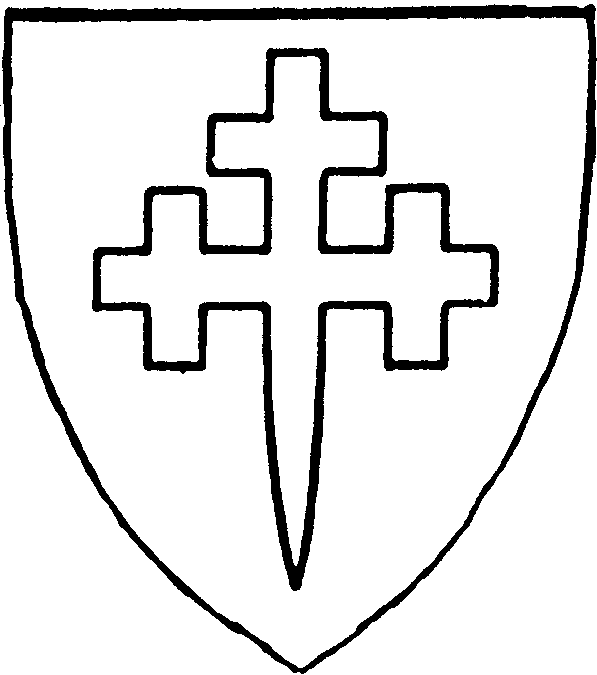
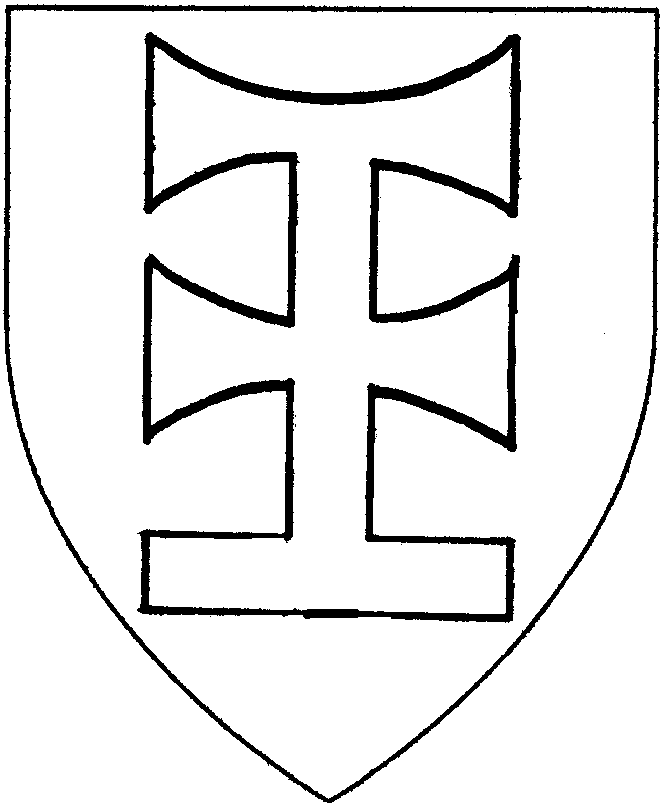
latin cross double crossed vs. Tau cross double crossed potent at the foot. [56]
maltese vs. bottony fitchy. [20]
maltese vs. couped. [34]
maltese vs. formy fitchy. [22]
maltese vs. four lozenges. [34]
moline vs. crosslet. [16]
moline vs. patonce. [43]
moline vs. pointed. [51]
nowy vs. quadrate. [8]
patonce vs. formy. [30]
patonce vs. latin. [33]
patonce vs. moline. [43]
patonce vs. swallowtailed. [44]
Patriarchal cross bottony throughout vs. bottony. [38]
pointed vs. moline. [51]
potent vs. flory. [39]
potent vs. four anchors conjoined in cross. [53]
potent quadrate vs. Canterbury. [28]
quadrate vs. nowy. [8]
Santiago vs. crosslet fitchy. [13]
swallowtailed vs. formy. [5]
swallowtailed vs. patonce. [44]
Tau cross double crossed potent at the foot vs. latin cross double crossed. [56]
throughout vs. annuletted. [40]
The following crosses have been ruled to be substantially different, clear by RfS X.2:
Latin cross formy vs. cross crosslet. [3]
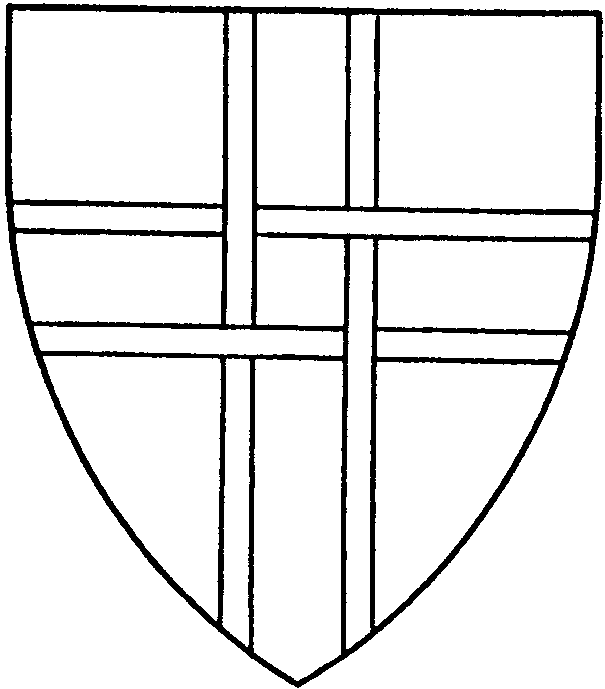
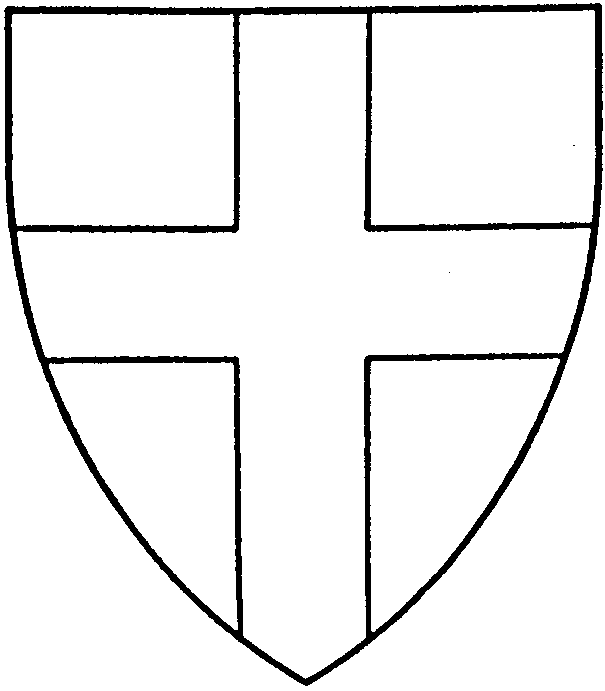
patriarchal cross vs. cross throughout. [11]
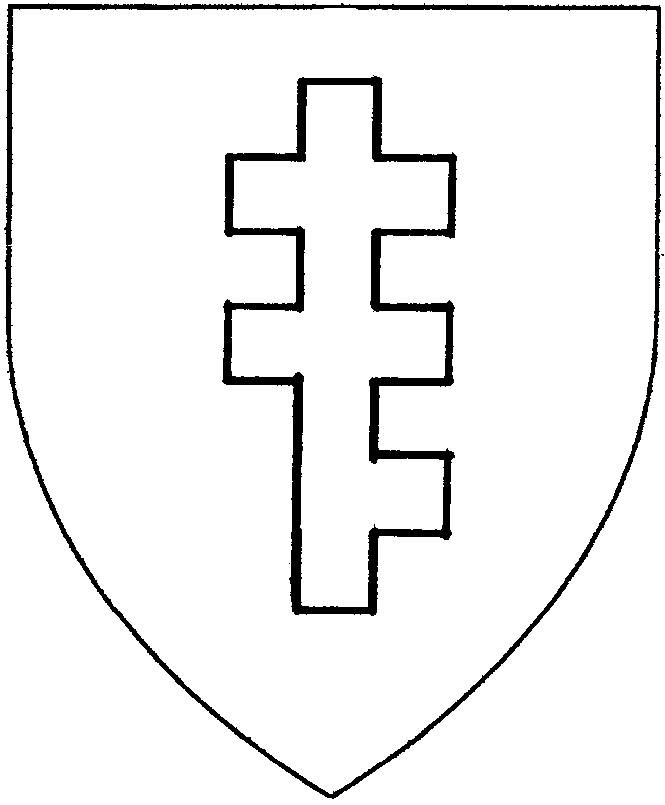
moline vs cross couped of three crossbars missing dexter base arm. [16]
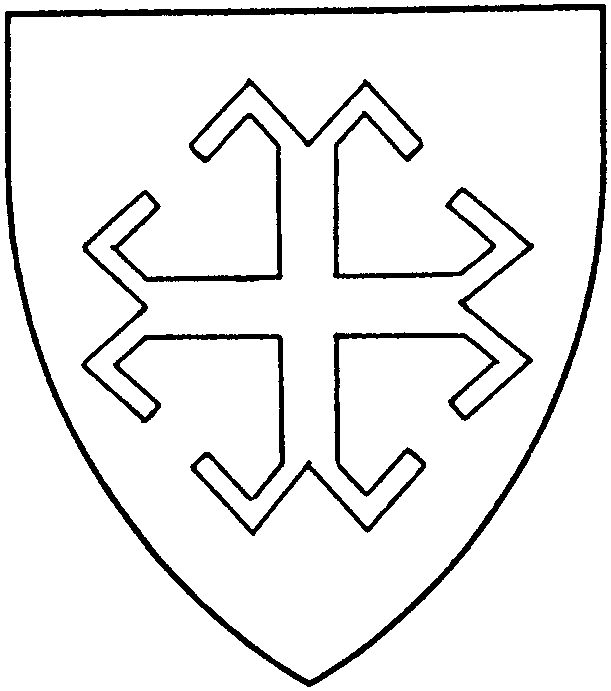
formy vs. bowen. [31]
fret vs. bowen. [32]
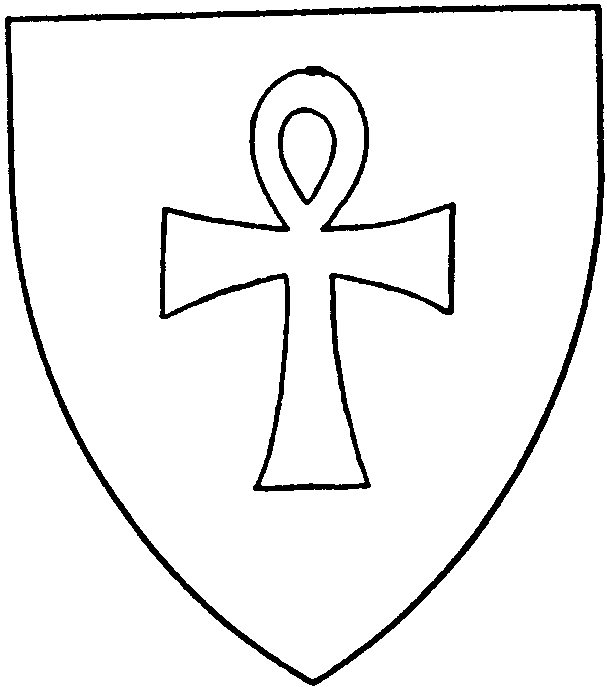
moline vs. ankh. [35]
Precedents regarding cross conflicts:
[1] [a cross fleury vs. cross of Santiago] As of the March 2001 LoAR, "A cross patonce and a cross of Santiago are both considered artistic variants of a cross flory; therefore, there is no CD for a cross patonce versus a cross of Santiago." A cross fleury is even closer in depiction to a cross of Santiago than a cross patonce. [Cristoval Gitano, 08/01, R-Lochac]
[2] [two Latin crosses vs. two Latin crosses fitchy] ... nothing for fitching the crosses. [Fa�lenn inghean Mheanmain of Ulster, 11/01, R-Atlantia]
[3] [Gules, six Latin crosses formy Or] This is clear of ... Azure, crusily Celtic Or. There is one CD for changing the field and another CD for the difference between a Latin cross formy and a Celtic cross. The annulet portion of the Celtic cross is prominent enough to merit a CD on visual grounds and we are not aware of any period interchangeability of these charges. This is also clear of ... Chequy purpure, crusilly Or and Or. Crusilly is, by default, of crosses crosslet ... There is X.2 difference between Latin crosses formy and crosses crosslet. [Christoff von Rotenburg, 12/01, A-Meridies]
[4] A cross patonce and a cross of Santiago are both considered artistic variants of a cross flory; therefore, there is no CD for a cross patonce versus a cross of Santiago. [Caitlin Davies, 03/01, R-East]
[5] A cross swallowtail is significantly different from a cross formy but not substantially different... [Margaret Powell, 07/99, R-Meridies]
[6] ... there is still a CD between a cross flory and a cross bottony. [Caterina de Cesare, 08/99, A-Middle]
[7] [a Latin cross bottony fitchy vs. a cross bottony fitchy]There is 1 CD for the field, but none for the difference in the crosses . Matilda Merryweather, 08/99, R-Ansteorra]
[8] There is a CD between a cross nowy and a cross quadrate. [Magdalena Bischoptre, 10/99, A-Calontir]
[9] ... there is not a CD between a cross crosslet fitchy and a cross bottony. [Gertraud von Wuerzburg, 12/99, R-Caid]
[10] ... the difference between a Celtic cross and a cross fleury, while significant enough for a CD, is not substantial enough for X.2, Difference of Primary Charges, to apply. [Celestine de Chatham, 01/00, R-Meridies]
[11] ... there is a substantial difference between a patriarchal cross and a plain cross throughout. [Karolus Janos, 02/00, A-Ansteorra]
[12] [a cross quadrate formy fitchy vs a cross patty sable] A comparison of the emblazons shows that the addition of the quadrate is not enough of a change, when used on a formy cross, to generate difference. [Johann Wolfgang von Hesse, 04/00, R-Atenveldt]
[13] [three crosses of Santiago Or vs. three crosses crosslet fitchy Or] ... there is a CD for type of cross. [Ximena Yannez de Talavera, 04/00, A-Meridies]
[14] There is no CD for the change between a cross nowy and a cross nowy quadrate, as the overall visual impact is quite similar, and there is no evidence indicating that the treatments were considered distinct in period. [Katheryn MacThomas of Ireland, 09/00, R-Middle]
[15] ... while there is a CD between crosses formy and crosses bottony, they are not substantially different. Therefore the two device are not clear by RfS X.2, "Difference of Primary Charge,"... [Johan Krieg , 0201, R-Atlantia]
[16] [a cross moline] This is clear of ... Azure, a cross couped of three crossbars, missing the dexter base arm, a bordure embattled argent. The two crosses, having a different number of arms, are substantially different. This is also clear of ... Sable, a cross crosslet fitchy within a bordure embattled argent. There is one CD for the change to the field, and a second for the difference between a cross crosslet and a cross moline. [Gryffri de Newmarch, 05/01, A-Meridies]
[17] [a cross bottony vs a cross of Jerusalem] There is a CD for the change of type between a cross of Jerusalem and a cross bottony. However, there is not the substantial change of type needed to clear it by RfS X.2, Difference of Primary Charges. [Maridonna Benvenuti, 06/01, R-Meridies]
[18] [A cross crosslet fleury vs a cross couped and vs a crux stellata] In both cases there is a CD between the crosses, but not a complete difference of charge. (William of Weir, 7/96 p. 19)
[19] [a Latin cross flory vs a cross of Santiago] There is nothing for the difference between a cross of Santiago and a Latin cross flory. (Bruinneach nic Thighearnain; 9/96 p. 18)
[20] [crosses bottony fitchy vs Maltese crosses] There is a CD for changing the type of each of the three charges, but the change...is not substantial enough to invoke X.2. (Andro Bruce, 10/96 p. 9)
[21] [a cross doubly pommeled elongated palewise vs a cross moline] [There is] nothing for the difference between the two crosses. (Petros Monomachos, 2/97 p. 22)
[22] [a cross formy fitchy vs a Maltese cross] There [is a CD] for the type of cross. (Seth Williamson of Exeter, 5/97 p. 3)
[23] [a cross formy fitchy vs a cross formy fitchy throughout] In general there is a difference between an ordinary throughout vs. an ordinary couped, but not between a non-ordinary throughout vs. its non-throughout version. Most types of crosses work more like non-ordinaries, but crosses formy are exceptional: in their throughout form they in many ways act as ordinaries. In particular both crosses and crosses formy are occasionally found overlying quartered arms, and crosses formy having flat ends merge into the edge of the shield. This may not apply to crosses in general, but in this instance there is the necessary second CD. (Seth Williamson of Exeter, 5/97 p. 3)
[24] [a cross flory vs a cross of Santiago] This conflicts with ... the only CD for fieldlessness. (Balian of Boxgrove Hall, 12/ 97 p. 9)
[25] [an equal-armed Celtic cross formy vs a Celtic cross] There is ... nothing for ... the details of the crosses. (Kolfinna Fraser, 2/98 p. 19)
[26] [a Celtic cross vs a cross crosslet] There is a CD, but not substantial difference between the two types of crosses. (Ofelia le Fleming, 12/98 p. 12)
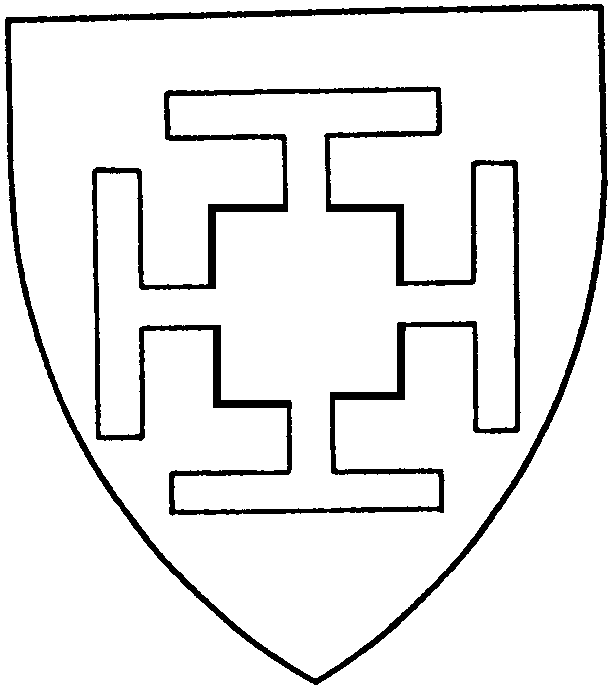
[27] A cross of Coldharbour is an SCA invention considered to be identical to a Celtic cross throughout. (Jubal Bieber, 12/98 p. 20)
[28] [a Canterbury cross vs a cross potent quadrate ] There is a CD for...the change to the type of cross (straight arms vs. formy, plus the markedly rounded ends vs. straight) (Caithlyn O'Duirnin, 10/94 p. 2)
[29] [Canterbury cross vs a cross patty] There is a CD for...the change to the type of cross. (Caithlyn O'Duirnin, 10/94 p. 2)
[30] [a crosses patonce vs a cross patty] There [is a CD] for changing...the type...of the charge(s). (Elwyn Tenways, 1/95 p. 2)
[31] [a cross formy vs a Bowen cross] ... Thus this is clear by application of X.2 for significant change of type of the primary charges. [editor's note: Laurel apparently meant that there is a substantial difference between these charges] (Grimbaldus Bacon, 5/95 p. 7)
[a patriarchal cross vs a cross of Toulouse] There is one CD for the change to the type of cross, but the "voiding" of the cross of Toulouse is a part of its definition and is not the addition of a tertiary charge. (John of Blackhawk, 8/95 p. 22)
[32] [a fret vs a Bowen cross]A visual comparison of the emblazons demonstrated that X.2. is reasonably applied between a fret and a Bowen cross. (Cynon Mac an Choill, 12/95 p. 5)
[33] X.2 [does] not apply between a Latin cross and a cross patonce. (Lloyd of Penrose, 2/96 p. 20)
[34] [a cross of four lozenges vs a cross couped vs a Maltese cross] In each case there is a clear CD for the change to type of cross, but they are not sufficiently different for X.2. to apply here. To quote from the results of Palimpsest's research into what types of changes to a cross constitute a single cadency step (as opposed to sufficient difference): "The closest [analogues to the current submission] I have found are the various arms of Banester (spelled variously as Banester, Banaster, and Banastre) in Papworth pp. 606-607. In all cases with an argent field and a sable cross are crosses plain, flory, of four fusils, humetty pointed, patonce, patty, and sarcelly. All but the first two are explicitly period, the first two having no date given. If nothing else this shows a wide variety of cross changes used to show cadency. In particular this includes the cross of four fusils, equivalent to that submitted here. Various other doublets between various crosses can be found, but these are the most relevant I have found." Based on this research, it would appear that the type of change from a cross couped or a Maltese cross to a cross of four lozenges is but a single cadency step; sufficient for a Clear Difference, but insufficient to apply X.2. for sufficient difference. (Ariane de Brie, 4/96 p. 15)
[35] [a cross moline vs an ankh] There is X.2. (Sufficient Difference) difference between these two crosses; the ends of the three lower arms have been changed significantly, and the looped chiefmost arm create an outline so different from a cross moline that it was felt that if X.2. difference can apply to crosses at all (and we believe it does), it should apply to these two. (Ursula of Kyleahin, 6/96 p. 8)
[36] [Returning Azure, a cross patonce between four roses, a bordure argent.] Conflict with ... Azure, a cross flory between four bear's heads couped argent muzzled gules within a bordure argent. There is only one CD for the change to the type of secondary charges [and nothing for patonce vs. flory]. [5/94, p.16]
[37] [Returning Gules, a latin cross throughout parted and fretted argent interlaced with an annulet Or.] Conflict with ... Gules, a cross voided argent. There is only one CD for the addition of the annulet. [Implying there is no CD between a cross voided and one parted and fretted.] [3/94, p.15]
[38] [Returning Gules, a patriarchal cross bottony throughout Or.] Conflict with ... Gules, a cross botonny Or. There may be a CD for the change to the type of cross, but there cannot be sufficient difference between [them]. [2/94, p.13; though listed among the acceptances this was intended as a return and corrected in Laurel's letter of April 12, 1994.]
[39] [Registering {field}, an equal-armed Celtic cross flory Or.] Versus ... {Fieldless} An equal-armed Celtic cross Or, there are CDs for fielded versus fieldless and for flory versus potent. [12a/93, p.12]
[40] [A pair of angles fesswise interlaced in pale vs. a chevronel interlaced with another inverted] [There is a CD] for ...type of "chevronel" --- just as there's a CD between a cross (throughout) and a cross annuletted. (September, 1992, pg. 33)
[41] [Three crosses crosslet fitchy vs. three crosses botonny] There's ...no difference for fitching the crosses, and no difference for crosslet vs. botonny. (Geoffroi de la Marche, September, 1992, pg. 39)
[42] [A Celtic cross vs. a Celtic cross equal-armed, quarterly pierced and throughout] There is no heraldic difference for the charge being throughout, or not. However, there's a CD ...for the quarter-piercing, which is visually equivalent to adding a tertiary delf. (Toirrdelbach Ua M�el Doraid, October, 1992, pg. 16)
[43] We can certainly see granting a CD between a cross moline and a cross patonce. (Dyryke Raleigh, November, 1992, pg. 19)
[44] [A cross swallowtailed] I'd grant a CD between this cross and a cross flory or a cross patonce (which were considered the same charge by medieval heralds). I might not have granted difference against a Maltese cross or a cross fourchy, but no conflicts were cited containing such crosses. (Donata Ivanovna Basistova, March, 1993, pg. 17)
[45] [Four fleurs-de-lys in cross, bases to center] The previous return (LoAR of Sept 91) determined that there was not Sufficient Difference between this arrangement of fleurs-de-lys and a cross flory. Had it been intended that the difference be negligible, however, I suspect the then-Laurel would have come out and said so. I believe there is a CD for type of primary charge group in this case. (Cara Michelle DuValier, August, 1993, pg. 6)
[46] The phrase cross of Cleves is synonymous with "Latin cross flory". We will accept whichever blazon is submitted. (Jonathus of Santiago de Compostela, August, 1993, pg. 8)
[47] [Four fleurs-de-lys in cross, bases to center] "Because of the arrangement of the primaries, we cannot apply X.2 to grant sufficient difference between this arrangement of four fleurs-de-lys and the cross flory." (LoAR 9/91 p.17).
[48] "A cross crosslet and a cross bottony are only artistic variations of the same charge, and were used interchangeably in period, so no difference may be granted between them." (LoAR 4/92 p.22).
[49] [A Celtic cross] "Conflict with... {fieldless} an equal armed Celtic cross... There is one CD for fieldlessness, but that is all." [implying equal-arming is worth no difference from standard latinate] (LoAR 5/92 p.23).
[50] "A cross clechy is a CVD from a cross flory." (LoAR 7/90 p.6).
[51] [Cross pointed vs. cross moline] "There is a CVD for type of cross, but with all the good will we could muster, we could not find sufficient difference between these two crosses." [That is, X.2 does not apply between moline and pointed] (LoAR 8/90 p.15).
[52] [Three latin crosses clechy, as primary charges] "Several possible conflicts were cited by a number of commenters, noting primarily that clechy is a later term and that this would conflict with a number of '(field), three crosses formy/paty argent.' It was the consensus of the meeting that the combination of the pointed ends of the cross combined with the longer lower arm was sufficient for a CVD here." (LoAR 9/90 p.1).
[53] [A cross of four anchors, as only charge on the device] "Most of the commenters, and Laurel, have no serious problem applying the provisions of X.2 to very different types of crosses. Indeed, applying this standard, we can see this submission clear of [same field, a cross crosslet of the same tincture]. However, we believe that the standards to be applied in X.2 are somewhat stronger than those applied to obtain a CVD between charges. As a consequence, we cannot in good conscience call this clear of [same field, a cross potent of the same tincture] (we see one CVD for the change to type of cross) or [different field, a cross of Calatrava of the same tincture] (with one CVD for the change to the field, but less than a CVD for the change to the type of cross)." (LoAR 9/90 p.16).
[54] "Evidence was presented that period heralds saw no difference between crosses and crosses fitched, nor did the modification of the bottommost limb of four appear to give adequate visual difference to grant a CVD." (LoAR 10/90 p.14).
[55] "[There is] not enough difference between a maltese cross and a cross patonce for [a CVD]." (LoAR 1/91 p.23).
[56] [A tau cross double-crossed, potent at the foot] "[Conflict with] a double-cross (Doppelkreuz)...(it is a Latin cross double-crossed). While we can see granting a CVD with no problem, we do not believe that X.2 can apply in this case." (LoAR 2/91 p.22).
[57] [The principal herald] has provided compelling evidence from illustrations of the regalia of the Order of the Knights of Calatrava that what the Society calls a Cross of Calatrava is merely an artistic variant of the cross flory. (LoAR 21 May 89, p. 20)
[58] We could see no more than a minor point of difference between the cross of conjoined ermine spots and the cross fleury. (LoAR 21 May 89, p. 23)
[59] A cross botonny is only an artistic variation of a cross crosslet. [BoE, 5 Jan 85, p.19]
[60] A cross-millrind or cross miller is "a severer form, and perhaps one more akin to the original notion of the fer-de-moline" of a cross moline. (Parker 168) There are no points of difference between the two, but I see no harm in blazoning the artistic variation. [BoE, 6 Apr 86, p.1]
[61] Virgule commented at length on the "distinction" (such as it is) between a cross patriarchal and a cross of Lorraine. The two differ only by the position of the second and longer traverse, which is nearer the foot on the cross of Lorraine; Baron Alfgar's quotes indicate that the two are often confused. I can see recognizing the distinction in blazon, but allowing no heraldic difference. [BoE, 7 Jul 86, p.6]
[62] A Cross of Cleves is a Latin Cross fleury. (IoL, 1 Sep 73 [70], p. 4)