 |
| Although petrified wood is found around the world, some of the most abundant and beautiful examples can be found in the Petrified Forest National Park. Beyond appreciation for the beauty of these fascinating fossils, petrified wood provokes specific questions from many visitors: |
| The Process of Petrification |
| A. The process of petrification is dependent on certain conditions. ~The dead wood needs to be protected from decay. ~The dead wood becomes saturated with mineral-laden water. The porous nature of wood allows the movement of water-borne particles. ~The water itself needs to harbor specific and minerals necessary for petrification. |
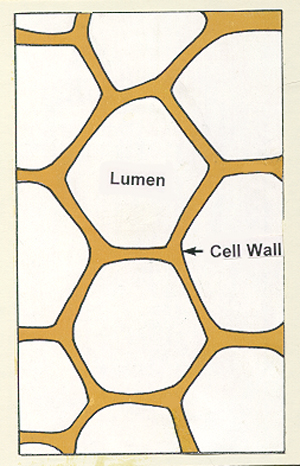
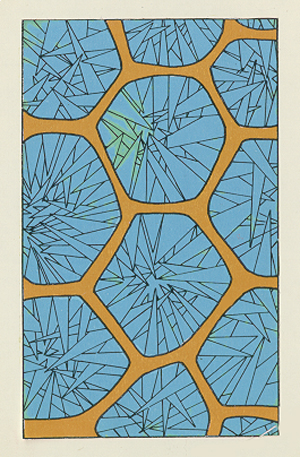
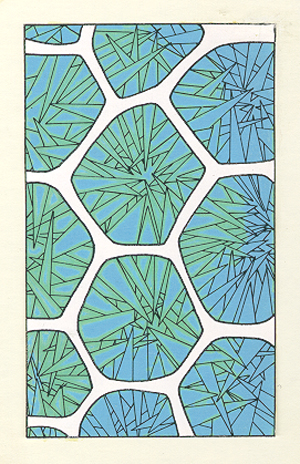
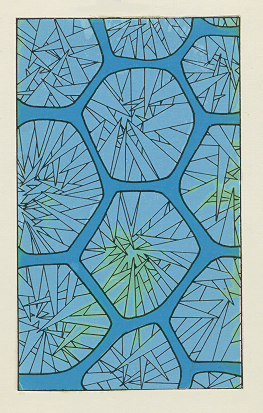
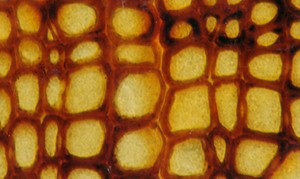
| B. After the burial and saturation of the wood by mineral-laden water, chemical reactions take place between the minerals and the cellulose compounds in the cell walls of the wood. The growth of mineral crystals begins in the porous cell walls (1), continues on the inner surface of the walls (2), and finally fills the central cavity of the central cavity (lumen) of the cell itself (3). If the process ends here, the cell walls remain intact, thoroughly embedded with crystals. This type of preservation is called permineralization. |
| C. Conditions may change in the solution surrounding the permineralized wood. If this happens, the cells walls degrade and dissolve, leaving the mineral fillings as perfect and finely detailed casts of the cell lumens. This is a rare occurance. |
| D. Usually, however, crystals grow in the spaces left behind by the dissolution of the cell walls. Thus, two phases of crystal deposition result in complete mineral replacement of the wood. This creates a pseudomorph: a copy of wood. In thin sections of petrified wood, the boundaries between cell walls and cell cavities can be seen using a microscope. Minerals, including iron, manganese, carbon, and chromium, can mark these boundaries, causing the colors of the petrified wood. |
| The Palette of Petrified Wood |
| ~How did the wood become petrified? |
| ~What causes the rainbow of colors? |
| ~How long did it take to petrify the wood? |
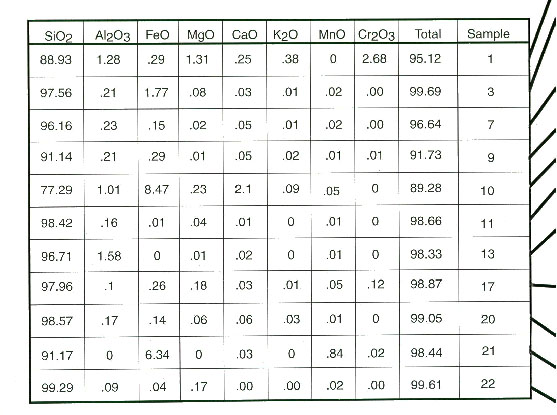
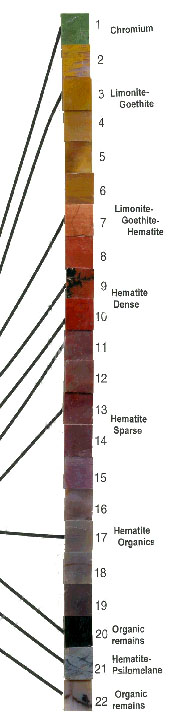
| Individual color samples of fossil woods demonstrate the chemical composition. |
|
 |
| Without protection, dead wood is susceptible to attack by fungi and other biological agents of decay. Protection can come from rapid burial of logs by volcanic ash, mud, sand, gravel, or other fine-grained sediments, creating an anaerobic environment. Fungal growth is also inhibited by the mineral solution in which the logs are steeped. |
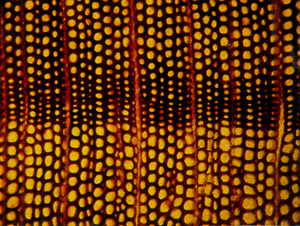
| Cross-section of modern and petrified wood showing cells. |
 |
 |
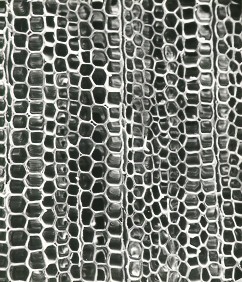 |
| Cross-section of modern Cypress wood X175 |
| Cross-section of petrified wood X175 (needs to be replaced with another graphic) |
| A. Diagram of a cross-section of unpetrified wood |
 |
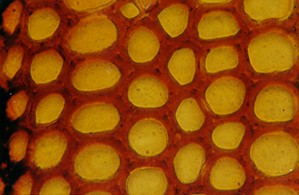 |
| 1. Cross-section, cell walls infiltrated by quartz. X350 |
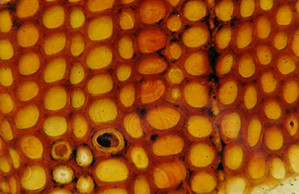 |
| 2. Cross-section, lumens filled with microcrystalline quartz. X250 |
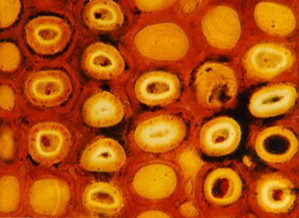 |
| 3. Cross-section, lumens with agate-like quartz fillings. X350 |
 |
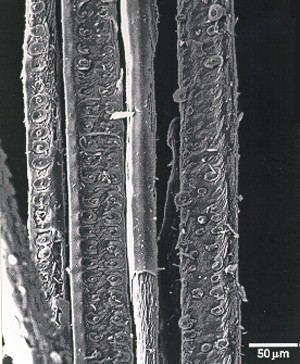 |
| Scanning Electron Microscope photomicrograph of isolated casts of wood cells. (Can be replaced with better graphic) |
 |
 |
| Organic residue partly removed from cell walls. Lumens filled with quartz. X350 |
 |
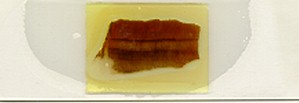
| Polished cross-section of petrified wood on microscope slide. |
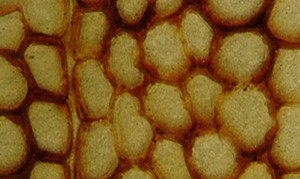 |
| Organic residue of cell walls greatly reduced. Lumens filled with quartz. X350 |
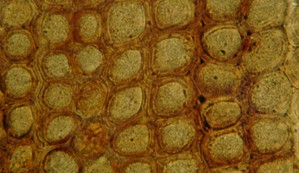 |
| Very little organic residue of cell walls remaining. Lumen filled with quartz. X350 |
| Sulfides Bornite Cu5FeS4 Copper iron sulfide* Chalcocite Cu2S Copper sulfide* Chalcopyrite CuFeS2 Copper iron sulfide* Cinnabar HgS Mercury sulfide* Covellite CuS Copper culfide* Galena PbS Lead sulfide* Marcasite FeS2 Iron sulfide** Pyrite FeS2 Iron sulfide*** Fluorides Fluorite CaF2 Calcium fluoride* Oxides Hematite aFe2O3 Iron oxide** Tenorite Cu2+O Copper oxide* Chalcedony SiO2 Crytocrystalline quartz*** Opal SiO2-nH2O Silicon dioxide hydrate*** Precious opal SiO2-nH2O Silicon dioxide hydrate* Hydrous Oxides Goethite Fe3+O(OH)2 Iron oxide hydroxide*** Carbonates Aragonite CaCO3 Calcium carbonate** Calcite CaCO3 Calcium carbonate*** Dolomite CaMg(CO3)2 Calcium magnesium carbonate** Siderite Fe2+CO3 Iron carbonate* |
| Examples of minerals reported as agents in the process of petrification |
| Silicates Chlorite Group (Mg,Fe2,Ge3)6AlSi3O10(OH)8 hydrate of magnesium iron aluminum silicate* Halloysite Al2Si2O5(OH)4 Aluminum silicate hydrate* Pyrophyllite Al2Si4O10(OH)2 Aluminum silcate hydroxide* Talc Mg3Si4O10(OH)2 Magnesium silicate hydrate* Phosphates Apatite Group** Perhaps: Chlorapatite Ca5(PO4)3Cl Fluorapatite Ca5(PO4)3F Hydroxylapatite Ca5(PO4)3(OH) Fossil replacement not defined but stated as apatite Vanadates Carnotite K2(UO2)2V2O3 -H2O Potassium uranyl vanadate hydrate* Sulfates Barite BaSO4 Barium sulfate* Uranates Uraninite UO2 Uranium oxide *Rare **Uncommon ***Common |
| B. Diagram of a cross-section of petrified wood with crystals filling cavities. |
| D. Diagram of a cross-section of petrified wood in which mineral matter has filled the cell lumens and replaced the cell walls. |
| C. Diagram of a cross-section of petrified wood in which the cell walls have degraded and have yet to be refilled with minerals. |
 |
 |
 |
 |
 |
 |
 |
 |
 |
 |
 |
| The Length of the Process |
| By examining the petrified logs at Petrified Forest National Park, it is noted that most of the logs are nearly round in cross-section just as they were in life. This indicates that the process took place quite rapidly, geologically speaking. The water-logged trunks had not been crushed by the weight of the overlying sediments. As the deposition of river sediments takes place rather quickly in normal circumstances, the possibility that the petrification process occurred in only a few centuries or even less has been theorized. |
 |
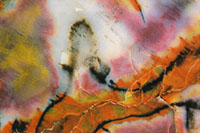
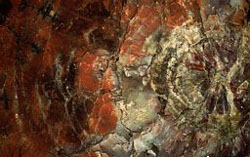
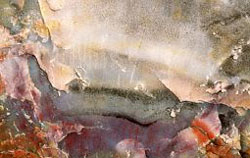
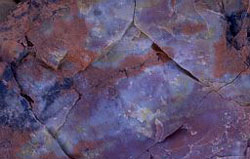
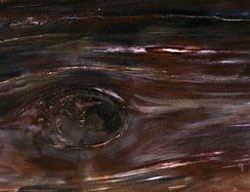
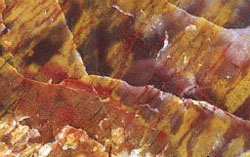
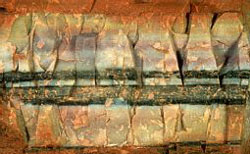
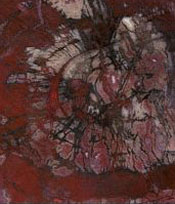
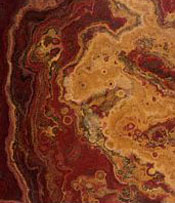
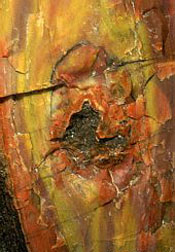
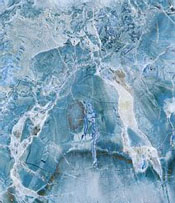
| The bright mustard colors through rich reddish hues in petrified wood of the Petrified Forest region are caused by small quatities of the iron minerals hematite, geothite, and limonite mixed with naturally colorless quartz. Green in some of the wood is created by small amounts of a chromium mineral. Depending on circumstances, black is caused by either large amounts of the carbon that was in the original wood or the iron mineral magnetite. |
| Whatever the color, the pattern, and the size of petrified wood pieces, this natural wonder is limited. Over more than a century, pieces have been removed by people, resulting in the disappearance of the Petrified Forest. Although 10% of the petrified wood deposit is protected and preserved within the boundaries of Petrified Forest National Park, tons continue to be stolen every year. Please help us protect this internationally important site for future generations. |
 |
 |
 |

|
|
|
|
|
|
|