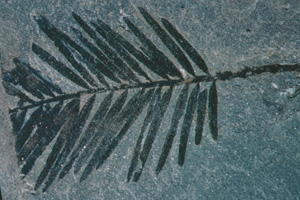
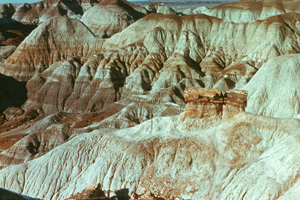
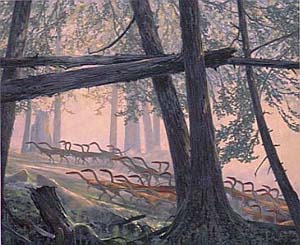
During the Late Triassic, 225 million years ago, this region was an immense tropical floodplain located near the equator. Sediment was transported by streams and rivers from the nearby mountains and highlands to settle in lakes and swamps. Several hundred feet of sediment accumulated during this time to form sandstone, siltstone, mudstone, and claystone layers of the Chinle Formation. Lush ferns, horsetails, and cycads provided cover and food for reptiles of all sizes, insects and their relatives, primitive mammals, and early dinosaurs. The waters teemed with crabs, crayfish, fish, and clams.
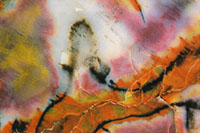
In the western sea, a chain of volcanoes began erupting, volcanic ash was blown eastward by winds, settling over on the plains, basins, and highlands of the interior. This fine silica powder mixed into the mud and water of the floodplain. Waterlogged trees that were washed down from the mountains were covered by sediment and preserved through the influx of mineral-laden water into their tissue, causing the growth of silica crystals within the cell structure of the wood.
By the end of the Mesozoic, the continents started to separate by tectonic activity, the crust of the earth moving as the Atlantic basin becomes wider. Ancient Arizona moved away from the equator, the climate changing.
After the Triassic, several thousand feet of Jurassic and Cretaceous sediments were deposited on top of the Chinle Formation in the Colorado Plateau region. In the Petrified Forest these beds were eventually eroded away. Between the Chinle and Formations and the next formation an unconformity, missing layers of rock, represents 170 million years of erosion. |