Quadrajet Fuel Loss Problem
Used Rochester Quadrajets have a peculiar and frustrating tendency to mysteriously lose fuel when sitting for a period of time.
I have found that fuel is commonly lost through three routes:
1. Evaporation. The vent tube on the airhorn goes directly to the fuel bowl. Heat percolates the fuel and it evaporates. A heat insulator under the carb will help with this problem.
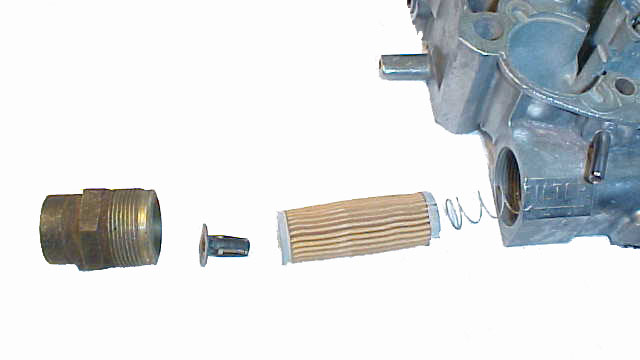
2. Out the way it came in. Stock Quadrajets have a filter behind the fuel inlet fitting in the housing.
Fuel can back siphon if it does not have the check valve installed in the filter as shown.
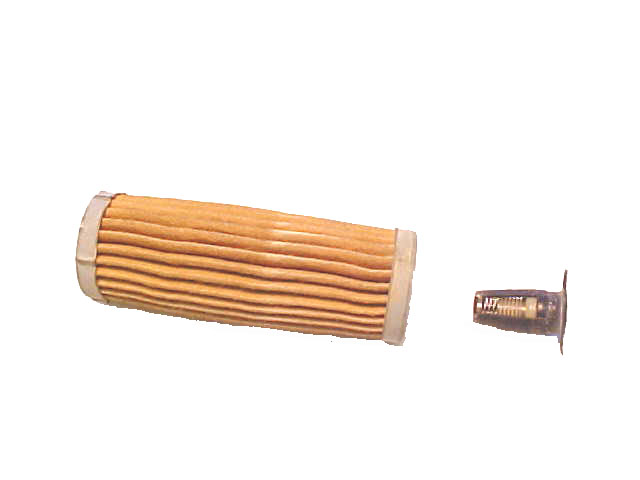
For some that are racing with a Q-jet, the check valve might be a flow restriction and back siphoning a necessary evil. Inline,AN style check valves are available, if neccessary.
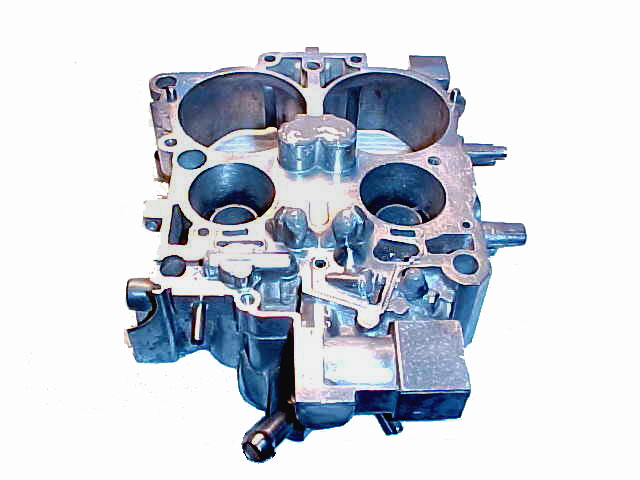
3. The infamous leaking of gas past the "Well plugs". When the Q-jet bowl was cast, various manufacturing holes needed to be plugged. Over time these plugs have the tendency to develop leaks.
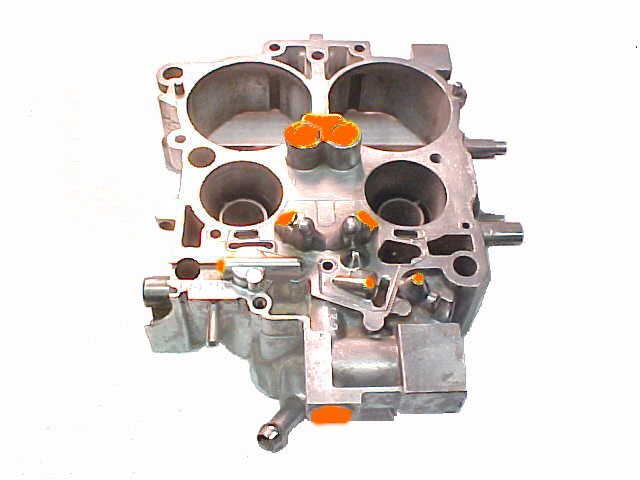
To see if this is the problem, remove the four bolts that secure the carb to the manifold. Gently lift the carb enough to slip a sheet of white paper between the carb and manifold. Let sit overnight. If the carb is leaking, the paper will be stained with gas.
The solution is to seal the well plugs with epoxy.
First remove and dissassemble the carburator. Clean the body completely. 'Hydroseal' carb cleaner works very good. It comes in a 5 gallon pail with a dip basket. Soak the main body overnight and rinse off. Then clean again with a "non-residue" type of spray brake cleaner ('Brakleen' brand).
Lot's of epoxy brands and types out there, but I've found 3M 'Scotchweld' works good.
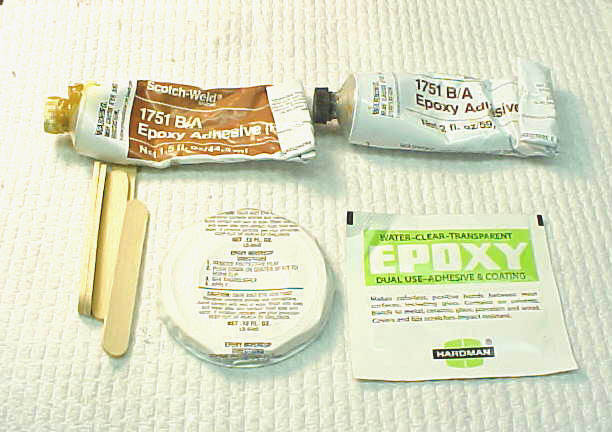
It cures overnight and flows nicely. If you use the faster setting epoxies, you may not finish in time before it sets up and the appearance may be shabby.
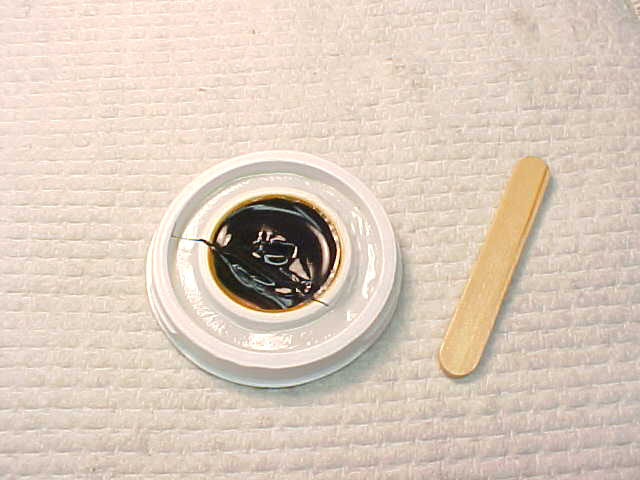
Mix the epoxy with a small wooden spatula. You can find these at craft stores.
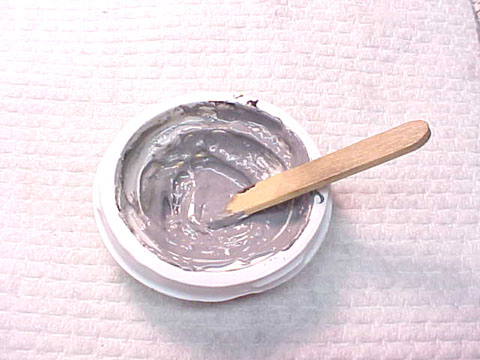
Apply the epoxy to the well plugs, making sure to work it into the nooks and crannies. Allow to cure at least overnight, but 48 hours is better. Temperature affects curing time and quality of the cure.
last update=1/21/03