

For whatever reason you are considering starting a HPCT there are essential preliminary tasks:
- Perform a needs assessment to evaluate the wisdom of a palliative team e.g. if your hospital is a Maternity Hospital it makes no sense. However if it is a general hospital with an oncology service and possibly other specialists it makes good sense.
- Enrol nursing, medical, social work, pastoral and other colleagues in a working group to develop a proposal for formal presentation to your institution
- Find a sympathetic administrator / planner who will support your thinking and proposal
- Meet with Hospital Administration and present your idea/proposal/costings
- Get advanced training in palliative care, read and surf the many good palliative sites on the internet if available
- Meet with colleagues in other disciplines, oncology, surgery, medicine to introduce yourself and the concept of palliative care. Their understanding and collaboration is essential
- Meet with pharmacy administration to enrol their support and inform them of the principles, practice and pharmacopoeia of palliative care. You must be sympathetic to there concerns re: increased workload, overtime budget etc.

https://web.archive.org/web/20200726052034/https://www.aaem.org/UserFiles/file/PalliativeCare.pdf
Common causes of suffering in seriously ill:
- • Pain
- • Dyspnea
- • Nausea/vomiting
- • Weakness & fatigue
- • Insomnia
- • Anorexia +/-cachexia
- • Incontinence
- • Constipation
- • Agitation/Delirium
- • Anxiety
- • Depression
- • Sense of well-being
- • Uncertainty about future
- • Fear of disability
- • Fear of death
- • Hopelessness
- • Remorse
- • Loneliness
- • Loss of
- – Meaning/Role
- – Control
- – Dignity
- – Autonomy
Hospital Palliative Care Unit
https://bit.ly/HospitalPCU
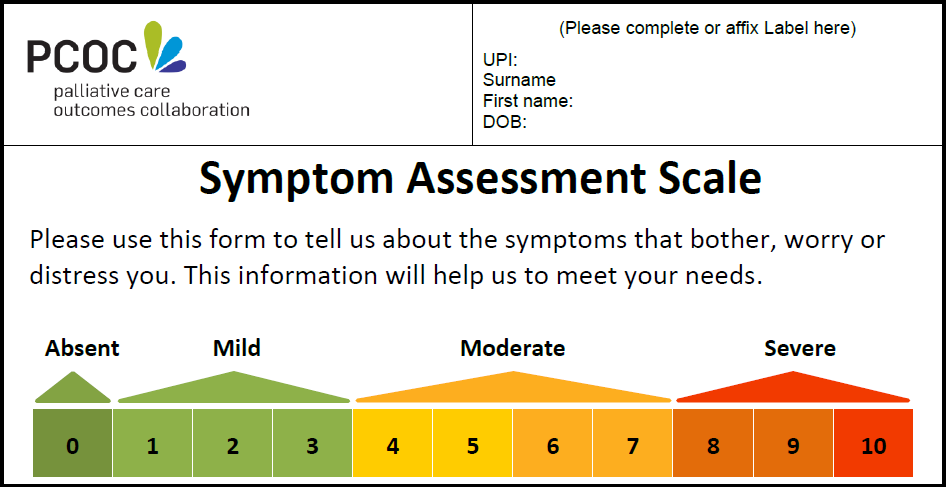
- Every person is different and symptoms experienced at end of life vary. Some common symptoms are pain, constipation, nausea, tiredness, breathlessness, fatigue and delirium.
In most cases symptoms can be controlled to a comfortable level, but some symptoms may not disappear completely. - Relief of symptoms is one of the major aims of the palliative care team.
- As a carer, you can help the person you are caring for by assisting them in recognising and managing their symptoms. Only do this if you feel comfortable doing so and if your relative is happy for you to do so. Otherwise, contact your GP or a palliative care team member if you are concerned about symptom management.https://www.betterhealth.vic.gov.au/health/ServicesAndSupport/Palliative-care-dealing-with-common-symptoms?viewAsPdf=true
- It can often be difficult to be certain that a person is dying, but it is essential to recognize the signs of dying in order to appropriately care for people at the end of life.
- An individualised care plan including the areas of symptom control and anticipatory prescribing should be created.
- Follow the principles of pain management used at other times when caring for people in the last days of life, for example, matching the medicine to the severity of pain and, when possible, using the dying person's preferences for how it is given. Consider non-pharmacological management of pain in a person in the last days of life.

https://www.ncbi.nlm.nih.gov/pmc/articles/PMC5371025/
Dispelling the Myths About Hospice and Palliative Care
- MYTH:
I can only get palliative care in hospital
- MYTH:
Palliative care manages pain through the use of addictive narcotics.
- MYTH:
Hospice and palliative care accelerates death.
- MYTH:
Hospice and palliative care is just for people with cancer
- MYTH:
Hospices are generally just for old people
- MYTH:
Everyone has access to hospice and palliative care
- MYTH:
Having hospice and palliative care means you will die soon.
INSOMNIA
- Venous thromboembolism (VTE) is a common complication of malignancy which carries a poor prognosis. This Fast Fact discusses the approach to VTE in patients with advanced cancer.
- The patient’s prognosis and preferences should be considered prior to starting anticoagulation therapy. Clinicians should work with hospice agencies to determine an affordable plan to safely administer and monitor anticoagulation for acute VTE in hospice patients. Clinicians should prepare patients who decide to initiate anticoagulation for discontinuing it once expected survival is short or worsening risks such as uncontrolled INR become apparent.
- *Major bleeding includes any bleeding associated with death, located at a critical site (intracranial, intraspinal, intraocular, retroperitoneal or pericardial area), resulting in the need for a transfusion of at least two units of blood or leading to a drop in hemoglobin of at least 2.0 g per deciliter.
- Assess whether patient is at risk of VTE. If so, take into account any risk of bleeding and expected prognosis; and then discuss with the patient whether they wish to have active prophylaxis with anti-embolism stockings and low molecular weight (LMW) heparin as appropriate, balancing risks and benefits to optimise quality of life. If the patient is in the last few days or weeks of life then thromboprophylaxis is often not appropriate, and is not routine. The best evidence in favour of thromboprophylaxis is in potentially reversible co-existing acute conditions e.g. patient admitted to hospital for intravenous antibiotics for community acquired pneumonia.
Signs and Symptoms at the End of Life
https://bit.ly/SignsandSymptomsattheEndofLife
Person-centred palliative care
‘Person-centred care’ means that:

- you are at the centre of
planning and decision-making around your end of life and palliative care- your individual, cultural and religious needs are considered when care is planned
- you are treated in the way you want to be treated
- your preferences and values are recognised and respected
- you are treated with respect and dignity whatever your age, cultural background, religion or sexual orientation.

By responding to your needs and those of your family in this way, your palliative care team can help you make the most of each day.https://www.betterhealth.vic.gov.au/
https://bjaed.org/article/S1743-1816(17)30528-0/fulltext
- In 1987, Ventafridda and colleagues demonstrated, in a retrospective study, that the use of the WHO analgesic ladder for all cancer pain led to a reduction in pain intensity in 71% of patients.
- Therefore, nearly a third of patients may need additional pharmacological and psychological management. This often requires the use of adjuvant analgesics.
- Anti-depressants may be useful; older less specific drugs such as amitriptyline are more effective than the newer drugs that target fewer receptor sites (e.g. fluoxetine).
Specific recommendations are as follows:
- The time to start palliative care is as soon as a patient's cancer becomes advanced
- For newly diagnosed patients with advanced cancer, the Expert Panel suggests early palliative care involvement within 8 weeks after diagnosis
- Inpatients and outpatients with advanced cancer should receive dedicated palliative care services early in the disease course concurrent with active treatment.

https://www.ipanel.ca/
So, how do we achieve a good death?
You can divide the steps required into 6 steps:
- Thinking and talking about death
- The warning shot
- Choosing where and how you would like to be cared for in your final illness
- How should your funeral be conducted?
- Where should you be buried?
- How should your estate be divided after death?
Managing Comorbidities and Deprescribing in Palliative Care
https://bit.ly/ComorbiditiesPC
Identifying spiritual needs and resources in ways that
- Respect patients’ perspectives and do not infringe privacy;
- Involve all members of the interdisciplinary team to the extent that they are able and willing to contribute;
- Permit clear documentation of needs, strategic responses to these needs, resources required, and outcomes;
- Integrate strategies into an overall care plan in ways that are readily understood by all members of the interdisciplinary team;
- Provide a shared framework for continuity of care between community agencies and inpatient services; and
- Provide a place for religious care but do not conflate spiritual issues with religious practice. While spiritual care in general may be provided by a team, specific religious care is best provided by a person from the same faith community, preferably one willing to participate in the team.

Here are some symptoms that palliative care may address:
- Pain
- Constipation
- Nausea and vomiting
- Diarrhea
- Bowel or bladder problems
- Loss of appetite, weight loss, or wasting
- Shortness of breath or labored breathing
- Coughing
- Depression
- Delirium or mental confusion
- Weakness
- Difficulty sleeping
"Palliative Care is for treatment of pain, and suffering from a variety of symptoms when there is no cure for the underlying condition. If the CDC and the states exempt it- it is exempted. The certificate is a plan for incurable disease with intractable pain and discomfort. This is the basis of humane medical practice going back centuries. If we healers cannot provide comfort to our patients, we need to find other professions."
https://diigo.com/0hubok
Palliative and End of Life Care Aims"Who provides palliative care? Palliative care can be provided by many different health and care professionals. In a hospital setting care is provided by doctors, palliative specialists, nurses and allied health professionals. In the community the palliative care team might include the person’s GP, community and aged care nurses, visiting allied health professionals, careworkers and support workers. Family, friends, neighbours and acquaintances will also provide important support."
https://diigo.com/0huchk
- Access to palliative and end of life care is available to all who can benefit fromit, regardless of age, gender, diagnosis, social group or location.
- People, their families and carers have timely and focussed conversations withappropriately skilled professionals to plan their care and support towards theend of life, and to ensure this accords with their needs and preferences.
- Communities, groups and organisations of many kinds understand theimportance of good palliative and end of life care to the well-being of society.
https://diigo.com/0hun9c

West Midlands Palliative Guidelines for Medicine:
Medical Goals of Care and Limitation of Treatment
Calm Together have put together a collection of meditations, sleep stories, exercises and music to aid relaxation and alleviate anxiety
Please select the palliative care team members involved in the care of the patient. Select all that apply. The discipline must be a regular and specifically recognized member of the palliative care team and must have contact with the patient/family. The person of that discipline may have other responsibilities but is clearly identified and identifies as a member of the palliative care team. For example, a visit by a chaplain that sees all patients in the hospital but who does not participate as a member of the palliative care team would not be included. If that chaplain did attend palliative care team meetings (clinical and administrative), then the chaplain would be considered a member of the palliative care team, and the visit would be recorded here.
Check all that apply
- Physician
- Licensed Practical Nurse (LPN)
- Chaplain/ Spiritual Care
- Dietitian/ Nutritionist
- Advanced Practice Nurse
- Psychologist
- Physical/ Occupational Therapist
- Pharmacist
- Physician Assistant (PA)
- Psychiatrist
- Other Therapist (e.g., massage, music/art)
- Community Health Worker
- Registered Nurse (RN)
- Social Worker
- Child Life Specialist
- Other: _____________________

- Symptom Management
- Decision Making (includes Goals of Care)
- Appoint health care proxy
- Providing support to patient/family
- Providing support to colleagues/staff
- Other: ____________________
Competency in Palliative Care
https://bit.ly/CompetencyinPalliativeCare
Palliative care may last for weeks, months, or years, and the relief of moderate to severe pain during that time can greatly improve quality of life. The biggest problem with palliative care is that many people are referred for care too late. By starting this type of care early, and by using the right type of pain management, nearly all pain problems can be relieved or reduced.
https://www.hopkinsmedicine.org/health/wellness-and-prevention/palliative-care-methods-for-controlling-pain

https://www.apsoc.org.au/PDF/Publications/APS_Pain-in-RACF-2_Abbey_Pain_Scale.pdf
Palliative care refers to the active total care of patients whose disease is not responsive to curative treatment to improve their quality of life. The main goal of palliative care is achieving the best possible quality of life. In the process of palliative care, the core activities are control of symptoms and psychological, social, and spiritual problems.
This implies palliative care is a comprehensive care to solve physical, emotional, and spiritual impact of HIV/AIDS has on a person, no matter the stage of the illness.
https://www.intechopen.com/books/palliative-care/palliative-care-in-hiv-aids
The crucial elements of palliative care in people living with HIV are the relief of pain related to physical, social, psychological, and spiritual aspects and enabling and supporting caregivers to work.
https://www.intechopen.com/books/palliative-care/palliative-care-in-hiv-aids
 The route to success in end of life care – achieving quality in acute hospitals (2010) highlighted best practice models developed by acute hospital trusts and supported by The National End of Life Care Programme (now part of NHS Improving Quality). It provided a comprehensive framework to enable acute hospitals to deliver high quality person centred care at the end of life.
 https://www.england.nhs.uk/wp-content/uploads/2016/01/transforming-end-of-life-care-acute-hospitals.pdf
- Level one – Palliative Care Approach: Palliative care principles should be appropriately applied by all health care professionals.
- Level two – General Palliative Care: At an intermediate level, a proportion of patients and families will benefit from the expertise of health care professionals who, although not engaged full time in palliative care, have had some additional training and experience in palliative care.
- Level three – Specialist Palliative Care: SPC services are those services whose core activity is limited to the provisional of palliative care.
Specialist Palliative Care is delivered by a multi-disciplinary team of health professionals who work together to provide care and support to the patient and family, depending on their needs and the available resources.https://diigo.com/0hueob
Maximal dose of Codein and Tramadol on WHO step 2:
Appropriate solutions for HDC are:
- • 0.9% Sodium Chloride (normal saline)
- • 0.45% Sodium Chloride (half normal saline)
- • Dextrose 5% and 0.9% Sodium Chloride (D5NS)
- • Dextrose 5% and 0.45% Sodium Chloride (D5 1/2NS)
- • Dextrose 3.33% and 0.3% Sodium Chloride (2/3 & 1/3)
- • Lactated Ringers
- • Solutions containing potassium (maximum concentration 40 mEq/litre)
Subcutaneous Hydration in Palliative Care
https://bit.ly/SubcutaneousHydrationPC
More than one infusion site may be used to accommodate high infusion rates.
- 1. Subcutaneous insertion sites used for medication administration should be rotated every 2-7 days and as clinically indicated.
- 2. Subcutaneous insertion sites used for hydration fluids should be rotated every 24-48 hours or after 1.5 - 2 litres of fluid and as clinically indicated.
Infusion sites include;
- a. anterior chest, upper abdomen, anterior or lateral aspects of the thigh, on the back above the scapula, and outer-upper arm;
- b. ambulatory patients – the upper chest area (subclavicular) is recommended because it allows full range of motion;
- c. patients with little subcutaneous tissue – use the upper abdomen away from the waistline. Avoid areas of constriction and areas over large underlying muscles or nerves. Low abdominal sites may cause scrotal edema. Insulin is absorbed most consistently in this site so is preferred for continuous insulin infusion;
- d. sites in the thighs may cause scrotal edema;
- e. confused patients – upper back can be useful to prevent accidental removal;
- f. skin should be intact, site located away from bony prominences and umbilical area to ensure adequate adipose tissue.

Many bereaved children are left #LostForWords by death, others simply haven’t enough words to express themselves.
Download: http://www.childhoodbereavementnetwork.org.uk/media/97729/Lost-For-Words-Benjamin-Brooks-Dutton.pdf
The following guidance must be adhered to when prescribing, dispensing or administering opioid medicines:
☛ Confirm any recent opioid dose, formulation, frequency of administration and any other analgesic prescribed for the patient.
☛ Ensure where a dose increase is intended, that the calculated dose is safe for the patient. Not normally more than 50% higher than the previous dose.
☛ Check the usual starting dose, frequency of administration, standard dosing increments, symptoms of overdose, and common side effects of that medicine and formulation.
☛ Ensure that naloxone (the antidote to opioid medicines) is available in the clinical area, to treat overdose and reverse unwanted, severe adverse effects.
☛ In palliative care and chronic opioid use give lower doses of naloxone to carefully manage opioid-induced respiratory depression and sedation, while maintaining adequate analgesia:
– 100 to 200 micrograms IV stat. If respiratory response is inadequate, give 100 micrograms every 2 minutes.
– Further doses may be necessary at one to two hour intervals especially when the opioid causing the toxicity has a long half life.
https://web.archive.org/web/20200811153615/https://mm.wirral.nhs.uk/document_uploads/guidelines/CareoftheDying-non-renal-v14_67703.pdf
Okay kan, Bro!


