
- active disease: this activity can be confirmed and measured objectively by clinical examination and investigations
- progressive disease: this too can be assessed clinically
- far-advanced disease: more difficult to define but examples are
- → extensive metastatic disease in cancer
- → refractory cardiac failure
- → total dependency in neurodegenerative conditions or Alzheimer’s disease
- focus on the quality of life is the key feature of the definition
- it is person-oriented, not disease-oriented
- it is not primarily concerned with life prolongation (nor with life shortening)
- it is not primarily concerned with producing long term disease remission
- it is holistic in approach and aims to address all the patient’s problems, both physical and psychosocial
- it uses a multidisciplinary or interprofessional approach involving doctors, nurses and allied health personnel to cover all aspects of care
- it is dedicated to the quality of whatever life remains for the patient
- palliative care is appropriate for all patients with active, progressive, faradvanced disease and not just patients with cancer
- palliative care is appropriate for patients receiving continuing therapy for their underlying disease
- palliative care should never be withheld until such time that all treatment alternatives for the underlying disease have been exhausted
- → Who you want to make health care decisions for you when you can’t make them.
- → The kind of medical treatment you want or don’t want.
- → How comfortable you want to be.
- → How you want people to treat you.
- → What you want your loved ones to know.
The message of palliative care is that whatever the disease, however advanced it is, whatever treatments have already been given, there is always something which can be done to improve the quality of the life remaining to the patient.

Sukses adalah LAA ILAAHA ILLAA -LLAAH sampai Akhir Hayat.
- → it should never be withheld until such time as all modalities of treatment of the underlying disease have been exhausted
- → it is active therapy that is complementary to active treatment of the underlying disease
- → It should be integrated in a seamless manner with other aspects of care
- → a holistic approach to care, encompassing all aspects of a patient’s suffering and which is a prerequisite for successful palliative care, is often lacking in modern disease-orientated medicine.
Dame Cicely Saunders’ concept of “Total Pain and Suffering” 4 domains:
- 1) Physical Pain – easily treated by traditional medical model
- 2) Psychological Pain – often manifest as depression, anxiety, or agitation
- 3) Social Pain – results from the change in relationships and role that occur with progressive disease
- 4) Existential or Spiritual Pain – deals with larger questions of the meaning of patient’s life, their legacy, and the “why” of dying
The Five Priorities for Care of the Dying Person
https://bit.ly/5CareDyingPerson

These include:
- Assess and diagnose the cause of symptoms, before planning symptom management
- Treat potentially reversible causes, where appropriate
- Always consider non-drug approaches as they can be as important as the use of drugs
- Management plan is influenced by prognosis and patient choice and depends on the therapeutic goal
- Plan regular REVIEW and reassessment for all symptoms
- Set therapeutic goals for drugs prescribed e.g. use opioids as analgesics, not for sedation
- All drugs need a review date; the goal is to use the minimum effective dose
- Adopt a team approach
- Ask for specialist advice in difficult situations*
Principles of good pain control
- ☛ Assess the patient and explore their concerns and expectations.
- ☛ Help patients and their carers to understand symptoms
- ☛ Treat the cause of the pain where possible
- ☛ Use the analgesic ladder at the appropriate step
- ☛ Prescribe analgesia on a regular basis
- ☛ Prescribe appropriate analgesic for breakthrough pain
- ☛ Explain the management plan to patient and carer
- ☛ Review analgesic needs frequently
The principles of good end of life care are:
- ☛ Effective communication with patients and their families
- ☛ Regular assessment
- ☛ Management of symptom control
- e.g. ensure anticipatory medications prescribed
- ☛ Avoid unnecessary interventions
- e.g. ensuring DNACPR status, the need for ongoing observations/investigations/blood tests reviewed
- ☛ Provision of psychological, social and spiritual support
- ☛ Food/fluids as desired – may be appropriate for comfort even if unsafe swallow. Parenteral fluids may be continued/commenced if appropriate.
The majority of people nearing death do not eat or drink, nor do they feel hunger. Our bodies no longer need or use nutrients as we near the end of life. Food and drinks do not taste good, and are often difficult to swallow or digest.
It can be hard for caregivers when their loved one does not want to eat or drink, but it’s a normal part of the dying process. Because of decreased input, and other physiological reasons, there will likely be a decrease in stool and urine output as well.
https://hospice-ncal.kaiserpermanente.org/wp-content/uploads/2017/03/KP-NCAL-Hospice_Days-and-Hours-Before-Death.pdf
What are the essential medications in palliative care?
Ranking of ‘essential’ drug:
- 1 Morphine -- Pain
- 2 Haloperidol -- Delirium
- 3 Dexamethasone -- Anorexia/cachexia
- 4 Midazolam -- Terminal restlessness
- 5 Metoclopramide -- Nausea/vomiting
- 6 Clonazepam -- Terminal restlessness
- 7 Paracetamol -- Pain
- 8 Amitryptiline -- Neuropathic pain
- 9 Pamidronate -- Hypercalcaemia
- 10 Cyclizine -- Nausea/vomiting
- 11 Hyoscine hydrobromide -- Excess oropharyngeal secretions
- 12 Diazepam -- Anxiety
- 13 Lorazepam -- Anxiety
- 14 Omeprazole -- Dyspepsia
- 15 Chlorpromazine -- Delirium
- 16 Fentanyla -- Pain
- 17 Spironolactone -- Ascites
- 18 Ranitidine -- Dyspepsia
- 19 Promethazine -- Nausea/itch
- 20 Frusemide -- Ascites
Palliative sedation can be a welcomed method to assure patient comfort but can also be profoundly distressing to the patient’s family members and/or friends. A few principles are useful when considering support for the patient’s family and friends:
- ☛ Provide an opportunity for the patient, if possible, to express what they may want from their loved ones, or would find comforting, during the time they are sedated.
- ☛ Ascertain the level of involvement that the family wants in the process.
- ☛ Family and friends should be allowed and be encouraged to be with the patient. In many situations, an opportunity to say goodbye is of critical importance.
- ☛ Family and friends often need repeated reassurance that other methods have been sufficiently tried and/or carefully considered but were ineffective, and that sedation is unlikely to shorten the patient’s life.
- ☛ Family and friends should be kept informed about the patient’s well-being and what to expect.
Outcomes:
- a) Improve personalised end of life care - enabling more to live and die where they choose.
- b) Reduction of hospitalisation - fewer hospital deaths, fewer crisis and reduced length of stay in hospital.
- c) Symptom control - Improving effective assessment and management of symptoms, including anticipatory planning and management.
- d) Cost effectiveness - Enabling cost effectiveness and cost savings for the NHS
- e) Sustainability - embedding sustained long term changes in practice.
"It is important to understand palliative care is very different from other subspecialties of medicine. It is person-based and not disease- or organ-system-based," Dr. Contreras says. "It's a new paradigm for hospitals because we [palliative care specialists] are of the mind-body-spirit approach. We are not being asked to remove an organ or consult because the kidney is not functioning well. We're being called in because we are trying to improve an ill person's quality of life and address their suffering."A mantra in medicine:
care always, palliate often, cure sometimes.
This may allow patients and their doctors to see healthcare
in a truer light.
https://www.bmj.com/content/345/bmj.e7628.full.pdf
https://www.beckershospitalreview.com/hospital-key-specialties/palliative-care-why-it-has-become-a-growing-specialty-within-hospitals.html
While core palliative care skills can be performed by frontline clinicians including hospitalists, specialty palliative care consults are the ones who are called in for complicated cases.
https://www.the-hospitalist.org/hospitalist/article/121441/hospice-palliative-medicine/10-things-hospitalists-need-know-about
The stress experienced by those working in a HPCU is no greater than in any other palliative care service except in one respect – they are working in a unit within a hospital where there may be little if any understanding of what palliative care is. They will find that what they do is often misunderstood, seen as sentimental and unscientific, but at the same time other nurses and junior doctors in the hospital may envy their job satisfaction in the HPCU.
https://hospicecare.com/what-we-do/publications/getting-started/8-a-hospital-palliative-care-unit
Subcutaneous Medications Used in Palliative Care
https://bit.ly/SubcutaneousPC
Adjuvant Analgesics - Corticosteroids
- ■ Dexamethasone commonly used
- ■ Works by inhibiting arachidonic acid cascade to reduce inflammation
- ■ Improves appetite, nausea, malaise, and quality of life
- ■ Used for neuropathic pain, cancer pain, bone pain, pain due to compression fractures, headaches, tumors, and malignant bowel obstruction
- ■ Side effects include neuropsychological toxicity, hyperglycemia, fluid retention, gastrointestinal ulcers, fragile skin, weight gain, oral thrush, osteoporosis, and hypertension.

What is palliative care?
Palliative care is the special care of a person whose life-limiting serious illness or disease cannot be cured. Palliative care and a palliative approach to care focuses on comfort and support to the person and family, assists with making plans and decisions for the journey ahead, and optimizes quality of life. Sharing health care wishes and goals with loved ones, doctors and other health care providers is important.
What is end of life care?
The goals for end of life care continue to be guided by the person's known wishes and priorities. Care remains active and focuses on easing pain and other discomfort, as well as to support living well to the end Of life. It is important that all end of life care options are discussed and the individual's choices are respected. This may include questions and planning related medical assistance in dying (MAiD). providing emotional and spiritual support for the person, family and friends as death draws nearer is very important.
What is last days and last hours care?
Last days and last hours care are those precious moments in which the person is still alive and when time is very short. The goals for care are to provide pain and symptom management, emotional and spiritual care, and to continue to honour the expressed wishes of the person throughout the dying process and with after-death care. This care includes providing support to family and loved ones.
https://www.interiorhealth.ca/YourCare/PalliativeCare/Pages/WhatIsPalliative.aspx

Bonnie Freeman, RN, DNP, ANP, ACHPN, Compassionate Person-Centered Care for the Dying
https://www.springerpub.com/cares-nursing-tool-for-the-dying/introduction
https://web.archive.org/web/20200705104235if_/http://www.springerpub.com/media/springer-downloads/Freeman_CARES%20-%20A%20Tool%20for%20the%20Care%20of%20the%20Dying.pdf
Hospital Palliative Care Unit
https://bit.ly/HospitalPalliativeCareUnit
One goal of hospice palliative care is to allow you to live out your life without further treatment for your illness, as naturally as possible. You'll get medical care to provide comfort rather than to prolong life.
For example, chemotherapy may no longer be used to cure your cancer, but it may be given to reduce pain.
People who want to live as long as possible by any medical means are not a good match for hospice palliative care.
Another goal of hospice palliative care is to give you as much control and dignity as possible during the time you have left. For example, most people in hospice palliative care can choose to die at home, surrounded by loved ones, rather than in a hospital, hooked up to one or more machines.
https://www.healthlinkbc.ca/health-topics/aa114690#aa114734
- Everyone has the right to refuse or discontinue a medical treatment. A person at the end of life is dying, not by choice, but because of a particular disease. It is not considered suicide to refuse or stop a medical treatment that cannot bring back health.
- Legally, artificial nutrition and hydration is considered a medical treatment that may be refused at the end of life. If the patient is able to make decisions, the patient can tell his/her physician what he or she wants. For patients who can no longer talk about their wishes, some states demand strong evidence to show what the patient’s wishes are. When there is uncertainty or conflict about whether or not a person would want the medical treatment, treatment will usually be continued.

Meaning:
- • Why is this happening to me? Why now?
- • What is the meaning of my illness, my suffering, my death?
- • What will happen to me after I die?
- • Do I still have value despite changes in my appearance, productivity, independence?
- • Is there anything valuable about me that will persist beyond death?
- • Do I need to forgive or be forgiven by anyone?
- • Am I loved? By whom?
- • Will I be remembered after I die? Will I be missed?
Palliative Care Guidelines
https://bit.ly/PallCareGuidelines
Regularly remind your team why they have supportive and palliative care meetings:
- • On average 1% of your practice population will die each year.
- • Most of these deaths can be predicted.
- • Identifying patients thought to be in their last years of life enables earlier discussion of their wishes and improved care at the end of life.
- • A proactive team approach to the shared care of frail elderly people with multiple co-morbidities, including cancer, becomes more possible.
- • Well run meetings support individual clinicians to not only care for their patients better, but to also care for themselves.
- • ‘Branding’ the meetings as supportive and ensuring the name of your register includes the term ‘supportive’ can make earlier conversations easier.Regularly remind your team why they have supportive and palliative care meetings

Advantages of a Consultation Team (HPCT) over a dedicated Hospital Palliative Care Unit (HPCU) include:
- → No need to fight for space, equipment, facilities
- → Minimal personnel commitment (no night call, no holiday relief unless readily available)
- → Ability to train other disciplines by hands- on end of life care and example
- → Use of pre-existing diagnostic and therapeutic resources and other hospital staff
- → Use of the hospital pharmacy and its specialist pharmacists
Disadvantages of a Consultative Service (HPCT) include:
- → The inability to develop team expertise in a dedicated unit such as a palliative care unit
- → The inability to control medication administration.
- → The difficulty (though not the impossibility) of doing research
- → The difficulty of doing formal bedside teaching when the HPCT does not have its “own beds” .
- → The consultation services having to rely on the staff and resources of the institution to provide such services as physiotherapy, occupational-, music-, art -therapy and pastoral care.
http://www.geocities.ws/yapalindo/hospicepalliativecare/
Barriers to Access to Palliative Care
https://bit.ly/BarriersPC

https://gohrbandt.files.wordpress.com/2016/04/concepts-and-definitions-of-palliative-care.pdf
Some people think that starting hospice palliative care is a last resort, that it means they're giving up on life. Some think that hospice palliative care means a lower level of medical care. But hospice palliative care is simply a type of care that focuses on the quality of your life instead of on continuing with treatment to prolong your life.Principles of good pain control
https://diigo.com/0hujsl
- • Assess the patient and explore their concerns and expectations.
- • Help patients and their carers to understand symptoms
- • Treat the cause of the pain where possible
- • Use the analgesic ladder at the appropriate step
- • Prescribe analgesia on a regular basis
- • Prescribe appropriate analgesic for breakthrough pain
- • Explain the management plan to patient and carer
- • Review analgesic needs frequently
It is hoped that this study may guide HCP in how to initiate and carry through conversations about wishes and priorities in patients with palliative care needs.
https://journals.lww.com/
https://t.me/c/1305911983/13
https://diigo.com/0huc30
- "Hospice care is appropriate any time after a doctor has estimated that a patient has six months or less left to live, and both doctor and patient have decided to move from active curative treatment to a regimen more focussed on quality of life.
- The prognosis might mean the person has several months of rich, full life in front of them or just a few days. Hospice care can help anyone on that spectrum with a full range of direct care, emotional and spiritual support, advice, and information. We can also help friends and family of patients through the periods before and after the end of life.
- When hospice is called in well before the end of life, the stages of care can be broken down as below- but remember that every patient is different, with different needs and a different pathway."
Core Palliative Care Tools
https://bit.ly/CorePCTools
- Structure and processes of care, including: interdisciplinary assessment and care planning; team composition, qualifications, and professional development; incorporation of volunteers; quality assurance and performance improvement; interorganizational collaboration across the continuum of care; and, the physical environment in which palliative care is provided.
- Physical aspects of care, which includes assessment of, and multidimensional approaches—including, but not limited to pharmacology—to address pain and other physical symptoms. The domain also emphasizes the development and implementation of policies to guide pain treatment and the prescribing and dispensing of opioids.
- Psychological and psychiatric aspects of care, including: the interdisciplinary team’s assessment of, and response to, illness-related psychological reactions (such as grief) and psychiatric conditions (such as anxiety). The domain also specifically describes elements of bereavement services.
- Social aspects of care, including: assessment, care planning and interventions to address social needs, such as access to financial resources, and to maximize social well-being, such as family communication and coping. The domain also outlines core elements of a palliative social assessment and stresses the role of professional social work in palliative care.
- Spiritual, religious and existential aspects of care. This domain applies a broad definition of spirituality to assessment and intervention, including at the time of death and post death. The domain also describes the complementary roles of spiritual care professionals and other interdisciplinary team members in addressing patients’ and families’ spiritual, religious and existential concerns.
- Cultural aspects of care. Drawing on wide-ranging definitions of culture, this domain illustrates how palliative care programs serve patients and families in a culturally and linguistically appropriate manner, such as by eliciting and supporting perceptions and practices related to illness or caregiving. The domain also identifies ways in which palliative care providers strive for cultural and linguistic competence at both practitioner and program levels.
- Care of patients at the end of life, including the palliative care team’s role in addressing physical symptoms and responding to patients’ and families’ psychosocial, spiritual and cultural needs at the end of life and following death. The domain also underscores the integral role hospice programs play in end-of-life care.
- Ethical and legal aspects of care, including the integration of person-centered assessment and care planning with healthcare decision-making, such as in the advance care-planning process. The domain also addresses complex ethical issues common in palliative care and makes clear the need to adhere to professional, state and federal laws, regulations and standards.
Breakthrough pain occurs between regular doses of analgesia; it reflects an increase in pain level beyond the control of the baseline analgesic.
In this situation the patient should be given an additional, or breakthrough, dose of their regular opioid.
The breakthrough (BT) dose ordered should be one-twelfth to one-sixth of the total daily dose (50% to 100% of the regular 4-hourly dose). The patient should be instructed to take the BT dose as often as necessary to control the pain. BT doses should be given no more frequently than every 30 minutes.
The regular analgesic dose should be reviewed if BT pain is not controlled after 3 doses.
The regular dose of opioid should be taken at the scheduled time.
http://www.gppainhelp.com/Treatment_Tree_Breakthrough.html
Financial considerations
A life-threatening illness or injury can have a significant impact on you and/or your family’s financial situation, plans and goals.Financial changes may include:
- health-related expenses, such as medication, equipment and specialist fees
- costs related to transport, accommodation, child-care or complementary therapies
- loss of income
- difficulty with paying for debts and bills.
https://www.qld.gov.au/health/support/end-of-life/living-with-terminal-illness/finance

https://www.cfp.ca/content/60/3/235

• By mouth – Oral administration of medication is an effective, convenient and inexpensive method of medicating patients and should be used wherever possible. Medicines are easy to titrate using this route.
• By the clock - Medications for persistent pain should be administered around the clock, with additional doses as needed. This allows continuous pain relief by maintaining a constant level of drug in the body, and helps to prevent pain from recurring. The goal is to prevent rather than react to pain.
• By the ladder – The WHO ladder is a validated and effective method of ensuring therapy for pain. Medications should be administered according to the severity of the pain and drug suitability.
• On an individual basis - Individualise the pain management, different patients will require different dosages and/or intervention to achieve good pain relief.
Patients should be carefully monitored:
- For any change in pain patterns, or the development of new pain.
- To ensure adequate pain control.
- To minimise or prevent side effects from their analgesia.
https://www.appm.org.uk/
Assess Palliative Care Needs
https://www.eldac.com.au/tabid/4921/Default.aspx
The Symptom Assessment Scale is a patient-rated tool that clinicians use to measure the amount of distress caused by seven of the most common symptoms in palliative care.
https://ahsri.uow.edu.au/pcoc/assessment-tools/index.html

https://www.rcgp.org.uk/clinical-and-research/resources/toolkits/palliative-and-end-of-life-care-toolkit.aspx
- Cancer
- Blood and bone marrow disorders requiring stem cell transplant
- Heart disease
- Cystic fibrosis
- Dementia
- End-stage liver disease
- Kidney failure
- Lung disease
- Parkinson's disease
- Stroke
Oral thrush management
Regular essential mouth care management reduces the chance of infection and should be continued
NB: All medications must be prescribed
- Use a new toothbrush
- Drug treatment (requires medical review) will improve symptoms,
- Note Nystatin and chlorhexidine mouthwash should not be used at the same time, as they will inactivate each other. Use 1 hour apart.
- For patients with dentures ensure dentures are thoroughly cleaned and soaked in appropriate antiseptic (e.g. chlorhexidine) for 15 minutes then rinsed in water.
- Dispose of toothbrush following completion of drug treatment.
https://diigo.com/0huhi9

Management of Pleural Effusion in Palliative Care
https://bit.ly/PleuralEffusioninPC
The Palliative care Outcome Scale (POS) is a resource for palliative care practice, teaching and research. This website has been established by a not-for-profit organisation to help advance measurement in palliative care. Free resources and training are available.
https://pos-pal.org/
An outcome is ‘the change in a patient’s current and future health status that can be attributed to preceding healthcare’.https://epub.ub.uni-muenchen.de/43641/1/EAPC_White_Paper.pdf
Outcome measurement involves the use of a valid and reliable measure to establish a patient’s baseline health status and then evaluating changes over time against that baseline. Outcome measurement is an important step to measure the value of health care provided.
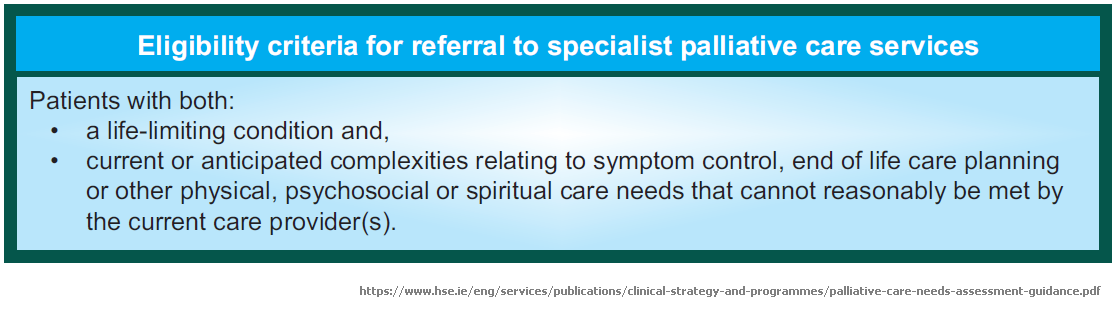
https://www.hse.ie/eng/services/publications/clinical-strategy-and-programmes/palliative-care-needs-assessment-guidance.pdf
- A team of doctors
- Nurses and nurse practitioners
- Physician assistants
- Registered dietitians
- Social workers
- Psychologists
- Massage therapists
- Chaplains
Heart Diseases in Palliative Care
https://bit.ly/HeartDiseasesinPalliativeCare
People who are getting less well from one or more health problems often miss out on well planned care and support because they are not identified and offered the right help soon enough.

The SPICT is a simple tool designed to help health and care professionals find people who might benefit from better supportive and palliative care, including thinking ahead and planning future care.
https://www.spict.org.uk/the-spict/spict-4all/
- How to palliate severe symptoms without the need for IV/SubQ medications,

- How to minimize the need for patient transfers by quickly treating patients in place,
- How to empower caregivers to care for patients at home, and how to enhance nursing efficiency amidst potential staff and resource shortages.
A multidisciplinary team can include a general practitioner,
- a surgeon,
- a medical oncologist,
- a radiation oncologist,
- a palliative care specialist,
- a nurse consultant,
- nurses,
- a dietician,
- a physiotherapist,
- an occupational therapist,
- a social worker,
- a psychologist,
- counsellor
- a pastoral care worker.
https://ww2.health.wa.gov.au/Reports-and-publications/WA-Cancer-Plan
https://ww2.health.wa.gov.au/~/media/Files/Corporate/Reports%20and%20publications/WA%20Cancer%20Plan/WA-Cancer-Plan.pdf

http://www.cheshire-epaige.nhs.uk/wp-content/uploads/2019/05/Syringe-Driver-Procedure-for-the-administrationof-medicationvia-a-subcutaneousroute-including-use-of-Mc-Kinley-T34-syringe-driver-ECT002989-1.pdf
Portable infusion pumps are used in palliative care to deliver a continuous subcutaneous infusion of medication over 24 hours. Mixing of medications in this manner is unlicensed but is supported by practice.
https://www.palliativecareguidelines.scot.nhs.uk/guidelines/end-of-life-care/syringe-pumps
When all reversible causes for the patient's deterioration have been considered, the multidisciplinary team agrees the patient is dying and change the goals of care. Reversible causes to consider include: dehydration, infection, opioid toxicity, renal impairment, hypercalcaemia or delirium.
https://handbook.ggcmedicines.org.uk/guidelines/pain-post-operative-nausea-and-vomiting-and-palliative-care-symptoms/palliative-care-last-days-of-life/
In the Australian context, symptoms that are encountered at the end of life are generally well controlled by the use of nine commonly used medications. These include:
- morphine sulphate/tartrate (an opioid);
- hydromorphone (Dilaudid, an opioid);
- haloperidol (Serenace, an antipsychotic/antiemetic);
- midazolam (Hypnovel, a short acting benzodiazepine);
- metoclopramide (Maxolon, an antiemetic);
- hyoscine hydrobromide (Hyoscine, an antimuscarinic /antiemetic);
- clonazepam (Rivotril, a benzodiazepine);
- hyoscine butylbromide (Buscopan, an antimuscarinic); and
- fentanyl (a narcotic).
Management of Subcutaneous Infusions in Palliative Care
Based on a literature review, an initial list of the 21 most common symptoms in palliative care was developed by the Working Group:.
21 Most common symptoms in palliative care
Pain
Mild to moderate
Moderate to severe
Bone*
Neuropathic
Visceral
Dyspnoea
Terminal respiratory congestion
Dry mouth*
Hiccups*
Anorexia–cachexia
Constipation
Diarrhoea
Nausea
Vomiting
Fatigue*
Anxiety
Depression
Delirium
Insomnia
Terminal restlessness
Sweating*
* The expert group determined after the process was completed that there was not enough evidence to recommend any medications as both safe and effective for these five symptoms.
https://ejhp.bmj.com/content/19/1/34#T1
dvance Care Planning helps you to consider and plan for future medical care.
https://planningaheadtools.com.au/advance-care-planning

- organizational
- poor administration
- lack of goal definition
- inadequate funding for infrastructure, personnel, medications
- lack of resources, poor allocation
- failure to recognize clinical team’s achievements
- no opportunity to develop new skills
- team
- poor leadership
- poor definition of goals
- unreasonable clinical workloads
- reimbursement issues
- poor communication
- role ambiguity: interdisciplinary conflict
- patients
- difficult patients
- difficult dysfunctional families
- emotional attachment to patients
- unrealistic goals
- attempting to solve all problems
- attempting to deal with long-standing family problems
- personal stresses
- personal
- marital
- family
Five simple steps to completing an advance directive
- 1. Select a person who can speak for you if you are too ill or unable to communicate clearly (health care agent).
- 2. Think about what is most important for your quality of life should you become seriously ill or injured with a life-threatening condition.
- 3. Write down your wishes in an advance directive form. Your health care directive indicates care you wish to have or avoid such as a feeding tube or life sustaining measures.* Durable power of attorney for health care names your health care agent.
- 4. Have document notarized or your signature witnessed by two people who are not related to you or might benefit financially from you.
- 5. Share copies of your advance directives with your family, caregivers and health care team so they can support you and your decisions when needed.

“Planning is bringing the future into the present so you can do something about it right now.” – Alan Lakein
Advance Care Planning - Key Points
- - You should start Advance Care Planning today to retain control over your medical care in case there is a time when you are unable to make your own decisions
- - Advance Care Planning tools include:
- Advance directives (living will and healthcare power of attorney)
- POLST (Pennsylvania Orders for Life Sustaining Treatment)
- - A living will is a document that expresses your wishes regarding end-of-life care
- - Healthcare power of attorney is a document that enables you to appoint someone to make decisions for you
- - POLST is a document, signed by your physician, that translates your end-of-life wishes into a physician order
- - It’s very important to think about the care you want or don’t want, to discuss these wishes with your physician, family, and friends, and to appoint a decision maker you trust
- - If you don’t have an advance directive and are unable to make you own decisions, it’s possible that people you don’t want making decisions for you will be the ones making decisions
- - It’s never too early to start Advance Care Planning
- - Everyone should have an advance directive, regardless of age

They are updated regularly as new NICE guidance is published. To view the latest version of this NICE Pathway see:
- Just as there is a period at the beginning of life, there is also a period at the end of life. End of life is “when a person is living with, and impaired by, a fatal condition, even if the trajectory is ambiguous or unknown. This period may be years in the case of people with chronic or malignant disease, or very brief in the case of people who suffer acute and unexpected illnesses or events, such as sepsis, stroke or trauma.”

- Recognising a resident’s end of life provides opportunity for assessment of palliative care needs and palliative care planning. There is no one tool that identifies when a resident is approaching this time. The surprise question is suggested as one trigger. So ask yourself of a specific resident ‘Would you be surprised if this resident would die in the next 12 months?’ However, accuracy of this question is relatively low for people without a cancer diagnosis.

Overall responsibilities of a GP regarding end-of-life care
https://bit.ly/2TdvMw1
- exploring the patient’s wishes and needs around end of life
- working to maximise the quality of the patient’s remaining time
- working to ensure a "good" death as far as possible, in the place and manner of the individual’s choosing
- working with the family and significant others, and addressing their worries and expectations
- supporting care workers in the community, including staff in care homes
- more broadly, commissioning services, and balancing very limited resources.
Advance care planning forms
Simple acts of caring are rituals. In difficult times, these ritualistic acts may take on extra significance. They can become ways of ordering and calming the feelings that arise; they provide a way to express the love you may hold for the person who is dying. You might consider these:
https://diigo.com/0hufbj
- sitting with the dying person while gentle music plays in the background;
- quietly humming or singing a song;
- reading a favourite story, scripture or poem;
- reading cards or notes sent by friends, colleagues or neighbours;
- holding or stroking the person’s hand or arm;
- brushing the person’s hair or wiping the person’s face;
- giving mouth care or giving small sips of water or ice chips (with guidance from the health care team);
- rubbing the person’s feet or legs;
- reminding the person that he or she is loved and will be remembered;
- thanking the person for the ways he or she has touched your life.
The Liverpool Care Pathway was first published in the late 1990s and went through 12 iterations until it was finally withdrawn after the Neuberger review recommended its cessation. The history of the LCP was by no means all bad. Indeed, much anecdotal evidence suggests that it helped clinicians and others provide a high quality experience of dying within an NHS setting. However it was let down by three serious failings.
https://commissiononthevalueofdeath.wordpress.com/2019/09/19/lessonsfrom-the-liverpool-care-pathway/

Palliative care incorporates the whole spectrum of care — medical, nursing, psychological, social, cultural and spiritual. A holistic approach, incorporating these wider aspects of care, is good medical practice and in palliative care it is essential.
The principles of palliative care might simply be regarded as those of good clinical practice, whatever the patient’s illness, wherever the patient is under care, whatever his / her social status, creed, culture or education.
https://hospicecare.com/what-we-do/publications/getting-started/6-principles-of-palliative-care
Top 10 Measures That Matter:
https://www.urmc.rochester.edu/
- Palliative care and hospice patients receive a comprehensive assessment (physical, psychological, social, spiritual and functional) soon after admission.
- Seriously ill palliative care and hospice patients are screened for pain, shortness of breath, nausea and constipation during the admission visit.
- Seriously ill palliative care and hospice patients who screen positive for at least moderate pain receive treatment (medication or other) within 24 hours.
- Patients with advanced or life-threatening illness are screened for shortness of breath and, if positive to at least a moderate degree, have a plan to manage it.
- Seriously ill palliative care and hospice patients have a documented discussion regarding emotional needs.
- Hospice patients have a documented discussion of spiritual concerns or preference not to discuss them.
- Seriously ill palliative care and hospice patients have documentation of the surrogate decision-maker’s name (such as the person who has healthcare power of attorney) and contact information, or absence of a surrogate.
- Seriously ill palliative care and hospice patients have documentation of their preferences for life-sustaining treatments.
- Vulnerable elders with documented preferences to withhold or withdraw life-sustaining treatments have their preferences followed.
- Palliative care and hospice patients or their families are asked about their experience of care using a relevant survey.

Indicators apply to all palliative and end of life care services in Scotland whether directly provided by an NHS board or secured on behalf of an NHS board and focus on:
- identification
- assessment and care planning
- accessing patient information, and
- place of death.
Signs of pain include:
- Noisy breathing – labored, harsh, or rapid breaths
- Making pained sounds – including groaning, moaning, or expressing hurt
- Facial expressions – looking sad, tense, or frightened; frowning or crying
- Body language – tension, clenched fists, knees pulled up, inflexibility, restlessness, or looking like they’re trying to get away from the hurt area
- Body movement – changing positions to get comfortable but can’t
Assessment forms can ensure that:
-
Assessments are routinely completed as a suite at each assessment occasion.
- Assessment scores are documented or recorded at point of care.
https://ahsri.uow.edu.au/pcoc/forms/index.html
Australia-modified Karnofsky Performance Status (AKPS)
Hospice care is appropriate any time after a doctor has estimated that a patient has six months or less left to live, and both doctor and patient have decided to move from active curative treatment to a regimen more focussed on quality of life.https://www.hospicesect.org/hospice-and-palliative-care/stages-of-hospice-care

https://www.jpsmjournal.com/article/S0885-3924(13)00243-1/fulltext#sec3.3
What can be done?
The team will work with you to relieve symptoms and provide comfort.
Things you can do:
- Allow the person to sleep as much as he or she wishes
- Include the children in your family in a way that is sensitive to their age and willingness to be involved
- Reposition the person if it makes him or her more comfortable
- Moisten the person’s mouth with a damp cloth
- If the person has a fever or is hot, apply a cool cloth to the forehead
- Give medications as ordered to decrease symptoms such as anxiety, restlessness, agitation or moist breathing
- Write down what the person says, reading it later may comfort you
- Continue to talk to the person and say the things you need or want to say. Remember that the person may be able to hear, even when not able to respond
- Keep a light on in the room, it may be comforting
- Play the person’s favorite music softly
- Encourage visitors to identify themselves when talking to the person
- Keep things calm in the environment
- Open a window or use a fan in the room if the person is having trouble breathing
- Continue to touch and stay close to your loved one

Patients have a right to an honest and full explanation of their situation
https://sites.google.com/view/principles-of-medical-ethics/home?authuser=0
Independent report Review of Liverpool Care Pathway for dying patients Report on the use and experience of the Liverpool Care Pathway (LCP).
https://www.gov.uk/government/publications/review-of-liverpool-care-pathway-for-dying-patients
Independent report Liverpool Care Pathway review: response to recommendations One Chance to Get it Right: how health and care organisations should care for people in the last days of their life.
https://www.gov.uk/government/publications/liverpool-care-pathway-review-response-to-recommendations
Planning for the end of life can be difficult. But by deciding what end-of-life care best suits your needs when you are healthy, you can help those close to you make the right choices when the time comes.
https://medlineplus.gov/endoflifeissues.html

- Recognise The possibility that a person may die within the coming days and hours is recognised and communicated clearly, decisions about care are made in accordance with the person’s needs and wishes, and these are reviewed and revised regularly
- Communicate Sensitive communication takes place between staff and the person who is dying and those important to them
- Involve The dying person, and those identified as important to them, are involved in decisions about treatment and care
- Support The people important to the dying person are listened to and their needs are respected
- Plan and do Care is tailored to the individual and delivered with compassion – with an individual care plan in place
https://www.nursingtimes.net/clinical-archive/end-of-life-and-palliative-care/personalised-care-plans-in-the-last-days-of-life-05-09-2016/
This guideline is an aid to clinical decision making and good practice in care for patients who are deteriorating and expected to die imminently. While this guideline focuses on physical symptoms, psychosocial and spiritual issues also need to be addressed to give holistic care.
https://www.palliativecareguidelines.scot.nhs.uk/guidelines/end-of-life-care/Care-in-the-Last-Days-of-Life.aspx
In 2019, a group of more than 25 general practitioners (GPs) and researchers from throughout Europe, all members of the EAPC Primary Care Reference Group, produced the EAPC Toolkit for integrating palliative care into primary care at national and clinical level.
https://eapcnet.wordpress.com/2020/05/01/covid-19-and-palliative-care-scale-up-provision-in-every-country-especially-in-primary-care/

Alternatives to Regular Medication Normally Given via a Syringe Pump When this is Not Available
Alternatives to syringe pumps - non injectable
- In the event that syringe pumps are not available, consider if any of the following options would be appropriate for your patient when they are unable to swallow.
- Some drugs can be used for more than one indication; try to minimise polypharmacy where possible.
- If the patient has an eGFR <30ml/min morphine should be used with caution due to risk of toxicity. Oxycodone may be a reasonable alternative.
- Some medicines are available as buccal preparations – moistening a dry mouth helps absorption. Some injectable preparations can be administered by the buccal or sublingual route.
- Drugs given by the sublingual or buccal route can also be dispersed in water and administered down an NG tube where this is in place.
ELDAC aims to connect people working in aged care with palliative care and advance care planning information, resources and services. Toolkits are an important way of supporting these connections.
 ETHICAL ISSUES IN PALLIATIVE CARE
- Clinical integrity – care of the whole person
- Respect for persons – the patient is the best person to make decisions about their care, in keeping with their values and beliefs
- Justice – taking into account the needs of all concerned in the care of the patient, including family, carers and others
- Benefit to the person – recognising the patient’s changing needs as the illness progresses and ensuring that treatment achieves benefit for the patient.
Ethics
Moral principles that govern a person's behavior or the conducting of an activity.
https://www.lexico.com/en/definition/ethics
There are four main principles of medical ethics
https://sites.google.com/view/principles-of-medical-ethics/home?authuser=0
- Beneficence
- Non-maleficence
- Autonomy
- Justice
Beneficence — is to produce benefit, to do good, to always act in the best interests of the patient
https://sites.google.com/view/principles-of-medical-ethics/home?authuser=0
Non-maleficence — is to minimise or do no harm
https://sites.google.com/view/principles-of-medical-ethics/home?authuser=0
Autonomy — acknowledges patients’ rights to self-determination, without prejudice
https://sites.google.com/view/principles-of-medical-ethics/home?authuser=0
Justice — refers to the equitable allocation of health care resources according to need
https://sites.google.com/view/principles-of-medical-ethics/home?authuser=0

Talqin: The recitation of the shahada and other creedal information or instructions to someone who is about to die, or who has recently died and been buried.https://en.wiktionary.org/wiki/talqin
Jika ia mati dalam keadaan bertauhid dan dalam keadaan beriman, maka itulah yang bermanfaat baginya.
https://muslim.or.id/
TALQIN dan MEMBACA DOA UNTUK PASIEN YANG SEKARAT
Hadits Ummu Salamah radhiyallahu ‘anha bahwasanya Rasulullah shallallahu ‘alaihi wa sallam bersabda:
إذا حضرتم المريض أو الميت، فقولوا خيرا، فإن الملائكة يؤمنون على ما تقولون
However, the commonly held Muslim view of a good death is lacking. It almost entirely revolves around the unknowable relationship between the deceased and Allah, while neglecting more practical temporal aspects. For the purposes of this essay, I want to explore the practical side of a “good death” and show that this is actually part of a neglected Prophetic tradition that we can and should revive.
A good death is described as any passing in which an individual dies as peacefully as possible, in accordance with their wishes and according to their own ethical, cultural or religious standards. This includes dying free of pain, in a location of their preference (usually divided into one of the 3 H’s – home, hospital or hospice) and surrounded by their loved ones rather than medical and nursing staff.https://muslimmatters.org/2017/08/30/the-prophet-and-secrets-to-a-good-death/

"Continuous subcutaneous administration of medicines using a syringe driver often becomes necessary for the control of symptoms during palliative care. A syringe driver is useful when the oral route of administration is not possible and repeated subcutaneous doses are inappropriate, ineffective or impractical. Although medicines can also be administered by other routes, such as rectal or sublingual, a further advantage of a continuous subcutaneous infusion is that any peaks and troughs of intermittent delivery methods are avoided"
https://diigo.com/0hulg2


- Patients’ attitudes to treatment and interventions may shift as prognosis shortens
- Personal priorities and preferred place of care may change
- Prognosis may affect the sustainability of care arrangements in the community.
https://diigo.com/0huehg
A New Way of Caregiving
In 1990, the World Health Organization (WHO) recognized palliative care as a distinct specialty dedicated to relieving suffering and improving quality of life for patients with life-limiting illnesses or serious injuries. WHO described the goals of palliative care as the prevention, assessment, and multidisciplinary treatment of physical, spiritual, and psychological problems. Palliative care was now an established entity, separate from hospice and sometimes administered along with curative treatments, but hospitals were rather slow to adopt the practice.
https://web.archive.org/web/20200811021945/https://www.upmc.com/-/media/upmc/Services/palliative-and-supportive-institute/resources/documents/psi-history-palliative-care.pdf
Okay, Bro!


