
Dari Sebuah Rintisan Menuju Paripurna
(Hidup tuh ra sah ngaya) = Santai santai saja!

Kalau blog CATATAN ini favourite bagimu, ... Semoga Allah swt menuntunmu pada jalan menuju ke Surga-Nya, (yang luasnya seluas LANGIT dan BUMI-Nya).

PALLIATIVE, END OF LIFE AND BEREAVEMENT CARE
Perawatan paliatif adalah perawatan yang berpusat pada pasien dan keluarga yang mengoptimalkan kualitas hidup dengan mengantisipasi, mencegah, dan mengobati penderitaan ketika terapi "kuratif" sia-sia.Victoria’s end of life and palliative care framework defines end of life as the 12 months before death; however, end of life may be shorter or longer.
- Palliative care is care that is tailored to help with the effects of life-limiting illnesses. While patients with life-limiting illness usually have greater need of palliative care in their last 12 months of life, palliative care is not limited to a person's last 12 months.
- Provision of palliative care is based on people’s needs, rather than diagnosis or prognosis, and can be provided at the same time as treatment to slow down or resolve life-threatening conditions.
Core characteristics of palliative include the following:
- • Care is provided and services are coordinated by an interdisciplinary team
- • Patients, families, palliative, and non-palliative healthcare providers collaborate and communicate about care needs
- • Palliative care is NOT the same as hospice care
- – Hospice is a specialized setting for delivering palliative care to individuals nearing death
- • Palliative care is not limited to the end-of-life phase alone and can be provided to patients and their families at any point in the illness trajectory
- • Palliative care may be provided independently or in conjunction with medical treatments targeting the disease
Differences Between Palliative Care and End-of-Life Care
https://bit.ly/Diff_PCEOLC
Palliative and end-of-life care
Think carefully about the findings above and answer the following questions:
- 1. Is death regarded as normal?
- 2. Is support only for the dying person?
- 3. Is palliative care used instead of other forms of treatment?
- 4. Does palliative care include bereavement counselling?
- 5. Is pain relief the only aim of palliative care?
Comment
In palliative care, death is regarded as a normal part of life – after all everybody dies.
Yet the support offered in a good palliative care approach supports the dying person and others who need support at this difficult time, with bereavement counselling being an example after the death of the person. It allows for different treatments to continue if they are in the best interest of the dying person, which include pain relief if necessary.
If these were the answers you thought of, you are developing an understanding of palliative care.
The Canadian Hospice Palliative Care Association (CHPCA) defines hospice palliative care as an approach to care that aims to:
“ Relieve suffering and improve the quality of living and dying. Such care approach strives to help patients and families:
- 1) Address physical, psychological, social, spiritual and practical issues, and their associated expectations, needs, hopes and fears;
- 2) Prepare for and manage self-determined life closure and the dying process; and
- 3) Cope with loss and grief during the illness and bereavement” (Ferris et al., 2002, p. 17)
The World Health Organization’s (WHO) definition of palliative care closely aligns with the CHPCA’s definition of hospice palliative care. WHO (2002) defines palliative care as an approach to care that aims to:
“ Improve the quality of life of patients and their families facing the problems associated with life-threatening illness, through the prevention and relief of suffering by means of early identification and impeccable assessment and treatment of pain and other problems, physical, psychosocial and spiritual.” (p.14).
https://rnao.ca/sites/rnao-ca/files/End-of-Life_Care_During_the_Last_Days_and_Hours_0.pdf

The palliative care team plays an important part in enhancing a patient's quality of life by:
- Recognising symptoms such as pain, nausea, fatigue, breathing or swallowing difficulties, constipation, and hopelessness.
- Identifying the patient's goals and needs so a palliative care plan can be developed specially for the patient.
- Understanding that many patients and their families struggle to make decisions. We help to facilitate difficult conversations between all parties so that trust can be established and relationships strengthened.
- Assisting with advanced care directives to help people formulate and communicate their preferences regarding care during future incapacity. It must be understood, however, that euthanasia cannot be accepted as part of palliative care.
Definition of End of Life Care
People are ‘approaching the end of life’ when they are likely to die within the next 12 months. This includes people whose death is imminent (expected within a few hours or days) and those with:
- Advanced, progressive, incurable conditions
- General frailty and co-existing conditions that mean they are expected to die within 12 months
- Existing conditions if they are at risk of dying from a sudden acute crisis in their condition
- Life-threatening acute conditions caused by sudden catastrophic events.
General Medical Council 2009
http://www.gmc-uk.org/static/documents/content/Treatment_and_care_towards_the_end_of_life_-_English_1015.pdf
Once identified and included on the register, such patients may be able to receive additional proactive support, leading to better co-ordinated care reflecting their preferences. This is in line with current thinking on shared decision-making processes and the importance of integrating advance care planning discussions into delivery of care. It is based on consideration of people’s needs rather than exact timescales, acknowledging that people need different things at different times. Earlier recognition of possible illness trajectories means their needs can be better anticipated and addressed.
https://sites.google.com/view/howtousethegsf-pig/home
What Is a Trajectory of Dying?
- “Trajectories of dying” were first articulated by researchers at the Institute of Medicine in the late 1990s as a conceptual framework for understanding the experience of illness and dying in America today. The trajectories map the course of decline in terms of “shape” and “duration” – the particular path the illness takes toward death and the speed with which it progresses (Field & Cassell, 1997).
- Trajectories are also often predictive, though not determinative, of where a patient will die, and they have significant influence over the opportunity for and timing of advance care planning and palliative or hospice care. Different trajectories of illness require different preparations, coping strategies, and responses. An understanding of the trajectories offers insights into the lived experience of people who are ill and those providing care for a loved one, and helps clinicians and their patients anticipate and plan for the challenges posed by the trajectory.

https://icd.who.int/browse10/2019/en#/Z51.5
ICD-11 (Foundation)
Palliative care is an approach that improves the quality of life of patients and their families facing the problems associated with life-threatening illness, through the prevention and relief of suffering by means of early identification and impeccable assessment, and treatment of pain and other problems- physical, psychosocial and spiritual.
The classification used nationally to assign diagnosis codes is the ICD-10-AM (see Classifications), with the ICD-10-AM 9th edition being used for the 2016–17 reference year. One of the codes in that classification—Z51.5—is Palliative care. While diagnosis codes usually describe a condition such as a disease, injury or poisoning, they can also be used in certain instances to indicate the specific care or service provided for a current condition or other reasons for hospitalisation (AIHW 2018). This is the case when Palliative care is recorded using a diagnosis code.
In 2016–17, there were about 77,400 hospitalisations identified as providing some form of palliative care, regardless of the care type assigned. These hospitalisations are identified by either the assignment of the ICD-10-AM diagnosis code of palliative care (Z51.5), or by the assignment of the palliative care type (or both).
https://www.aihw.gov.au/reports/palliative-care-services/palliative-care-services-in-australia/contents/technical-information
Caring for Dying Patients in Palliative Care
https://bit.ly/CaringforDying
Curative care refers to treatment and therapies that have the intention of improving the patient's symptoms and/or curing the patient's medical problem. Examples can include:
- antibiotics
- surgery
- a cast for a broken limb
- targeted therapy and
- curative chemotherapy.
https://www.pallcaretraining.com.au/mod/page/view.php?id=8

https://icd.who.int/browse11/
Synonyms: palliation
https://icd.who.int/dev11/
Death is one of the attributes you were created with; death is part of you. Your life's continual task is to build your death.20 health conditions that most commonly result either in death or in suffering that is severe enough to require a palliative care intervention for people of any age:
(Montaigne)
https://bit.ly/2WwTAwX
- 1. atherosclerosis;
- 2. cerebrovascular disease;
- 3. chronic ischemic heart diseases;
- 4. congenital malformations;
- 5. degeneration of the CNS;
- 6. dementia;
- 7. diseases of the liver;
- 8. hemorrhagic fevers;
- 9. HIV disease;
- 10. inflammatory disease of the CNS;
- 11. injury, poisoning, and external causes;
- 12. leukemia;
- 13. lung diseases;
- 14. malignant neoplasms (cancers);
- 15. musculoskeletal disorders;
- 16. non-ischemic heart diseases;
- 17. premature birth and birth trauma;
- 18. protein energy malnutrition;
- 19. renal failure; and
- 20. tuberculosis.
There are many 'triggers' that can be used to promote a referral for a palliative care evaluation. The evaluation can be helpful for patients with frequent hospital admissions or clinic visits, complex medical needs, global decline in function, transition to or need for a higher level of care, or a need to help with discussion about advanced directives and advanced care planning,
https://www.unitypoint.org/livewell/article.aspx?id=ee3fdf26-001b-498c-8758-9dde7f60dd4e
The Comprehensive Care Standard integrates patient care processes to identify patient needs and prevent harm. It includes actions related to falls, pressure injuries, nutrition, mental health, cognitive impairment and end-of-life care.
https://www.safetyandquality.gov.au/standards/nsqhs-standards/comprehensive-care-standard
Palliative care should start when a person is diagnosed with a serious illness. It continues through treatment, to the end of life, and helps support the family through their grief.
https://www.cancercareontario.ca/en/cancer-treatments/palliative-care
NEW Updated Proactive Identification Guidance - 6th edition 2016 - To download the Updated GSF Proactive Identification Guidance please complete the Registration Form below.
https://www.goldstandardsframework.org.uk/PIG

- Difficulty sleeping
- Appetite problems
- Nausea
- Bowel problems
- Breathing problems
- Fatigue
- Pain
Signs and Symptoms at the End of Life
http://inctr-palliative-care-handbook.wikidot.com/signs-and-symptoms-at-the-end-of-life
- Palliative care does not hasten death. It provides comfort and the best quality of life from diagnosis of an advanced illness until end of life.
- Palliative care can benefit patients and their families from the time of diagnosis of any illness that may shorten life.
- People with advanced illnesses don't experience hunger or thirst as healthy people do. People who stop eating die of their illness, not starvation.
- Pain is not always a part of dying. If pain is experienced near end of life, there are many ways it can be alleviated.
- Palliative care can be provided wherever the patient lives — home, long-term care facility, hospice or hospital.


As hospice and palliative care continues to evolve, the hope remains that the benefits of a model of care previously available to just a few people at the end of life will, in time, be extended to all who need it - regardless of diagnosis, stage of disease, social situation or means.
http://www.missionhospice.bc.ca/wp-content/uploads/2018/01/A-History-of-Hospice-Palliative-Care.pdf
WORLD HEALTH ORGANIZATION DEFINITION
Palliative care is an
approach that improves the quality of life of patients and their families
facing the problems associated with life-threatening illness, through the
prevention and relief of suffering by means of early identification and
impeccable assessment and treatment of pain and other problems, physical,
psychosocial and spiritual.
https://palliativecareindonesia.blogspot.com/p/blog-page_18.html
https://palliativecareindonesia.blogspot.com/p/blog-page_18.html
The holistic approach looks at problems in four groups:
■ Physical – symptoms (complaints), eg pain, cough, tiredness, fever
■ Psychological – worries, fears, sadness, anger
■ Social – needs of the family, issues of food, work, housing and relationships
■ Spiritual – questions of the meaning of life and death, the need to be at peace.
https://thewhpca.org/resources/palliative-care-toolkit
- Provides relief from pain and other distressing symptoms
- Affirms life and regards dying as a normal process
- Intends neither to hasten nor postpone death
- Integrates the psychological and spiritual aspects of patient care
- Offers a support system to help patients live as actively as possible until death
- Offers a support system to help the family cope during the patient’s illness and in their own bereavement
- Uses a team approach to address the needs of patients and their families, including bereavement counselling, if indicated
- Will enhance quality of life, and may also positively influence the course of illness
- Is applicable early in the course of illness, in conjunction with other therapies that are intended to prolong life, such as chemotherapy or radiation therapy, and includes those investigations needed to better understand and manage distressing clinical complications
What is palliative care?
Palliative care is the care of patients with active, progressive, far-advanced disease, for whom the focus of care is the relief and prevention of suffering and the quality of life.
The following should be noted:
- active disease: this activity can be confirmed and measured objectively by clinical examination and investigations;
- progressive disease: this too can be assessed clinically;
- far-advanced disease: more difficult to define but examples are extensive metastatic disease in cancer, refractory cardiac, renal or respiratory failure and total dependency in neurodegenerative conditions or Alzheimer's Disease;
- focus on the quality of life is the key feature of the definition
- it is person-oriented, not disease-oriented;
- it is not primarily concerned with life prolongation (nor with life shortening);
- it is not primarily concerned with producing long term disease remission;
- it is holistic in approach and aims to address all the patient's problems, both physical and psychosocial;
- it uses a multidisciplinary or inter professional approach involving doctors, nurses and allied health personnel to cover all aspects of care;
- it is dedicated to the quality of whatever life remains for the patient
- palliative care is appropriate for all patients with active, progressive, far-advanced disease and not just patients with cancer;
- palliative care is appropriate for patients receiving continuing "active" therapy for their underlying disease.
Palliative care improves the quality of life for patients with a life-threatening illness and for their families. It aims to relieve suffering by identifying, assessing, and treating pain and other physical, psychosocial, and spiritual problems. Palliative care can be provided whether an illness is potentially curable, chronic, or life-threatening; is appropriate for patients with noncancer diagnoses; and can be administered in conjunction with curative-aimed therapies at any stage of the illness. Hospice is a type of palliative care provided when curative treatment is no longer beneficial or desired, and when life expectancy is measured in months or less. It supports patients and their families while focusing on symptom relief and comfort.
https://www.aafp.org/afp/2013/1215/p807.html
What palliative care is not
Though the principles of palliative care are applicable in each of the following they are NOT palliative care services
Most emphatically palliative care is not euthanasia or physician-assisted suicide, both of which focus on death rather than on the quality of life.
- Care of the Elderly (Geriatrics)
- General practice (Family Medicine)
- Care of the Chronically Ill
- Care of Cancer (Oncology)
- Care of the Incurable
- Pain Relief Service
https://hospicecare.com/what-we-do/publications/getting-started/4-introduction
Palliative care should never be withheld until such time that all "active" treatment regimens for the underlying disease have been exhausted.
The message of palliative care is that whatever the disease, however advanced it is, whatever treatments have already been given, there is always something which can be done to improve the quality of the life remaining to the patient.
https://hospicecare.com/what-we-do/publications/getting-started/5-what-is-palliative-care
There are seven key components of this definition.
- 1. Palliative care is an approach to delivering high quality care.
- 2. Care is holistic, encompassing physical, psychosocial and spiritual domains of need thereby requiring interdisciplinary working.
- 3. The family, not the individual, are recognised as the unit of care.
- 4. The aim of care is to prevent and relieve suffering, and improve quality of life. These are the core values of good care. It follows then that this approach should be delivered across all levels and settings of care by all health and social care professionals as normal practice; palliative care is not the exclusive remit of specialists.
- 5. This approach to care is for anyone living with and dying from life-threatening illness. The term life threatening refers to a spectrum of illness from potentially curable to incurable. A life-threatening illness may progress to become life-limiting, with no reasonable prospect of cure; through thoughtful medical intervention and care it may be possible to extend life and improve quality of life. In babies, children and young people the term life-shortening is preferentially used to describe life-limiting conditions.
- 6. Care is not time-limited or based on prognosis, but based on need. Palliative care should be integrated with active treatment and extend throughout the life course to death and, for families, beyond (where bereavement care is indicated). ]
- 7. The full definition recognises death is an inevitable, and normal, part of life. A number of other definitions exist.
Measurement and Evaluation Tools for Palliative Care
https://bit.ly/MeasurementPC
What’s the difference between palliative care and hospice?
Simply put, all hospice care is palliative, but not all palliative care is hospice. As you can see in the figure below, a person may receive curative treatments, such as chemotherapy, while also receiving palliative care. Hospice care is an optional care benefit that a person may choose to use when nearing the end of their life; it does not include curative treatments.
https://www.oregon.gov/DHS/PROVIDERS-PARTNERS/LICENSING/CBC/Documents/Palliative-Care-Toolkit.pdf

Model of integration of palliative care

https://www.researchgate.net/figure/Model-of-integration-of-palliative-care-modified-from-American-Association-Institute-For_fig1_322211685


Understanding Palliative Care and Hospice
https://www.mayoclinicproceedings.org/article/S0025-6196(16)30763-7/fulltext

- The concept of beginning palliative care early in the patient’s journey is illustrated by the “Bow Tie” Model above.
- The blue triangle represents disease management, including chemotherapy, radiation, surgery and related psychosocial care.
- The purple triangle represents palliative care, including pain and symptom management and related psychosocial care.
- The patient’s illness takes them to the possible outcomes of rehabilitation and survival or end-of-life care and death, moving through a complementary continuum of disease management and palliative care, with an increasing emphasis on palliative care toward the end of life.

- 1.Symptom management
- 2.Team work
- 3.Relations and communication
- 4.Support for patient relatives during the diseases and after death

- Parkinson’s disease is a progressive neurodegenerative condition, resulting from the death of the dopamine producing neurons in the substantia nigra of the mid brain, and is currently incurable. Thus all treatment is symptomatic, with an average life expectancy post diagnosis of 15 years, although this can vary greatly.
- Because the risk of developing Parkinson’s disease increases with age, the fact that more people are now living into old age means that the overall number of people with Parkinson’s disease is also rising.
Asumsinya adalah kebanyakan pasien tidak tahu bahwa dirinya dalam masa akhir hayat.
Bila memang sudah tahu, maka pertanyaannya adalah apakah mereka mempunyai sesuatu pengharapan pada masa akhir hayatnya tsb.
Apakah kita dibutuhkan untuk mendukung dan menfasilitasi harapan-harapan terakhirnya tsb.
Harapan tsb tentunya bukan LAGI pada bagaimana menyembuhkan penyakitnya, atau bagaimana PASIEN bisa hidup jauh lebih lama lagi.
Namun MUNGKIN kita bisa sedikit membantu pasien dan keluarga membuat PERENCANAAN pada masa akhir hayatnya.
PASIEN boleh BAHAGIA dan percaya adanya TUHAN dan akan menemuiNYA di SURGANYA.
Bukan sekadar MST / Durogesic, Deksametason, dan Alprazolam,
SELEBIHNYA adalah bahwa tugas ini SANGATLAH BERAT dan bukan untuk main-main.
Salam paliatif.

Hui D, and Bruera E, Nat Rev Clin Oncol 2016;13(3):159-171.
https://www.ncbi.nlm.nih.gov/pmc/articles/PMC4772864/
https://web.archive.org/web/20200708082547/https://www.ncbi.nlm.nih.gov/pmc/articles/PMC4772864/figure/F3/?report=objectonly
Care needs of patients with advanced-stage cancer.
- a the care needs of a patient with cancer can be classified under three domains: cancer management; symptom management and personal care needs; and the management of comorbidities. Considerable interactions exist between these domains and, therefore, interventions relating to one domain of care can influence the needs pertaining to another (arrows), which necessitates dynamic monitoring of the patient and modification of their care. For instance, chemotherapeutic agents can cause renal failure, which requires the initiation of different medical interventions and can also affect the ability of the patient to proceed with oncological investigations and treatments. Disease progression might affect the emotional state of the patient, which might, in turn, affect her adherence to treatment. To optimize patient outcomes, the oncology team, palliative-care team, primary-care team, and other subspecialists need to collaborate closely and communicate often.
- b Personal care needs can be further subdivided into acute issues, chronic issues, psychosocial issues, and existential and spiritual issues. Relevant expertise, close collaboration and interdisciplinary teamwork, and adequate resources are important requirements to comprehensively address these supportive-care issues, longitudinally.
Suffering is common in this patient population. It commonly presents itself in physical symptoms; thus, controlling symptoms to maximize patient comfort is a cornerstone function of palliative care. Also important are the recognition, assessment and management of non-physical areas of suffering that are important to the patient. These include cultural, psychological, social, spiritual, financial, ethical and legal issues. Where available, consultation with palliative care specialists should be considered for all of these symptoms.
https://www.icsi.org/guideline/palliative-care/
https://www.icsi.org/guideline/palliative-care/
THE GOALS OF PALLIATIVE CARE
- • To accompany and comfort adult and paediatric patients throughout the course of serious chronic, complex, or life-limiting conditions by continually assessing, preventing, and relieving pain and suffering of any kind – physical, psychological, social, or spiritual – using best available evidence;
- • To thereby provide person-centred and family care that optimizes quality of life and maximizes the dignity of patients and their families;
- • To integrate with and complement prevention, early diagnosis, and treatment of serious chronic, complex, or life-limiting health problems at all levels of any health system and thereby to improve continuity of care, strengthen health systems, and promote universal health coverage.
PALLIATIVE CARE
Palliative care is not hospice care: it does not replace the patient’s primary treatment; palliative care works together with the primary treatment being received. It focuses on the pain, symptoms and stress of serious illness most often as an adjunct to curative care modalities.
It is not time limited, allowing individuals who are ‘upstream’ of a 6-month or less terminal prognosis to receive services aligned with palliative care principles. Additionally, individuals who qualify for hospice service, and who are not emotionally ready to elect hospice care could benefit from these services.
HOSPICE
Hospice care focuses on the pain, symptoms, and stress of serious illness during the terminal phase. The terminal phase is defined by Medicare as an individual with a life expectancy of 6-months or less if the disease runs its natural course.
This care is provided by an interdisciplinary team who provides care encompassing the individual patient and their family’s holistic needs.
https://www.nhpco.org/wp-content/uploads/2019/04/PalliativeCare_VS_Hospice.pdf
In 2001 the Canadian Palliative Care Association changed its name to the Canadian Hospice Palliative Care Association concluding that “due to the fluidity of the English language, “hospice care” and “palliative care” are no longer recognized as separate entities. The term that is now widely accepted in Canada is “hospice palliative care”.
http://www.missionhospice.bc.ca/wp-content/uploads/2018/01/A-History-of-Hospice-Palliative-Care.pdf
- All hospice is palliative care, but not all palliative care is hospice.

- Palliative care discussion or referral should be considered whenever the patient develops a serious illness.
- Palliative care discussions should be included whenever a patient with a life-limiting or life-threatening illness presents, including the hospital ICU or emergency department.

U.S. Model views incurable disease as a medical problem with a social component
- • 60% of deaths over age 60 occur in a hospital
- • Medical care is increasingly aggressive up to the last few days of life
- • Estimated that 11% of care in Intensive Care Units is futile
- • U.S Palliative care began in 1967 originally as a model of care for cancer patients, now provided for any age, and any stage of illness.
- • Addressing all distressing symptoms as opposed to only pain can lead to better outcomes.
- • Expanding palliative care to more than just hospice is essential.
- • Following cultural preferences regarding disclosure, advance planning, and decisional process improves patient and family satisfaction
- • Community-based palliative care is only available through hospice care, thus excluding a large number of patients.
- • Core components of palliative care include assessment of physical and psychological symptoms, support for spiritual distress, expert communication and coordination of care.
- • Spirituality is of high importance to patients however, less than half of physicians are open to discussing spiritual concerns
- • For health related decisions, U.S. culture known for emphasizing patient autonomy
- • Religion is used as a coping mechanism.
- • Minority cultures prefer family-based, physician-based or shared physician-and- family based decision making.
- • In the U.S. and Western Europe, cross-cultural differences occur along four dimensions: autonomy, beneficence, nonmaleficence and justice.
- • Education about patient’s differential spiritual needs is not part of most medical school curriculum, so physician’s are forced to depend on their own religious experiences in dealing with such issues.
DefinitionsPalliative Care Curriculum
https://bit.ly/CurriculumPC
Advanced Life Limiting Illnesses:
Advanced life limiting illnesses are conditions that can be reasonably expected to lead to the death of a person within the foreseeable future. The term encompasses cancer and non-cancer illnesses which are expected to shorten a person’s life.
End of Life Care:
End of life care is used in this Plan to mean the care provided to a person during the period of time when they are living with an advanced, progressive life-limiting illness. This period may be identified by clinicians asking themselves the question: “Would you be surprised if the person died in the next 12 months or so?”.
Generalist Clinicians:
Generalist clinicians include general practitioners, community nurses and allied health professionals, staff in multipurpose services and residential aged care facilities. In the context of this plan it includes health care providers whose central work is outside of palliative care.
Model of Care:
Defines the way health services are delivered by outlining best practice care and services for a person or population group or patient cohort as they move through the stages of a condition, injury or event. It aims to ensure people get the right care, at the right time, by the right team and in the right place.
Needs Based Care:
Refers to care based on the unique needs of patients and their families and carers. Frequent reassessment ensures that care and support can be adjusted as people’s needs change.
Palliative Care:
Palliative care is an approach that improves the quality of life of patients and their families facing the problems associated with life-threatening illness, through the prevention and relief of suffering. Palliative Care is not limited to the final weeks of a person’s life.
Palliative care may be provided by specialist palliative care clinicians or generalist clinicians including a person’s general practitioner in their local community. Care provided by generalists is often referred to as ‘a palliative approach’ to care.
Specialist Palliative Care:
Specialist palliative care describes services provided by a multidisciplinary team of specialist palliative care clinicians who have expert knowledge and skills in the care of people living with an advanced life limiting illness, in particular in the management of complex symptoms.
https://wnswlhd.health.nsw.gov.au/Downloads/Publications%20and%20Reports/WNSWLHD_Palliative_Care_Plan.pdf
Typology of potential dying trajectories in acute stroke
Sudden
- Little evidence of healthcare in the last year of life
- Unexpected death - e.g. ineffective resuscitation; complications of thrombolysis; overwhelming cardio/cerebrovascular event
- Plurality of physician input in last year of life
- Expected death; distinct terminal phase although not set within a general context of deterioration
- Evidence of multiple acute interventions; exacerbations of health problems; evidence of organ failure
- Evidence of increasing health problems; multiple acute, curative interventions; indistinct terminal phase
- Frailty associated with long-term health condition
- Multiple health problems; general picture of persisting, and overwhelming illness
- Unable to classify as above
Integration of Palliative Care into Clinical Care
https://bit.ly/IntegrationPC

- Palliative care does not hasten death. It provides comfort and the best quality of life from diagnosis of an advanced illness until end of life.
- Palliative care can benefit patients and their families from the time of diagnosis of any illness that may shorten life.
- People with advanced illnesses don’t experience hunger or thirst as healthy people do. People who stop eating die of their illness, not starvation.
- Palliative care can be provided wherever the patient lives – home, long-term care facility, hospice or hospital.
- Allowing children to talk about death and dying can help them develop healthy attitudes that can benefit them as adults. Like adults, children also need time to say goodbye to people who are important to them.
- Pain is not always a part of dying. If pain is experienced near end of life, there are many ways it can be alleviated.
- Keeping people comfortable often requires increased doses of pain medication. This is a result of tolerance to medication as the body adjusts, not addiction.
- Appropriate doses of morphine keep patients comfortable but do not hasten death.
- Palliative care ensures the best quality of life for those who have been diagnosed with an advanced illness. Hope becomes less about cure and more about living life as fully as possible.
- Sometimes the needs of the patient exceed what can be provided at home despite best efforts. Ensuring that the best care is delivered, regardless of setting, is not a failure.
https://www.virtualhospice.ca/en_US/Main+Site+Navigation/Home/Topics/Topics/What+Is+Palliative+Care_/10+Myths+about+Palliative+Care.aspx
- Good palliative care is not just about supporting someone in the last months, days and hours of life, but about enhancing the quality of life for patients and those close to them at every stage of the disease process from diagnosis onwards.
- A palliative care approach should be considered alongside active disease management from an early stage in the disease process.
- Palliative care focuses on the person, not the disease, and applies a holistic approach to meeting the physical, practical, functional, social, emotional and spiritual needs of patients and carers facing progressive illness and bereavement.
Palliative care is provided not only to the patient with the life-limiting illness but to their carer/family as needed - together comprising the unit of care. It is also appropriate in supporting carers and family members both prior to and following the patient's death. For a small number of people, that process may be more complex than anticipated and some may develop significant psychological and emotional issues. It is recommended that the bereaved carers receive follow-up to ensure that potential problems are identified early and referred for bereavement support if required.
http://www.dhhs.tas.gov.au/palliativecare/health_professionals
Kualitas hidup pasien adalah keadaan pasien yang dipersepsikan terhadap keadaan pasien sesuai konteks budaya dan sistem nilai yang dianutnya, termasuk tujuan hidup, harapan, dan niatnya.https://www.jpsmjournal.com/article/S0885-3924(02)00468-2/fulltext
- In an effort to address the issues that were causing suffering during the dying process, the modern hospice and palliative care movement started during the 1960s in the United Kingdom, and the 1970s in both the United States (1972) and Canada (1975).
- (The term “palliative care” or “soins palliatifs” in French was initially developed by Balfour Mount, Montréal, Canada, as a phrase that would be synonymous with “hospice care” for use in the Francophone community of Canada where “hospice” was not an acceptable term to describe end-of-life care [due to its longstanding history as a term to describe shelters for the wayward and the disadvantaged]).
Categories of life-limiting and life-threatening conditions:Palliative Care Outcome
https://bit.ly/PCOutcome
- Category 1 Those children with life-threatening conditions for which curative treatment may be feasible but can fail. e.g., cancer, irreversible organ failure
- Category 2 Those children with conditions in which there may be long phases of intensive treatment aimed at prolonging life, but premature death is still possible e.g., cystic fibrosis, Duchenne muscular dystrophy
- Category 3 Those children with progressive conditions without curative treatment. e.g., batten disease, mucopolysaccharidoses
- Category 4 Those children with conditions with severe neurological disability, which may deteriorate unpredictably, but are not considered progressive.

Goal setting in palliative careMany people find that their spiritual beliefs or a belief in something greater than themselves is a comfort at this time.
https://www.hepatitis.va.gov/pdf/HCC-patient-modules.pdf
People living with advanced disease want to live well despite their condition and related symptoms. When asked ‘what matters?’ patients and family members often reply:
- • Continuing with important life roles and usual routines.
- • No longer feeling ‘who I once was’.
- • Being able to perform daily activities independently.
- • Adequate symptom relief and a sense of control.
- • Maintaining dignity.
- • Maintaining a sense of humour.
- • Sharing time with friends and family.
- • Not being a burden to others.
Hospice and End of Life Care
- • Model for quality, compassionate care for people facing a life-limiting illness
- • Involves a multi-disciplinary team that provides – medical care, pain and symptoms management, emotional and spiritual support to person and family members
- • Focus –
- • “It’s about how you live.”
- • Develop a plan to die pain-free, with dignity, without suffering, and engage others in family to live well afterwards (your legacy).

- a. Gejala fisik
- b. Kemampuan fungsional (aktivitas)
- c. Kesejahteraan keluarga
- d. Spiritual
- e. Fungsi sosial
- f. Kepuasan terhadap pengobatan (termasuk masalah keuangan)
- g. Orientasi masa depan
- h. Kehidupan seksual, termasuk gambaran terhadap diri sendiri
- i. Fungsi dalam bekerja
Di Perawatan Paliatif mengharuskan kita semua setiap hari lebih baik menyempatkan diri membaca informasi atau edukasi tentang perawatan paliatif. Meskipun cuma membaca seuntai paragraf kalimat tentangnya. Selamat belajar, berdoa dan bekerja.

Finance Problems in Palliative Care
https://bit.ly/FinanceProblemsPC
The Tasmanian Palliative Care Formulary includes:
Medications with specialised palliative care indications
Routes and dosing, including via syringe drivers
Variations on usual prescribing for this patient group
Summaries that compare medications within a class, eg. NSAIDs, benzodiazepines
Links to useful resources;
- symptom management guidelines
- syringe driver compatibilities, and
- opioid conversion tables
http://www.advancecaredirectives.sa.gov.au/
- It is ethically important not to harm patients approaching the end of life by providing burdensome or futile investigations and/or treatments that can be of no benefit.
- SA Health have a range of online resources providing information to professionals on the Advance Care
https://derbyshire.eolcare.uk/
Derbyshire Alliance for End of Life Care . Mendaftar dan login. Beberapa modul bagus tentang perawatan Akhir Hayat disediakan secara gratis. Nuwun

Palliative care is specialized medical care for people living with a serious illness. This type of care is focused on providing relief from the symptoms and stress of the illness. The goal is to improve quality of life for both the patient and the family.
Palliative care is provided by a specially-trained team of doctors, nurses and other specialists who work together with a patient’s other doctors to provide an extra layer of support. Palliative care is based on the needs of the patient, not on the patient’s prognosis. It is appropriate at any age and at any stage in a serious illness, and it can be provided along with curative treatment.
https://www.capc.org/about/palliative-care/
Palliative care is the active holistic care of individuals across all ages with serious health-related suffering due to severe illness and especially of those near the end of life. It aims to improve the quality of life of patients, their families and their caregivers.
https://palliativecareindonesia.blogspot.com/p/blog-page_6.html
- Palliative care is the active, holistic care of patients with serious health-related suffering
- Palliative care aims to improve the quality of life of patients with severe illnesses
- Palliative care is provided to patients, their families and caregivers
- Palliative care includes early identification, comprehensive assessment and adequate management of:
- Physical issues including pain and other distressing symptoms
- Psychological distress
- Spiritual distress
- Social needs
- Whenever possible, these palliative care interventions must be evidence based
- Is applicable throughout the course of an illness, relative to the patient’s needs
- Is provided in conjunction with disease modifying therapies whenever needed
- May positively influence the course of illness
- Provides support to help patients live as fully as possible until death by facilitating effective communication and helping patients and families determine goals of care.
- Intends neither to hasten nor postpone death, affirms life, and recognizes dying as a natural process
- Provides support to help the family and caregivers during the patients’ illness and in their own bereavement
- Must be provided in accordance with the cultural values and beliefs of the patient and family
- Is applicable throughout all health care settings (from primary to tertiary) and can be provided by health care professionals with basic palliative care training
- Requires specialist palliative care with a multiprofessional team for complex cases
- In order to achieve palliative care integration, governments must:
- Adopt adequate policies and norms that include palliative care in health laws and national health programs
- Ensure access to essential medicines for pain relief and palliative care, including pediatric formulations
- Integrate palliative care services in a continuum of care with emphasis on community-based care
- Ensure access to adequate palliative care for vulnerable groups, including children and older persons
- Include palliative care as an integral component of the ongoing education and training offered to care providers, including basic, intermediate, and specialist training, as well as continuing education for health care workers and caregivers
Identification and Assessment Tools in Palliative Care Services
https://bit.ly/IdentificationToolsPC
Hip Fracture: A Trigger for Palliative Care in Vulnerable Older Adults
- Hip fracture most commonly affects older adults and causes devastating consequences including pain, immobilization, functional decline, delirium, and death. Among those in the Medicare population who sustain hip fractures, 13% die within 3 months and 24%die within 12months. Of thosewhosurvive to 6months, only50% recover prefracture ability to performactivities of daily living.
- Hip fracture has a tremendously deleterious impact onthe survival and functional outcomes of the residents of longterm nursing homes. A palliative care approach is highly appropriate and should be initiated at the onset of hip fracture in the clinical care of this most vulnerable subset of older adults.

https://www.england.nhs.uk/north/wp-content/uploads/sites/5/2018/07/cheshire-merseyside-clinical-practice-summary-palliative-care-symptoms.pdf
Advance care planning (ACP)
Advance care planning is the process whereby patients, in consultation with healthcare professionals, family members, and other loved ones, make individual decisions about their future healthcare, to prepare for future medical treatment decisions.
These clinical assessment palliative care tools were developed or adapted by Promoting Excellence in End-of-Life Care demonstration projects and national workgroups.
Legal Aspects of Palliative Care
https://bit.ly/LegalPC

- Conversations about dying and end-of-life (EOL) care are the most challenging of all communication scenarios. These conversations include discussions about diagnosis and prognosis, treatment goals, and EOL wishes, goals of care, and plans for the future.

Clinicians have the responsibility to provide opportunities for discussion and information to patients, caregivers, and surrogates throughout the trajectory of serious illness; such conversations occur in the context of an uncertain, emotional environment and require core communication skills of sensitivity and empathy—skills that professionals in all disciplines should cultivate.
- Dying involves much more than medical concerns and decisions—there are psychological, social, spiritual, and financial concerns that require the efforts of an interdisciplinary team. The ideal team would include professionals from medicine, nursing, chaplaincy, and social work or similar fields to address the medical and psychosocial and spiritual needs of the patient and family.

Team-based efforts hold the most promise for facilitating the communication needed to provide information, explore options, develop plans and goals, and ultimately provide holistic, patient-centered care.


DEFINISI LAMA (TAHUN 2000)
Palliative care is the active total care of patients whose disease is not responsive to curative treatment. Control of pain, of other symptoms, and of psychological, social and spiritual problems is paramount. The goal of palliative care is achievement of the best possible quality of life for patients and their families. Many aspects of palliative care are also applicable earlier in the course of the illness, in conjunction with anticancer treatment. Palliative care:
- - afirms life and regards dying as a normal process neither hastens nor postpones death;
- - provides relief from pain and other distressing symptoms;
- - integrates the psychological and spiritual aspects of patient care; offers a support system to help patients live as actively as possible until death;
- - offers a support system to hclp the family cope during the patient's illness and in their own bereavement.
http://apps.who.int/iris/bitstream/10665/37896/1/9241544821.pdf
Euthanasia is the act of deliberately ending a person's life to relieve suffering and, in line with the position of the British Government and the NHS, both euthanasia and assisted suicide are illegal under English law.
https://goldstandardsframework.org.uk/international
How is Palliative Care different from Hospice?
- • According to the Center for Medicaid and Medicare Services, Hospice care is available to a terminally ill patient which is defined as a prognosis of less than six months to live if the disease runs its natural course. The philosophy of hospice is comfort care. Both hospice and palliative care focus on person- and family-centered care provided by an interdisciplinary team. Palliative care like hospice focuses on relief from suffering but can include life prolonging medications and treatments. Palliative care is not restricted to the terminally ill and can be offered at the time of diagnosis of a serious illness and intermittently as needed. While hospice is a well-defined benefit, there is wide variation in palliative care services because there are no palliative care specific regulations.
Palliative care in hospice
- If you are in the last few months of your life and feel that you are no longer able to manage at home, hospice may be a good option for you. Hospices are meant to feel more like a home than a hospital. They are designed and furnished to provide a peaceful, home-like environment for you and your family.
- In hospice, you will have your own room where you can bring some of your small personal items. Your family and friends can visit as much or as little as you wish. Nurses and care aides are always around and other members of the team are available as needed, including spiritual care.
QOL Instruments Used in the Palliative Care
https://bit.ly/QOLInstrumentsPC
How palliative care differs from hospice care
- Although you may hear “palliative care” and “hospice care” used in similar ways, they are not the same. Palliative care is given at every step of the treatment process. It provides an extra layer of support for people with any stage of cancer. Hospice care is a specific type of palliative care. It is only provided to people with advanced cancer who are expected to live six months or less.
- If you have advanced disease, your doctor may suggest treatments to improve symptoms or treatments directed at the cancer. If you choose to stop treatment for cancer, such as chemotherapy, this does not mean you have stopped “fighting” the disease. It also does not mean that your health care team has abandoned you or given up. Instead, the focus may be on relieving symptoms and allowing for additional support in all areas of your life. If a person decides to begin hospice care, a member of the palliative care team will help with the transition and address the physical and emotional issues that come with that choice.
If cardiac or respiratory arrest is an expected part of the dying process and CPR will not be successful, making and recording an advance decision not to attempt CPR will help to ensure that the patient dies in a dignified and peaceful manner. It may also help to ensure that the patient’s last hours or days are spent in their preferred place of care by, for example, avoiding emergency admission from a community setting to hospital. These management plans are called Do Not Attempt CPR (DNACPR) orders, or Do Not Attempt Resuscitation or Allow Natural Death decisions.
Download the guidance
https://www.gmc-uk.org/ethical-guidance/ethical-guidance-for-doctors/treatment-and-care-towards-the-end-of-life

Victoria Hospice offers the following useful clinical tools to help healthcare professionals in their assessment or treatment of patients facing advancing illness, death or bereavement.
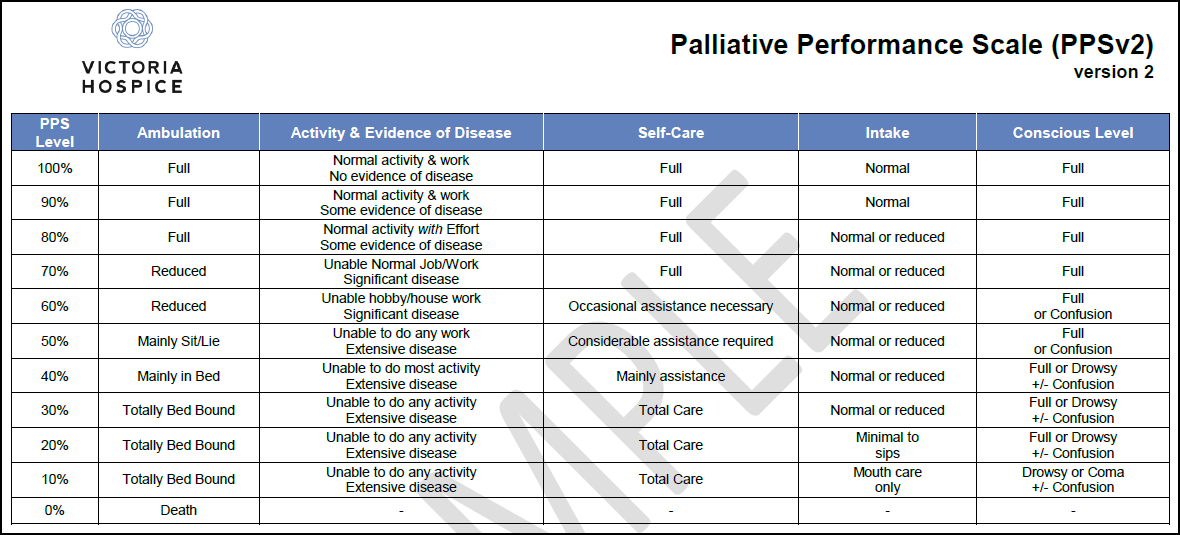
PALLIATIVE PERFORMANCE SCALE (PPS V2)
In the PPS, physical performance is measured in 10% decremental levels from fully ambulatory and healthy (100%) to death (0%). These levels are further differentiated by five observable parameters:
- the degree of ambulation
- ability to do activities/extent of disease
- ability to do self care
- food/fluid intake
- level of consciousness
Palliative Performance Scale (PPS)
https://bit.ly/PPS_PalliativeCare
Core Palliative Care Tools
The set of tools and resources provided is not intended to be exhaustive, nor is any one tool specifically recommended. https://www.aci.health.nsw.gov.au/palliative-care-blueprint/the-blueprint/essential-components/essential-component-5#resource-291960
Stated another way, referrals to SPC are appropriate where there is an extraordinary level of need and examples of this include:
- o uncontrolled or complicated symptoms;
- o specialised nursing requirements relating to mobility, functioning or self-care;
- o emotional or behavioural difficulties related to the illness, such as uncontrolled anxiety or depression;
- o concern or distress involving children, family or carers, physical and human environment (including home or hospital), finance, communication or learning disability;
- o unresolved issues around self-worth, loss of meaning and hope, suicidal behaviours, requests for euthanasia and complex decisions over the type of care, including its withholding or withdrawal.
Midland Palliative Care Workgroup
https://baynav.bopdhb.govt.nz/media/1302/referral-criteria_specialist-palliative-care_midlands_final_sept_2014_-2.pdf
Symptom Guidelines
- These best practice guidelines are a result of a collaboration of the following organizations: The BC Centre for Palliative Care, Fraser Health, First Nations Health Authority, Interior Health, Island Health, Providence Health, Vancouver Coastal, and Northern Health.
- These guidelines are intended for inter-professional clinicians working with adults living with advanced life-limiting illness. Though these guidelines were created for adults, the symptoms may also be experienced by children with advanced illness. See additional resources within each guideline specific to pediatrics, illnesses such as cancer, and your organization / region.
Palliative Care Symptom Control Guidelines
https://bit.ly/SymptomControlGuidelinesPC
Recognising that a child or young person is entering the last days of life is difficult. Advance care planning prior to this stage ensures that children and young people have plans in place in order to manage emergency care and the terminal stages of their illness. The child’s main consultant, key worker and the family, along with the wider MDT should be involved in discussions to help recognise and plan for end of life from the earliest appropriate opportunity. The following documents may be helpful in recognising EoLC:
- The Royal College of Paediatrics and Child Health (RCPCH) document ‘Making Decisions to limit treatment in life-limiting and life-threatening conditions in children: a framework for practice’: http://adc.bmj.com/content/100/Suppl_2/s1.full.pdf+html
- The General Medical Council (GMC) booklet ‘Treatment and care towards the end of life: good practice in decision making’: http://www.gmc-uk.org/guidance/ethical_guidance/end_of_life_contents.asp
- Together for Short Lives Core Care pathway. http://www.togetherforshortlives.org.uk/assets/0000/4121/TfSL_A_Core_Care_Pathway__ONLINE_.pdf
- Together For Short Lives Guide to End of Life Care. http://www.togetherforshortlives.org.uk/assets/0000/1855/TfSL_A_Guide_to_End_of_Life_Care_5_FINAL_VERSION.pdf

What is a palliative care physician?
A palliative care physician is a doctor who specialises in the care of dying patients.
They often coordinate a multidisciplinary team that ensures optimisation of care around the time of death.
Their role includes supporting the emotional as well as medical and physical wellbeing through the dying process.
https://healthengine.com.au/info/palliative-care
Care of dying patients and those close to them is central to this specialty. Doctors in palliative medicine also provide supportive care at earlier stages in an illness, alongside active treatments and interventions.
https://www.healthcareers.nhs.uk/explore-roles/doctors/roles-doctors/medicine/palliative-medicine
Palliative care teams focus on quality of life. They treat people suffering from the symptoms and stress of serious illnesses such as cancer, congestive heart failure (CHF), chronic obstructive pulmonary disease (COPD), kidney disease, Alzheimer’s, Parkinson’s, Amyotrophic Lateral Sclerosis (ALS) and many more.
https://getpalliativecare.org/whatis/
Pros of working in this specialty
Palliative care is provided by an interdisciplinary team that may include a doctor who specializes in palliative medicine, a nurse, pharmacist, social worker, dietitian, and volunteers.
https://palliativedoctors.org/faq
Palliative care is for people of any age, and at any stage in illness, whether that illness is curable, chronic, or life threatening.
https://palliativedoctors.org/
A palliative care physician is a doctor who specialises in the care of dying patients.
They often coordinate a multidisciplinary team that ensures optimisation of care around the time of death.
Their role includes supporting the emotional as well as medical and physical wellbeing through the dying process.
https://healthengine.com.au/info/palliative-care
Care of dying patients and those close to them is central to this specialty. Doctors in palliative medicine also provide supportive care at earlier stages in an illness, alongside active treatments and interventions.
https://www.healthcareers.nhs.uk/explore-roles/doctors/roles-doctors/medicine/palliative-medicine
Palliative care teams focus on quality of life. They treat people suffering from the symptoms and stress of serious illnesses such as cancer, congestive heart failure (CHF), chronic obstructive pulmonary disease (COPD), kidney disease, Alzheimer’s, Parkinson’s, Amyotrophic Lateral Sclerosis (ALS) and many more.
https://getpalliativecare.org/whatis/
Pros of working in this specialty
- Being able to look after the whole patient, rather than one system; it is probably one of the few remaining general medical specialties that does this
- Having time to address issues important to the patient
- Helping to ease distressing symptoms (and optimise quality of life) throughout a patient’s disease trajectory, not just in the terminal phase
- Facilitating dignity and comfort at the end of life.
- Building effective working relationships with a wide range of professionals
- Ample opportunity to educate staff about the benefits of symptom control and the purpose of palliative care
Eligibility criteria for referral to specialist palliative care services, Patients with both:Palliative Care Best Practice Guidelines
https://bit.ly/BestPracticePC
- • a life-limiting condition and,
- • current or anticipated complexities relating to symptom control, end of life care planning or other physical, psychosocial or spiritual care needs that cannot reasonably be met by the current care provider(s).
- • Is progressive and fatal; and
- • The progress of which cannot be reversed by treatment
Palliative care is provided by an interdisciplinary team that may include a doctor who specializes in palliative medicine, a nurse, pharmacist, social worker, dietitian, and volunteers.
https://palliativedoctors.org/faq
Palliative care is for people of any age, and at any stage in illness, whether that illness is curable, chronic, or life threatening.
https://palliativedoctors.org/
Complex needs may derive from the patient, carer or health care team and
the help required may be intermittent or continuous, depending on the
level of need and rate of disease progression.
Examples of complex levels of need include:
a) Physical symptoms
- uncontrolled or complicated symptoms, specialised nursing
requirements, complex mobility or functioning issues.
b) Psychological
- uncontrolled anxiety or depression, cognitive or behavioural
issues.
c) Social
- complex situations involving children, family or carers, finance
issues, communication difficulties and patients with special needs.
d) Spiritual
- unresolved issues around selfworth, loss of meaning and hope,
requests for euthanasia, unresolved religious or cultural issues.
e) Ethical
- conflicting interests involving ethical principles that impinge on
decisionmaking by patient, family or care team.
The Six Steps of the End of Life Care Pathway

https://www.ama-assn.org/specialty/hospice-and-palliative-medicine
Palliative medicine does not lend itself to becoming a speciality in the same way that medical care focusing on a specific organ does (eg, cardiology or respirology) or that medical care focusing on a phase of life does (eg, pediatrics or geriatrics). Palliative care is, by its very nature, multidisciplinary and holistic.
https://www.ncbi.nlm.nih.gov/pmc/articles/PMC2426996/
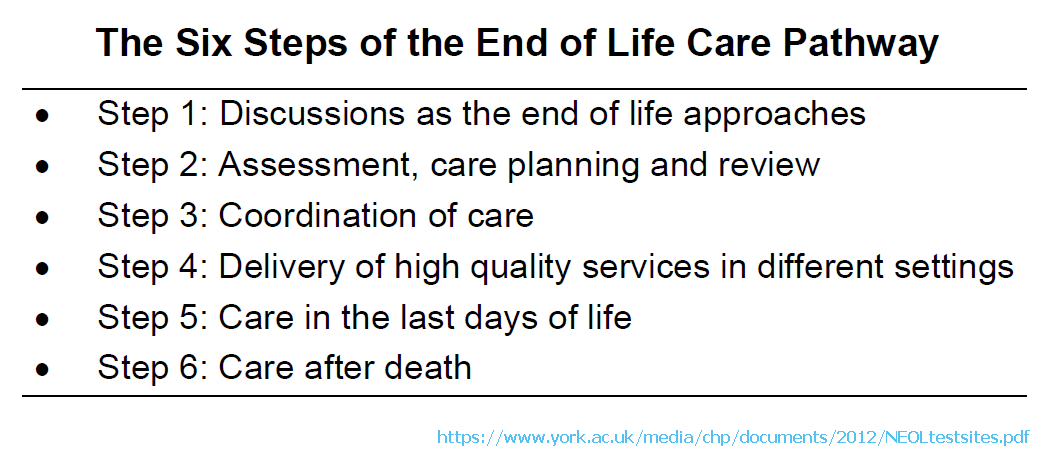
- ☛ Step 1: Discussions as the end of life approaches
- ☛ Step 2: Assessment, care planning and review
- ☛ Step 3: Coordination of care
- ☛ Step 4: Delivery of high quality services in different settings
- ☛ Step 5: Care in the last days of life
- ☛ Step 6: Care after death
"Pasienne wis sak tikruk,
dijaluki siji wae ra entuk".
Keys to being a successful hospice and palliative medicine provider include being empathetic, a good listener and a patient advocate. Maintaining a good work-life balance is critical to being successful in this field.
https://www.ama-assn.org/specialty/hospice-and-palliative-medicine
Palliative medicine does not lend itself to becoming a speciality in the same way that medical care focusing on a specific organ does (eg, cardiology or respirology) or that medical care focusing on a phase of life does (eg, pediatrics or geriatrics). Palliative care is, by its very nature, multidisciplinary and holistic.
https://www.ncbi.nlm.nih.gov/pmc/articles/PMC2426996/
I’m a palliative care doctor, and though I spend every day in the shadow of death. I don’t cherish the end of life — there are certainly moments when I wish the people I love would live forever. I am not a glutton for the end of things.
https://www.kevinmd.com/blog/2015/02/im-palliative-care-doctor.htmlOverall: Presence of a Serious, Chronic Illness
- ☛ Declining ability to complete activities of daily living
- ☛ Weight loss
- ☛ Multiple hospitalizations
- ☛ Difficult to control physical or emotional symptoms related to serious medical illness
- ☛ Patient, family or physician uncertainty regarding prognosis or goals of care
- ☛ Requests for futile care
- ☛ DNR order conflicts
- ☛ Use of tube feeding or TPN in cognitively impaired or seriously ill patients
- ☛ Limited social support and a serious illness (e.g., homeless, chronic mental illness)
- ☛ Patient, family or physician request for information regarding hospice appropriateness
- ☛ Patient or family psychological or spiritual distress
According to the Institute of Medicine (2001, pp. 5-6), quality of care can be considered within six dimensions:Electronic Proactive Assessment and Information Guide for End of Life (EPaige)
https://bit.ly/EPaige
- Safe – avoiding injuries to patients from the care that is intended to help them.
- Effective – providing services based on scientific knowledge to all who could benefit and refraining from providing services to those not likely to benefit.
- Patient-centred – providing care that is respectful of and responsive to individual patient preferences, needs, and values and ensuring that patient values guide all clinical decisions.
- Timely – reducing waits and sometimes harmful delays for both those who receive and those who give care.
- Efficient – avoiding waste, including waste of equipment, supplies, ideas, and energy.
- Equitable – providing care that does not vary in quality because of personal characteristics such as gender, ethnicity, geographic location, and socioeconomic status.
Once you have decided that a patient would benefit from and is appropriate for specialist palliative care, you then need to decide which service they should be referred to and complete a referral for admission. This guide provides the admission criteria, services provided, and the providers of care (including their referral processes) for different service types.
https://www.rph.health.wa.gov.au/sitecore/content/Corporate/Articles/F_I/Guide-to-specialist-palliative-care-servicesLevel 3 – Specialist Palliative Care
- Specialist palliative care services are those services whose core activity is limited to the provision of palliative care. These services are involved in the care of individuals with more complex and demanding care needs, and consequently, require a greater degree of training, staff and other resources. Specialist palliative care services, because of the nature of the needs they are designed to meet, are analogous to secondary or tertiary health care services.
Islamic faith community
- The name Islam is from a root word meaning “peace” and “submission,” and Islam teaches one can only find peace by submitting in heart, soul and deed to the Almighty God, who is called Allah in Arabic.
- Muslims believe in Jesus’ virgin birth, the holiness of his mother Mary, and his miracles. They believe he was a prophet like all other prophets, not the Son of God.
- Health-care workers are considered God’s agents of healing, whereas final healing comes from God alone.
- Privacy is very important, especially with mixed gender health-care professionals present.
- Muslims are forbidden to eat pork, foods prepared with alcohol, or to drink alcohol.
- While in the hospital, many Muslims may still wish to perform their five daily prayers. Assistance may be needed to wash prior to prayer, especially if the patient is bedridden.
- The most accepted Muslim belief is to perform all medical care if the possibility of cure exists but that prolonging of medical futility and suffering is not warranted.
- Quick burial is mandatory and autopsies are generally denied unless absolutely necessary.
- Support for the grieving family is important and follow up contact is helpful. Organ donation is acceptable and may offer comfort.
- Muslims do not believe in abortion unless the mother’s life is in jeopardy.
- Euthanasia is considered murder.
Tafsir Quran Surat Ali ‘Imran Ayat 102
102. Wahai orang-orang yang beriman kepada Allah dan mengikuti Rasul-Nya! takutlah kalian kepada Rabb kalian dengan sebenar-benarnya takut, yaitu dengan mengikuti perintah-perintah-Nya, menjauhi larangan-larangan-Nya dan mensyukuri nikmat-nikmat-Nya. Dan berpegang-teguhlah kalian pada agama kalian sampai maut menjemput ketika kalian dalam keadaan seperti itu.
https://tafsirweb.com/1234-quran-surat-ali-imran-ayat-102.htmlSebuah Buku, Judul, Kesimpulan dan Daftar Pustaka Kehidupan
Ketika kita telah lahir, ortu memberi nama yang terpilih. Itu ibarat sebagai judul sebuah buku.
Ketika kita akan meninggal, maka yang terpenting adalah ibaratnya pada bagian kesimpulan dan daftar pustaka buku tersebut.
Maknanya:
1. Kesimpulan tentang diri kita ini apa?
2. Apa referensi yang kita pakai selama hidup ini?
Lihatlah lagi, mungkin masih ada yang perlu diperbaiki pada kesimpulan dan daftar pustaka hidup kita (sebelum buku kita ditutup dan tamat)
Penulis sebuah buku itu kita sendiri. Bukan orang lain.
Salam
"Beberapa
catatan kecil tentang perawatan paliatif dan akhir kehidupan sudah
tuliskan, semoga bisa dibaca oleh beberapa orang yang hidup pada masa
depan".
(Ika, 2020)
(Ika, 2020)
Kualitas hidup itu bukanlah berarti bila berhasil mencari pangan,uang dan teman.
tetapi juga berarti bila berhasil mencari Tuhan.
Pangan, uang dan teman hanyalah sesaat,
berlindung dan berserah diri kepada Tuhan haruslah setiap saat.
Pangan, Uang dan Teman bisa berubah menjadi Musuh-Musuh.
May God protect and sustain us in our joint mission!

﷽
IKA SYAMSUL HUDA MZ, MD, MPH
https://twitter.com/drikasyamsul
- 1. Dhawuha: "Kawula nyuwun ngayom ing Pangeraning bangun enjing".
- 2. Saking awonipun samu kawis kang kathitahaken.
- 3. Saha saking awonipun dalu ingkang peteng dhedhet lelimengan nalikanipun datheng.
- 4. Lan saking pihalanipun tiyang ingkang ngempakaken sihir handamoni bundhelan.
- 5. Lan saking pihalanipun tiyang drengki nalika andrengkeni.
IKA SYAMSUL HUDA MZ, MD, MPH
https://twitter.com/drikasyamsul
Okay kan, Bro!


