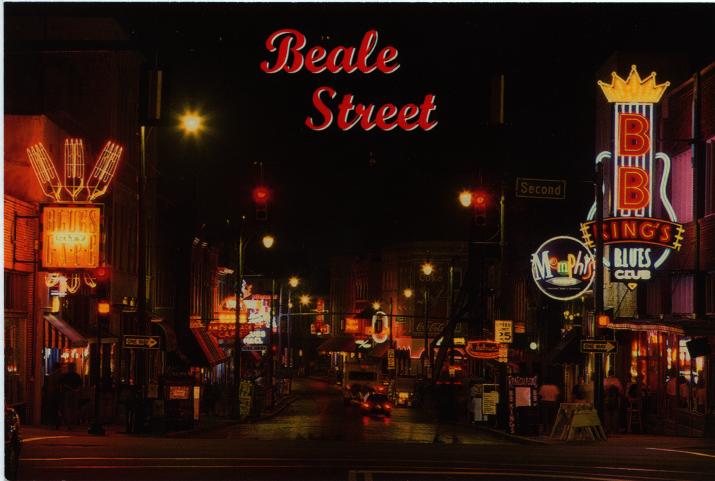
With the promise of something else besides sharecropping, the Blues musician began to look to recording. And, the place to get recorded was Beale Street, Memphis Tennesse. The top of the Mississippi Delta.
Memphis has Elvis. And, Memphis has Corky's. Memphis also has a haven for the Blues, Beale Street. Long past the days of hustling girls, slot machines, pimps and sleepless nights, Beale Street has been a home to many Blues artists.
Right after World War II, Memphis began to recruit black police officers after an incident that threatened to invite a riot. The police commissioner began to recruit the different community groups to assist him in hiring blacks. The effort was successful and black police officers then began to patrol Beale Street. A climate where the Blues could thrive was now in place.
During earlier days, Memphis brokered a large percentage of the cotton crop and soon became a meeting place for black people to gather and bond. Beale Street provided a more than adequate place for fellowship. Blues artists were there, of course. Saturday night was one of the most popular times to gather and enjoy the company of friends, newly arrivals and even strangers. Music, especially the Blues, flourished with these meetings. Blues artists, played Beale Street after hours working in the fields. Music careers took off, however slight. Small night clubs appeared. Beale Street was thriving.