
|
Loida
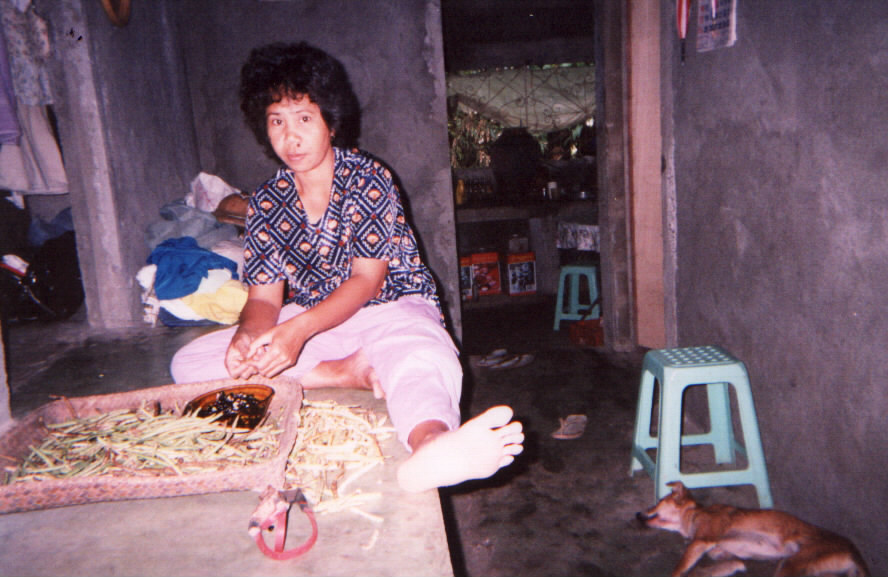 Valderama Antique
HistoryHistorians had it that the first datus headed by Datu Puti with their followers left Borneo to escape persecution by rajah of the House of Sri-Vishaya and landed in the island of Panay ruled by a Negrito chieftain, Marikudo. After some haggling, they succeeded in buying the island from the Negrito chieftain for one gold "sandok" and a gold necklace for his wife, thereby enabling Datu Sumakwel to establish a permanent settlement in the island they called Hamtic, which is now Malandog in the Municipality of Kamtic. The name was taken after a specie of large ants called "hantic-hantic", which abound in the place. The settlers occupied almost all coastal parts of the island forcing the native to live in the hinterlands and sliced the island into political unit called "sakop", namely Hantic (Antique), Aklan, and Irong-Irong (Iloilo). Datus Puti, Bangkaya, and Paiburong headed these "sakops" but the entire island continued to be called Hantic under the supreme command of Datu Sumakwel. Antique was officially recognised as a separate political unit in 1790 when the Spanish authorities made it a political and military province with Antique (San Jose) as the capital town. The institution of American authority over the island and the restoration of peace and order in Panay led to the formation of a civil government on April 13, 1901. During the Japanese occupation, Mt Baloy (Elevation 2,080m), which straddles part of Antique was the headquarters of the 6th Military District under Col. Macario Peralta. The other 2 peaks of Panay, Mt. Madia-as (Elevation 1,117 m) and Mt. Nangtud (Elevation 1,900 m) are found in the province of Antique.
|
Binirayan
Bacolod City, Negroes OccidentalMy lovely wife Minda had the opportunity to go home to Bacolod City Philippines during the Maskara '99 festival. This festival is held once a year and is very similar to Mardi Gras. Don't miss the chance to visit this beautiful country. Negros Occidental, covering an area of 7,926 square kilometers, is one of the provinces that compose Western Visayas or Region VI. Located in the northwestern portion of Negros Island, it can be found near the central part of the Philippine Archipelago. It is bounded on the north by the Visayan Sea and on the south by the Sulu Sea. It is southeast of Panay Island from which it is separated by the Guimaras Strait and on the east is the Ta�on Strait and Negros Oriental. The province has a population of 2.5 million. Hiligaynons or Ilonggos form 78 percent of the population, followed by Cebuanos at 21 percent, and the remaining a mix of Tagalog, Aklanon, Hamtikanon, and other ethnic groups from Visayas and Mindanao.
Nanay Jesusa
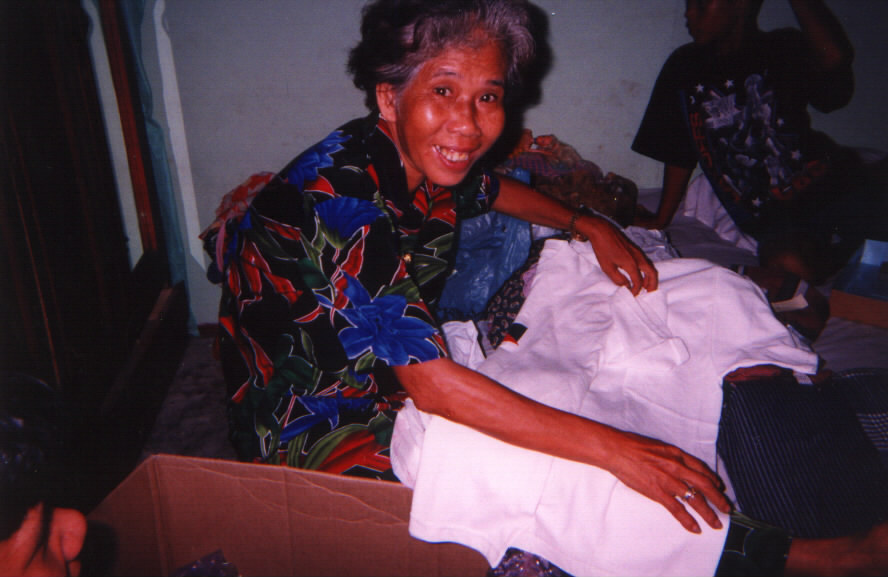 MaskaraThe MassKara Festival (Maskara Festival) If you've been to New Orleans, this is their version of the Mardi Gras. The Bacole�os literally "wear masks" during this festival. This non-stop dancing parade is celebrated during the month of October. Like any other Filipino fiesta, the festival always has a beauty contest call "Miss Masskara Queen beauty pageant". It is where you'll find the most beautiful and intelligent Bacole�o during the year will be crown.
|