The Andrew Foster Acadamy
Since my move to the east bay, my family and I had the pleasure of training with Sifu Andrew Foster at the Chee Kim Thong Pugilistic and Health Society.
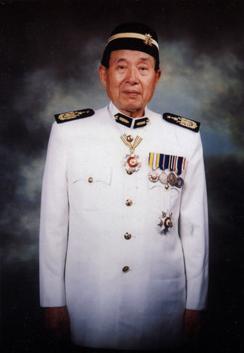
Founded by Master Chee Kim Thong who now resides in Malaysia. The Chee Kim Thong Pugilistic & Health Society would not have been created had it not been for the initial efforts of our Mr. Yap Cheng Hai, who succeeded in persuading our Grandmaster Dato'Chee Kim Thong to come out of from Dungun to Kuala Lumpur in 1961 to impart his knowledge in the Wushu to the many eager students. Such was the popularity of Dato'Chee that a group of his students proposed to Dato' Chee that it would be desirable to formally register a society with the Registar of Societies of Malaysia. Dato' Chee agreed to this proposal and this led eventually to the official establishment of the Chee Kim Thong Pugilistic & Health Society on July 15th, 1969.
Grandmaster Chee
"Thoughtfulness is just a way of life for certain people Like you Sifu! However, you can help, and you always do. Kindness is the way you live, the heart of all you are. You've touched so many lives and shown the value of life. I'm so very grateful for what you have done for me, as well as for others. Undoubtedly, you are truly a very special man, as well as our Master."
Dato' Chee Kim Thong
History
Born in PuTian in the XingHua district of FuJian province in China, Dato Chee had a great start in the practice of Wushu. Most of us treat Wushu as a separate form of art to be practised in isolation. Dato Chee, however, had the benefit of learning the invaluable doctrine from his paternal grandmother that, in order to be able to attain the highest form of Wushu, its practice must go hand-in-hand with the art of healing as well as with spiritual practice. His grandmother, Madam Khor Si, was well-known for her healing abilities, especially in accupuncture, paediatrics, orthopaedics and the treatment of internal injuries. She was also known for her knowledge and practice of Buddhism as practiced in the Shaolin temple and she used these skills for spiritual healing. Her skills in the Shaolin martial arts, however, were kept secret. In addition, she was particularly skilled in the use of the DanDao (Fighting Knife). This skill was a family secret. At the age of about six, Dato Chee began learning this holistic approach and in the space of about four years, he became well acquainted with the basic Shaolin Wushu skills. When he was ten, he went to XiaMen to study and work during his spare time. There he met Master Toh Yit Choon, a famous expert specialising in the martial art from the Northern School of Shaolin. Master Toh was at one time, one of the bodyguards of Dr. Sun Yat Sen (Founder of the Republic of China), and one of his specialities in the Wushu was Xinggong, or the ability to be extremely agile. Dato Chee trained under Master Toh for about three years and absorbed a great deal of knowledge from this Master.
Great Grandmaster
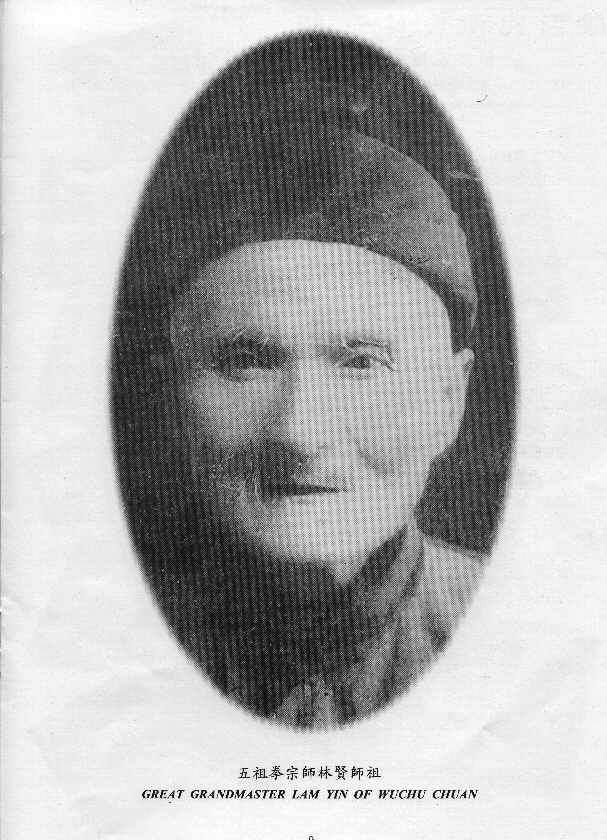
Lam Yin of WuChu Chuan
An event of great importance took place when Dato' Chee was just past twelve. He was seen by Master Lam Yin using his Wushu skills to subdue a bully neatly. Master Lam was so impressed by the youngster's ability that he made an offer to train Dato' Chee, an offer which was accepted without hesitation. It turned out that Master Lam was a great exponent of the Southern Shaolin style of WuChu Chuan. Such was his ability that he could, while holding a cup of tea in his had, use his internal energy to warm the tea in the cup. After training for about three years under Master Lam, Dato' Chee had himself developed to become a great exponent of this martial art form.
When Master Lam retired, his youger sister, Madam Lam Yu Leong, continued to help Dato' Chee enhance his skills for another two years or so, as a result of which he became even more proficient in WuChu Chuan.
Great Grandmaster
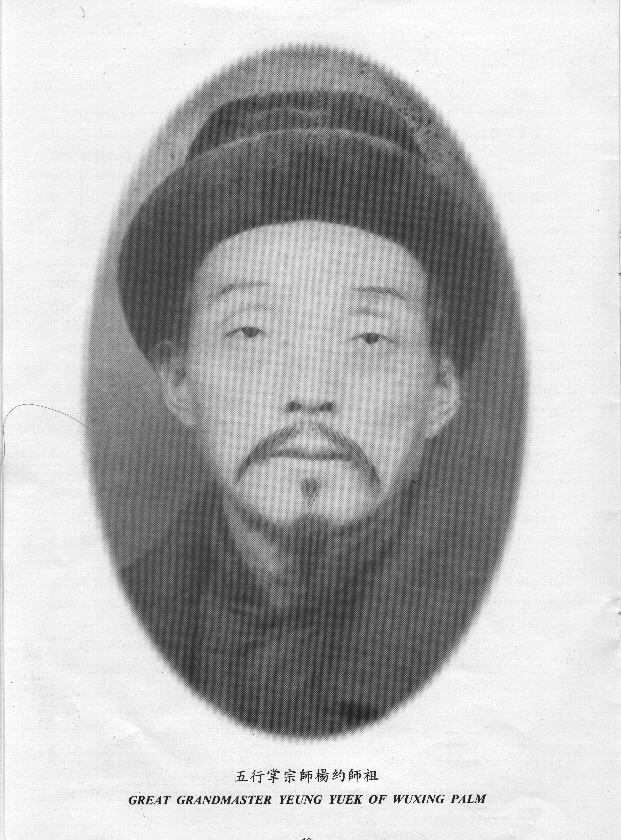
Yeung Yuek of Wuxing Palm
It was at this time that he was recommended to train with Master Yeung Yuek by his maternal grandfather who was a good friend of this Master. Master Yeungwas a top-notch exponent of the art of the WuXing palm. He earned the reputation that no one can get within a striking distance of "five steps" from his peers in the Chinese WuShu world. He was also famous for his ability to climb up walls using his special "three-step" technique. Dato' Chee trained diligently with Master Yeung for the next three years.
At about the same time Dato' Chee's reputation became known to the very Reverend Yit Sim of the Lam Por Thor Temple. This Master sent out one of his senior disciples to test the level of Dato' Chee's ability. When convinnced by his disciple's positive report, this Master invited Dato' Chee to undergo training under him. This Master specialised in the ShaoLin martial arts. he was also a master in Buddhist teachings and meditation. Dato' Chee spent three extremely fruitful years with the very Reverend Yit Sim, not only learning ShaoLin WuShu but also further enhancing his own Buddhist spirituality and meditation techniques.
With the vast repertoire of skills acquired from all these Masters, coupled with his natural ability and diligence, it is not at all surprising to learn that, at the age of about 18 years, Dato' Chee became a champion in the "middle-weight" category in a pugilistic tournament organised by the Chinese government held in XiaMen. Therefore, he assisted the government in the training of military personnel.
Being the modest person that he is, Dato' Chee is disinclined to dwell too much about his many exploits. Suffice to say that by the young age of twenty-two, he had succeeded to become very well-known as one of the foremost exponents of Chinese WuShu.
When the Japanese invaded Xiamen, Dato'Chee left China for Malaysa. He made his new home in Dungun in the state of Terengganu where he became more of a businessman, and started his family there. He, nonetheless, maintained his WuShu expertise as he continued to practise secretly. In a small place like Dungun, however, secrecy is difficult to sustain and his WuShu prowess leaked beyound that town to the outside world.
Fortunately for us, the leak reached the ears of our Mr. Yap Cheng Hai, another remarkable person who has (even now) and insatialble thirst for knowledge in Wushu. Using his great tact and persuasive powers, he managed to convince Dato' Chee to come out to Kuala Lumpur in 1961 to impart his knowledge to the many eager students. Dato' Chee then not only taught WuShu, but also put his healing art to good use. This arrangement led eventually to the official establichment of the Chee Kim Thong Pugilistic and Health Society in 1969 and the acquisition of the Society's present premises.
As stated earlier, Dato' Chee's hallmark modesty has limited mention of his many other expoits. He only wishes to say that he is the President of the Hokkien Association of Dungun. He is also the President of the Rumah Berhala Hong Thian Tiang Temple in Dungun. The Federation of the Heng Ann Association of Malaysia is fortunate enough to have him as its Hon. Chairman. He is also the Hon. Chairman of the International Southern ShaoLin WuChu body in which participating countries include Malaysia, China Singapore, Taiwan and Philippines.
In recognition of his services renderedd to the community as a Chinese Sinseh, he was conferred the "Bintang Darjah Dato' Pduka Mahkota Terengganu (D.P.M.T.)" which carries the title "Dato'" by His Royal Highness, The Sultan of Terengganu in 1995.
In spite of his modesty, his fame has reached such distant shores as USA, UK, Switzerland, France, and Australia where students, who have come to Malaysia to learn from him, are now propagating his WuShu, particularly WuChu Chuan and WuJi Chuan.
Ther term Kung has no exact equivalent in English. The nearest translantion that one can think of is CHI or internal power. Learning martial arts without learning the KUNG is like learning the form without learning the substance. CHI means breath or air. In martial arts training, the quickest way to improve your body's CHI capacity and usage is by standing meditation. Daily meditation of at least one half hour - preferably one hour a day. I must be quiet meditaiton, where your goal is a non-thinking empty sensation. This must be complimented with exercises that teach you to move you CHI - in the case of self-defense, for better power and sensitivity. Without these moving exercises, your standing meditation just makes you healthier. You must learn to move the CHI before you can use it.
"Heavy Hands"
The unique style of Chinese Kung Fu, Art of Free Flow, Ngor Chor-Sum Chian (the Old and the New). This style involves the very tradition of Wu Chu Chuan, which is the roots of our foundation and includes many combination of freeflow, which are movements of the mind and body as one. To develop your own creativity, which has no limitation, one can freely move in all directions.
"Wu Chu Chuan"
In recounting the creation and spreading of Wu Chu Chuan (Art of Five-Master), one has to trace back to the admission of Baik Yu-feng to Shaolin Monastery in Yuan Dynasty in ancient China. Baik, from a wealthy family and had devoted his whole life to the study of kung-fu, at that time had already mastered a number of schools of kung fu. After joining the Monastery, he realized that since the creation of the 18 lohan Hands by Buddhi Dharma. Shaolin produced many outstanding exponents and skills. Among them were five super experts who each had their oun specialities, for example, one excelled in "ch'i", while another whose body posture was excellent and the specialized in force. Baik urged them to present and contribute their specialities which were then put to further scrutiny and eventually Wu Chu Chuan was created.
As the old saying goes, "The
way to teach is to stress
specialization." Those who
learn WuShu must be given
specialised instruction.
The process does not come with
new tactics or sets everyday.
This is especially true in the
process of cultivating 'Kung',
the process requires tenacity of
training and intense
concentration.
"The end result will be void if
efforts are made only to learn
WuShu without cultivating
'Kung'." One does not learn
WuShu for the sake of showing
off, but for one's own benefit.
It is hoped one who learns
Wushu must not be hasty. The
saying, "Satisfaction over the
little that has been learned is
the real gain," must be
understood.
One must understand that hasty
pace will not bring one's
destination any closer. It is
particularly true that there is no
short cut to success.
Desire for showmanship should
not be the purpose for devoting
to this endevour. The adage,
"Your prowess be concealed;
your tolerance be perserved,"
must be observed.