
Back to Internial and Externail Pest

PREVENTING INTESTINAL WORMS
 OUT
OFMAY
BE WORM FREE.
OUT
OFMAY
BE WORM FREE.
Or, maybe not. The truth
is most dogs do have worms. Puppies and young hounds are the ones
most at risk. A tummy full of whipworms can kill off a litter before
they are ever weaned. Hookworms, roundworms, whipworms and tapeworms
are the primary intestinal worms that plague our little hunting buddies.
This is without question a case when, “An ounce of prevention is worth
a pound of cure.”
I can remember in another life, before I became the know it all that I am today; I was always trying to rid of my hounds of worms. I would wait until a dog got down or showed signs of worm infestation before I would take any action. Only then would I make an effort to get rid of the worms. I tried it all. That is, all that I knew about. I remember the big purple pills that I could not get down their throat. The ones for a 20 pound dog were the size of a hen egg and there was no way you could get a wormy hound to swallow that. If you used two pills for a 10 pound dog, then you got to attack your dog twice. Then there was the banana flavored liquid gold that I got from the vet. Now I want everyone to know that I never tasted that worm medicine, it just smelled like bananas and the dogs liked it even if it did not do much good. I called it liquid gold, because they sold it in small bottles for big money.
Too many hunting dogs spend most
of their lives with a gut full of worms. Once a dog is grown they
develop a tolerance that allows them to coexist with the parasites that
live within them. They just accept this relationship and serve themselves
up as host to a variety of worms, because that is the way it is and that
is the way it will always be.
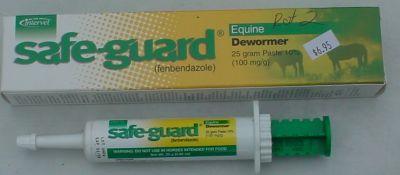
That is just too complicated
for most of us to make it work. By the time I did all the above calculations,
adjusted the dial ring, administered the paste then ran back to the co-op
for more paste the number of worms in the last hound to be treated may
have already doubled in number.
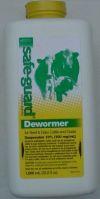
Measuring is as easy as using
a 10 or 12 cc syringe to draw up the amount you need.
To know the exact amount to give each hound, I developed a chart that tells
how much to give each hound based on their weight.
Safe-guard Chart
Safe-guard is given bi-monthly,
1cc or ml per 5 lbs. For 3 consecutive days.
LBS=ML 8=1.6
9=1.8 10=2 11=2.2 12=2.4
13=2.6 14=2.8 15=3 16=3.2
17=3.4 18=3.6 19=3.8
20=4 21=4.2 22=4.4 23=4.6
24=4.8 25=5
26=5.2 27=5.4 28=5.6
29=5.8 30=6 31=6.2 32=6.4
33=6.6
34=6.8 35=7 36=7.2
37=7.4 38=7.6 39=7.8 40=8
In the above chart the first
number is the dog’s weight and the number following the equals sign (=)
is the number of ml or cc of safe-guard to give for that weight.
Most co-ops and feed stores will not carry the liquid safe-guard. They have the paste and make many sales both for horse and hounds. I think I have already explained that you would have to be a math professor married to a rich woman to use the paste.
Liquid Safeguard can be purchased from most animal supply catalogs.
Two good sources that I have
used are:
Lambriar Vet Supply
1-800-344-6337
www.LambriarVetSupply.com
The 2005 price at Lambriar is
$108 plus shipping.
Jeffers Pet
1-800-533-3377
http://www.jefferspet.com/ssc/default.asp?id=10659&link=33
The current Jeffers price is
$103 plus shipping. The Jeffers catalog will not have the liquid
listed but you can tell the sales rep what you need.(1000 ml Liquid Safe-guard)
The item number is 16s0
1. All hounds should receive safe-guard for three consecutive days every other month. I always do this on the 15th, 16th and 17th of every other month. Jan, Mar, May, Jul, Sep and Nov.2. On the first day that safe-guard is to be given, (15th) I will weigh each hound and record their weight. I use a bathroom scale to weigh the dogs. I first weigh myself. I try to keep my weight at a nice round number. (200 lbs.) I then pick up a hound and step back on the scales. The difference between my weight and our combined weight is obviously the weight of the hound. This is not an exact science, but is better than just guessing. If you are off a pound or so it is not a show stopper. Safe-guard is just that, safe. If you give a little too much no harm is done. However, giving to much is a waste, so try and be as accurate as possible.
3. Based on each dog’s weight and using my safe-guard chart I give each hound the correct amount of safe-guard. I use a 10 or 12 cc syringe, without a needle. I shake the safeguard up and then poor some into a small shallow cup. It is easier to draw the safe-guard out of a cup than trying to get it out of the 1000 ml jug.4. Just open each dog’s mouth and inject the safe-guard over their tongue and into the back of their throat.
5. This process is repeated on the 16th and 17th. Having recorded each hounds weight on the day of the weigh-in, there is no need to weigh them again.
Notice: Safe-guard should be kept refrigerated after it is opened. When receved it will have an expiration date. I have never received a shipment with less than a 2 year shelf life. Any one who has 5 or 6 average size beagles will use up the 1000 ml container within two years. Many dog owners alternate between safe-guard and other products. I do not. I have had my hounds on safe-guard for over 6 years now and I would dare to say they are worm free.