
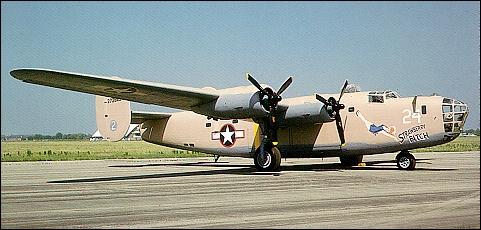
Photo ex USAF Museum, Ohio
|
The rain forests of Northern Australia hold all sorts of secrets, I
was lucky enough to be around when one was discovered in 1972. A USAF
B-24 Liberator bomber, lost in December 1942 was discovered on top of
Hinchinbrook Island, just off the coast of North Queensland. This aircraft
had been on route between Brisbane and Cape York; the story was that
there with six Australian nurses on board, in addition to the normal
crew.
The discovery of the wreck was reported to have been made by a local
who started to spend US dollars in Lucinda, a local sugar industry town.
Apparently he had found some of the aircrew's wallets intact and decided
not to tell about his discovery until he had spent the dough.
The site was visited by the RAAF, who proceeded to clear the site of
the poor crew and passenger's remains. I also heard that a memorial
was erected on the site. The guy with all the info was a friend of mine
from the Army, Greg Keays. Greg decided to visit the wreck, and invited
me along on the trip. Was I going to knock back the chance to check
out a 30 year old crash site - which had been barely touched since the
accident. No way!
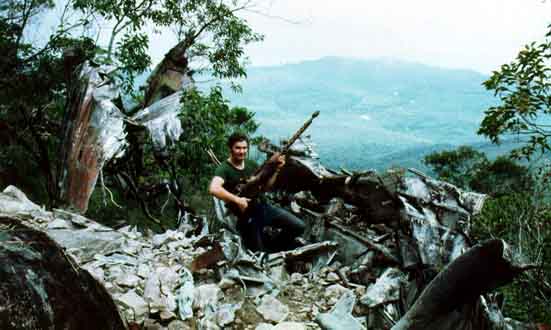
Finally we popped out of the overgrowth and there we were as the crash
site. Poor buggers had hit just down from the top of the mountain, another
100 ft or so higher and they would have cleared it. There had obviously
been a fire, although not all of the plane was burnt. The amazing thing
was that the crash was not seen or heard, Lucinda is less than 10 km
away, in clear sight. Apparently the crash had happened during a storm,
in which case the crash site would have been obscured by clouds, the
crash may have sounded like distant thunder, and the fire would have
gone out by the time the clouds cleared. |
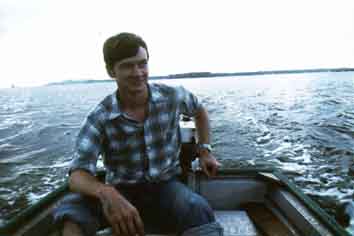 We left Townsville pre dawn to launch the borrowed dingy from Lucinda
just after dawn. As the crash site was on top of a 3200 ft "mountain"
(Mt Straloch), and the climb was through tropical rain forest, with
no tracks to follow, we planned for an overnight stop on the mountain.
The short trip across Hinchinbrook Channel went with no dramas. The
only way up to the wreck was via a "creek" bed - there were no tracks.
To find the creek Greg had to pick the correct channel into the mangrove
swamp at the Southern end of the island. We went up one of the channels
and tied the boat up before starting the trek into the mangroves. Getting
through the mangroves was an experience on it's own. Sinking into the
mud up to your shins and scrambling over mangrove roots. Hitting terra
firma was a relief, and it turned out to be in the right spot as well!
We left Townsville pre dawn to launch the borrowed dingy from Lucinda
just after dawn. As the crash site was on top of a 3200 ft "mountain"
(Mt Straloch), and the climb was through tropical rain forest, with
no tracks to follow, we planned for an overnight stop on the mountain.
The short trip across Hinchinbrook Channel went with no dramas. The
only way up to the wreck was via a "creek" bed - there were no tracks.
To find the creek Greg had to pick the correct channel into the mangrove
swamp at the Southern end of the island. We went up one of the channels
and tied the boat up before starting the trek into the mangroves. Getting
through the mangroves was an experience on it's own. Sinking into the
mud up to your shins and scrambling over mangrove roots. Hitting terra
firma was a relief, and it turned out to be in the right spot as well!
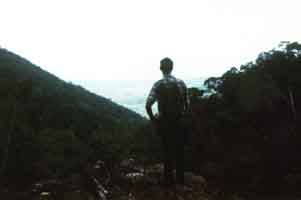 Next came the climb up the "mountain". The creek bed was dry,
the only difference between it and the surrounding forest was that the
earth had been washed out from between the boulders. This made the going
difficult, but as there was no undergrowth in the "creek" it was climbable.
It wasn't long before the mosquito's hit, and the repellant we had wasn't
doing a good job. The mozzies got so bad that we abandoned the idea
of staying overnight and decided to leave our gear and "sprint" to the
top and back again. I have never seen mozzies as bad before or since
that day, we must have been the only meat around!
Next came the climb up the "mountain". The creek bed was dry,
the only difference between it and the surrounding forest was that the
earth had been washed out from between the boulders. This made the going
difficult, but as there was no undergrowth in the "creek" it was climbable.
It wasn't long before the mosquito's hit, and the repellant we had wasn't
doing a good job. The mozzies got so bad that we abandoned the idea
of staying overnight and decided to leave our gear and "sprint" to the
top and back again. I have never seen mozzies as bad before or since
that day, we must have been the only meat around!
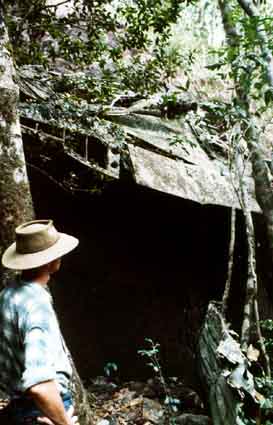 It was pretty hard yakka but eventually we came across the
tail of the aircraft, in pretty good condition, still with the aircraft
numbers on it. It was a good way down from the main wreck. Next we came
across one blade of a propeller, which had been cut off with a hacksaw.
Some nong had tried to bring it down, by throwing it from rock to rock,
eventually giving up after a couple of hundred feet. The blade was getting
so knocked about in the process, it wouldn't have made much of a souvenir
anyway.
It was pretty hard yakka but eventually we came across the
tail of the aircraft, in pretty good condition, still with the aircraft
numbers on it. It was a good way down from the main wreck. Next we came
across one blade of a propeller, which had been cut off with a hacksaw.
Some nong had tried to bring it down, by throwing it from rock to rock,
eventually giving up after a couple of hundred feet. The blade was getting
so knocked about in the process, it wouldn't have made much of a souvenir
anyway.
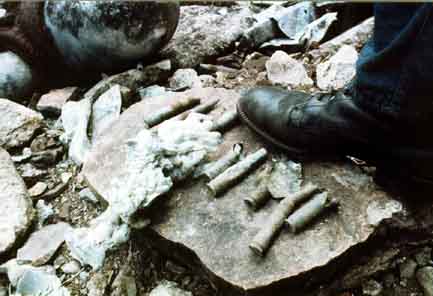 One interesting discovery
was the heavy steel plates which had been fitted behind and underneath
the crew seating. They were made of about 12 mm steel plate, the surprising
thing was that they had been cut using an oxy cutter, with little attempt
to clean up the edges. Not your usual aircraft engineering. Must have
added a bit to the weight of the plane, but what's a extra few hundred
kilos - when it comes to saving your bacon?
One interesting discovery
was the heavy steel plates which had been fitted behind and underneath
the crew seating. They were made of about 12 mm steel plate, the surprising
thing was that they had been cut using an oxy cutter, with little attempt
to clean up the edges. Not your usual aircraft engineering. Must have
added a bit to the weight of the plane, but what's a extra few hundred
kilos - when it comes to saving your bacon?