Graham Greene and Art
Paul S. Davey
Catholicism and Communism shaped Greene's life, the way he saw the world, and his literary interpretation thereof. Not being born into either, he apparently chose both freely, at an early age. Such an enigma, the padre and the cadre sharing a pew, stumps even the world according to Camus, who at least had us all labeled uniquely. Being torn between the two -- can there be any other way? --must have exacted an intellectual toll on Greene, and any reconciliation can only have been achieved by further abstraction and denial of reality.
Subscribing to any faith, religious or political, opens a person up to accusations of hypocrisy wherever his life errs from the constraints of his chosen regime. A retort by the accused would quickly explain that the hypocritical acts are in themselves proof that systems are needed to guide the straying person: lacking the innate ability to know social and religious morality, a person requires constant guidance to keep him straight. Greene was no different from most, his life divided between beliefs and actions, seemingly at odds with each other, but exemplary of the human condition at large. Although Greene would have the world gregariously living in communes sharing all, he squirreled away his money in capitalism's very heart: Switzerland. And while he would have us all living glumly in nuclear families under the dictates of a Pope in Rome, he kept up a series of sordid affairs throughout his life.
Writers vary from the lowliest hack scribbler to the most erudite artist, from the pennies-per-word tradesman to the interpreter of life. Greene moved along the spectrum, at ease, as mood and necessity dictated. As a fiction writer he saw himself as both an entertainer and a novelist, happy at times to be gainfully employed, writing for cash, happy at other times to be free and creative, writing for life. As a novelist he will endure, a quintessential Twentieth Century novelist; although some of the books he regarded as novels have been pilloried as propaganda, and some he regarded as entertainments have been hailed as classics. But what was the source of such a rich output?
A clear mind, as far as one exists, reflects reality and sees the truth around it; as does a mirror; a mind polluted by propaganda can not see; it interprets; the filter of its ideology shades reality. Moreover, any conflict in the mind adds to the confusion. The artist is thought to celebrate life. But real celebration comes from joy, and joy from peace. Art comes not from peace but from internal conflict; the energy released in overcoming such conflict is funneled into the creative process; the product of which is not a representation of life but an abstraction of life, one step back; the more conflict the better the art; and from Greene's position, many steps back, life must have been blurry indeed, but the art created very good.
Greene was both an artist and a victim of criticism. First came the artist, then the beholder of art, and finally the critic; the artist and his audience existing symbiotically; the critic parasitically, between the two, supposedly elucidating the product of the former for the benefit of the latter. Greene did his fair share of criticism, a kind of penance paid by most artists. Endless words are written about art. Words fill pages, pages books, books shelves, and shelves libraries. Library upon library full not of art itself, but of words about art, and if art as representation is already an abstraction, then art criticism is a further perversion. Was there ever a book written on the beauty of flowers, as there are libraries on the beauty of paintings? Poets celebrate beauty, but we celebrate poets and their poems. Painters behold beauty and record their perceptions, but we look at paintings and discuss them endlessly. Greene has attracted his fair share of criticism, and continues to do so; biographers have devoted much time to unraveling the complexities of this man and his work; but to what end. The man seems to have been as confused about the world as the rest of us, if not more so; his redeeming quality being his ability to verbalize that confusion in cleverly crafted stories. Can we really learn anything about life by getting inside this man and his stories?
Greene flirted with espionage throughout his life, whether for patriotism, ideology, or just for the pure excitement of it. He admires Philby for 'serving a cause and not himself'. But serving causes has disfigured history and, as Camus so elegantly remarked, disfigured the last century in particular. Whenever the cause is elevated above the individual, the individual can be sacrificed to it, and blood spills. Espionage is employed by corrupt ideology. Such service should be condemned in the strongest ways, not applauded. When accused of serving in MI-5, the internal intelligence service, Greene responded that he would never spy on his fellow countrymen; as if the people of the world can be all neatly divided up geographically and doing despicable things to another human is justified if that person is living across a border.
We are too ready to let other people lead our lives for us. Mr. Greene had all the adventures, his characters all the fun, and we, rather sadly, are content to sit in suburbia, book in hand, and let him do all the running, escaping in a fantasy and then having some critic explain to us what it all means.
© Paul S. Davey 2000
Miles Off (home)
Paul S. Davey is a freelance travel and fiction writer. He started life in the UK but now turns up in the strangest of places around the world -- usually with his notebook handy
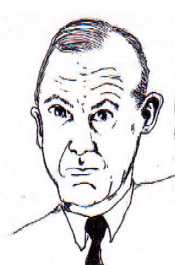
Read a short story I wrote after reading Greene's 'The Root of all Evil': The Collector
Other short stories:
Kanch': A Bridge on the River Home
Loek. A Tale from a Lagoon
The Enema
O'Keefe's Dog Day
novels:
Ghost Money first chapter of a new novel
Fei Azzis and the Water Table of Sa' An (coming soon)
travel:
Tryin' to Get to Mexico
Freedom in Cambodia
Saigon Gary
Pedalling Taipei
Tofu Culture
Hawking Carrot-Cake and a New President
Cambodia, Freehand