

What Does Ozone Do to You?
 |
 |
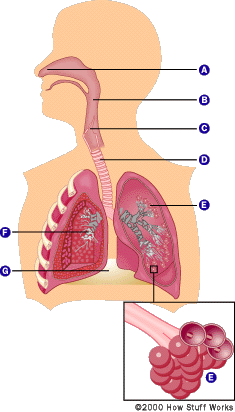
Ozone exposure can aggravate existing respiratory conditions such as asthma, reduce your lung function and capacity for exercise and cause chest pains and coughing. Young children and the elderly are most susceptible to the high levels of ozone encountered during the summer.
In addition to effects on humans, the corrosive
nature of ozone can damage plants and trees. High levels of ozone can destroy
agricultural crops and forest vegetation.
What Can be Done to Reduce Ozone Pollution

Photo courtesy National Archives and Records
Administration, photographer Gene Daniels/U.S. EPA
Ozone-damaged plant (left) and normal plant (right)
What do the numbers in the AQI mean? The AQI
measures concentrations of five air pollutants: ozone, sulfur dioxide,
particulate matter, carbon monoxide and nitrogen dioxide. The EPA has chosen
these pollutants as criteria pollutants, but these are not all of the pollutants
in the air. These concentrations are compared to a standard set out in federal
law. An index value of 100 means that all of the criteria pollutants are at the
maximum level that is considered safe for the majority of the population -- a
yellow alert on the chart below. Numbers above 100 indicate higher
concentrations and therefore a greater risk to most individuals.
Air
Quality Index
Color
Air
Quality
Prediction
0 to 50
Green
Good
No health impacts
are expected.
51 to 100
Yellow
Moderate
Unusually
sensitive people should limit prolonged outdoor activity.
101 to 150
Orange
Unhealthy for
sensitive groups
Active people and
those with respiratory disease should limit prolonged outdoor activity.
151 to 200
Red
Unhealthy
Active people and
those with respiratory disease should avoid prolonged outdoor activity;
all others should limit prolonged outdoor activity.
201 to 300
Purple
Very unhealthy
Active people and
those with respiratory disease should avoid all outdoor activity; all
others should limit outdoor activity.
To reduce your exposure to ozone, you should avoid exercising during afternoon and early evening hours in the summer.
There are several ways you can help to decrease ozone pollution:
Besides personal attempts to reduce ozone
pollution, the EPA has initiated more stringent air-quality standards (such as
the Clean Air Act and its modifications) to reduce air pollution. Compliance
with these standards by industries, manufacturers and state and local
governments has significantly reduced the levels of many common air pollutants
 Photo courtesy U.S. EPA Changes in air-pollution emissions in the United States |
Ozone concentration in the troposphere has also
decreased in the past 10 years.
Changes in ozone concentration in the United States
(black line represents air-quality standard)
With continued conservation and reduction practices, adherence to ozone-pollution warnings, research and government regulation, ozone-pollution levels should continue to fall, so perhaps future generations will not be threatened by this environmental pollutant.
