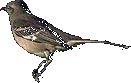
"…but remember, it’s a sin to kill a mockingbird."
"…but remember, it’s a sin to kill a mockingbird."
- Atticus, To Kill A Mockingbird
Of all the rights and liberties afforded by the United States of America, freedom of speech, of expression, and of the creation of art are quite possibly those I hold most dear. The most dynamic thinkers of every century have found themselves against a wall of controversy at some point in their careers. James Joyce, Keats, Thoreau, and even Jesus Christ himself found contention over their ideas and their chosen form of expression.
Censorship, in one form or another, finds its way into nearly every creative endeavor. It’s fair enough to say that words like "fuck" are offensive to some people. It’s also offensive that the art of writing still finds itself struggling against the impediments of closed minds. Where would the world be without the avante garde? How could art exist without nudes, speech exist without swearing, joy exist without suffering, the divine exist without the profane? By making the voice of the artist mute, censors narrow the artistic grayscale dramatically.
We, the founding contributors of the Mocking Bird, find censorship to be more offensive than strings of profanity. We believe that no truth can exist when artists are forbidden to discuss what their muses urge them to communicate. We believe that it is a sin to kill something that exists only to sing. With these beliefs held close to our hearts we raise a mocking finger to the face of censorship in order to combat the great silence we fear will be created should this wholly unnatural phenomenon remain dominant.
We present, with great pride, five previously censored pieces of art for your enjoyment.
- kristen robertson