
Febuary 9, 2005
Rat Dissection Project
|
|
|
|
|
|
|
|
|
|
|
|
|
|
|
|
|
|
|
|
|
|
|
|
|
|
|
|
|
|
|
|
|
|
|
|
|
|
|
|
|
|
|
|
|
|
|
|
|
|
|
|
|
| Patrick Greenleaf Febuary 9, 2005 Rat Dissection Project |
||||||||||||||||||||||||||||||||||||||||||||||||||||
|
||||||||||||||||||||||||||||||||||||||||||||||||||||
| Purpose: The purpose of this lab report is to disect a white rat and to record and discover similarities between them and humans. They include organs, muscle structure, organ systems, physical characteristics, and overall internal layout. | ||||||||||||||||||||||||||||||||||||||||||||||||||||
| (This is the little guy right here) | ||||||||||||||||||||||||||||||||||||||||||||||||||||
| Procedure: To begin with, we got our tools and began to plan out how we would go about conducting the disection so it would really benefit us versus randomly slicing the rat without direction. We decided to begin by skinning the rat entirely so that we could get a good look at the skin, fat, muscle structure, and physical features of the rat. To do this we simply used our knife to make a cut from the rats open throat area down to the testes. This allowed us to simply shank the rest of the skin off with a knife. We then peeled off the fatty tissue so that we could get a full view of the rats muscle system. We made observations and continued by making an incision from the testes, upward toward the rats mouth to reveal the inside of the rat. We then observed the insides of the rat individually and made conclusions. We then took each body part out one by one, identified it, and compared it to that of a human. We took each organ and viewed it under a microscope to get a closer view and to see if we could make any observations. | ||||||||||||||||||||||||||||||||||||||||||||||||||||
|
||||||||||||||||||||||||||||||||||||||||||||||||||||
|
||||||||||||||||||||||||||||||||||||||||||||||||||||
|
||||||||||||||||||||||||||||||||||||||||||||||||||||
| Data: | ||||||||||||||||||||||||||||||||||||||||||||||||||||
|
||||||||||||||||||||||||||||||||||||||||||||||||||||
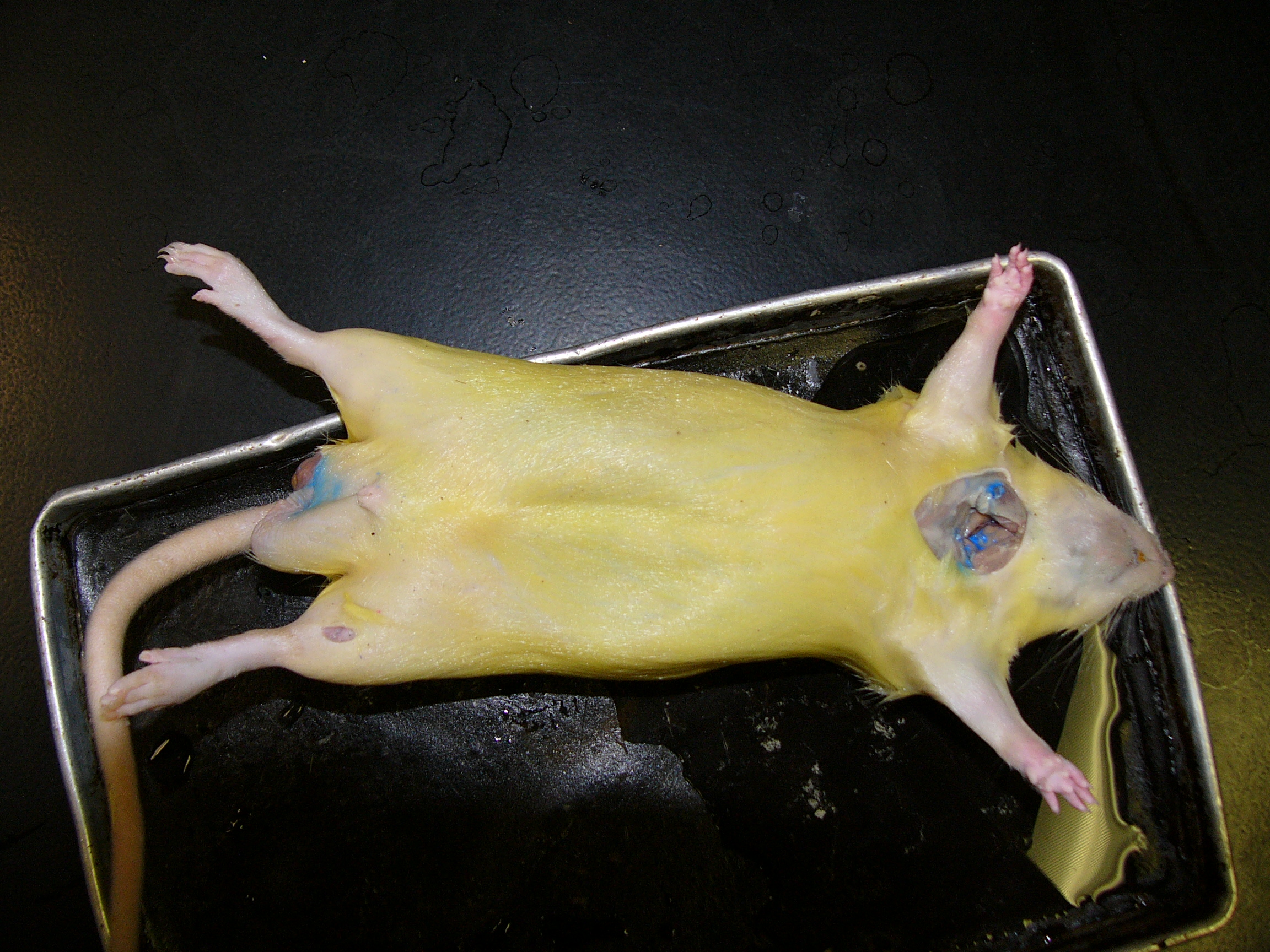
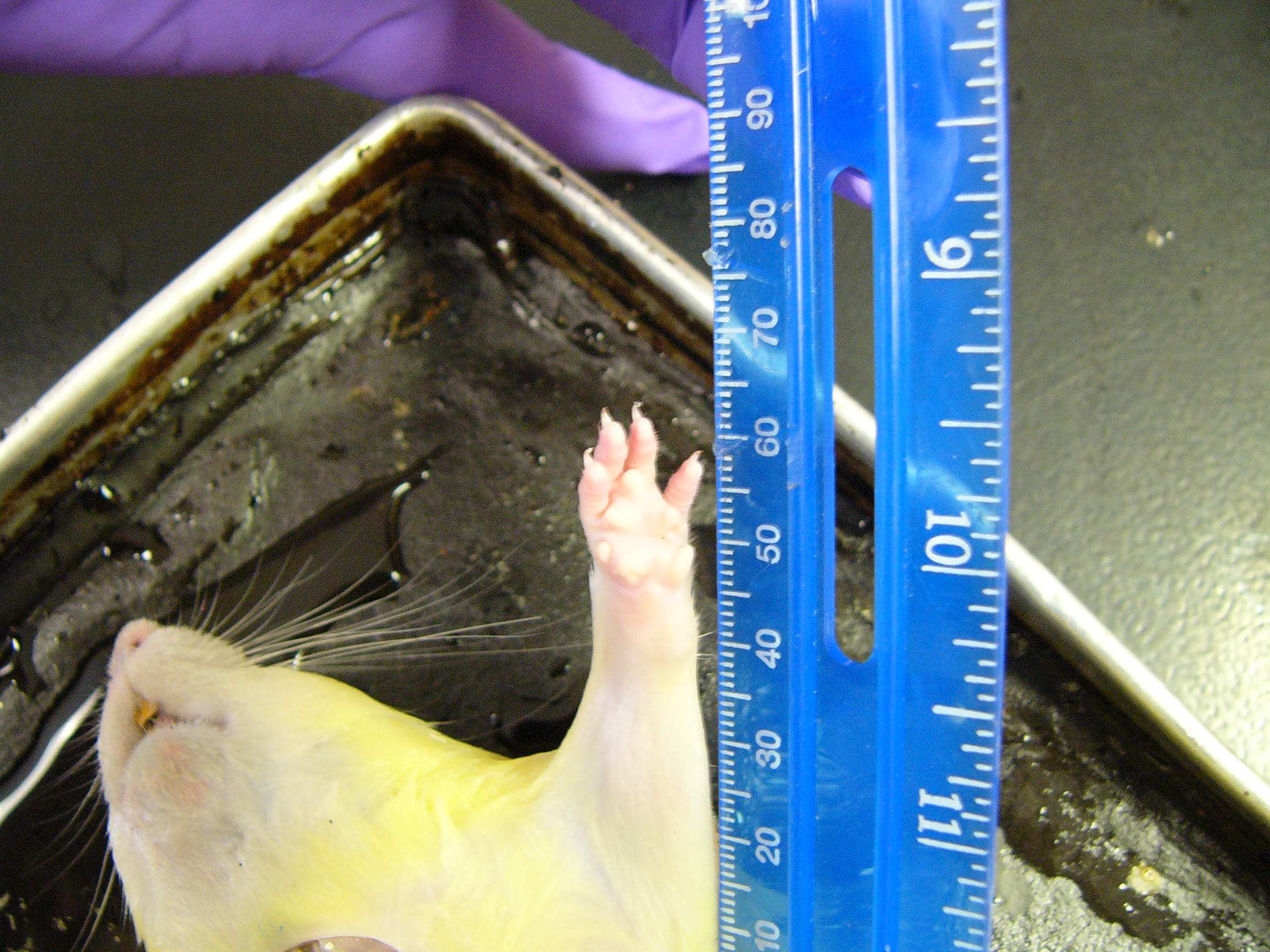
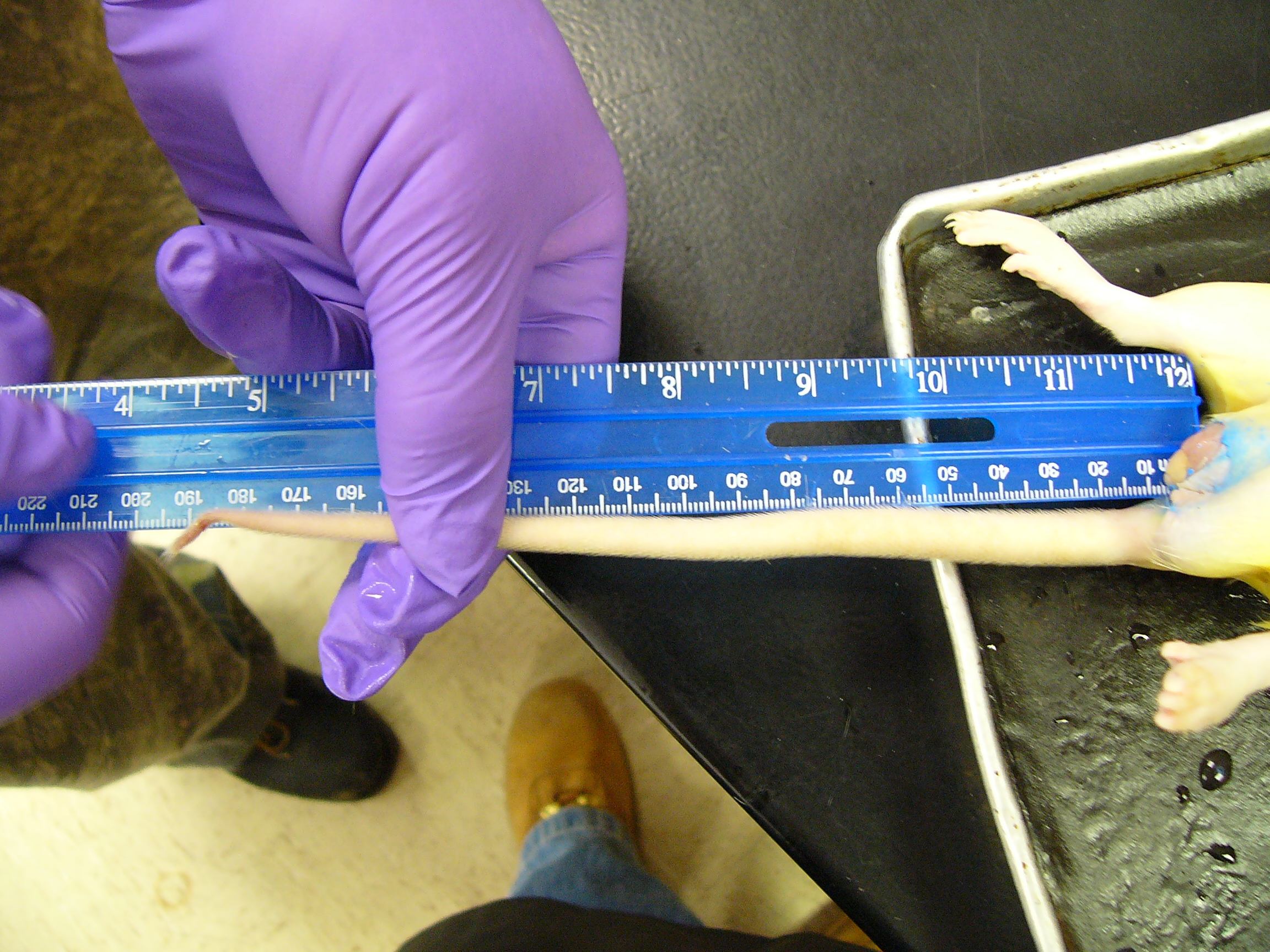
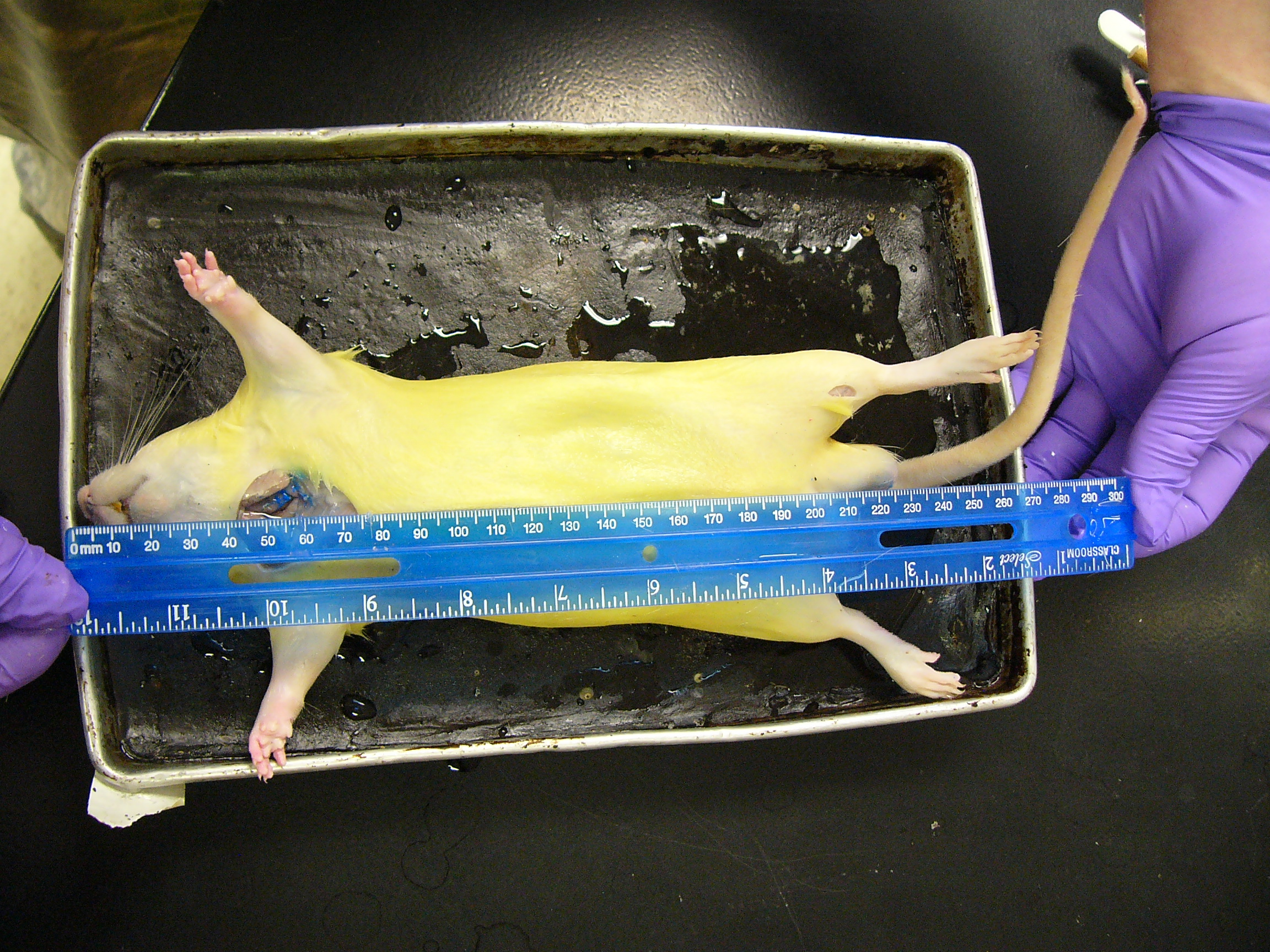
| Some external operations of the rat are pictured here | ||||||||||||||||||||||||||||||||||||||||||||||||||||
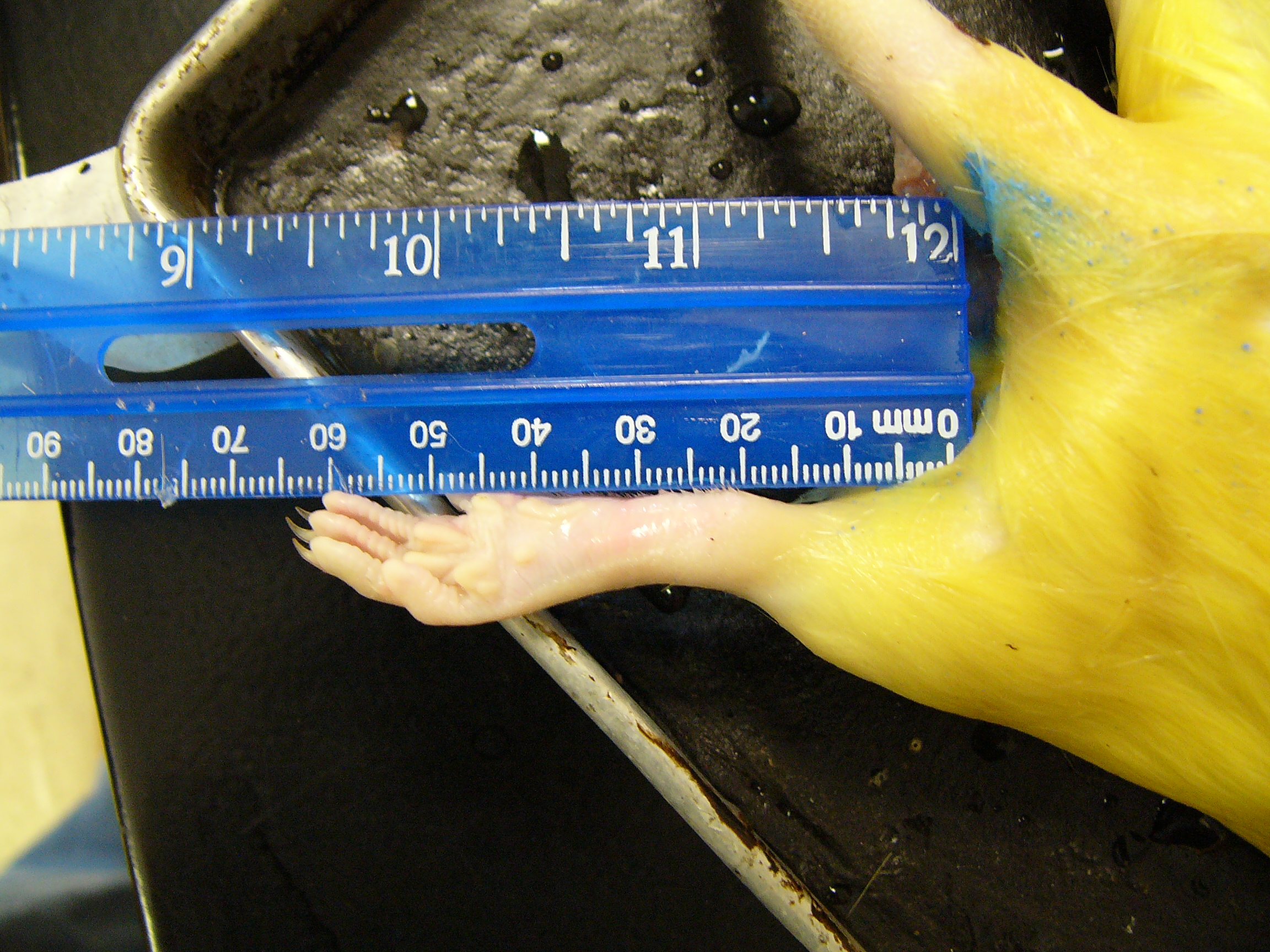
| Even simply from viewing the rat with it's skin in tact, we made quite a few observations. The exterior structure of a rat is very similair to a human. If you look at the rats paw, you can see how it's hands and fingers resemble a humans very closely by having five fingers and finger nails (obviously never trimmed.) The feet are also very similair, starting with the toes and the foot and it even has a heel similair to humans, although it is higher up on its leg. If a rat were to walk upright, it would be hard to tell the difference, well, maybe not but they are similair. | ||||||||||||||||||||||||||||||||||||||||||||||||||||
| After shanking the skin, we took a look at the muscle groups within the rat and compared them to that of the human muscle group. Trapezius, biceps, gluteus maximus, achilles tendon, deltoid, dorsii, obliques, and others were found in the rat, and also appear in the human muscle group. We moved the legs and arms of the rat around like a human would during a physical theropy appointment, and found that the legs function similairly to that of human legs. | ||||||||||||||||||||||||||||||||||||||||||||||||||||
| (pic 1, 2, 3, 4) | ||||||||||||||||||||||||||||||||||||||||||||||||||||
| The first observation opon internal incision was how it's skeletal system was formatted. It's framework is unique, because it is desigened to protect soft organs by having them lower to the ground, or less exposed to harm. Humans have strong bones and are more structurally sound than rats, so they must make up for their lack of strength by adapting to it, and they did this in having their organs "hidden" near the ground. We noticed that all joints in humans appear in the rat also. | ||||||||||||||||||||||||||||||||||||||||||||||||||||
| As far as a rats breathing process goes, it appeared to be very similair to that of the human. We noticed that there was hair in the rats nose, which would signify it contained a nasal cavity similair to ours (disecting the skull and examining would have taken forever). We noticed that the lungs were similair, the diaphragm was similair, and the pharynx was similair. An observation we made was that the rats head was designed so that it wasnt facing downward, which would complicate it's respitory process. | ||||||||||||||||||||||||||||||||||||||||||||||||||||
| (pic 6, 7, 8, 15) | ||||||||||||||||||||||||||||||||||||||||||||||||||||
| Within the lymphatic system, we noticed that the spleen is indeed in the rats body, plus it is in the abdominal cavity between it's stomach and it's diaphram. It's hard to tell how a rats lymphatic system works, because many of the system's parts are very small (capillaries, lymphatic tissue, stem cells, t-cells, ect...) Also, we did not get a chance to investigate it's bone marrow. The thymus was present, and was placed in it's throat which also holds true to the human body. | ||||||||||||||||||||||||||||||||||||||||||||||||||||
| (pic 17, 20) | ||||||||||||||||||||||||||||||||||||||||||||||||||||
| The rat's digestive process is congruent to that of the humans. The rat eats the food and it goes into it's esophagus and muscles contract to help it go down (we opened up the rat's esophegus and found a very small muscle lining.) The food reaches it's stomach, which is shaped differently than that of a humans. The rats stomach is very small and is a circular shaped, where as the human stomach is in the shape of a "J". An observation we made was that this is a disadvantage to the rat, because it must seek food more often that a human with a larger stomach. Anyways, the food then goes to the rat's intestines (we cut the intestine and found brown reminents inside). Then on to the liver, which was similair to that of a human liver, in color and in shape. Opon going further, we cut open the large intestine and found feces inside of him. | ||||||||||||||||||||||||||||||||||||||||||||||||||||
| (pic 11, 13, 19) | ||||||||||||||||||||||||||||||||||||||||||||||||||||
| Within the rat, kidneys, urethra, and bladder all were comparable to humans' but obviously different in size. The kidneys are shaped like little beans and are directly under the ribs on the right and left side of the back. We also observed that the ureter, although very small, was indeed present and was functioning as the waterway of urine to pass it on to the bladder. | ||||||||||||||||||||||||||||||||||||||||||||||||||||
| (pic 21) | ||||||||||||||||||||||||||||||||||||||||||||||||||||
| As far as the endoctrine system goes in comparison in humans, the hypothnalamus, pineal gland, and pituitary gland were inside of the skull which would have taken a lot of time to observe, so we did not do that section. However, the rat did have a thyroid and parathyroid gland, which also exist within humans. The pancreas is, which serves the rat in a way where it controls glucose levels in the blood, functions like ours. Our rat was a male, and had testis that are very different than that of humans'. They are quite large, which allows them to create high doses of sperm, as reproduction is seemingly a competition like process for rats. | ||||||||||||||||||||||||||||||||||||||||||||||||||||
| (pic 17, 23) | ||||||||||||||||||||||||||||||||||||||||||||||||||||
| Here are some pictures of individual organs taken from the rat>> | ||||||||||||||||||||||||||||||||||||||||||||||||||||
| (pic 9, 10, 11, 12, 13, 14, 15, 16, 17, 18, 19, 20, 21, 22, 23, 34) | ||||||||||||||||||||||||||||||||||||||||||||||||||||
| My Conclusion: | ||||||||||||||||||||||||||||||||||||||||||||||||||||
| This lab project seemed to be very boring and tedious at first, but once I started making observations and comparisons to humans, it became very facinating. It's actually really cool how a rat is so similair to us by means of body structure and organ systems, but yet they are so different. | ||||||||||||||||||||||||||||||||||||||||||||||||||||