The Pendulum an Open Dynamic System?
Edgar
Paternina
email: [email protected]
Abstract. In this paper the pendulum and its approximation factor that can be
validated with what is observed in the reality “out there”, is presented by using the complex basic unit system
concept based on Euler relation. This paper is a result and a promise made in
Physics Forum, in its sub forum Theory Development, where I have been
participating under the pseudonym of Epsilon Pi. Here I want to show that it is
possible to cope the fundamental equations of physics from a point of view or
framework that includes the third, which means mathematically speaking, by
using complex numbers.
Key words: pendulum, synergy, time, decoupled,
Newton’s laws generalized
1. Introduction
This is the first of a
series of articles where a new
methodology to cope the fundamental equations of physics is presented;
new in the sense that it deviates definitively from that prevailing methodology
where Aristotelian logic is so central,
expressed as: if we have A=B, B=C, then C=A,
which means that the third is always excluded. It
was Hermann Weyl the so-called philosopher of relativity the one that in his beautiful book “Simetría” wrote: “La
fe en la equivalencia derecha-izquierda se ha mantenido en la ciencia incluso
ante hechos biológicos como los que citaremos a continuación, que
parecen sugerir su no equivalencia aún más fuerte que la desviación de la aguja
magnética que tanto impactó al joven
Mach.”(10, 19). Since then this faith in that equivalence between right and left has
prevailed in western science even in spite, as pointed out the translator of the
book:”El tiempo se encargó, como tantas veces ha ocurrido con las “verdades”
físicas, de echar por tierra esta afirmación. En
1956, pocos años después de publicarse este libro. T.D. Lee y C.N. Yang
postularon, en un trabajo publicado en Physical Review, la violación de la
paridad en las interacciones débiles.”(10, 16)
What we have found is then
that there is a different way to cope
reality in which the third is included; a way that is fundamental when coping
with the radical duality of the
universe such as in those cases where:
- momentum cannot be related
to position
- wave cannot be reduced to
a particle
-
time cannot be coupled or reduced to space
In this case we have always,
as I said before, a radical duality
which means that we cannot reduced the one to the other: we cannot couple time
to space, wave to particle, momentum to position as they are decoupled, but
decoupled in this case does not mean that both terms cannot be put in a common
ground or in a framework that includes them both; this is where the “third
included” enter into the scene, but the important thing is that there is a
mathematical framework, I mean, complex
numbers based on Euler relation, that have at the background the complex plane,
sort of canvas to represent the dynamic nature of reality, that permits us to
represent in a most rigorous way that framework with the third included. The
great mistake of philosophers at all times had been to suppose that reality is
simple, and as so of that science whose mathematical representation was based
just on an equal sign or as Hermann Weyl put it in bilateral symmetry, with no
chance to have a radical duality included, I mean, not just opposition, the two
signs(+/-), the Aristotelian binary logic or symmetry, but also complementarity.
This first paper has to do
with the pendulum, the second one with the Schrödinger wave equation, the third
one with the Lorentz transformation group, and the fourth with gravitational
fields. It is worth to point out that
in this way we will put under a same roof and methodology the fundamental
equations of physics so it certainly is not a TOE, but a unified methodology to include all those phenomena
of physics, even those that had resisted a good documentation.
2. The Pendulum , an open dynamic system?
We will start our quest with
that entity, that practically motivated
Galileo to dedicate his all entire life
to that enterprise we now call western science, I mean, the pendulum; another reason for starting with it has to
do with what T.S.K. wrote:
"How else are we
account for Galileo's discovery that the bob's period is entirely independent of amplitude, a discovery that
the normal science stemming from Galileo had to eradicate and that are quite
unable to document today?"(8,124)
As a matter of fact and
keeping the due proportions, the pendulum behaves as a non classical system as it is a "particle" with mass "m", and with a wave behavior.
The pendulum will be
represented then as a basic unit system concept or else:
i(q)
DS = |DS| e
where
we have Euler relation as:
i(q)
e = Cosine (q) + i Sine (q)
At this point it is important to recall that in
this most elegant equation we have a radical duality included or else the
third:
- on
the first term we have the cosine, with an even parity, as it remains the same when the sign of the angle is
changed
- on
the second term we have the sine, separated by the symbol i, with an odd
parity as it changes its sign when
the sign of the angle is changed.
Additionally we must point out the most remarkable
property of this relation: it has to do
with the fact it remains with the same form with change, or with those mathematical processes that represent
change, I mean, integration and differentiation, that makes it the ideal tool
to represent the covariant laws of
nature.
Normally is said “The cosine is perfectly
general, since the addition of a phase
angle of -90° converts the cosine function into the sine.”(9, 512),
but this addition of -90° means all difference, as it means the complex plane, but additionally this difference
has to do with another radical duality, I mean, the two kinds of parities, very important in modern
physics as: “…..if you look at the
original state and by making a little computation on the side discover that an operation which is a symmetry operation of the system
produces only a multiplication by a certain phase, then you know that the same property will be true of the
final state- the same operation multiplies the final state by the same factor.
This is always true even though we may not know anything else about the inner
mechanism of the universe which changes a system from the initial to the final
state.” (6, 17-7)
So far so good with Euler relation.
In figure 1 we have on the one hand a maximum
angle qmax, for a corresponding displacement Smax. That
point, where these values are reached,
is a point of static equilibrium within a dynamic system . It is from this
point that we have a returning point.
In this
same figure we have two axis:
- a
dual or symmetry axis, X and
- a
non dual axis Y
These two axis define the complex plane in this
case, as it is this plane the one that
serves as referential frame or background to represent dynamic entities such as
the pendulum.
It is
important to note at this point that in that figure 1, the inertial force is
identified with the tangential force and the principle of equivalence between
weighting mass and inertial mass hold, so it is not strange to find that the
tangential force as a component of the weight be equal to the inertial force.
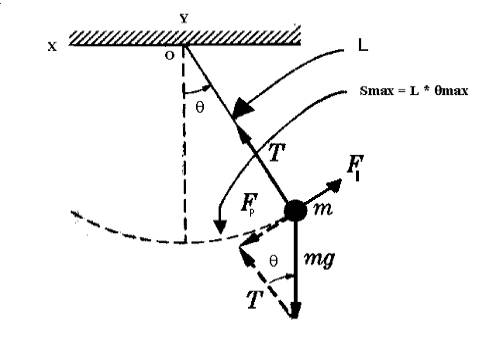
Figure1. The pendulum and the complex plane
3. A non classical solution
for the pendulum?
The solution of this pendulum system will be done in two complementary
phases, but in a certain sense, independent from each other:
·
one phase related with the spatial
representation, in which we have those special points of equilibrium
·
one phase related with the dynamic behavior
properly speaking that will permit to
introduce time.
In regards to the former, if we integrate the
trajectory DS between S = 0, and S = Smax, then we have:
Smax Smax Smax
ò DS = Cosine (qmax) ò DS
+ i Sine (qmax) ò DS
0 0 0
so:
i(qmax)
S = Smax e
We have
thus obtained a static expression, as
it were, a potential expression, associated with the path in space. Its
dynamic counterpart will be introduced by multiplying this expression by the
basic unit of time given by:
i(wt)
e where, q = wt
Time is then an independent sphere of reality
introduced in this case by means of a non linear process, but immersed too in
the complex plane. Time is not reduced in this case, to a time-made-quantity, or
to a time assimilated to a space dimension as that one used by contemporary
physicists, but in this case we include
both aspects of time. Time is not described just by a process taken from
extension as Bergson would say, but by a rotation, or a process that can be
qualified as qualitative, as a counterpart
process derived from extension.
It is precisely here where we have a clear deviation with that conception of time as conceived by contemporary physicists and specially as is presented by Stephen W. Hawking in his Historia del Tiempo(7, 178), which is as a matter of fact a consequence of that conception of time introduced by Minkowski in his well-known paper Space and Time(5,75); paper in which the bases of the geometrization of space was introduced for the first time and that was then the starting point of general relativity.
Hawking wrote:
“...
se supone... que con cada una de esas historias está asociada una pareja de
números, uno que representa el tamaño de una onda y el otro que representa su
posición en el ciclo(su fase)... hay que sumar las ondas correspondientes
a historia de la partícula que no está
en el tiempo <<real>> que Ud. y yo experimentamos, sino que tiene
lugar en lo que se llama tiempo imaginario... Para evitar las dificultades técnicas
en la suma de Feynman sobre historias, hay que usar tiempo imaginario. Es
decir, para los propósitos del cálculo hay que medir el tiempo utilizando
números imaginarios en vez de reales. Esto tiene un efecto interesante sobre el
espacio-tiempo: la distinción entre tiempo y espacio desaparece completamente. “(7, 178)
Even
though we recognize as a good point the utilization of complex numbers, as a
indispensable tool to represent physical reality, it is evident though the reductionistic tendency in that conception
of time of contemporary physicists in which time and space are a same thing, or
in other words, they are always conceived as been coupled, which certainly does
not agree with the arrow of time where time is an irreversible entity, not an entity
that like space can run in both directions. This is but a mathematical
abstraction used for the sake of applications.
On the
other hand we do not agree anymore with the term “imaginary” used by Descartes,
for the first time, for complex numbers, as the starting point of this
deduction of the pendulum formula is precisely the complex plane that coincides
with its dynamic reality. Instead of the imaginary character what seems clear
is that dual character, or bilateral symmetry associated with its
behavior in space and with the term i. Hermann Weyl was then right to dedicate
a whole book to this important concept that today is the base of those
processes that have to do with the chemistry of nuclear interactions.
The
complex reality of the pendulum is then represented by
i(wt + qmax)
S(t) = Smax e
This
expression is then a rotational system
in the complex plane and not just an instantaneous picture of privileged moments; so our problem is reduced to find the state
of this complex expression, which means
we must find a relation between its two state variables Smax and qmax.
The natural state of the pendulum is related with a
cyclical phenomenon, kind of spiral movement, in which each step is followed by
another, going back to sort of new origin, but, is not this an external
manifestation of the same principle of synergy as we have sort of “spin”
property that can give us a whole greater than the sum of its parts, where that
greater is explained by its permanent interchange with its environment?
In that
figure 1 we have that
Smax = L qmax
where L is the radius or the length of the cord, so
replacing we have:
i(wt + qmax)
S(t) = L qmax e
4. Equality and dynamic equilibrium and the pendulum
We have
then two kinds of forces:
· inertial or tangential forces and
· gravitational forces, due to the earth
gravitational field which is in this case
the external environment in which the pendulum is immersed.
When we talk about the acquisition of the steady
state and a dynamic equilibrium, we mean that along the trajectory there is:
· kind of non equilibrium between inertial and gravitational forces, that makes it possible
precisely that pendulum movement,
· but we have too privileged static points that make
it possible to determine the steady state of the pendulum.
·
On the other hand there is a third type of force,
due to friction and air that make its entropic contribution to the whole
system, but this type of force must be
compensated as sort of secondary regulation if we want to preserve the steady
state of the whole system. It does not
have any sense to think that will have sort of perpetual motion in this case.
It is correct to say that if we do not
compensate these losses,
entropy is the negative of synergy.
If we take into account the inertial forces and a resulting force along the trajectory,
we must then apply Newton’s second law, but this time in a generalized
way, I mean, expressed in complex
numbers. So the first derivate of
i(wt + qmax)
S(t) = L qmax e
is:
i(wt + qmax)
dS/dt = L qmax
i w e
and its second:
i(wt + qmax)
d²S/dt² = -( L qmax
w² ) e
being, amax
= ( L qmax w²
), the maximum
value of acceleration.
So according to that second law, we have that at the maximum point we have the inertial vector as:
Fmax = m (L qmax
w² )
If we apply the composition of forces as shown in
figure 1, in that point of a maximum arc, Smax, the total forces on the bob
become minimum in that moment inertial force is equal to weighting force. Both,
this equality of forces, as that tendency to preserve the form, make us think
in the generalization of the first and third Newton’s laws not just applied to
linear movements anymore.
We have then a change in the direction of movement in that Smax point, having in this
way the pendulum movement.
The weighting vector gives us in that Smax point:
Fmax = m g Sine(qmax)
And
L qmax
w² = g Sine(qmax), so
w =
Ö (g Sine(qmax) /( qmax L))
being this the expression for the angular velocity, but
if w = 2 p f
and T = 1/f, we have the period as:
T = 2 p Ö ((L/g) ( qmax /Sine(qmax))
Which is precisely the pendulum formula, with correction factor included that can be
validated not only with what is observed but with that solution obtained
classically by means of an elliptic integral(1,744), as is shown in table 1.
|
Angulo |
0° |
10° |
20° |
30° |
60° |
90° |
120° |
150° |
180° |
|
K |
1.571 |
1.574 |
1.583 |
1.598 |
1.686 |
1.854 |
2.157 |
2.768 |
¥ |
|
2k/p |
1.000 |
1.002 |
1.008 |
1.017 |
1.073 |
1.180 |
1.373 |
1.762 |
¥ |
|
q/Sine(q) |
1.000 |
1.005 |
1.0206 |
1.047 |
1.209 |
1.570 |
2.418 |
5.235 |
¥ |
|
Error-% |
0.000 |
-.304 |
-1.267 |
-2.853 |
-11.23 |
-24.8 |
-43.22 |
-66.34 |
N/A |
Table 1. The pendulum and its correction factor by
two methods
This factor, Ö(qmax
/Sine(qmax)), tends to one when qmax is small, having then sort of linear
behavior, but this is not the case in general what seems to suggest that time
and space are not always coupled or time cannot be always assimilated to space
dimension.
On the other hand it is from this pendulum
formula where all those observed laws found by Galileo, can be derived such as:
· the oscillation period does not depend of the
amplitude within the limits, as can be seen in the table, of 10°
· the period of the pendulum does not depend of the
substance or material
·
the period of
the pendulum is directly proportional
to the square root of its length
· the period of the pendulum is inversely
proportional to the square root of the acceleration or local gravity.
ã,
1991, 1999, 2001. Edgar Paternina. Electrical Engineer.
email:
[email protected]
August 27, 2004
References
1. Beer/Johnston. Vector Mechanics for
Engineers. McGraw Hill. 1962
2.1 Bergson Henry. Creative Evolution. UPA.1983
2.2. Bergson Henry. Memoria y Vida. Altaya.1994
3. Drake Stillman. GALILEO. Alianza
Editorial. 1980
4. Dibner* Drake. A Letter from Galileo Galilei. Burndy Library. 1967
5.
Einstein Albert et all. The
Principle of Relativity. Dover P.Inc.1952
6. Feyman Richard. Física. Mecánica
Cuántica. Volumen III. Fondo Editorial Interamericano. S.A.
7. Hawking Stephen W. Historia del Tiempo. Editorial Crítica. 1988
8. Kuhn T.S. The Structure of Scientific Revolutions. The University of Chicago
Press . 1996
9. Scott R.E .LINEAR
CIRCUITS I & II. Addison-Wesley
PC. 1967
10. Weyl Hermann. SIMETRÍA. McGraw Hill/Interamericana de España. 1991