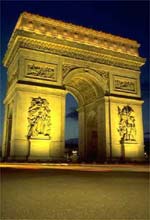
 Arc de Triomphe and Champs Elysées
| index | Homepage | City of Lights |
Arc de Triomphe and Champs Elysées
Being built for Napoleons victory celebrations, never actually got finished for that purpose as the battle of Waterloo brought about his downfall. It now stands as a symbol to the remains of the unknown soldier from World War 1. The eternal flame ever burning under it. It is also the gateway to the Champs Elysees. The view is breathtaking and spectacular from its gallery at the top, you can see most of Paris city centre. The shimmering Seine runs below and you can also see La Place de la Concorde at the other end of the Champs Elysees.
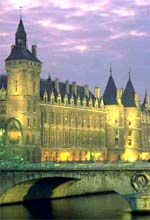
The Pont Neuf (New) with its golden statues is one way on to the Ile , Notre Dame is another sight not to be missed as this Gothic masterpiece stands in its own splendour, displaying its own warm radiance of the 13th century. It has many spectacles like the Gargoyles and reminds one of the Hunchback. Meanwhile down to the opposite end are the Palais de Justice. This is the place where all decisions relevant to the French are made. Then the Conciergerie, a palace used as a prison, holding many unfortunate people that later went to the guillotine to lose their heads at the Place de la Concorde. St Chapelle is another fine Gothic example built in the 13th century, supposed to have the actual crown of thorns.
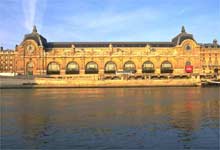 Latin Quarter and Musée
d`Orsay
Latin Quarter and Musée
d`Orsay
This is a fine place to visit and you can get to it by walking or the Metro at the Musee d`Orsay. Do not be rushed as you need time to appreciate all that it offers like the master pieces of Monet (Rouens Cathedral) Gauguin, Cezanne and Millet. A self portrait by Van Gogh and the also famous Whistlers Mother. Just a short distance from here is the Boulevard St Germain and the famous Latin Quarter, onward to the Rue St Michel to the Universite de Paris. The sorbonne has more visitors than students but is still exciting, it is also the oldest university in france. The place is absolutely packed with second hand book sellers and lots and lots of cheap bistros(eateries) cheaper down the side streets as I found out. There is also the old Gallo-Roman Baths (remains ). The memorial to St Genevieve (Patron Saint of Paris the Eglise St Etienne du Mont.
 Opéra Garnier,
Haussmann and La Madeleine
Opéra Garnier,
Haussmann and La Madeleine
Built for Napoleon the III and updated with an art work of the ceiling in 1964 by Chagai, it plays host to ballet more than it does other events since the opening of the Bastille Opéra. The interior is of wonderful marble and a huge chandelier weighing in at over 8 tonnes. Then there are the shops and the exclusive shops in and around this area, Galeries Lafayette and Au Printemps. something even more exclusive there is Rue du Faubourg St Honore even here you can still pick up a bargain. The Ste Marie-Madeleine to look at the reflections in the mirrors of the National buildings of the Place de la Concorde.
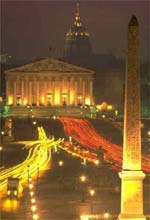
A short walk from the Ste Marie- Madeleine is the wonderful grandeur of 19th century Baron Haussmann who was behind the cleaning up of the old Paris. Home to the largest square in Europe and with its tall Luxor obelisk in pink granite of some 3,300 years old a gift from Egypt in 1831. The square renown for the guillotine and the approximately 1350 heads taken during the revolution including Marie Antoinette. Last but not least the superb view of the whole length of the Champs Elysees, the Tuileries and Louvre and then, yes you guessed the Arc de Triomphe.
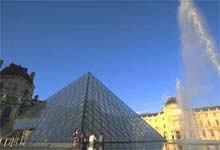
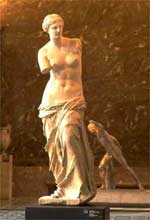
The Tuileries is the place that you can have your portrait done by one of the many posers and street artists who frequent the place, but watch the price dont be ripped off. The gardens originated in the 16th century by Catherine de Medici, The Jeu de Paume has modern collections and the Orangerie is better known for its great impressionists collection world known. the Louvre is better known nowadays for the pyramid at the entrance to the museum, it has been transformed from its original state of fortress to museum about 200years ago, it is of a vast size and needs a lot of understanding and planning when you visit. In the museum are the Mona Lisa and the Venus de Milo both master pieces and the statuettes of soldiers that encircle the inner walls of the square, which I may say is huge are spectacular in the evening spot lights.
 The Marais, Pompidou Centre and Bastille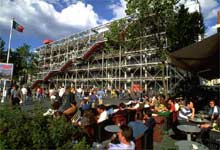
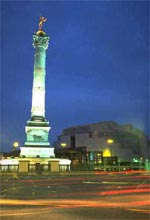
The Place des Vosges built by Henry IV is today fashionable and full of shops and restaurants and even antique shops,it has a vibrancy to rival anywhere in Paris, contained within the Marais is the Picasso museum and houses its own collection, funded by his family. The Bastille is the district that lacking a reminder of the revolution(The Bastille) now proudly houses the Opéra Bastille built to commemorate the storming of the prison over two centuries ago.
The Centre George Pompidou caused a lot of outrage in 1970 when built, nearly as much as the Louvres pyramid it is built inside out or certainly appears that way, consisting of two storeys and up to date art work it has glass escalators and view to be enjoyed once at the roof bar. The streets are always full of street artists and are superb to watch, singers also.The Cimitiere du Pere Lachaise, is a memory that most visitors will never forget as you can get a free ( yes free) map of the main graves of people like Chopin, Oscar Wilde and Edith Piaf.
 Notre Dame
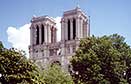
The history of the Cathedral of Paris, France. Gothic in Origin built in the 13th Century this is Frances finest. The Gargoyles are there to remind you of the Hunchback and the Jean XIII square at the rear give a great view of the flying buttresses. A truly wonderful sight. 1163 - 1250 Located in the Old Paris city centre
 Sacre Coeur Basilica
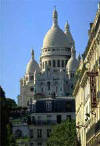
This great church was designed by Abadie started in 1875 and completed in 1914 alas Abadie did not see his work finished as he died in 1884. , it is home to one of the worlds largest mosaics, designer was Luc Olivier Merson a Frenchman showing Christ with his arms outstretched. The bell however is of great proportions, boasting one of the worlds heaviest bells at around 19tonnes. It is at home in the white bell tower and it was cast in Annecyin 1895. The bell tower is the highest point in Paris.
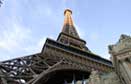
La Tour Eiffel
The Tower had its inauguration on the 31 March 1889 at 1.30pm It was designed by and built by Gustav Eiffel who climbed the 1710 steps to the third level at which point he unravelled the French flag which was marked by a 21 Canon salute; The tower took only 2years and 2months to build (26 months). The structure consists of 2,500,000 rivets and it is 7,300tonnes in weight and is 1050 feet high it was built to acknowledge the visit of the worlds fair to Paris in 1889.
Last updated 12/02/2004