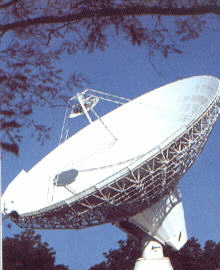
India possesses 1,468,000 route kilometers of Trunk Automatic Exchange (TAX); 86,601 route kilometers of microwave systems and 108,032 route kilometers of optical fibre systems in the long-distance transmision network, as on 31 September, 1999.
Long-distance traffic is carried mostly by coaxial cable and low-capacity microwave radio relay; since 1985, however, significant trunk capacity has been added in the form of fiber-optic cable and a domestic satellite system with 254 earth stations; cellular telephone service in metropolitan cities
India has satellite earth stations for international calling - 8 Intelsat (Indian Ocean) and 1 Inmarsat (Indian Ocean Region); four gateway exchanges operating from Mumbai, New Delhi, Calcutta, and Chennai; submarine cables to Malaysia, UAE, Singapore, and Japan
The demand for the next 10 years is estimated to be 81.83 million lines (i.e. an addition of 67.40 million lines). Assuming that the Department of Telecommunication ('DOT') is able to grow at an annual rate of 12-13 percent through internal accruals alone, the projected demand gap is expected to range between 20 and 25 million lines in 2007. Investments to the tune of Rs 1,900 billion (US$ 53 billion) are required for the provision of these new connections.
Cell Phones:
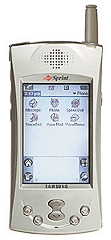
In November 1994, 8 licenses were issued for Cellular Mobile Telephone service in 4 metro cities. Further 34 licenses to 14 companies for 18 telecom circles were issued since December, 1995. The service has since been started in all the 4 metro cities and selected cities in 18 Telecom Circles.
There were about 15.9 lakh cellular mobile telephone customers in the country as of December 30, 1999 and the number is expected to increase to 24.5 lakh (2.45 million) in 2000. The potential is immense. USA has about 94 million cell phones. |