 |
| With over 20 million shareholders, India has the third largest investor base in the world after the USA and Japan. Over 9,000 companies are listed on the stock exchanges, which are serviced by approximately 7,500 stockbrokers. The Indian capital market is significant in terms of the degree of development, volume of trading and its tremendous growth potential. There are 23 recognised stock exchanges in India, including the Over the Counter Exchange of India (OTCEI) for small and new companies and the National Stock Exchange (NSE) which was set up as a model exchange to provide nation-wide services to investors. NSE, which in the recent past has accounted for the largest trading volumes, has a fully automated screen based system that operates in the wholesale debt market segment as well as the capital market segment. |
| Indian Stock Markets: |
| India's market capitalization was amongst the highest among the emerging markets. Total market capitalisation of the BSE as on July 31, 1997 was Rs 5573.07 billion growing by 18 percent over a period of twelve months and as of April 2000 was over $300 billion. As of end-March 2000, the assets under management by the Indian MF industry stood at a staggering Rs 1,13,005 crore. While income funds accounted for assets of Rs 48,004 crore, growth funds had assets of Rs 30,611 crore. Balanced funds accounted for another Rs 26,757 crore of assets as of end-March 2000. Liquid funds had Rs 1,529 crore, money market funds Rs 698 crore, gilt funds Rs 2,370 crore and ELSS with Rs 3,036 crore made up the balance. |
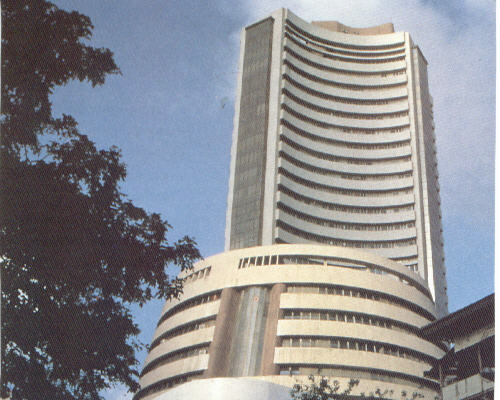 |
| Bombay Stock Exchange (BSE), one of the oldest in the world, accounts for the largest number of listed companies and has also started a screen-based trading system with the introduction of the Bombay On-Line Trading system. |
| Copyrights �2003, Parsi Community of United States All Rights Reserved |
 |
 |