Plant
Reproduction: Alternation of Generations
The Basic Reproductive Cycle
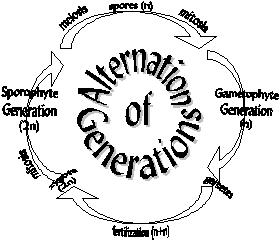
Gametophyte: haploid structure that produces
gametes.
Sporophyte: diploid structure that produces
spores.
Spore: first cell of the gametophyte generation.
Zygote: first cell of the sporophyte generation.
Meiosis: the process that begins the gametophyte
generation.
Fertilization: the process that begins the
sporophyte generation.
Pollination
Pollination agents
Wind: gymnosperms, grasses, maples, ragweed
Living pollinators
Insects
Birds
Types of pollination
Self-pollination: transfer of pollen to
another part of the same plant.
Cross-pollination: transfer of pollen between
two different plants. allows for more genetic recombination.
Fertilization
Fertilization: union of sperm and egg.
Double Fertilization: occurs only in angiosperms.
zygote formation: union of sperm
nucleus with egg nucleus.
endosperm production: union of sperm nucleus
with two polar bodies to produce triploid tissue.
Flower Structure
Structure: four whorls
Pedicel: stem/ stalk
Receptacle
Bracts
Perianth
sepals (collective: calyx): green
leafy structures that surrounds bud, protects from invaders
petals (collective: corolla): generally
colored portion to attract insects
Stamens: male part of a flower
filament (stalk)
anther (sac)
Pistil: female part of a flower
stigma: receives pollen
style: connects stigma to ovary
ovary: produces egg
Angiosperms
Variations in Flowers
Complete flowers have all four whorls.
Incomplete flowers: missing at least one
whorl.
Perfect flowers have both male and
female parts.
Imperfect flowers have only one type of
sexual organ.
back
to tech biology!