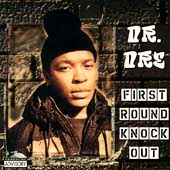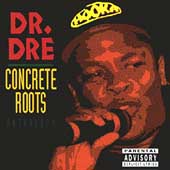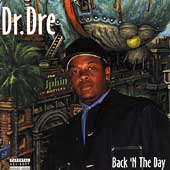
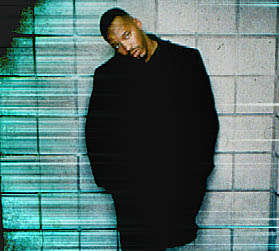


Dr. Dre (b. Andre Young, February 18, 1965) became involved in hip-hop during the early '80s, performing at house parties and clubs with the World Class Wreckin' Cru around South Central Los Angeles, and making a handful of recordings along the way. In 1986, he met Ice Cube, and the two rappers began writing songs for Ruthless Records, a label started by former drug pusher Eazy-E. Eazy tried to give one of the duo's songs, "Boyz N the Hood," to HBO, a group signed to Ruthless. When the group refused, Eazy formed NWA -- an acronym for Niggaz With Attitude -- with Dre and Cube, releasing their first album in 1987. A year later, N.W.A. delivered Straight Outta Compton, a vicious hardcore record that became an underground hit with virtually no support from radio, the press or MTV. N.W.A. became notorious for their hardcore lyrics, especially those of "Fuck tha Police," which resulted in the FBI sending a warning letter to Ruthless and its parent company Priority, suggesting that the group should watch their step.
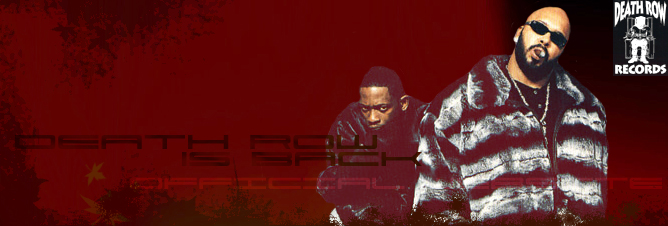
Most of the group's political threat left with Ice Cube when he departed in late 1989 admist many financial disagreements. While Eazy-E appeared to be the undisputed leader following Cube's departure -- and he was certainly responsible for the group approaching near-parodic levels with their final pair of records -- the music was in Dre's hands. On both the 1990 EP 100 Miles and Runnin' and the 1991 album Efil4zaggin ("Niggaz 4 Life" spelled backward), he created dense, funky sonic landscapes that were as responsible for keeping NWA at the top of the charts as Eazy's comic-book lyrics. While the group was at the peak of their popularity in 1991, Dre began to make efforts to leave the crew, especially after he was charged with assaulting the host of a televised rap show in 1991. The following year, Dre left the group to form Death Row Records with Suge Knight. According to legend, Knight held NWA's manager at gun point and threatening to kill him if he refused to let Dre out of his contract.
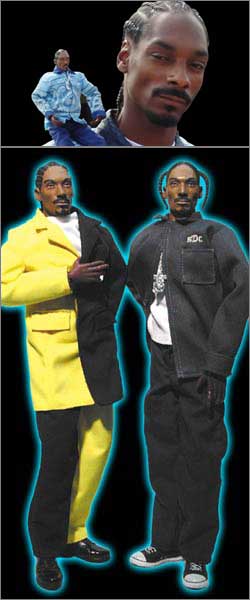
Dr. Dre released his first solo single, "Deep Cover," in the spring of 1992. Not only was the record the debut of his elastic G-funk sound, it also was the beginning of his collaboration with rapper Snoop Dogg. Dre discovered Snoop through his stepbrother Warren G, and he immediately began working with the rapper -- Snoop was on Dre's 1992 debut The Chronic as much as Dre himself. Thanks to the singles "Nuthin' But a 'G' Thang," "Dre Day" and "Let Me Ride," The Chronic was a multi-platinum, Top 10 smash, and the entire world of hip-hop changed with it. For the next four years, it was virtually impossible to hear mainstream hip-hop that wasn't affected in some way by Dr. Dre and his patented G-Funk. Not only did he produce Snoop Dogg's 1993 debut Doggystyle, but he orchestrated several soundtracks, including Above the Rim and Murder Was the Case (both 1994), which functioned as samplers for his new artists and production techniques, and he helmed hit records by Warren G ("Regulate") and Blackstreet, among others, including a hit reunion with Ice Cube, "Natural Born Killaz." During this entire time, Dre released no new records, but he didn't need to -- all of Death Row was under his control and most of his peers mimicked his techniques.
The Death Row dynasty held strong until the spring of 1996, when Dre grew frustrated with Knight's strong-arm techniques. At the time, Death Row was devoting itself to 2-Pac's label debut All Eyez on Me (which featured Dre on the breakthrough hit, "California Love") and Snoop was busy recovering from his draining murder trial. Dre left the label in the summer of 1996 to form Aftermath, declaring gangsta rap was dead. While he was subjected to endless taunts from his former Death Row colleagues, their sales slipped by 1997 and Knight was imprisoned on racketeering charges by the end of the year. Dre's first album for Aftermath, the various artists collection Dr. Dre Presents...The Aftermath received considerable media attention, but the record didn't become a hit, despite the presence of his hit single, "Been There Done That." Even though the album wasn't a success, the implosion of Death Row in 1997 proved that Dre's inclinations were correct at the time. Both Chronic 2001 and its companion volume 2001 Instrumental followed in 1999.
Dr. Dre, Ice Cube, and others from L.A.'s Compton neighborhood were founding members of N.W.A. (Niggaz With Attitude). Often called by some "revolutionary rap visionaries," "F*** Tha Police," off their first album (Straight Outta Compton, in 1988), upset so many people that the group was investigated by the F.B.I. It also made N.W.A. rich and famous. After the crew disbanded. Dre's first solo effort, The Chronic, became the sixth-biggest seller of 1993. The album earned him two Grammys--including one for best rap solo performance, for the single "Let Me Ride." Dre's hot label, Death Row Records, launched the careers of Warren G. and Snoop Doggy Dogg; it grossed $75 million in 1994.
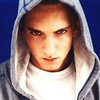
In the early nineties, Dre was sued by a woman who accused him of assaulting her in a nightclub (it was settled out of court) and by a colleague, the late Eazy-E (his label, Ruthless Records, sued Dr.Dre's Death Row Records for alleged racketeering; the suit was dismissed in 1993). The godfather of gangsta rap was convicted of assaulting a record producer, and arrested for punching a cop. On probation, he wore an electronic monitor and had to be at his million dollar home by nine p.m. The rapper's rap sheet got longer in 1994. After being pulled over for doing ninety in his Ferrari, Dre failed the alcohol test. He was sentenced to five months in the slammer for violating probation. It could be worse: Death Row partner Suge Knight ("the Spielberg of hip-hop") was convicted of weapons violations and assault. Now recently Dr. Dre has found a new prodige 'Eminem' he is signed under Dre's label Aftermath Records.
Dr. Dre is often considered the most influential rapper/producer of his time. With his straight-out-of-Compton attitude, Dre created his own style of hip-hop; one that went beyond flashy colorful clothes and fickle imagery, and coined the term and the sound that has become commonly known as gangsta-rap. In the tradition of bands like Cypress Hill and Parliament, Dre crafted his own subculture of sound. His G-funk ethic has been carried on in acts such as Snoop Doggy Dogg, Warren G and Ice Cube. His work in the famous N.W.A. collaboration, starring fellow rappers Eazy E and Ice Cube, revolutionized the rap industry forever.