As
we are the largest coal port in the world, you would think that we would
have a reasoned attitude to safeguarding our well-being. Global
warming starts here in the Hunter Region.
Do we all know someone having skin cancers cut out of their face?
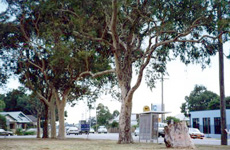
Do we all love parking under the shade of a tree on a hot day?
Do we enjoy walking around a barren desert on a hot day?
Do we all ensure that our children are well 'slapped' in sun creams
at the beach?
Do we all reel in horror at the sight of severe natural disasters that
we see on the TV?
Do we all get diverted by the alternate story, that it's all a myth,
that there's no such thing as the green house effect, global warming,
bah...it's just not happening, it's all emotional rubbish?
Are people concerned?
I believe they are.
SOME THOUGHTS
THAT CAN HELP
1. We have to
to learn to share.
We share this
earth with many different creatures and life forms. Everything is connected,
everything we do in some way effects everything else. If we want to
survive, then we need to ensure that we share. That means giving other
life forms room enough to live independent lives.
2. We must curb
our arrogance that we can know more than nature.
People seem
to think that they're going to live forever, that they are immortal.
We, as a species appear to harbour egos which can be described as having
centres that lie nowhere, and whose circumference is everywhere. The
reality is, that for the human animal, no one gets out of here alive.
Life is an experience that leaves its marks upon our bodies. For humans,
it scars our skin, we age, we die. Our life span is around 100 years,
if we're lucky. Trees can live for hundreds of years, their lives are
also scarred by life, but they survive and adapt. Just as we don't euthanise
humans who have suffered and survived hardships and have lost limbs,
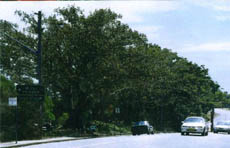
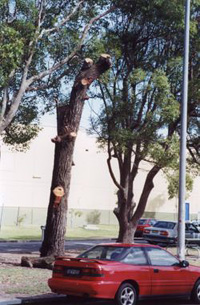
so, we don't have to euthanise trees that have been through a hard life
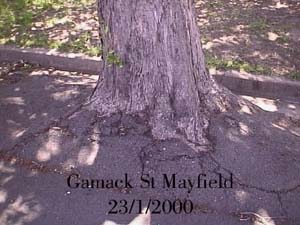
surviving fires, lopping or having to live on the space of a median
strip. Nature looks after this through sprouting new growth from old,
by cracking cement, or through the wind that dislodges any limbs that
shouldn't be there. If you believe in a sacred and magical world, then
old trees, as old people, have much to tell and teach us. If we're worried
about cement, there are alternatives...why not build curved paths? Have
a look at the great work the landscapers have done at the University
of Newcastle. The late artist Hunderwasser said that straight lines
existed no where in nature, and believed that they could kill. Science
is great, but propelled by an ego such as man's it appears to be following
the religious maxim given in the Bible to recreate nature in our image,
as God created man in his image. Do we really want to live in a totally
man-made environment. Without any access to a wild world, we in turn
become wild.
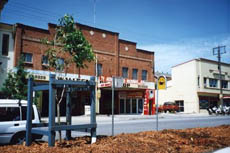
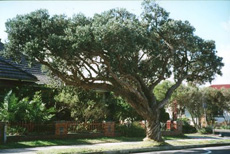 New
Zealand Christmas Bush
New
Zealand Christmas Bush
Glebe Road
The Junction |
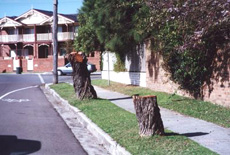
Merry Christmas
Glebe Road
The Junction |
3. We need to
know our history, to accept it, and to dream.
Australia is
at a crossroads. It is selective about the history it chooses to recognise
as its own. There is a shame about what was done to the Aboriginal people
that we try to disguise through ignorance and denial. [ If you don't
think there's anything to be ashamed of, then I would suggest enrolling
in History 101 at the University of Newcastle and learn, its a wonderful
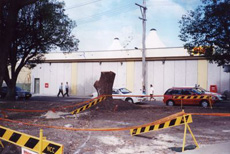
course]. This is manifested in the way we cannot live with ruins, everything
has to be totally wiped out and covered in cement. We can't live with
history because it secretly causes us pain. We need to be able to link
back, religio.
4. We need to
develop a spiritual imagination and respect for the mysterious.
We need to see
the whole of the world as sacred. We have to use our imagination and
our creative thought to re-vision everything. We need to become mystics,
listen to our dreams, tell wonderful stories, in this way we will find
reconciliation as well. We have to understand that there will always
be a mysterious dimension to life. Every mystery science solves, opens
more mysteries, and so, we should try to pay homage to the mysterious,
as we do to science.
5. Sensible
and Senseless Development
If we have to develop or create new industries or human endeavours,
then let us abide by the five rules of common sense. Let what ever we
create be pleasing and non-harmful to the five senses. It therefore
should be beautiful and not harmful physically or visually to the eyes.
For the ears, it should not create noise, but music of some description.
The development should not produce anything that offens the nose, it
should be pleasant to smell. It should not produce anything that is
harmful to the touch, or cause our hands to corrode. It should not be
poisonous to the taste if we eat it. Any development that fulfills these
criteria should be considered sensible. Any development that doesn't
fulfill these criteria should be considered senseless. Let us investigate
and dream up more sensible developments for the future.
I hope this
helps.