| Paresh Dhepe |
 |
| My Info: |
| Name : Paresh L. Dhepe |
| Email : [email protected] [email protected] |
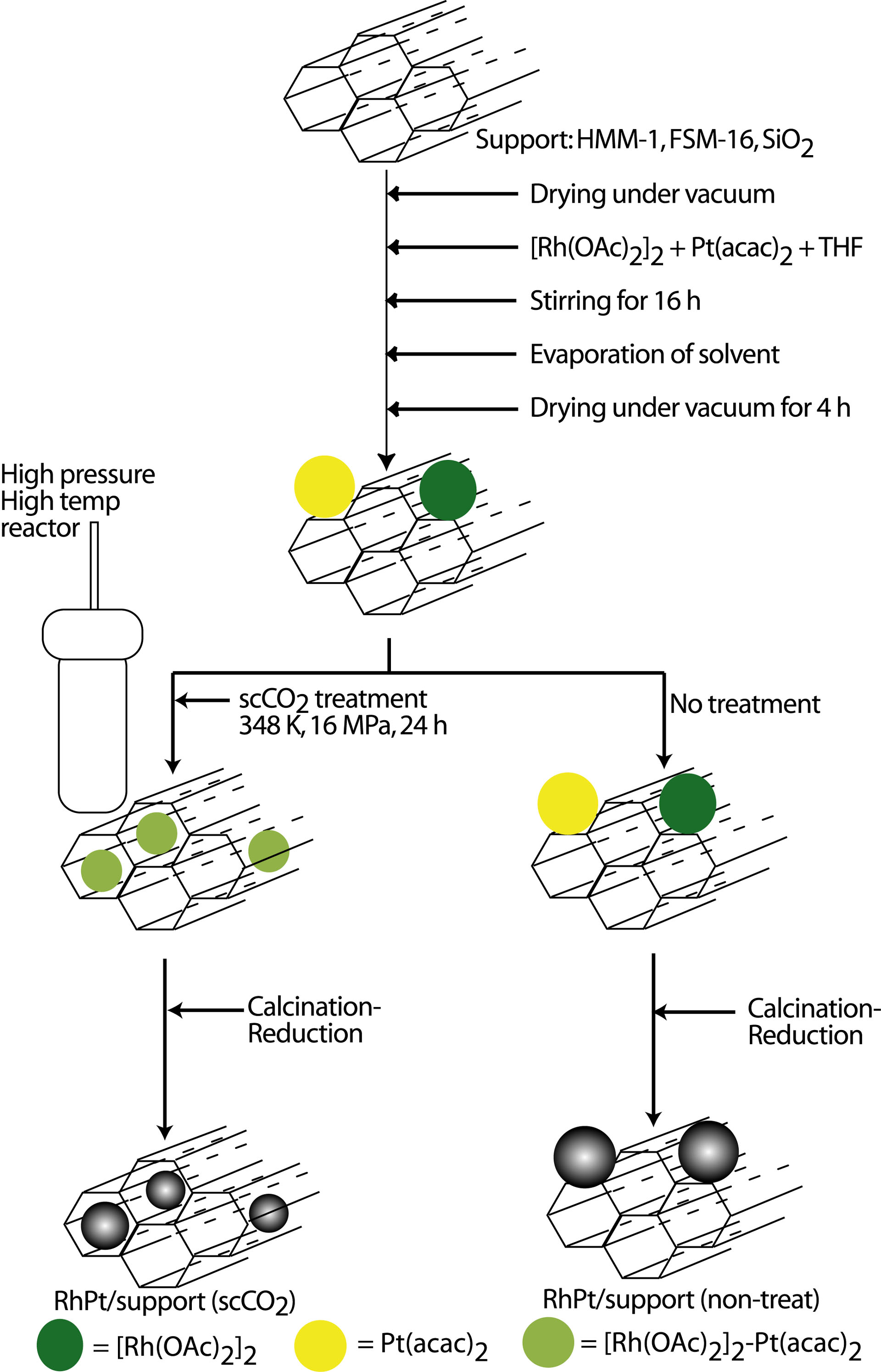
| Education: 2003, Ph.D. from Hokkaido University, Sapporo, Japan; Thesis title, "Study on Rational Design of Supported Metal Catalysts using Supercritical Fluid, Their Characterization and Catalysis" 1998, Masters (Organic Chemistry) from Pune University, Pune, India Experience: 2003-present : Research Fellow at Catalysis Research Center (CRC), Hokkaido University, Sapporo, Japan 1999-2003 : Doctoral Student at CRC, Hokkaido University, Sapporo, Japan 1996-2003 : Project Assistant at National Chemical Laboratory (NCL), Pune, India Research field: Conversion of biomass (starch, cellulose) to value added products (glucose, sorbitol, mannitol) by environmentally benign processes over solid acids or supported metal catalysts. Key words: Catalysis, heterogeneous catalysts, mesoporous, nanoparticles, solid acids, biorefinery, biomass, cellulose, starch, hydrolysis, sugar alcohols, supercritical fluid, Publications: Papers 1. Catalytic conversion of cellulose into sugar alcohols, A. Fukuoka and P. L. Dhepe, Angew. Chem. Int. Ed. (2006) published online 2. Hydrolysis of sugars catalyzed by water-tolerant sulfonated mesoporous silicas, P. L. Dhepe, M. Ohashi, S. Inagaki, M. Ichikawa and A. Fukuoka, Catal. Lett. 102 (2005) 163 3. Novel fabrication and catalysis of nano-structured Rh and RhPt alloy particles occluded in ordered mesoporous silica templates using supercritical carbon dioxide, P. L. Dhepe, A. Fukuoka and M. Ichikawa, Phys. Chem. Chem. Phys. 5 (2003) 5565. 4. Preparation of highly dispersed RhPt alloy catalysts in mesoporous silicas using supercritical carbon dioxide and selective synthesis of ethane in butane hydrogenolysis, P. L. Dhepe, A. Fukuoka and M. Ichikawa, Chem. Commun., (2003) 590. 5. Catalyst preparation using supercritical carbon dioxide: Preparation of Rh/FSM-16 catalysts and their catalytic performances in butane hydrogenolysis reactions, P. L. Dhepe, A. Fukuoka and M. Ichikawa, Catal. Lett. 81 (2002) 69. Book Chapter 1. Catalysis of mesoporous solid acids for environmentally benign process, P. L. Dhepe and A. Fukuoka in "Bottom-up Nanofabrication: Supramolecules, Self-assemblies and organised films" Ed. K. Ariga, American Scientific Publications, USA (2006) in press Abstract: 1. Conversion of Cellulose to Sugar Alcohols (sorbitol, mannitol) Introduction Catalytic conversion of biomass (starch, cellulose) is always a challenge for heterogeneous catalysis. Until now, hydrolysis of starch to glucose is reported over zeolites, ion-exchange resins, supported metal catalysts but no report ever reported hydrolysis of cellulose over supported metal catalysts. In my work, various metals (Pt, Ru, Rh, Ir, Pd, Rh, Ni) were supported over many supports (g-Al2O3, HUSY, HZSM-5, HMOR, HB, SiO2, FSM-16, C, etc. and were used for the conversion of cellulose into (via glucose) sugar alcohols (sorbitol and mannitol) Why sugar alcohols? Sugar alcohols are useful as sweetner (in foods), are precursor for vitamin C synthesis (L-sorbose), are raw materials for glycols (propylene, ethylene, glycerin) prduction and most importantly are precursor for H2 (hydrogen) synthesis to be used in fuel cell application. Results and discussion Pt and Ru supported on various supports show high activity (almost 30 %) and selectivity for sugar alcohol synthesis. Other supported metals also showed activity but compared to Pt and Ru it was negligible. It is proposed that in-situ acid sites generated with the help of hydrogen present in autoclave catalyzes hydrolysis of cellulose. FOR FUTHER DETAILS ON THE PROCESS PLEASE DOWNLOAD PAPER [Angew. Chem. Int. Ed. (2006) published online] OR REQUEST THE SAME 2. Starch Hydrolysis to glucose over Solid Acids As known, solid acids eventhough successfully replaced the conventional mineral acids, tend to loose the activity in water media due to the poisoning effect. In the present work, application of water tolerant solid acid catalysts has been tested. The hybrid organic-inorganic mesoporous silicas (HMM) were sulfonated with Si-C3H6-SO3H groups and then used for the hydrolysis reactions in excess water. On the prepared solid acids sucrose and starch hydrolysis was carried out. The sulfonated mesoporous silicas gave very high activity over conventional solid acids such as SiO2-Graft, Amberlyst-15, Nafion-silica. The catalysts showed same activity in repeated runs emphasizing that they can show very high TOF. The catalsyts characterization by 13C NMR, 29Si NMR and XRD suggested that morphology of catalysts was not changed after reaction. FOR FUTHER DETAILS ON THE PROCESS PLEASE DOWNLOAD PAPER [Catal. Lett. 102 (2005) 163] OR REQUEST THE SAME 3. Structural Characterization and Hydrogenolysis over Rh and RhPt Nanoparticles Prepared by Supercritcal Carbon Dioxide Treatment. Key words: supercritical carbon dioxide; FSM-16; HMM-1; nanoparticles; alloy; hydrogenolysis In many fields of chemistry supercritical fluids (SCFs) are attracting much attention due to their unique properties such as high diffusivity, low viscosity, non-flammability, lack of toxicity and alterable solvent properties. First time in the field of nano-particle synthesis we took advantage of SCFs. By use of SCFs in the heterogeneous catalyst preparation we proposed formation of highly dispersed nano-particles. FSM-16 and HMM-1 supported monometallic Rh, Pt and bimetallic Rh-Pt catalysts were prepared by impregnation method using conventional organic solvent and then subsequently treated with supercritical carbon dioxide (scCO2) in a temperature range of 50-150oC and 10-40 MPa pressure (Catalyst preparation method). Characterization was done by CO chemisorption, XRD, TEM, EXAFS, and FTIR. It is demonstrated that highly dispersed metal particles are obtained by the scCO2 treatment. TEM images show formation of nano-particles inside the channels of mesoporous FSM-16 and HMM-1 after treatment. The IR study revealed the formation of homogeneous RhPt alloy after scCO2-treatment. To study the differences in the catalytic activity and product distribution, structure sensitive butane hydrogenolysis reactions were carried out as a test reaction. In these reactions the scCO2-treated catalyst showed higher conversions and ethane selectivity. FOR FUTHER DETAILS ON THE PROCESS PLEASE DOWNLOAD PAPER [Phys. Chem. Chem. Phys. and Chem. Commun. and Catal. Lett.] OR REQUEST THE SAME |
| Address: Catalysis Research Center, Hokkaido University, Kita ku, N 21, W 10, Sapporo 0010-0021, Japan |
| For terms and other informaton please scroll down |
| Various terms used on this page |
| Biorefinery: Biorefinery is analogus to petrorefinery of present day. Biorefinery means, conversion of biomass into chemicals, fuels, power etc. Biomass is everything which is derived from plants and also from humans. Plants by photosynthesis process generates starch and cellulose, 2 important and essential components for them to survive just like humans have skin, bone (cellulose) and fat (starch). Cellulose is present as a wood, which gives support and basic infrastructure to the plant and starch is present as potato, rice, corn etc. Cellulose has a rigid structure and is a polymer of glucose units attached to each other via Beta (B)-1,4-linkage. Cellulose is water insoluble and is very hard to degrade (as we know our furnituer and many materials made of wood are very resistent). Starch is on the other hand, water soluble (not exactly a room temperature but at higher temperatures, approx. 70-80 degC) and can be easily degraded into glucose via enzymes or mineral acids (so we can eat potato, rice, corn etc. which consists of starch, and this starch humans can digest). Supported metal catalysts? Catalysis is a term used when a catalyst carries out any reaction without getting consumed during the process. Now, catalysis is of several types such as, homogeneous, heterogeneous, enzymatic and so on.. In case of homogeneous catalysis, catalyst is solvent soluble and also reactant and product (not always). Thus at the start of the reaction and during the reaction, all catalyst, reactant and product forms one phase. In case of heterogeneous catalysis, this is not true. Here, catalyst is always a solid material, which is never soluble in reaction solvent. But, at the same time, reactant and product might be soluble in the solvent (if reaction is carried out in liquid media). Thus this system forms 2 phases, 1) solid (catalyst) and 2) liquid or gaseous. Supported metal catalysts are therefore, metal particles supported on some kind of support. Now, metals as we all know are many, gold (Au), platinum (Pt), ruthenium (Ru), iron (Fe) and so on... Supports are the materials which are sometimes neutral, sometimes acidic or even basic. Here I will not go into the details of these materials. So coming back on track, these metals are supported on supports and thus becomes catalysts to carry out n number of reactions. Supercritical, Normally it is known that any material can exist in 3 phases, either solid, liquid or gaseous. But supercritical is another phase in which properties of both gas and liquid are combined. This phase is achieved by heating the material above its critical temperature (Tc) and pressurizing it above its critical pressure (Pc). For e.g. Carbon dioxide (CO2) has Tc = 31.1 degC and Pc = 7.3 MPa. Generally, supercritical fluids have diffusivity more than liquid but less than gas and density more than gas but less than liquid. Moreover, its properties are adjustable by altering temperature, pressure and with addition of other solvents in small amounts. PLEASE VISIT THIS SITE AGAIN, AS I WILL ADD MORE CONTENTS IN FUTURE...!! |
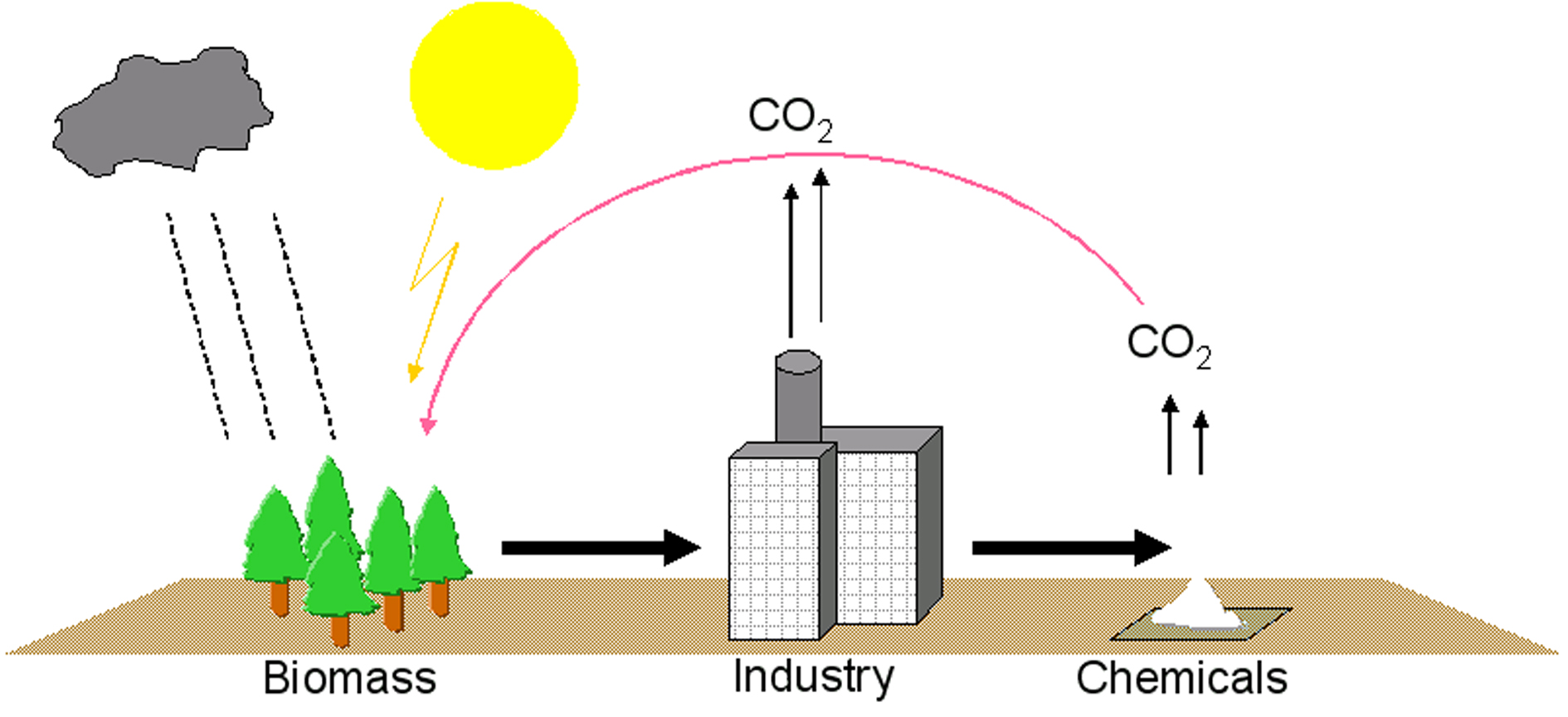 |
| Biorefinery concept |