| Parcfermeuk |
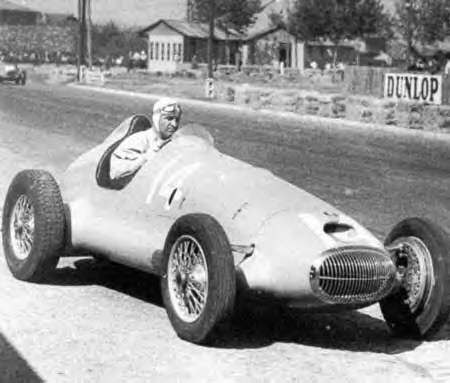
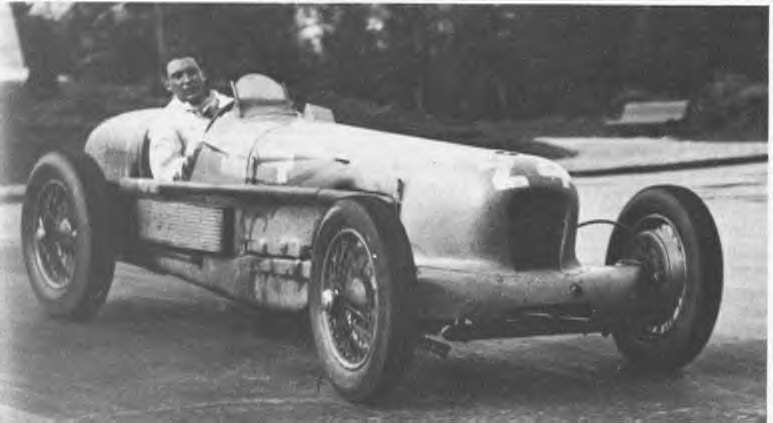
| The recent failure of Prost Grand Prix got me thinking again about the peculiarly French ambition to produce a national racing car which probably has its roots in the 1908 and 1914 Grands Prix de l�ACF when France was humbled by the might of Mercedes. It�s certainly true that France invented motor racing when the first competition took place over the roads between Paris and Rouen in 1894 � this led directly to the foundation of the Automobile Club de France later that year and the ACF assumed the mantle of organising racing in the early years. Without doubt, French cars were dominant in the first few years of motor racing � Mors and Panhard dominated the city-to-city races for several years, but once the Gordon Bennett races succeeded them cracks started to appear in the French wall of invincibility. Jenatzy's Mercedes took the 1903 race in Ireland and although Leon Th�ry won in 1904 and 1905 with Richard-Brasier cars, he was especially lucky in the latter year when Vincenzo Lancia�s FIAT dropped out with a holed radiator. Nazzaro and Cagno in the other two FIATs were a strong second and third. The following year, Nazzaro came second in the first Grand Prix. In 1908 he went one better, defeating the pride of France. Even worse was to come, when in 1908 Christian Lautenschlager�s Mercedes led two Benz home: the drivers of the Benz cars were French as well! That was the last French Grand Prix until 1912, when it seemed the old order was restored � Georges Boillot won in a mighty Peugeot L76, a feat he repeated the following year in a Peugeot EX3. But in 1914 Lautenschlager and Mercedes were back � with a vengeance! Mercedes finished 1-2-3, with Louis Wagner and Otto Salzer taking the minor places. Jules Goux brought his Peugeot home in fourth, but France had once again been humbled by Mercedes: just a month later came the Great War, which put an end to racing in Europe. Peugeot continued in America but after the war, the old order changed in France and new names like Bugatti, Talbot and Delage emerged in Grand Prix racing. The classic Bugatti T35 was the most successful Grand Prix car of all time, winning countless races, while the Delage 2LCV and 15S8 both enjoyed brief periods of domination. The supercharged 15S8 grand prix car, suitably modified by Ramponi, was still winning voiturette races in the hands of Dick Seaman, against state-of-the-art ERAs and Maseratis, ten years after it had been first built. The 1930s were not kind to French motor racing � Bugatti stagnated, producing a number of unsuccessful designs, and Delage withdrew, eventually merging with Delahaye. Italian cars dominated Grand Prix racing, in the shape of Alfa Romeo and, to a lesser extent, Maserati. With the new 750kg Grand Prix Formula of 1934 came a new French challenger � the SEFAC, produced by the Societ� d�Etude et de Fabrication d�Automobiles de Course. It was designed by Emile Petit, who had produced a long and successful line of racing cars for Salmson in lower formulae, while amongst the group was a young and successful French driver called Raymond Sommer. First details were released in April 1934 when the �SEFAC mystery car� was revealed as having a 2600cc supercharged �parallel-eight� engine, which owed a lot to previous Salmson designs. The SEFAC could lay claim to being one of the ugliest Grand Prix cars ever, clothed as it was in a boxy bodyshell with no pretensions to beauty. It was entered for the 1934 French GP, but failed to appear until the same event the following year, when it boasted a slightly larger capacity of 2760ccc, and the Algerian veteran Marcel Lehoux drove it briefly in practice. Sommer had long since gone in search of a real Grand Prix car! However, we will meet him again later. Secrecy was the order of the day at Montlh�ry - photographers and journalists were discouraged, but the car was abruptly withdrawn when it was discovered that it was 175kg over the maximum weight limit! After the German steamroller had rolled through for the second year running, the French press were baying for blood and the authorities took the easy way out, running the 1936 and 1937 French Grands Prix for sports cars � a French victory was virtually guaranteed that way! There was another new Grand Prix formula for 1938 and the SEFAC was dusted off again after being laid up for two years, appearing at Reims for the French Grand Prix. A new nose had been fitted, possibly to temper some of its ugliness, and it was rumoured that it had turned in some fast testing laps at the Montlhery Autodrome � it wasn�t taken seriously when compared to the latest supercharged marvels from Mercedes Benz and Auto Union, and even the new Bugatti was accorded more credence, while a weight of 931kg gives clues to its problems of two years before. It did actually start the race, in the hands of the sports car driver Eugene Chaboud, but expired on lap 3 in a cloud of blue smoke. It was recovered and was on the way home even before Mercedes had finished 1-2-3. The final appearance of the SEFAC was in the 1939 Pau GP, this time driven by Jean Tr�moulet, another sports car man. His practice time was a full 19 seconds slower than von Brauchitsch achieved in the latest Mercedes Benz and in the race he trailed around in last place before retiring the car after 35 laps. That might sound a little better, but the full distance was 100 laps. A hopeful entry was made for the French GP, but the doleful note in the programme that read D�part improbable was proved to be correct � it didn�t even arrive, let alone d�part! Unbelievably, this was not quite the end of the story � nine years later, in 1948, there were excited noises being made in the French press about a new French Grand Prix car called the Dommartin, designed by Emile Petit. This time the engine had been stretched to 3619cc, but the technical specifications were transparently those of the old SEFAC. It was clothed in an attractive sweeping body, but was destined never to race. Meanwhile, in 1946 another French national racing car had been announced � the CTA-Arsenal. Originally presented as a �high speed research vehicle� by the Centre d�Etudes Techniques de l�Automobile et du Cycle, a government grant was obtained for construction of the car, which took place at the arsenal at Ch�tillon: thus the unusual name. Designed by Albert Lory, who had produced the great Delage 15S8 in the twenties, the 1.5 litre supercharged CTA-Arsenal was a compact and pretty car, but that�s probably about the only positive comment that can be made about it! Among the other leading lights of the project was our old friend Raymond Sommer, by now a respected elder statesman of French motor racing. Sommer had first driven the car at Montlhery early in 1947, and found it far from raceworthy: it allegedly attained a speed of 124mph at the Autodrome, although whether that was the lap speed or the top speed was not made clear. Sommer thought the car was hopeless and in need of considerable development. As ever in stories like this, politics took a hand, and the CTA came under government pressure to fulfil their entry in the GP de l�ACF at Lyon. In practice Sommer found it weaving badly on the straight and his best time was 3m.45.5s, almost half a minute behind Louveau in pole position. Amazingly, he wasn�t last on the grid, but of the five cars behind him, de Graffenried had had problems during practice and the other four (Comotti, Chinetti, Ascari and Villoresi) had arrived too late to record a time. When the tricolour fell to start the race, the field got away in a cloud of tyre smoke, but as it cleared the CTA-Arsenal could be seen rolling slowly to a halt. The clutch had jammed, then come in with a bang and snapped a half-shaft: the car was pushed off the grid to boos of derision from the crowd. This was to be the only �appearance� of the CTA-Arsenal, although two arrived at Reims for the 1948 GP for Sommer and Eugene Martin. Sommer was obviously still not convinced by the car as he took the very sensible precaution of bringing along his usual Maserati 4CM. The CTAs were withdrawn after the first day of practice as �not ready� and Sommer raced the Maserati. The cars were sold to Tony Lago, owner of Talbot, who stored them at his Suresnes works for some years before they were consigned to the lock-ups under the banking at Montlhery whence they eventually emerged to begin a peripatetic existence as travelling museum exhibits. Ironically, 1950 would find Sommer behind the wheel of a BRM Type 15 on the grid at Silverstone for the International Trophy: he let in the clutch and a half-shaft snapped - d�j� vu? |
 |
 |
| Tremoulet driving the SEFAC at Pau circuit in 1939 |
| Sommer in qualifying for the French Grand Prix of 1947 |
| WHAT IS IT ABOUT THE FRENCH? By Richard Armstrong |