 |
| VANCOMYCIN RESISTANT ENTEROCOCCUS (VRE) |
| What is Vancomycin Resistant Enterococcus? Bacteria known as Enterococcus can be found in the human genital and gastrointestinal tract. These bacteria rarely affect a healthy person, and are generally limited to individuals on antibiotics that are hospitalized. Enterococci bacteria causes infections in the urinary and biliary tracts, in post operative surgery sites, and through the use of catheters. Enterococci bacteria is inherently resistant to numerous antibiotics. Recently, a strain known as E. Faecium, has shown that it is resistant to numerous antibiotics. Vancomycin is used as a last resort when the enterococci bacteria no longer reacts to all other types of antibiotics. When the antibiotic Vancomycin has no effect, the person is now VRE positive. Risks Factors VRE is generally found in health care settings such as hospitals and nursing homes. This environment, along with the patient's current medical condition, increases their risk of VRE infection. Susceptibility to VRE increases in: *patients with depressed immune systems *patients with recent transplants *patients in Intensive Care or Critical Care Units *patients with post operative surgery sites *patients with catheters or colostomy sites Patients who have been given numerous amounts of antibiotics and have been pre-disposed to Vancomycin are at a greater risk of contracting a VRE infection. Treatment of VRE Enterococci bacteria that is resistant to Vancomycin makes treatment for an infection difficult. Since Vancomycin is usually the last resort antibiotic, experimental drugs are being introduced. Dalfopristin and Quinupristin, which are given intravenously, belong to Pristinomycins a new class of drugs that are used to treat a VRE infection. The enterococci bacteria response to these drugs is still being researched. |
| Prevention of VRE The following precautions should be taken when dealing with VRE patients: *Proper handwashing before and after patient contact *Avoid body fluids *Disinfection of equipment that have come in contact with the patient *Proper disposal of waste products *Isolate the patient *Wash laundry separately *Wear protective clothing such as a gown, gloves and a mask |
|
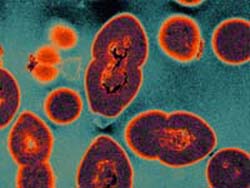
| Photo of Vancomycin Resistant Enterococcus Bacteria |