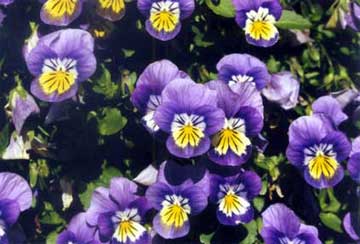
Pansies in a frame.
Pansies (Viola sp.) prefer full sun and moist, rich soil that is well drained.
They may be cool season annuals, biennials, or hardy perennials and bloom in early spring or fall depending on the species and actual time of sowing the seeds.
Pansies have their own unique set of cultural requirements that differ from other summer annuals. Planting time is critical. If you plant too early, before the weather cools, plants will often become weak and spindly in the late summer heat. Then they're more susceptible to winter cold damage, diseases and insects.
For a longer blooming season they should be planted in a cool place and not permitted to dry out from the hot sun. They can be planted as early in March as the ground will allow. The plants will continue to flower well into June or later if the dead flower heads are picked off. Pansies are best planted in late winter even though they are often planted in late fall. Planting pansies in the fall helps them develop vigorous root systems during winter, thus you'll get many more blooms in spring, however there is a risk of losing your plants to a severe freeze.
Fall planted Pansies tend to fend off cold better if they are well fed, so feed your plants in fall with water-soluble general purpose fertilizer right after planting them. Then sprinkle a teaspoon of slow release fertilizer around each plant. If severe weather is expected or a serious cold front hits, cover your plants with several inches of pine straw, fallen leaves, or hay. When the weather moderates remove it, you'll find your plants healthy, green, and ready to bloom again.
Links for Pansies
Burpee Seeds
Gurneys Seeds
Planting advice
|