| |
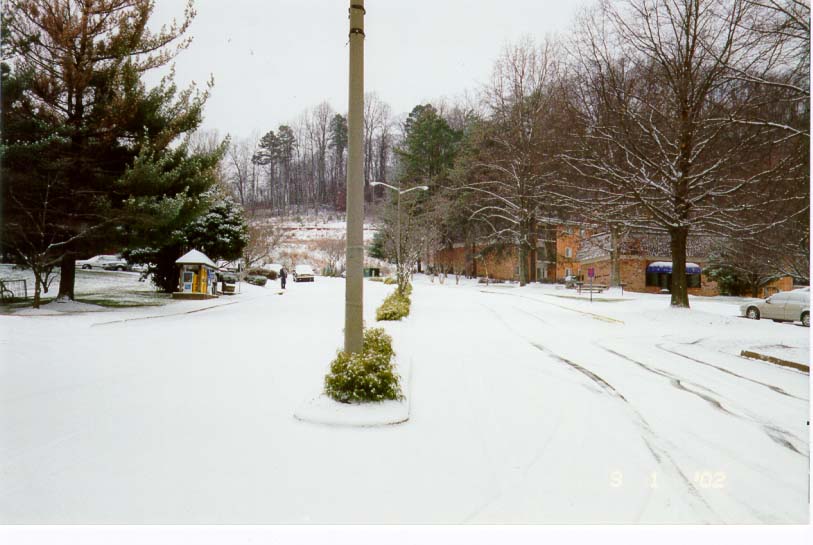
Today, while driving he is thinking about snow. When he got out of the library to walk to his car, he noticed the snow flurries landing gently on his fall jacket. The first for the winter season.
It occurs to him, as he is driving along, that every man, woman and child develops their own unique relationship with the elements � with the rain, with snow and with the sea. And it occurs to him that he has never really examined or even considered his evolving relationship with snow.
Immediately, he recalls the winter of 1990-91, which was the toughest one in his life. In the years that followed, he has been through blizzards and more feet of snow than he cares to recollect, but that one was the toughest. It was his first winter in Buffalo, NY.
He was a new graduate student then, arriving into Buffalo, one of the coldest towns in the country. He arrived with thin tropical blood flowing in his veins. He was unprepared for the brutal winters of the northeast. Most important, he didn�t have a car then. And he hadn�t yet learned that when it came to the snow experience there is a �warm-side� and a cold one.
Today, driving around in his heated car, he can admit to himself that he actually likes snow. The cold affords him an excellent excuse to indulge in warm drinks. Hot apple cider, hot cocoa or more commonly coffee. But all of this applies only if he is on the �warm side,� gazing out at the snow from a protected perch. However, that is not the real snow experience. For a true relationship with snow to be forged there must be no such warm barrier to insulate him from the cold.
Which was the case back in January of 1991. He was an intern in a company called Linde. Twice a week, he had to commute by bus to a place far away. Far away from the warm campus that the rest of his classmates got to stay in.
The return commute, back to his apartment was the worst. What a shock to realize that it started to go dark as early as four in the afternoon. Of course, the one-hour clock shift had happened in November, so it was really five o�clock, but still. The cold, the drizzle, the dizzying flurries. When would it ever stop?
He was very annoyed that in a place as cold as Buffalo, they hadn�t bothered to build covered bus stops. 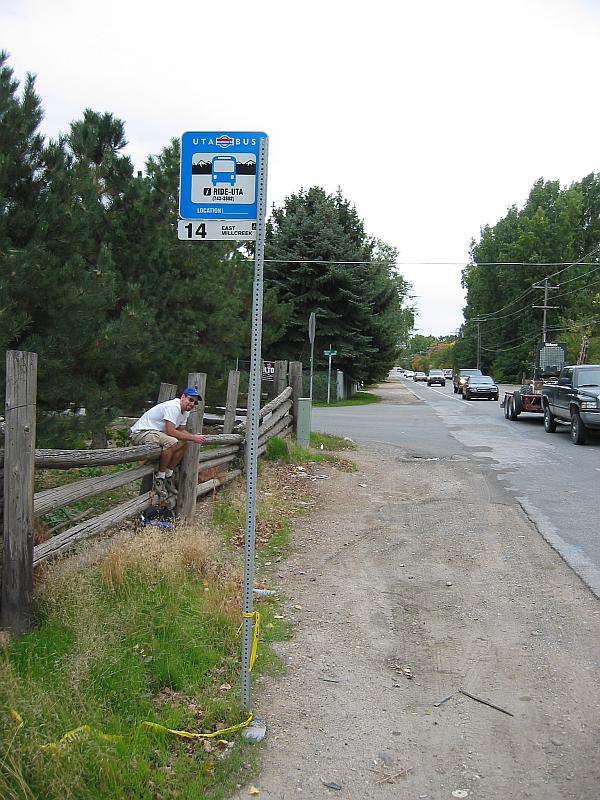 Most stops were nothing more than an eight-foot slotted pole, with a small metal sign screwed on. The sign would be painted with an NFTA logo and the bus route number in a large font. That was it. And twice every week he would stand beside that pole, in the merciless cold, waiting and waiting. Most stops were nothing more than an eight-foot slotted pole, with a small metal sign screwed on. The sign would be painted with an NFTA logo and the bus route number in a large font. That was it. And twice every week he would stand beside that pole, in the merciless cold, waiting and waiting.
A six or seven minute bus-delay meant a world of difference. His ears used to freeze until he bought himself a set of earmuffs. No matter how good his shoes and how warm the socks when he started out of the Linde building, the socks always got wet because of trudging in the snow to reach the bus stop. When he got to the bus stop, his toes and fingers would start to freeze. He hadn�t heard of anyone getting frostbite while in town, but to him the fear was very real. He had to repeatedly stomp the ground several times a minute with both feet to keep the circulation going. He would sway back and forth, and if the darned bus still didn�t show up, he would slowly circle around over and over in the same spot. He wasn�t sure if those gyrations provided any warmth, but it was something to do.
He often thought of his classmates and friends who were all ensconced in the warmth of their labs and classrooms while he alone had to endure the cold in the bus stop.
He would stare at each passing car with its single occupant with a mixture of anger and envy � feelings he would have frowned upon, if he detected them in others. Didn�t it occur to even one of these passing cars to stop and offer him a short ride? To take him two miles and drop him off on Kenmore Avenue, which had a lot more traffic and many more buses plying in it? He imagined owning a car. He knew that if he had a car, he would surely stop for those less fortunate than himself.
Even that anger born of righteousness helped warm him a little while he waited. With each passing minute, the cold took a deeper hold. Some days, he was so cold that if someone had offered him a lit cigarette, he probably would have gratefully accepted though he didn�t smoke. Fortunately, no one ever did.
No one else waited in that bus stop. In fact, there was hardly anyone else who seemed to take these buses. Coming from Madras, a city with overcrowded buses, he thought it was a terrible waste that such a wonderful and fully heated bus was plying with just 2-3 passengers onboard. Surely, the bus company had to be losing money. He didn�t know then, as he did now, that in places like Buffalo, especially in the suburbs, only those who couldn�t afford a car took the bus.
Of course, all that was a decade ago. His whole relationship with snow has undergone an about turn. Primarily because he has a car now. Snow permits him small indulgences. Sometimes, he imagines that snow is a magic blanket pulled on by a benevolent God to cover over the world�s dark underbelly. These days, trudging in snow, when he sees the interesting-shaped shadows that the sun flings upon a fresh carpet of snow, he is tempted to reach for his digital camera. In his kitchen shelf, he has sweet-condiment tins lined in neat rows, and can make himself cappuccino, hot cocoa or warm cider as he pleases. (Just add hot water.) Topped with a dollop of whipped cream if he is feeling decadent. These days he is snow�s master merely because he has a car now. He is back on the warm-side.
But, even to this day, when he is driving by and he sees some poor souls shivering in bus stops stomping their impatient feet, waiting for transportation and warmth, he gets the urge to stop. He notices that even in Chicago most bus stops are still a solitary slotted pole. He imagines writing a letter to the commissioner of the bus authority. He knows that he should pull over. He imagines announcing grandly: �Hop in, folks. I can take three of you.� It would be such a neat way to get back to all those who didn�t stop to give him a ride in his Linde days. Revenge that was positive, mixed in with just the right dose of a random act of kindness. �My name is Ram. What are yours?� he imagines asking the cold passengers, as they gratefully settle in his car.
Of course, he never does stop. Yes, he is aware of the sentiment that a single deed is better than a hundred kind thoughts. He also knows that the road to hell is paved with good intentions. And yet he doesn�t pull over at bus stops. He is pragmatic, and he knows that it would be too odd if he stopped. Those at the bus stop know, and he knows of the dangers that lurk in the kind of big city that they are all citizens of. None of those stomping their feet waiting for the bus are going to jump into a stranger�s car.
So, wishing for the speedy arrival of a warm bus to whisk their cold troubles away, he drives on. He drives on, plowing right into the first wispy flurries of the season that hint of a long winter ahead.
Ram Prasad
December 2003
|