 The very first limousine ride that I ever took in my life was from the Indianapolis airport. I was a student finishing up my graduate studies and I was flown to Indy for a job interview.
Actually, my heart was set on acquiring a teaching position in any college in the United States that would have me. I loved teaching, and my students seemed to agree. But this was in mid-1995, and getting a job in academia was next to impossible. There were over 900 applicants for every single faculty position in reputed universities. I had never been diligent about publishing technical papers, which was the passport to any good academic job. All my academic job applications were going nowhere.
The job I was interviewing for in Indy was not a teaching one.  "It was for a corporate job, for a very prestigious Fortune 500 chemical company called Dow Elanco. When the phone call from Dow Elanco had come to my thesis advisor asking for a reference about me, I happened to be in a one-on-one conference with him. He asked me to step outside while he sang my praises to them. Every good advisor wants their students placed in good jobs. This in turn would mean more students for them and possibly future projects. My advisor, having foreseen that I wasn't very likely to land a teaching job anytime soon tried to steer me towards a corporate job. He proceeded to try and impress upon me the importance of making the most of the few interviews that came my way.
And so, one evening I took a flight from Buffalo, NY to Indianapolis to be interviewed the following day. In the limousine there was a TV, but I was nervous about the imminent interview and had no desire to really watch anything. It dropped me off in the Indianapolis DoubleTree Hotel ("Twice the Hotel," if you believe the ads).
Within the hour two gentlemen from Dow Elanco showed up to take me to dinner. These two who would be my future colleagues at Dow Elanco if I joined the company. We drove to an upscale neighborhood, and I could see that they were taking me to a fancy restaurant. We walked past a Barnes & Noble bookstore. Chitra Banerjee Divakaruni's book Arranged Marriage, (which would go on to win the National Award) was featured prominently in the store. Our dinner conversation centered around what it meant to have a marriage arranged by one's parents. I wasn't married at the time, but that didn't stop me from pitching in with my comments. I defended the concept of arranged marriages while those two talked about how strange it was to marry someone you hadn't even met properly before.
The next morning, I showed up at the Dow Elanco headquarters building in suit and tie. The first things I noticed in the foyer were the numerous signs and posters. The posters were all extolling the virtues of fertilizers and chemicals that Dow produced. One pictorial informed me that the total weight of all the rats in the world was many, many times the weight of all the humans combined. 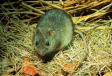 "(The subtext was that with the help of their pesticides, Dow Elanco was ridding the world of rats, thus making sure that there was at least some rice and wheat left over for you and me to consume.) Other posters showed how efficient their chemicals were in getting rid of small germs and microorganisms invisible to the naked eye.
Dow was very interested in my Bachelor's degree, which was in Chemical Engineering. The graduate degree I was pursuing was in Operations Research. The posters helped bring home the realization that I was being interviewed for my role as an optimization expert, who (combined with his meager knowledge of Chemical Engineering) would help Dow maximize the amount of pesticides they produced.
Looking at the posters, I fully understood the importance of Dow's role -- eliminating mice and frogs and what not, but I couldn't shake off the feeling that it was wrong. Sure, I loved rice as much as any other South Indian, and yet I couldn't seem to fully grasp the idea that these pests have to be exterminated. I recognized my feelings for what they were - a hypocrisy. I recognized it but was unable to overcome it.
It was a day long interview, and as it proceeded, I kept thinking about the question that was nagging me: Can you be a rice-eater and yet not condone the mass killing of the rats and other pests?
But I kept reminding myself that I was there to seek a job. As part of the interview I had been asked to give a presentation, and so I did just that. I talked about my thesis, making sure to touch upon the more interesting aspects, and glossing over the more esoteric math stuff. They were an attentive audience and they asked a lot of questions. In fact, they were a great bunch.
I had gone through one or two interviews in India where they grilled me with questions. In contrast, I found the interviews in the U.S. to be generally a lot more pleasant. The interviewers were the ones who do most of the talking, and if you had the knack to pose a good open-ended question or two, you could sit back and listen. The interviewers almost never asked pointed questions, and if they did ask something they would practically apologize for doing so.
To a person, my interviewers were nice folks. They went to great lengths to make me feel welcome. They were already treating me as a part of their group. Some interviewers had dropped hints that the pay was very generous. I could picture myself working with these people, eating fancy dinners and browsing around in a Barnes & Noble bookstore afterwards before returning home. It was a limousine-and-tuxedo lifestyle that I could get used to.
For my penultimate interview, I met an avuncular figure, a man who was a spitting image of Robert Duvall in the movie The Paper. Ram, he said, everybody likes you. There are three candidates that we are interviewing for this job. Everyone today has said good things about you. Your next interview, the last part, is with our VP. Look, he said, all you have to do is to go in there and ask her for the job. Tell her you want the job and it is yours. He patted my shoulder. Good luck.
Yes, I believe that I stood a real good chance. Sometimes, you can tell.
I went into the room for my wrap-up with the VP. She was in her early thirties, wearing a stylishly cut all-white suit and pants, with matching white shoes. Even as I made small talk with her, I knew that I would leave the room without directly asking for the job. Something about all those rodents and the tons of pesticides to eliminate them kept intruding.
We ended up having a very interesting conversation. I was relaxed and wasn't constantly mentally editing what I said or did not say, and so I chatted freely. In a sense, I turned the tables and asked the questions. She had readily confessed to a lack of technical skills. So, I asked her how come she had gotten to be the VP of this particular group, managing all these people with their Ph.D's. I didn't mention the egos that usually accompany the Ph.D's.
"I see my job as one of making sure that I eliminate any obstacles in the paths of those in my group," she said. "That way, they can focus solely on getting their work done." It was sound advice for anyone leading a group of self-motivated technical folks. "I think I am very good at my job." I didn't doubt it.
When my allotted fifteen minutes were up, I thanked her for her time and left. I hadn't asked for the job outright.
Sure enough, I didn't get the job offer. A few weeks later a pleasantly bland letter showed up in my mailbox saying that they had found someone else for the job and that they wished me the very best in my future search.
For my part, I have never regretted not getting the Dow Elanco job, not for a single moment. I have also never managed to get my own hypocrisy on this issue resolved to my satisfaction. Yes, I want my rice, but no I don't want to think about the rats that have to be killed so that I can get my rice. Maybe there are certain central hypocrisies in all our lives that we are just not meant to ford.
Incidentally, for my return trip to the airport after the interview, there was no limousine waiting. An ordinary taxicab showed up, but I got to the airport just fine.
Ram Prasad
July 2003
