India on My Mind
I first met Shankar in Roorkee. He had left Madras and traveled nearly 2000 kilometers to pursue a degree in engineering. Shankar’s success in the entrance exam was a big breakthrough for their family. There was finally hope that he would get a well-paying job after his degree and help his parents out of debt to financial freedom. But this responsibility didn’t cure him of his chronic homesickness. Often I would find him weeping in his room, thinking about Madras. At the beginning of each semester he would start crossing out the dates in the calendar and keep count of the remaining days for his trip back home. “I will be taking the Tamilnadu Express from New Delhi in another ninety-eight days,” he once announced as I was walking with him to the mess to have dinner. Shankar hated it in Roorkee. Everything there was a barrier that separated him from his beloved city and his parents. Finally, when he couldn’t bear it anymore, he decided to take the IIT entrance exam again and go back to Madras. He did clear the exam and go back to Madras. His father was disappointed because he had lost a year of his studies. But Shankar didn’t regret it one bit.
I stayed in touch with Shankar. He wrote me letters regularly and whenever I visited Madras to spend time with my relatives I would also make it a point to visit him. He told me that his mother was happy to have him near her and he was glad to be back in Madras. That is all that mattered to him.
After I graduated from Roorkee, I left for Penn State in the United States. A year later, Shankar applied to the very same school and got an admission with scholarship. We shared an apartment at the University Park campus. And his homesickness started to plague him again. Once, after returning from India, he broke down and cried thinking about his family back home. I lectured to him, and when that failed, admonished him to snap out of it. But he couldn’t. He would spend over $300 every month calling his parents. I asked him to stop spending so much from his meager tuition stipend. But he never took my advice.
At Penn State, his obsession with India in general, and Madras in particular, continued. During his spare time he surfed the Internet, read the leading Indian newspapers and listened to Tamil songs. He showed great mastery when it came to Indian politics, but in a television quiz program he couldn’t identify Richard Nixon as one of the past presidents! The States didn’t appeal to him one bit; his thoughts were in India. He would rent B-grade Tamil movies with horrible picture quality and watch till late at night, but couldn’t bring himself to watch any of the Oscar movies for more than five minutes. We argued almost constantly about the choice of going back home to India or staying here in the United States. He remained upbeat about the progress India was making and favored going back home, while I remained a skeptic and preferred to stay back.
Within four years he graduated with a master’s degree and a Ph.D. in the field of powder metallurgy. He never applied for a job in the States. Mr. Shivakula, a venture capitalist with an M.B.A. from Harvard, who was opening a plant in Bangalore hired him. At the age of twenty-six Shankar joined the start-up company as the Director of Engineering! However, his pay in India was miniscule when compared to the average pay of a person with doctorate degree here in the States. But nothing could hold Shankar back. He left for India with the same belongings that he had brought from home four years earlier, and a near zero bank balance. Before leaving he told me that his father was very disappointed with his decision as he was squandering the opportunity to work and earn in American dollars. His father’s disappointment, however, didn’t shake his resolve to go back home.
A few days back, while waiting to board a plane at the Detroit airport, I saw a business magazine on display at a bookstore that had the picture of an Indian on the cover, who resembled Shankar. I bought the magazine to read the cover story, which was about the rise of Indian standard of living, thanks to the emerging IT industry and the globalization of the world economy. This young lad had left the States to settle down in Bangalore, close to his parents.
 On my return, I stopped at the same bookstore and paid another ten dollars to buy a couple of other magazines just because they had a story each on India. During the drive back home my wife called me to remind me about the Tamil movies that I had to return at the Bombay Grocers in Ann Arbor. After shopping for a variety of tropical vegetables, which are not available at our local grocery stores, I rented another couple of Tamil DVDs knowing fully well that I would have to drive more than 80 miles the following weekend to return them. While standing in line at the checkout counter, I flipped through a wafer-thin, international edition of India Today and ended up buying it. I made it home just in time to watch Comedy Time in Sun T.V., a Tamil channel that we subscribe for $19.99 a month.
Every day, when I return home from work, I read The Economic Times and  The Hindu on the Internet. Every week, I fish out articles on India in The New York Times and read them avidly. Although the topics remain the same – the rise of IT industry, increasing foreign exchange reserves, accent neutralization classes for employees at the call center, emerging auto industry and the rising popularity of the Hindu Nationalist Part (never is it called the BJP in the States) – my interest never wanes. I thirst for more such news. At work, I volunteer to lead projects that even remotely deal with Indian companies.
On weekends, when my Indian friends call me at home, I complain about the tedium in dealing with things here in the States. It is more than six months since I watched a Hollywood movie! Nowadays, during my commute to work, I prefer 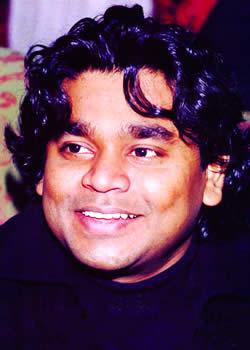 Rehman’s music over NPR radio (my favorite station for all these years). In the Wall Street Journal I selectively read and make copies of articles on India, and ignore all the discussion on political issues in this election year.
Slowly, in these past ten years, I have become like Shankar, yearning for everything Indian. But I have also bought a home and settled down here with a well-paying job. While I am present here in the States, my thoughts are in India. Unlike Shankar, I am not able to muster the courage to pack my belongings and take a flight back home. And deep down I know I am regretting it.
Mukund Narasimhan
April 2004
