 |
 |
 |
 |
 |
 |
 |
|
|
|
|
|
|
| CHESTNUT AGOUTI COATS Fur color genotypes are the same in all breeds, however length, density, and texture of the coat may effect the color. Genes commonly referred to as "plus + minus -" modifiers also affect the intensity of the coat color. Longer coats may show more bands than short coats. "Faux" rings in self angora coats are sometimes mistaken for agouti banding. |
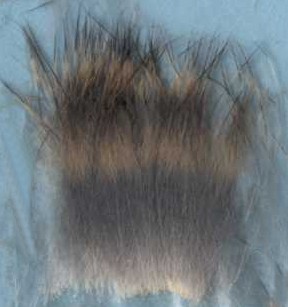
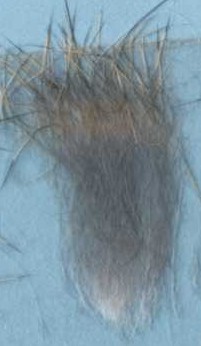
| Castor Rex. Note the color saturation and the wide intermediate band of the shorter coat. |
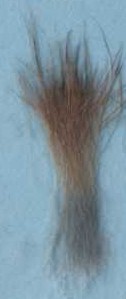
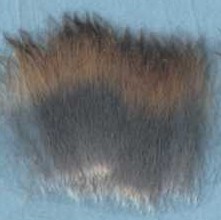
| Copper Satin. Rich color intensity due to the transparent fur shaft. |
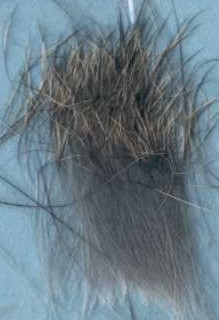
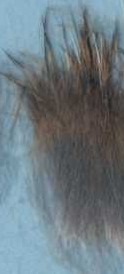
| Brown Silver. The heavier guard hairs containing more pigment give the flyback coats added color intensity. (Note the silver hairs evident in the upper right side of the photo.) |
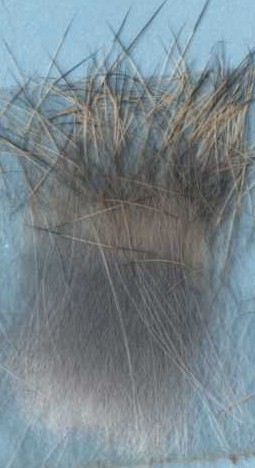
| French Lop (left) & Holland Lop (right). The longer, softer coats of the lops tend to be diffused in color. Lack of breeding for roufus ++ modifiers may also result in faded intermediate bands. Note the tan banding near the tip of the coat, which is not evident in the shorter rex coat. (It can also be noted on the satin coat pictured above). |
| Belgian Hare (left). The thick guard hairs and roufus +++ modifiers give the Belgian Hare a brilliant red coat. The recessive "ww" (wideband gene) increases the width of the intermediate band, decreasing and sometimes nearly completely eliminating the black tipping of the agouti coat. |
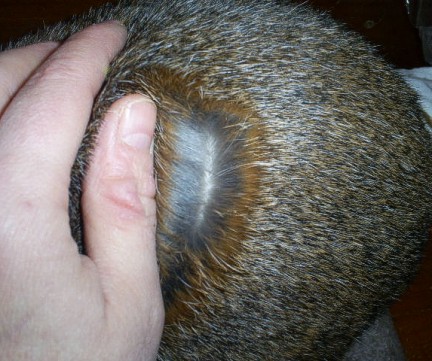
| Steel. The effect of the Es dominant steel gene on the agouti coat darkens the coat by "filling in" the tan intermediate band. The steel gene does not show its effects on the self coat, however does darken the belly on "at" tan pattern coats. (Steel Tans are not accepted in any breed.) The steel coat should not show ring color when blown into. (See Below) |
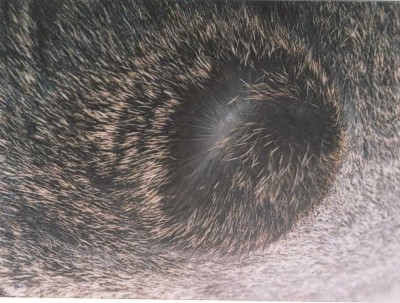 |
| Above - photo showing ring color of a brown Silver's coat. |
 |