 |
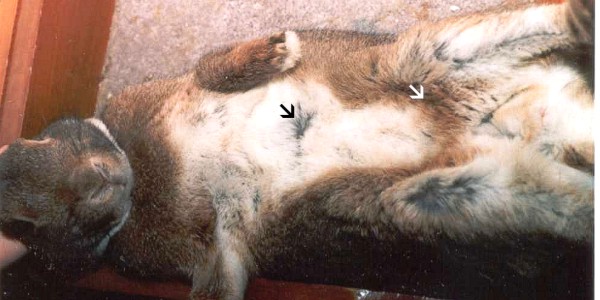
| (Brown Silver rabbit pictured) The surface color of the belly should be white with a slate blue undercolor (coat parted at the black arrow to show under color). The white arrow indicates the "lap spots" visible in the groin area. (May or may not be evident on all rabbits). Also note the lighter color on the inside of the legs. Refer to each standard very specifically for the Chestnut Agouti color requirements. Some allow the wide band version which would have a cream to red belly with light belly under color. The Holland Lop standard, for example, does not specify belly undercolor on the Chestnut Agouti, but the Netherland Dwarf standard does. Watch for dark barring or banding on the surface of the belly harlequin markings. The Mini Rex standard specifically DQ's for those markings. |
| Chestnut Agouti Belly |
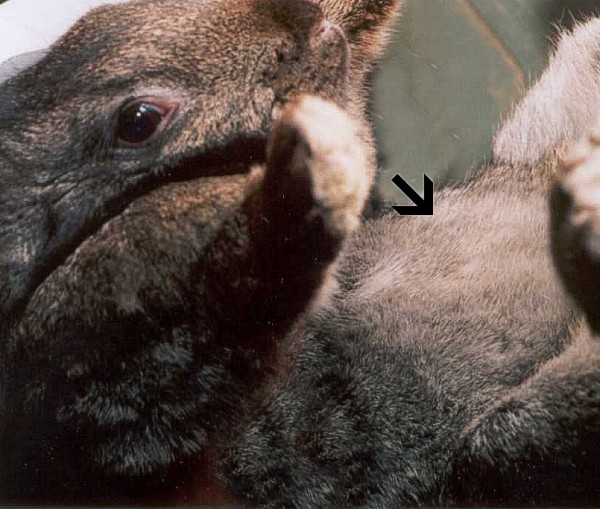 |
| (Steel American pictured) Note how the steel gene (left) has "filled" in the agouti pattern markings producing a darker coat and colored belly. The desired genetic makeup for the steel gene is heterozygous Es E on the agouti "A" coat. The homozygous steel results in a coat that is very dark with little steel ticking and in some cases appears to be black. The steel gene has the same effect on the tan "at" pattern coat. The steel gene does not produce banding or ticking in the fur, and so has no effect on the self "a" coat. |
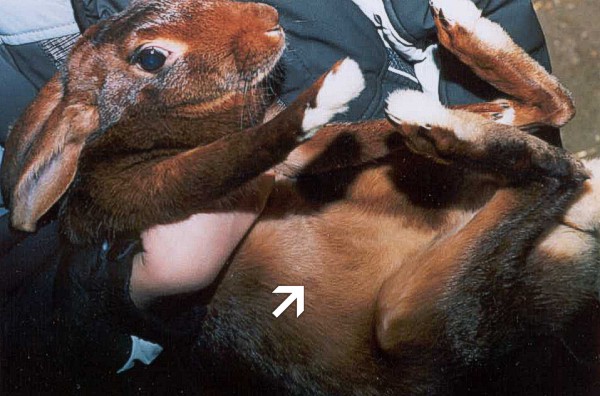 |
| Pictured (right) is a Belgian Hare. The recessive wide band gene "ww" widens the intermediate band to the point of eliminating much of the black ticking on the coat. Note that the agouti pattern markings will be cream to red in color when the wide band is present, and the red color will carry down to the skin. (No slate blue belly undercolor). This is also the gene that produces the fiery red belly of the Tan breed. The wide band gene is not to be confused with the wide band variety group. The only true genetic wide band variety in the wide band variety group is the color "red". |