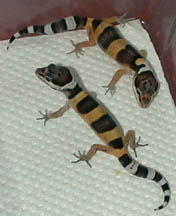
Ideally, juvenile leopard geckos should be housed individually in a small rubbermaid with a shelter and a shallow water dish. You can keep juveniles together if you make sure all of them are eating enough. If one is not eating take it out and raise it by itself for atleast one month and if it's eating improves you can put it back with the others or leave it alone by it's self. But make sure to monitor him to if you put it back with the other juveniles.
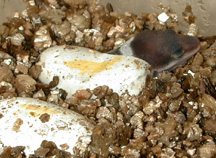
During the first week after the juveniles hatch, the baby leopard geckos will live off their yolk reserves. They will not feed until after their first shed which should occur within the first week of hatching. Hatchlings and juveniles should be fed three week old vitiman/mineral supplemented crickets every one to two days. These three week old crickets are called "pin heads" as they are so tiny. A shallow water dish should be available at all times and changed daily. A light misting of the shelters (at least one per leopard gecko) three times a week is recommended to increase the relative air humidity to help with shedding.
My personal recommendation for housing hatchling leopards is to house them all individually in rubbermaid 1.5 g container. You must punch about 15-30 holes on the sides and lid of the containers. I keep the hatchlings on paper towel, give them a shelter (a yogurt container cut to size) and a small water dish ( a 4 L milk lid). I have had the most success with this method and have noticed as well as complimented on how big my hatchlings are for there age. When they are housed individually they grow faster because there is no competition for food, which there would be if they were housed with other hatchlings. |