
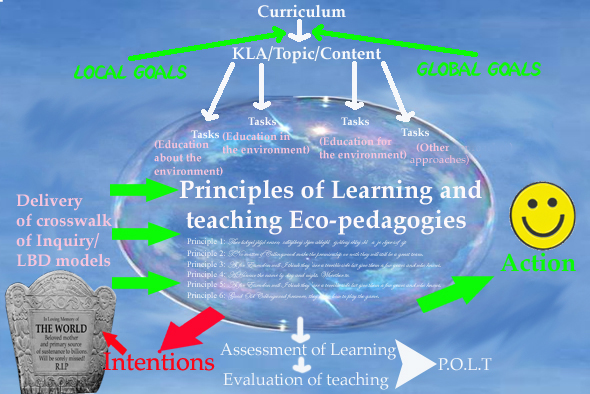
*Promote autonomous thinking: education through the balanced treatment of all positions.
*Integration of environmental awareness, social justice and ecological sustainability into the lifestyles of students.
*The concept that sustainable development requires change and compromise from everyone.
*Students are supported in developing vision- learning how to take themselves into a sustainable mental space.
-Strategies for envisioning: *Workshops (guided visioning process) *Literature reviews and analysis *Brainstorming future generations *Alternative future exercises *Incasting
-Turning fears into hope.
*Realising the importance of the school being an entity that practices sustainable environmental practice.
*Facilitate the �practice of freedom,� Students are taught how to be involved in transforming the world in a critical and creative way.
*Build resilience in the children that will help them to understand that their changes will probably cause conflict.
*Teaching childen how to uncover assumptions in order to confront their role in creating our problems.
*Building visions for an ideal future through the balance of the two elements of (1)the eschatological (transcendent) and the utopian (immanent).
Eschatological: Mentally entering the realm of another type of society.
Utopian: Humans are the co-partners with nature in developing a sustainable world.
*Creating strategies to turn intentions into actions .
*Children must learn to be proactive rather than reactive to change.
*Skills for participation in decision making
*Discussing
*Application
*Reasoning
*Research
*Evaluation
*Group work
*Analysis
*Problem solving