|
|
 |
Taxila = The famous archaeological site
|
|
|
| Location | 35.40 km from Rawalpindi. |
| Civilization | Gandhara Civilization. |
| Accessibility |
Road |
Taxila is the one of the famous archaeological site in the world. At sometime it was center of Buddhism, worlds famous Gandhara sculpture and the center of learning and culture.
At Taxila, you can see the great Buddha. His eyes gaze at you till you find yourself gripped by the feeling of awe. The other people you can meet at Taxila are Alexander of Macedonian, Asoka the famous Buddhist king and Kanishka. You'll find their imprints all over the place.
In 327 BC Alexander conquered the Taxila which was Achaemenian Empire. Later it came under Mauryan dynasty and reached a great level of development under the rule of great Asoka.
The next step in the Taxila history was the indo-Greek descendents of the Alexander's warriors and the final period is called Gandhara. The great Kushan Dynasty was then established in 50 AD, and in these 200 years Taxila became the most renowned center for philosophy, art and learning. Taxila is the great attraction for the pilgrims and tourists from China and Greece. The final period of the Taxila in the fifth century AD when white Huns snuffed out the most successful and great Gandhara civilization of last several centuries.
Taxila is the one of the famous archaeological site in the world. At sometime it was center of Buddhism, worlds famous Gandhara sculpture and the center of learning and culture.
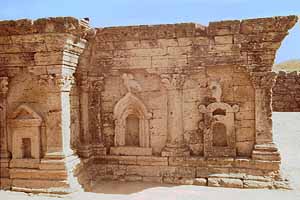
Exploring Taxila is a multi-dimensional experience. The richness and variety of the famed Gandhara sculpture will attract you. There are many images of Buddha, in stone and stucco and numerous panels depicting all the important stages of the great sage's life. Exquisitely times of one of the world's most impressive men of peace Gautama Buddha. Each carved bit of sculpture, from the colossal to the miniature and there are literally thousands of them is the items of collection. To find difference between the Greece-Roman counterparts and the Gandhara masterpieces will be a great challenge for you. To welcome you there are stone men and women who will receive you open armed in Taxila. Then there are three distinct cities, which are in very good state of preservation. With your imagination sided by the carved people who inhabit these cities, you will have little difficulty in picturing crowds on the well laid out streets, families in the spacious houses, priests in the towering stupas and royalty in the great palaces.
The earliest city of these is known as Bhir Mound. Which was established somewhere in sixth century BC, whose irregular streets, cramped houses and mediocre public buildings indicate its primitive origins. Then comes the Sirkap city which is on the opposite side of Tamara Stream, is much younger and it was built somewhere around 2nd century BC, and you'll find the difference between these cities because this one is well planed.
And as you will stroll down its streets you can call at the houses of the affluent and go slumming, as it were, in the more crowded sections where dwelt the common man of the dim and misty past. Note the fortification of wall, the long, straight and impressive main street, the Royal palace, an Apsidal Temple and the shrine of the double headed eagle. Sirsukh the most modern city of them was built by Kushan kings in first century AD. It is fully excavated as yet but it is clearly a well-fortified and well-laid out city. This city is patterned after Central Asian cities, and is complete with suburb.
In addition to these cities, there are many monasteries and stupas have been excavated all along the Taxila valley. Dharmarajika stupa, which is 2 miles from Taxila museum is a must see stupa. It comprises main building, a monastery area where the monk lived and a series of small chapels. A wealth of gold, silver coins, gems, jewelry and the other antiques were discovered at Dharmarajika.
Jaulian another marvelous complex of chapels, stupas, quadrangles, and a monastery with assembly hall, store rooms, refectory, kitchen and bathrooms. At five small stupas you will sea beautiful stucco relieves of Buddha and Bodhisattvas supported by rows of stone elephants and lions.
Two miles west of Jaulian is an other well-preserved monastery at Mohra Moradu. In one of the monk's cells here was found stupa with almost all the details intact. At Jandial, a mile-and-a-half from Sirsukh, is an image-less temple in the classic Greek style, with sandstone columns and cornices.
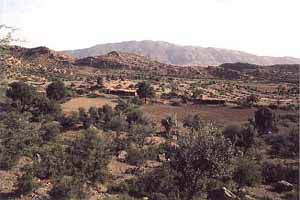
Attraction for climbers is Glen of Giri, which is about three-and-half miles from Dharmarajika stupa. Atop the highest peak of the range of hills are two stupas and a fortress built in a cleft near a spring of pure, sweet water. The stucco decorations of the stupas are well worth of the climb.
Visit to Taxila is a good worth of your money. To feel and understand the importance their full importance you'll have to visit Taxila by your self. The men 3000 years ago knew that what they are doing when they choose Taxila to built there cities here.