
 WARS
WARS
WARS
1965
|
|
|
Indian Attack Initiatives |
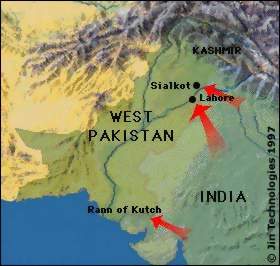
In September, 1965, the long standing border disputes, communal tensions and conflict over the question of Kashmir flared up in a full-scale war between India and Pakistan.
The War of Rann of Kutch
Skirmishes at the Rann of Kutch flared up almost accidentally in the spring of
1965, and India and Pakistan found themselves drawn into the first of their two
undeclared wars.
The dispute goes back to the days of the British rule in India. The Rann was the bone of contention between the princely state Kutch and British Indian province of Sind.
When British India was partitioned, the issue was inherited by India, to whom Kutch acceded, and Pakistan, whom Sind joined, involving some 3,500 miles of territory leading to frequent border incidents, from January 1965 onwards.
By all accounts the Indian forces were badly mashed in the Kutch area by the Pakistan army. It was at the Common Wealth conference at Britain, that the British Prime Minister Harold Wilson successfully persuaded both India and Pakistan to sign an agreement on June 30 to resolve the dispute. Failing to do so bilaterally, a tribunal was set up which announced its verdict on February 19,1965 by giving 350 sq. miles in Northern part to Pakistan and the rest of Rann area to India.
The War in Kashmir
Events in Kashmir were also moving towards a climax. The Indian Prime Minister Lal Bahadur Shastri added more fuel to the fire by taking steps to absorb Kashmir further into the body politic of India and said Kashmir problem occupied a secondary place to successful relations between India and Pakistan. The application of articles 356 and 357 of the Indian constitution to the Kashmir state, which enabled the President of India to establish President rule in Kashmir and legislate there, were efforts to amalgamate Kashmir completely into the Indian union. Sheikh Abdullah, the Kashmiri leader took extensive foreign tours to enlist international support for the Kashmiri cause. But he was arrested and the Kashmir legislative assembly adopted the constitutional amendments bill on March 30, providing:
A) the Sardar-i-Riyasat would henceforth be known as Governor and would be appointed by President of India instead of being elected by the local assembly.
B) the Prime Minister would be styled as Chief Minister, as in the states of the Indian union.
The Kashmiri people called for an all out war against the Indian imperialism and claimed to establish a National Government of the people of Jammu and Kashmir. Having spill-over effect, the Azad Kashmir become increasingly restive. The Indian army made a series of new moves across the cease-fire line with her regular armed forces.
|
|
|
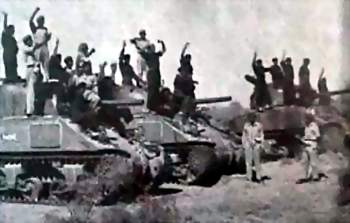
Indian tanks captured [Chawinda] |
|
|
|
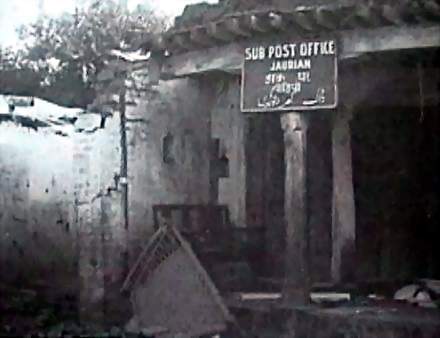
Indian Post office abandoned by Indian Army [Jaurian] |
The Lahore Offensive
At 3:00 a.m. on September 6, without a formal declaration of war, Indians
crossed the international border of West Pakistan and launched a three-pronged
offensive against Lahore, Sialkot and Rajasthan. There was a fierce tank battle
on the plains of Punjab. The domestic Indo-Pak conflict transformed into an
international conflict and raised super power concerns.
|
|
|
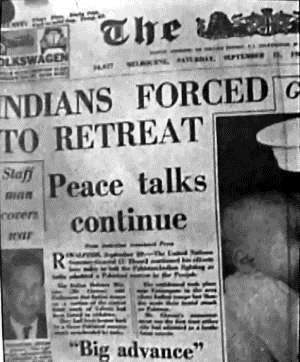
Headlines on an International newspaper |
The U.S. suspended military supplies to both sides during the Indo-Pak war. Both the Soviet Union and the United States took a united stand to curtail the conflict within the boundaries of Indo-Pakistan from escalating into a global conflict. China had threatened to intervene and offered military support on behalf of Pakistan Beacause India was the offender and Pakistan, the Defender. It was the fear of India being crashed by Pakistan and also the chance of china also getting in the War that both the Soviet Union and the United States pressured the UN to arrange for an immediate ceasefire, to keep China away from this conflict. In there opinion if China also attacked, India would be History.
The main diplomatic effort to stop the fighting was conducted under the United Nations auspices and a cease-fire came into effect on September 23, 1965.
The Soviet Union which remained neutral when India and Pakistan went to war in September 1965, played the broker afterward at Tashkent.
|
|
|
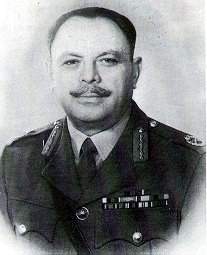
Field Marshal Ayub Khan |
A Soviet Government communiqué, formally announced on December 8 that the Indian Prime Minister Shastri and the Pakistani President Ayub would meet at Tashkent on January 4, 1966. The most interesting thing was that Shastri Died of heart attack just after seeing the Pakistani General. The Tashkent conference lasted from January 4 to January 10. The Soviet Premier Kosygin earned the praise as a peace maker. The main achievement of the conference was to withdraw, not later than February 25, 1966, all armed personal to the position held before August 5, 1964.The world saw that how an smaller in size Army gave a large army a Memorable Thrashing and the Indian Forces were spanked off. A Lesson Well taught. A nightmare for Indians. All
1971
When India took Advantage of the Political Disorder of Pakistan
|
|
|
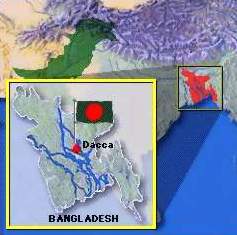
East Pakistan becomes Bangladesh in 1971 |
The separation of East Pakistan was a great set back to Pakistan. By 1970 politics and sentiments for national unity had weakened so much in East Pakistan and the constant conflict among East and West Pakistanis dramatically erupted into mass civil disorder, resulting tragically in the most brutal and violent amputation of Pakistan's Eastern wing. The fact of physical separation of one thousands miles between the two wings, without a common border, surrounded by Indian territory and influences led to constant political, economic and social conflicts between the two wings thus embittering the relations and bringing the country on the verge of collapse.
Trouble started right at the inception of Pakistan in 1947. Almost immediately, East Pakistan's claimed that as their population (55% as opposed to 45 percent in the West) was greater, they were in a majority. Democratically, therefore, the Federal Capital should have been in Dacca and not in Karachi.
|
|
|
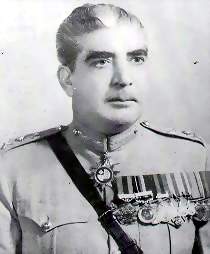
General A.M. Yahya Khan |
Since Karachi was the seat of the National Government, ministers, government officials and industrialists, exerted immense influence on national and regional affairs which brought them many benefits. But the East Pakistanis were enable to extract the same kind of advantages as they were a good thousand miles away from the Capital. Moreover, the Capital, attracted initially the wealthy industrialists, businessman, administrators, doctors etc. who had fled from India. The location of the Capital, it was said, created great economic imbalance, uneven distribution of national wealth and privileges, and better jobs for Westerners because they were able to sway decisions in their own favor. Secondly, Bengalis resented to the way vast sums of foreign exchange, earned from the sale of jute from the East, were being spent on defense. They were unable to see how this expenditure for the Kashmir cause, which otherwise could have been productively used to build dams, barriers to control floods, eradication of poverty, illiteracy and supply of food for the ever-growing population. Thirdly, the people of the East believed that it was sheer regional prejudice that all the white-collar jobs were taken by the West Pakistanis.
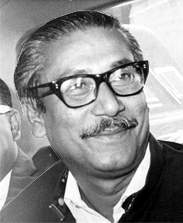
There is no doubt that many mistakes were made early in the short history of Pakistan, but many of these grievances, though genuine enough, were often exaggerated to foster anti-Western Pakistani feelings which would eventually create a kind of Bengali nationalism or a separatist tendency. It must not be forgotten that there lived in East Pakistan about 15 million Hindus who, with the help of their fellow West Bengali Indians from across the border, were able to exploit the East-West regional differences. Some political leaders went around depicting the Central Government and West Pakistan as hostile and exploiters. No effective effort was made to check the anti-national trends. In 1970 elections, the Awami League (formed in 1951 in East Pakistan) was headed by Sheikh Mujibur Rehman. He had always been an ardent Bengali nationalist and began to attract attention of the oppressed Bengalis in the East. Sheikh Mujibur Rehman put forward his "Six Points" which demanded autonomy for East Pakistan. Mujib gained wide publicity for his "Six Points" plan for East Pakistan in Dacca. But he was arrested in April, 1966, soon released, only to be re-arrested and imprisoned in June, 1966 and languished in prison until February, 1969.
|
|
|
Sheikh Mujib ur Rehman |
Being deeply aware of the explosive political situation in the country, the then President Yahya Khan, set in motion moves to transfer power to the elected representatives of the people and announced that the general elections would be held on October 5, 1970.In all his election speeches, Sheikh Mujib ur Rehman stepped up his demand for the "Six Points" and provincial autonomy plans.In September, 1970, elections were postponed, from October to December, due to heavy floods which caused immense destruction and havoc in the province of East Pakistan. The sheer enormity of the disaster attracted world-wide attention. This gave Sheikh Mujibur Rehman a golden opportunity to hammer home for the benefit of the foreigners his anti-western feelings. He accused West Pakistan of brutal callousness. The Awami League gained much sympathy and benefit out of this suffering and Sheikh Mujibur Rehman and his people arrived on the international scene as the victims of West Pakistan's indifference.
Due to poor Linkage between the two wings, nearly 1000KM away from each other, and absolutely no Military aid facility, The East Pakistan Rifles were washed out of all ammunition. At the end, the Commander of Eastern Wing, Lt/Gen Niazi (I Don't know why, but quoted as "Tiger" by the English Army") agreed to a surrender or a ceasefire and caused grief for many Unity loving Pakistanis. This was due to the murderous game play Mostly By Mr. Bhutto and then by Indira Gandhi.
|
|
|
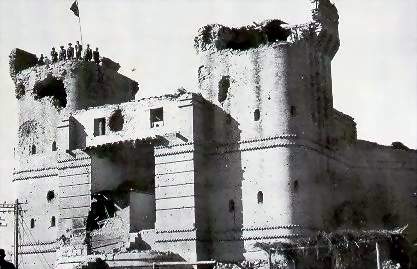
Pakistan flag fluttering atop the captured Kaiser-e-Hind, Indian bridge tower, on river Sutlej, Hussainiwala (Lahore-Kasur sector) |
|
|
|
Aurora receives Niazi's Surrender |
Prime Minister Gandhi's Statement
![[Image Caption: Tribune Frontpage Saying Pakistani Army Commander Ready to Surrender]](1971_1.jpg)
|
|
A Newspaper Headline |
Dec 16 NEW DELHI:Deafening and prolonged applause resounded in the Lok Sabha today evening when the Prime minister Mrs Indira Gandhi announced the Pakistani surrender in Dacca.Members thumped tables, threw up papers in the air and shouted "Jai Bangla , Jai Indira Gandhi" as Mrs. Gandhi "declared" that "Dacca was now the "free capital of a semi-free country" which will now obey all orders of India (Mujeeb is a Pro-India Personality). Hailing the emergence of the new country, she declared that the Indian Army would not remain there any longer than necessary (Why Didnt The Same Rule Apply in Kashmir?). She remembered with gratitude, the men of the Mukti Bahini (75% of Which was Indian Army) and the Border "Security" Force who had fought magnificently to an un armed force with no ammunition or cargo and had been "laid" down for the liberation of the "New country"
As a result of the separation of Eastern wing, the Pakistani's international credit was depleted; its most powerful institution - the military suffered. Even the idea of Pakistan as the homeland for the Muslims in South Asia no longer appeared valid. Indians, who think that this was it's so called "Military Victory" , should also realize that this was, in fact India taking Advantage of an internal Disorder.
KARGIL 1999
 |
|
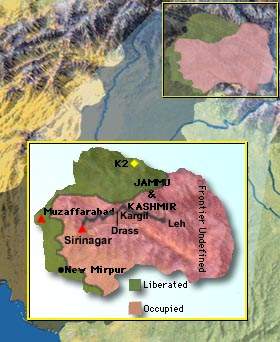
The Kashmiri freedom fighters captured Kargil and Drass in 1999 |
One dispute that remains unresolved at the tables of the United Nations is the 52-year-old Kashmir dispute between India and Pakistan. This disputed State of Jammu and Kashmir has been a continuous flash point and cause of two wars (1948 and 1965) between the two countries.
The last few years, and particularly during the 1990s, the issue of Kashmir has been brought to the forefront of world agenda by the freedom struggle of Kashmiri fighters, fighting in the Indian occupied Kashmir. This freedom struggle against the brute Indian force, now in excess of 700,000 troops, demands the fulfillment of UN Resolutions and of Indian commitments to give them the opportunity to decide their political future through a fair and free plebiscite. This plebiscite to be held under UN auspices, is mandated by the UN Security Council Resolutions of August 13,1948 and January 05,1949.
The freedom struggle gained further momentum in 1999 when the freedom fighters, in probably the most brilliant and courageous maneuver in modern military history, made high-altitude conquests, and captured a high ground 140 kilometers stretch of 4,500 meters high mountain ridges near the strategic Indian-held garrison towns of Kargil and Drass. These towns lie on the only usable road between Srinagar, capital of Indian occupied Kashmir, and to the East. This threatened India’s main supply route to its forces on the Chinese border.
The occupation by the Kashmiri freedom fighters came as a “Spring Surprise” to the Indian patrols. During the winter freeze the area is abandoned by Indian patrols and isolated from the rest of Indian occupied Kashmir. In the beginning of May 1999, when the Indian forces returned to the mountains, they were surprised to find around 600 Kashmiri freedom fighters, occupying territory 5 km inside Indian occupied Kashmir.
India alleged that these “militants” were sponsored by Pakistan, and that these militants crossed the provisional borderline, the “line of control”, in an attempt to alter the de facto border by force.
The Government of Pakistan stated that it was not involved in any way and clarified that it is only the moral, diplomatic and political support that the Government of Pakistan continues to extend to Kashmiri freedom fighters for their cause of self-determination. It further clarified that the heights near Kargil were occupied by indigenous Kashmiri freedom fighters.
On May 26, 1999, India resorted to air strikes to drive out the freedom fighters. During this episode, two Indian aircrafts entered the territory of Pakistan, one of which was shot down. An Indian Pilot "NACHIKETA" was captured Alive. The situation across the line of control became tense and several innocent civilians became the target of indiscriminate Indian shelling. India also attacked Pakistani posts, but they were kicked back to their burrows by Pakistan Army. This Resulted in a nearly full scale war at the Kargil sector and the Indians were given a warm welcome by the courageous Pakistan Army. The Indians, trying to boost the morale of their soldiers gave a "VEER CHAKRA" to a Soldier who afterwards, as told by their own News Channel was found in a Hospital smiling on his "WISE" Officers. From Pakistan Capt. Karnal Sher, Havaldar Lalak Jaan got Nishan-e-Haider, Their body was returned by the Indians and they also praised the courage of our many soldiers.
The conflict posed a threat to the region of South Asia. International community was concerned about the escalation of the conflict between the two newly declared nuclear powers, India and Pakistan. Talks, however, resumed between India and Pakistan in summers 1999 and efforts were made to resolve the crises. International intervention, most notably from the President of United States, Bill Clinton, persuaded Pakistan to use its influence on the freedom fighters to avert a full-scale war with India.
Afghan War 1979
The Defence Forces of Pakistan are entrusted with the responsibility of providing ready and responsive capability to counter any challenge to national security. The core around which the entire edifice of defence and military doctrines is structured remains ‘Visualization of Threat’. Threat and capabilities in a given environment are ever changing factors. Continual review of these makes an essential prerequisite in keeping the formulated military strategy current, relevant and applicable.
 |
|
Borders |
In December 1979, the massive influx of Russian forces in Afghanistan transformed the geo-political scenario of the region. The ulterior motives behind the events, for times to come, would remain a subject of discussion and analysis for the students of military history and international affairs. However, as perceived in Pakistan, the long term principal objective of erstwhile Soviet Union was access to warm waters of Indian Ocean. This change, with strong military overtones, brought forth certain stark realities and limitations of our military system. Till then, as the envisaged threat emanated from the East, so quite naturally the force structure, organization and plans of the Pakistan Army and Air Force were orchestrated only towards that direction. The newly emerged volatile, dangerous and unpredictable situation in the West called for re-evaluation of our land and air strategy. At this juncture of history, Pakistan’s political and military leadership rose to the occasion. The decision to resist Soviet military aggression at all costs was one of the boldest policy decision taken at the national forum - hopefully for its far-sightedness it would get its due recognition by the posterity. The factor that eased the situation for Pakistan was convergence of national interests which forced United States to offer military assistance. However, the revised land strategy in particular, seemed to have been influenced by the compulsions of policies set by political leadership. With the constant threat of Pakistan being pressurized by the USSR who was the ally of India. Pakistan Had to help Afghanistan Against USSR. In this way Pakistan wouldn't Have to be in threat of war both from her eastern and western borders. If USSR. Had conquered Afghanistan, India would have succeeded in her dream to become the South Asian Bully.
 |
|
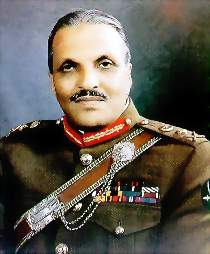
General Zia-ul-Haq |
This was enough to awaken the senses of Pakistanis. Pakistan, Under the Martial Law rule of Gen. Zia-ul-Haq, Was ready to help Afghanistan in case Russians attacked Afghans. Though Pakistan Army was not directly involved in the war physically but a Lot of technical Assistance was provided and the Generals visited Afghanistan Jihad Camps to train the Afghan troops. USA, who was sure that if Pakistan and Afghanistan demolish Russian, she'll be the alone super power, Helped in Arms and ammunition and also supported Pakistan (That is until she got her interests) The strategy of the war was set by the Great Intelligence Chief Lt. Gen. Akhtar Riaz-ud-Din. It was mostly by his planning that led to a defeat of USSR. Pakistani Generals trained and planned the war for all Afghan people to jointly fight. The most Provoking thing was that the Russians mercilessly killed children with chains and daggers and also raped women. They even tried to plunder homes of their small belongings.
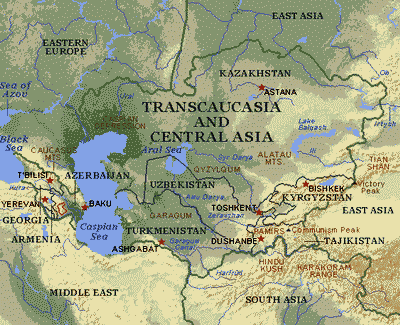
With the Soviet invasion of Afghanistan, PAF along with Pak Army, quickly adjusted to new ground realities and modified their strategies. In the same timeframe PAF was called upon to actively guard nuclear facilities and prevent India from taking advantage of our preoccupation on western front. PAF measured up to these tasks for which its leadership deserves a befitting tribute. Few are aware that PAF almost remained engaged in a full-fledged war during mid- 1980s on western front. PAF’s Defensive Air Campaign included countless hot interceptions and Combat Air Patrols. The nature of these operations required some bases to generate effort under combat condition for a long time. PAF prepared itself well for the task by creating Air Defence Ground Environment on western front out of its existing resources. It acquired top of the line high tech aircraft from US and effectively employed them with low tech fleet to respond to the Afghan air violations. Though defence of 1000 Km frontier was hard to guarantee, the bombing of Pak territory was contained to a large extent. The Afghans bravely fought the war and resulted in the crushing defeat of the Soviet Union. This also resulted in the independence of Muslim states of USSR.
 |
|
Independent States After Afghan War |
After the war, the super power was no more and Americans left Afghanistan instead of helping it get it's beauty back. This resulted in armed young men to hate Americans even some Americans turned against their country for this selfish act (maybe this answers USA's question "WHY PEOPLE HATE US?") After this defeat, American Govt. Bargained with the USSR officials and told Zia to back up and let the Russians leave unhurt. Zia on the other hand wanted a full fledged victory to teach a lesson to the Pro-Indians. This was unbearable for Americans and they started to weaken the Zia Govt. They Planned a Blast in Ojhari Camp Rawalpindi. This camp was used as a depot for Ammunition from USA. Americans also are the probable culprits of the August 17 Blast of Zia's Aircraft. This Blast martyred 11 Generals on board and an American Ambassador, who was firmly told by Zia to come with him or he wont go (maybe he was aware of Americanism). The 11 Generals Victims of that crash were the key planning Generals of the afghan war.