| My didgeridoo story.. (click on pictures to get a bigger image) |
| * Since I started playing the didgeridoo in Australia, I got used to recording nearly everything, it helps a lot, and I get to realise what sounds good to the lips but not so much to the ear. * I now have plenty of recordings, but none of them are full length "songs", so for those interested I've put available to listen to or download some extracts of my training sessions. * I try and take very short extracts so that they are not to big to download. |
| * Of course the selection will grow, I've just started in order to check if it's easy to listen to, or download, but I'll put some more very soon.. |
 |
| * I've put my files for you to listen to, but I didn't think about those how weren't with me in Australia (oups..). * And maybe you would be happy to meet my wooden friends: |
 |
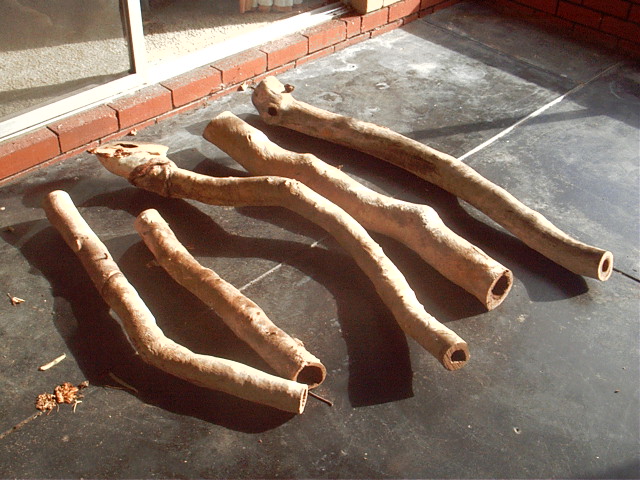
| - My first ever didge, is one I've made with Warren's help. It's a very pretty euca didge. It took me about 3 weeks to finish it. I've sanded it down at 3 differnt levels: -the top part is very slightly sanded and the result is that you can see the grain of the wood and a strange greeny-beige effect. -the middle part is just a bit more sanded and we don't see the grain anymore, it's all smooth and beige,and you can start to see red veines. -the further you go towards the bottom end the more it has been sanded down, until you can see this deep red colour at the very bottom. I'm really proud of the colour effects I've managed to get out of this didge, it makes it even more unique (as if all the didges weren't already unique) As for the shape it's nicely bent, and this is how I describe it in my files "bent didge", so if you open a file called "bent didge...someting something" this means it's this one. Ok I'll go and try and find pictures of it: Here's one of it just before I started the grooming work on it: (the one far left) |
 |
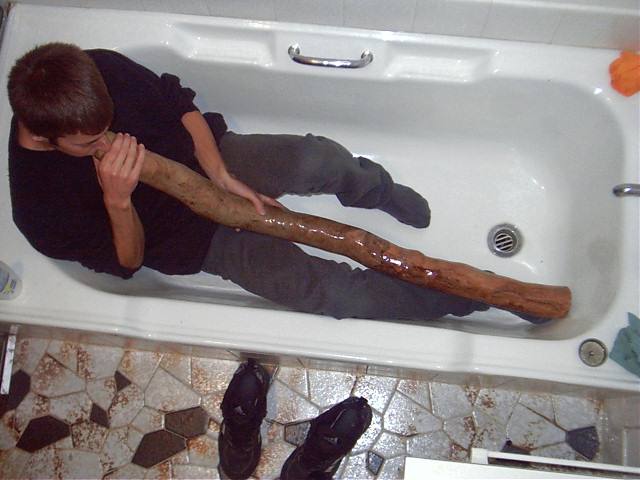
| And here's a picture of it finished while I practice in the bathroom: |
| Of course there's no way I'm going to bin it or part with it, I'll try and repair it the best I can, and it'll only travel by road or boat....or maybe spend part of his life at my parents place until I know for sure where I want to live. |
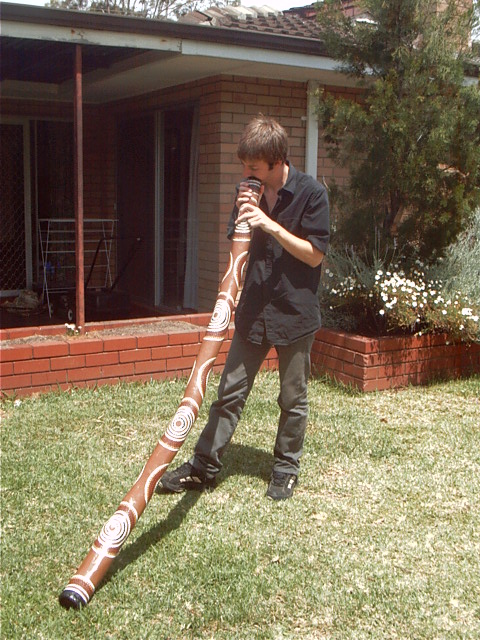
| - My second didge, is one I've bought in Fremantle. After weeks and weeks of seeing it, and trying it, but finding it too expensive, one event changed my mind and this was a 20% discount weekend as well as a drop on the price of this didge, it then became the one I wanted for the price I wanted to put. It's a nice and crispy A#, the wood is a Wandoo Malle and it comes from the Western Desert. The particularity of this wood is that the veines are not straight and going from one end of the didge to the other, but all mixed up and in any direction (like a web), it makes it much stronger and more resistant to difference in temperature and pressure (perfect for me as I'm planning to travel around and I don't want it to crack on the flight). It was a bit hard to play it to start with (maybe because I was still a begginer), but now I've worked a lot with it, and found some of the specific sounds I can make only on this one, and am still playing it everyday. |
| Still to come: I'll have a look in my files to see if I have a reasonnably good recording for you to hear it's tone. I've never tuned it so I don't know which key it's in, but probably around C key. |
 |
|
 |
 |
| As far as listening to this one, I think all the recordings I've put available further up this page are done with this didge. |
|
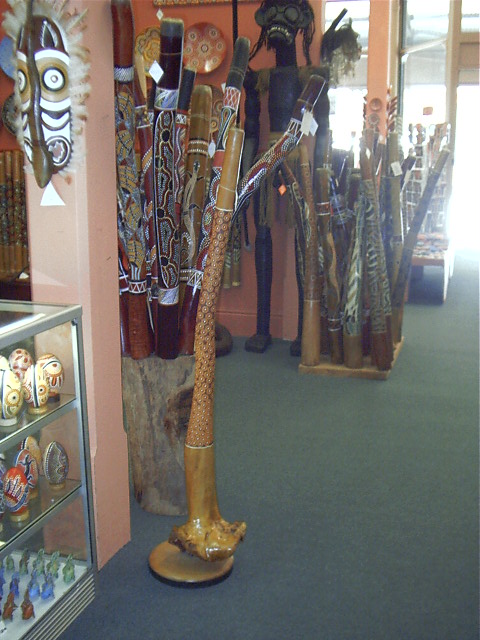
| -And my third didgeridoo is one I bought just one or two weeks before flying from Australia to Canada. But unfortunately the wood cracked during the trip, I think part of it is due to pressure, but it wasn't handled with care either as the wrapping was torn when I received it. I did insure it before sending it, so at least I,ll get some money back to order another one, but it'll never be the same one, just another story. this one used to be a E key, a lot of back pressure, well easy to play and nice toots. I'll search for some recording of this one, but considering the small amount of time i had it in my hands, I doubt I'll find an interesting one (it's name on my file is "blossom didge"). At least I'll let you see it's beautiful shape with this picture: |
 |
| My project while in Canada, is to build myself a home made Slide-didgeridoo, I'll let youknow how things are going, and I'll present it to you when it's finished, and of course record some tracks with it.. |
| Well it didn't take long to build and here it is: |
|
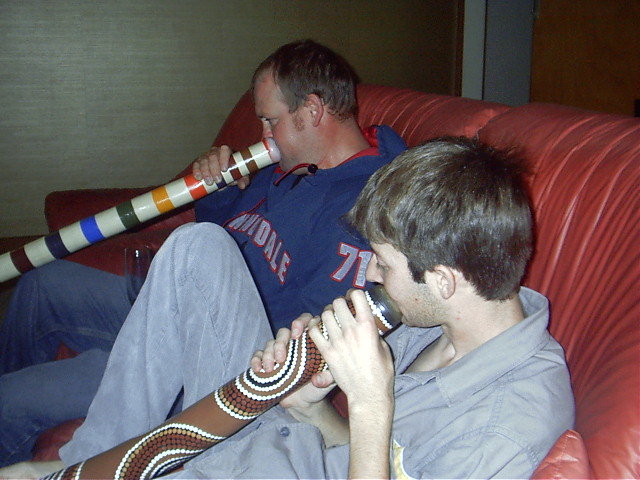
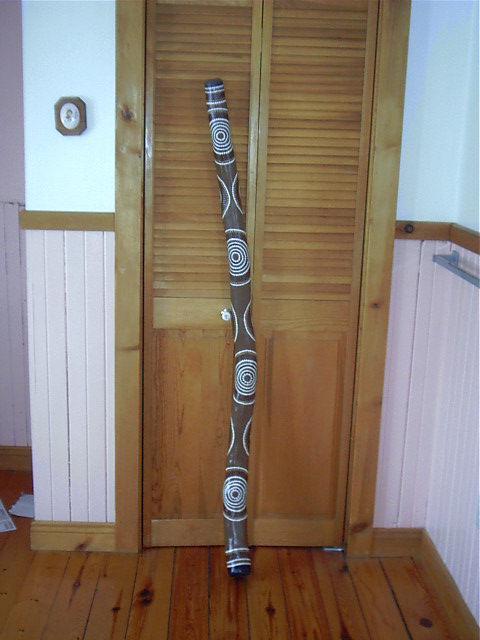
| By the way let me introduce you to Warren, who is playing with me on the picture below. |
 |
 |
 |
 |
 |
| I've decided today to take a few other pictures of my didges, first of all for me as a record of the different times and places I've been with my didges, but also for you so that you can have fresh new photos regularly, and not the same boring old site forever. |
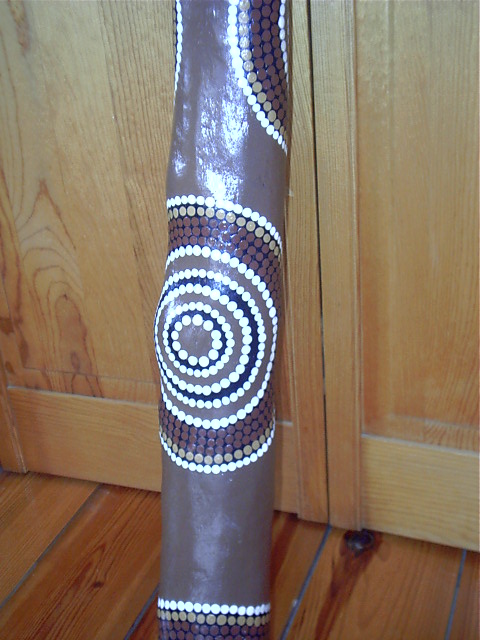
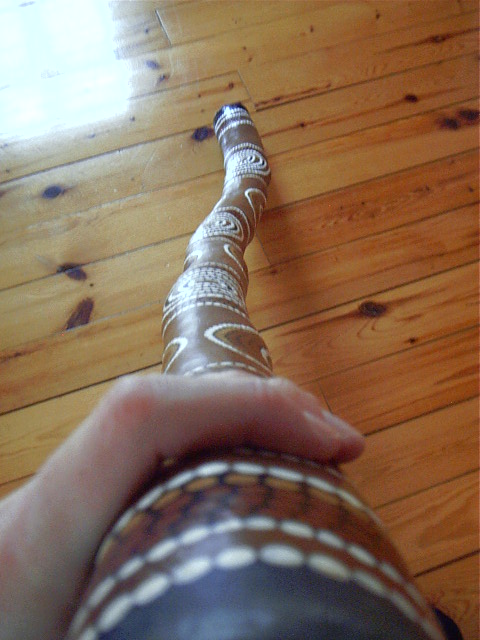
| After seeing the whole didge, here's a closer shot of the artwork. It is said to represent, in this case, the aboriginal tribe's community importance when meeting with another tribe. |
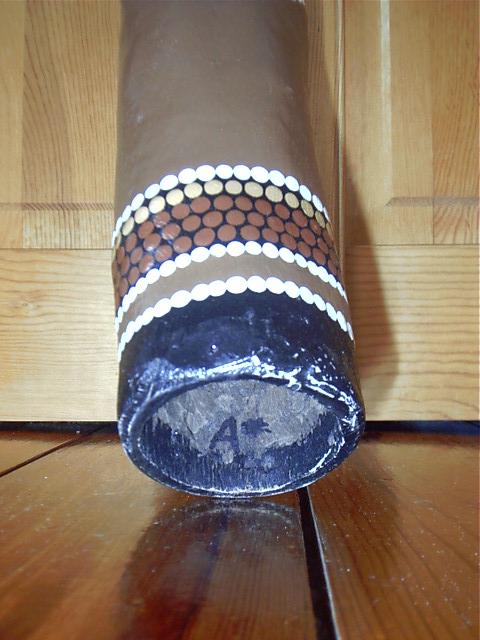
| This is where the magic comes out from. I've noted down the key the didge is in (as if I wouldn't remember..) |
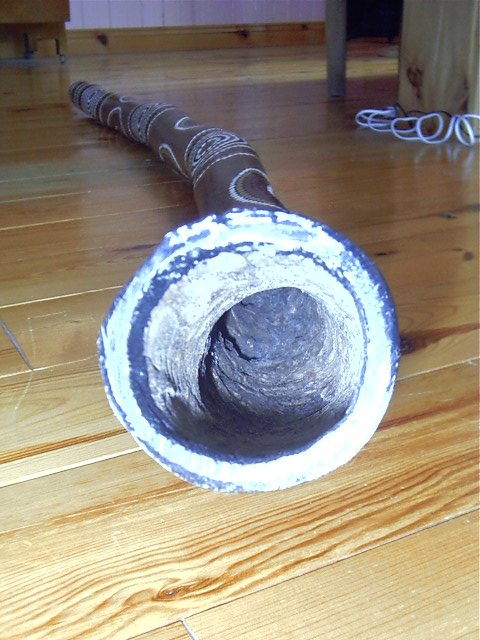
| You can see how smooth the walls are compared to other didges. Not that it makes it better, it's just that i didn't know what to say for this picture, just click on it.. |
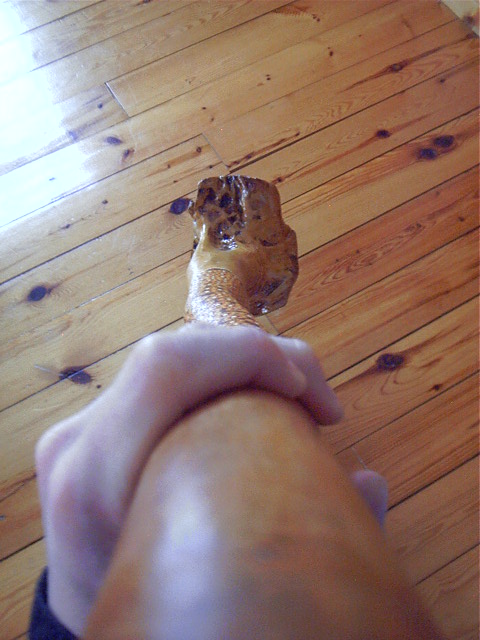
| This is what I see when I play standing up..when I have my eyes open of course. |
| This one too got his fair share of fresh pictures.. |
 |
 |
 |
 |
 |
 |
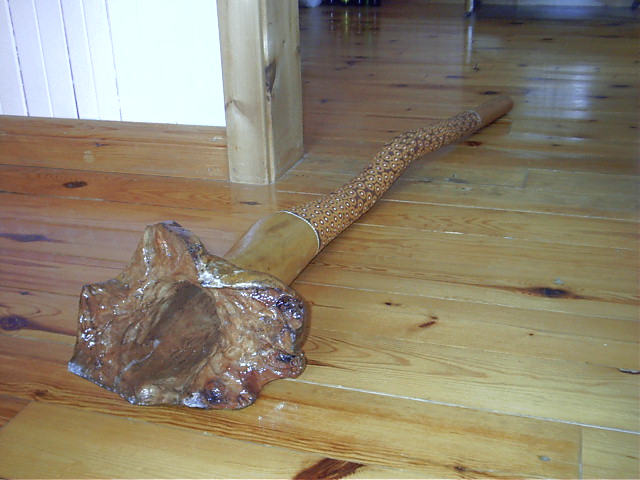 |
| Except for the picture above which was took even before I had in mind to buy this didge, I didn't have any other. Now there's a little serie I took on a cold boring winter day.. |
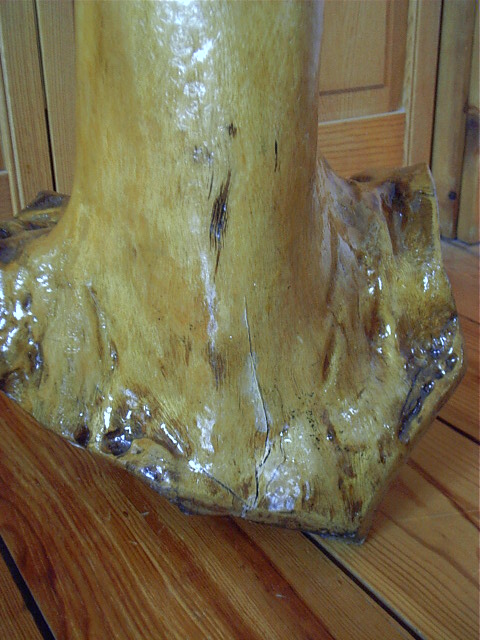
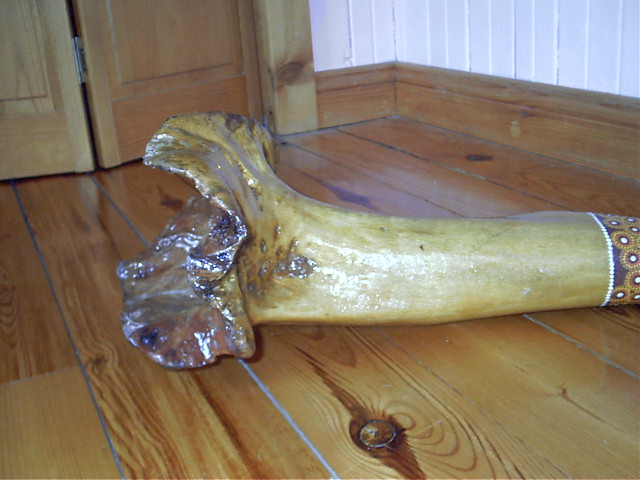
| One these two pics you can have a better idea of the rather unusual bell shape. Sort of prolonging the didge on one side and opening it on the other.. |
| From this view you can see how it looks like an open mouth. Unfortunately during the transport to my new home, the pointed upper part was hit and broke part of it.. |
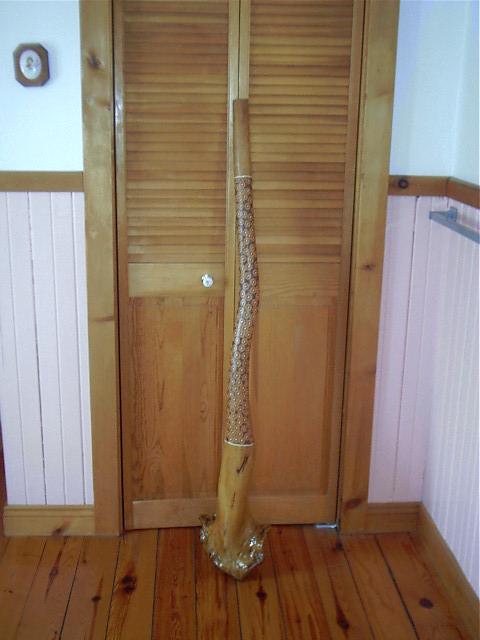
| Yes, as you already know this didge was badly handeled during it's trip towards Quebec, and I found it split top middle and bottom, the wrapping partly undone and the box torn...what a mess. |
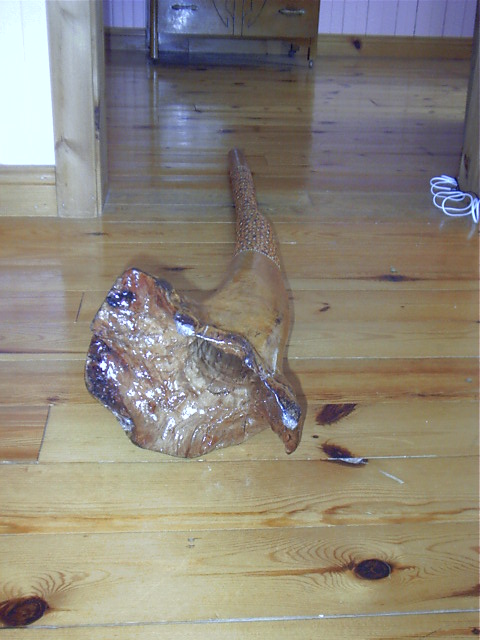
| This was a shot to give an idea of the whole aspect of the didge and specially the bell bottom, but I chose to put the picture here as we can clearly see the long split shown on the previous picture but from the other side. The split is 2 or 3 cm longer on this side.. |
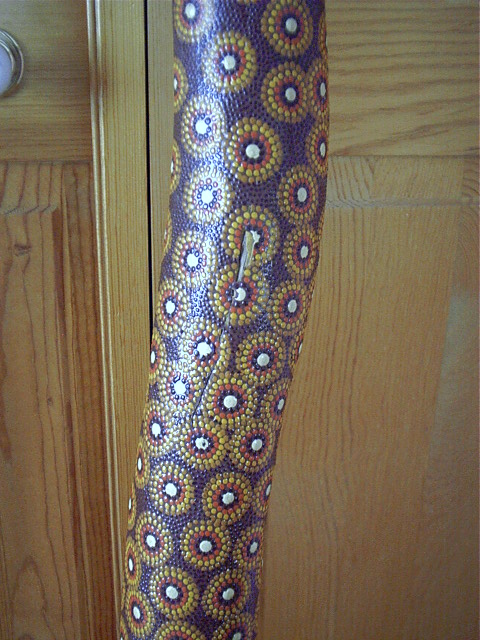
| The most anoying part...well any split is anoying. But for this part I'll have to scrape the paint of. And you can see if you enlarge the picture by clicking on it how nice the painting is.. |
| Here you can see how far up on of the cracks go..from the pointy end which was hit and partly broken, going up for about 15cm and forking further up.. |
| And for this one too, the sight you would be seeing if you were playing this E key didge. You can see on the bell the amount of detail, change in colour and different shapes..all this makes me see faces or animals while I'm playing. |
| Once cut to the required length, on tube receives the melted wax (no beeswax yet, just candle).. |
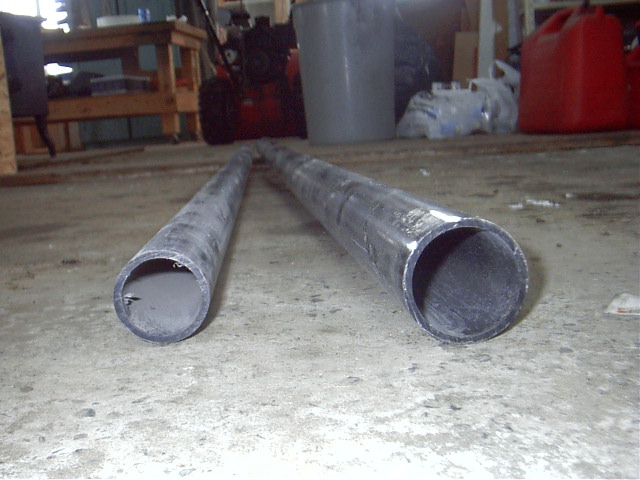
| I've started by finding 2 abs tubes fitting one into the other without an enormous gap.. |
 |
 |
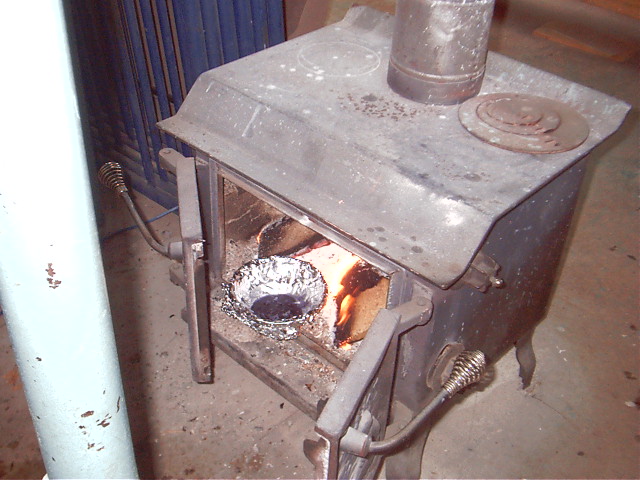 |
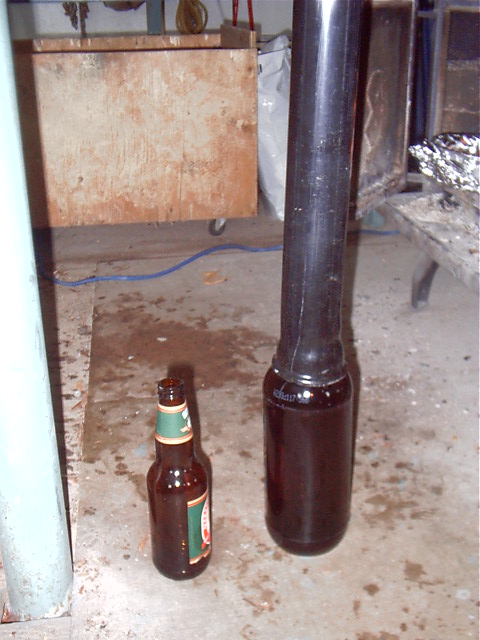
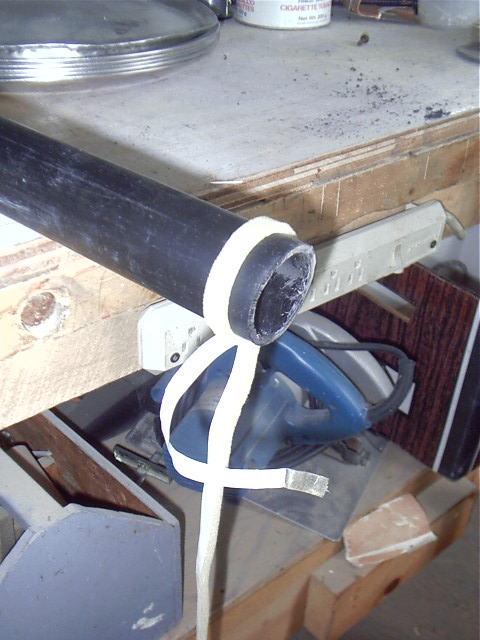
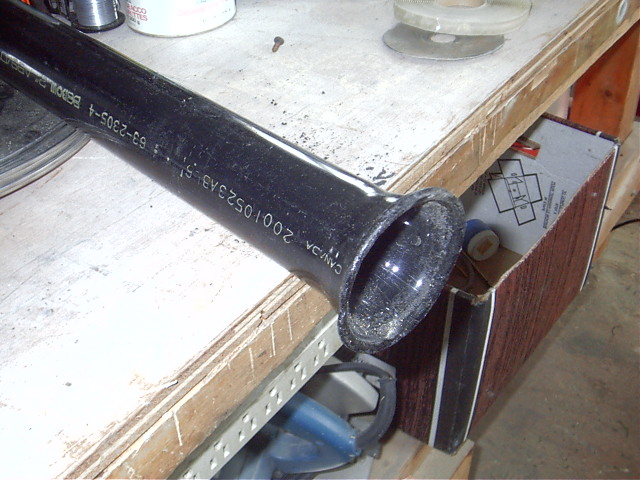
| On the other tube I'm working on a bell end. Simply by heating the bottom end, and pushing the soft tube onto a glass bottle.. |
| Here's the result, just needs a little bit of sanding to make it smooth.. |
 |
 |
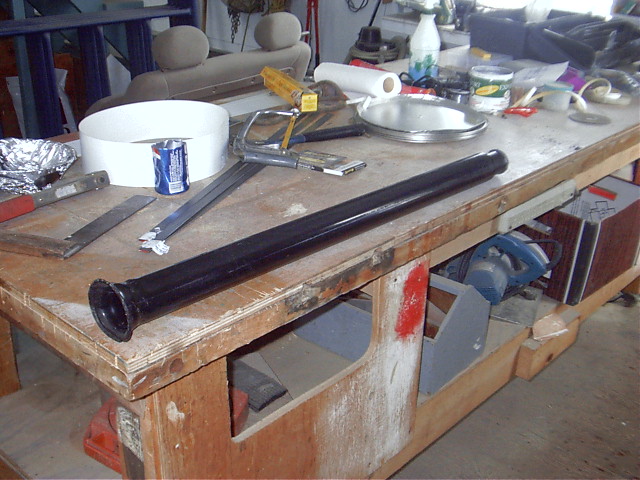
| Here is the short version of the didge.. |
| Where the 2 tubes are going to link, I need to make a slideable joint. For now I've just used sticky padding you normally fit to your window to avoid drafts. But it's ne hermetic enough.. |
 |
 |
| I don't know yet the key range, but I'll find out some way. As for sound files, I've just done one recording while fooling around and got out these extracts to give you an idea |
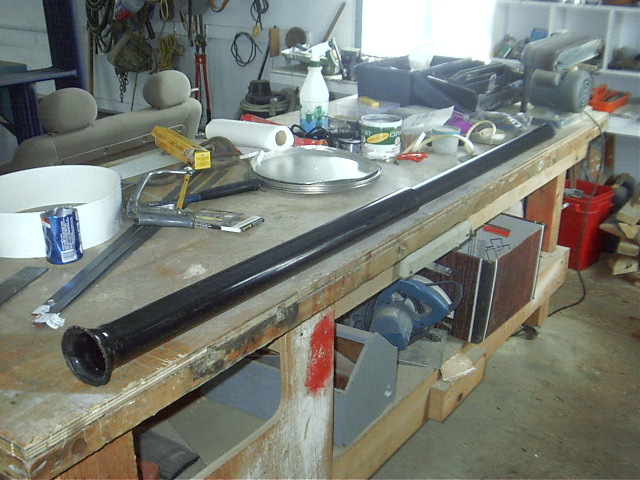
| And here is the long one.. |
| - Low key : I recon it's A# like my other didge, I can go even lower but it's not easily playable, and anyway the sound isn't so good lower thaan that. - Medium key : I have no idea which key is this one, how about medium key, does it help ?? - High key : This is really a mess, no rythm, no pattern, nothing, just to let youhear a higher tone. - High key : Again a high key, but more in rythm this time.. - A play on 2 differnt keys, not always nice, but interresting to work on.. - An idea of the playable range of the didge.. |