 |
|
|
|
|
|
|
|
|
|
|
Teaching Softnes |
|
|
|
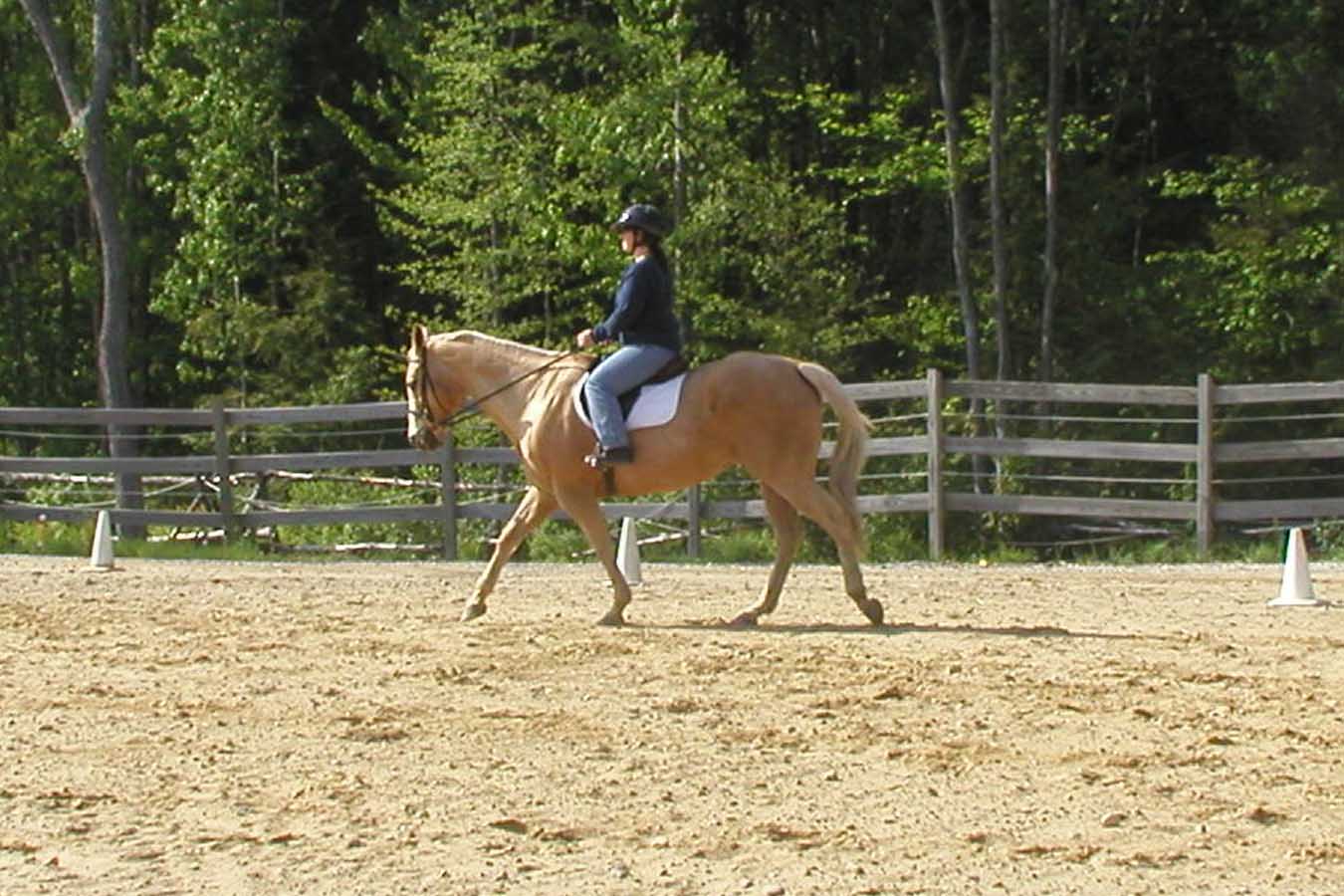
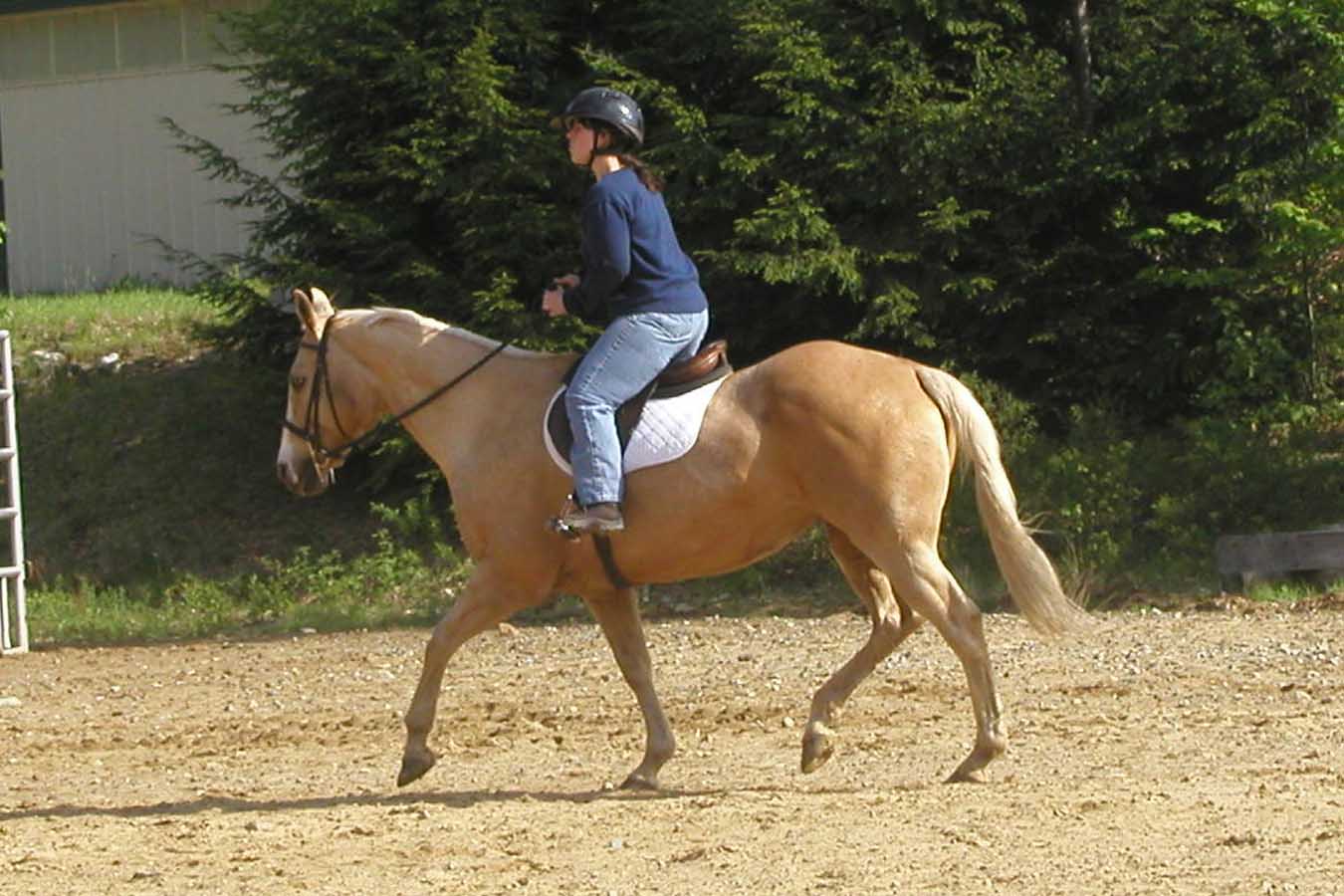
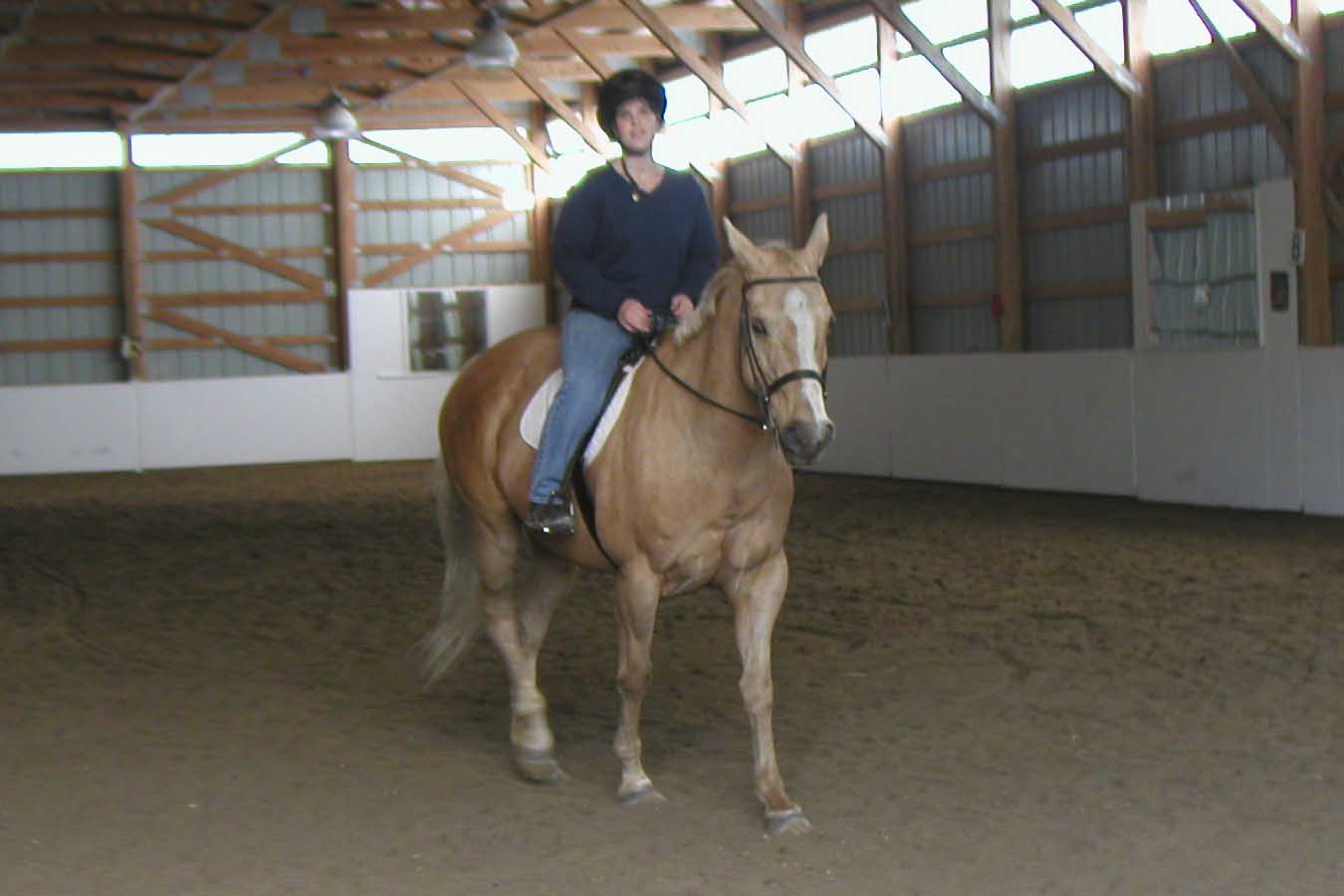
On a recent trip back east, I borrowed a retired equitation horse, Babe, and my best friend and cousin, Jeanine. I asked them to work for an hour together. Jeanine had never had a riding lesson before. Having turned a new page on my riding career, I decided to follow in the footsteps of a friend from hunter jumper junior equitation days.
I would teach my rider to be soft, and no matter what happened with her horse, remain soft. At the end of the lesson, I knew I was on to something. While Jeanine is a beginner rider, struggling with diagnals and Babe is a great horse, I believe they both teach a great deal about the virtues of pressing through conflict with softness. |
|
|
|
 |
|
 |
|
|
|
A lesson should begin in the stall learning cues from the horse, daily needs of the horse, and where the horse makes a home. The lesson should include safe stirrups, helmet, safe riding conditions, and a horse who is well maintained from the feet up. The horse should have a sound relaxed mind as well.
Hands -imagine holding a coke can or holding a yogurt.
Don't drop the can; maintain this constant light feel when communicating with the horse.
Walk and relax
posture on the horse -heels down, back straight, Determine the distance to an object ahead that provides your perfect head and eye position, weave polls. |
|
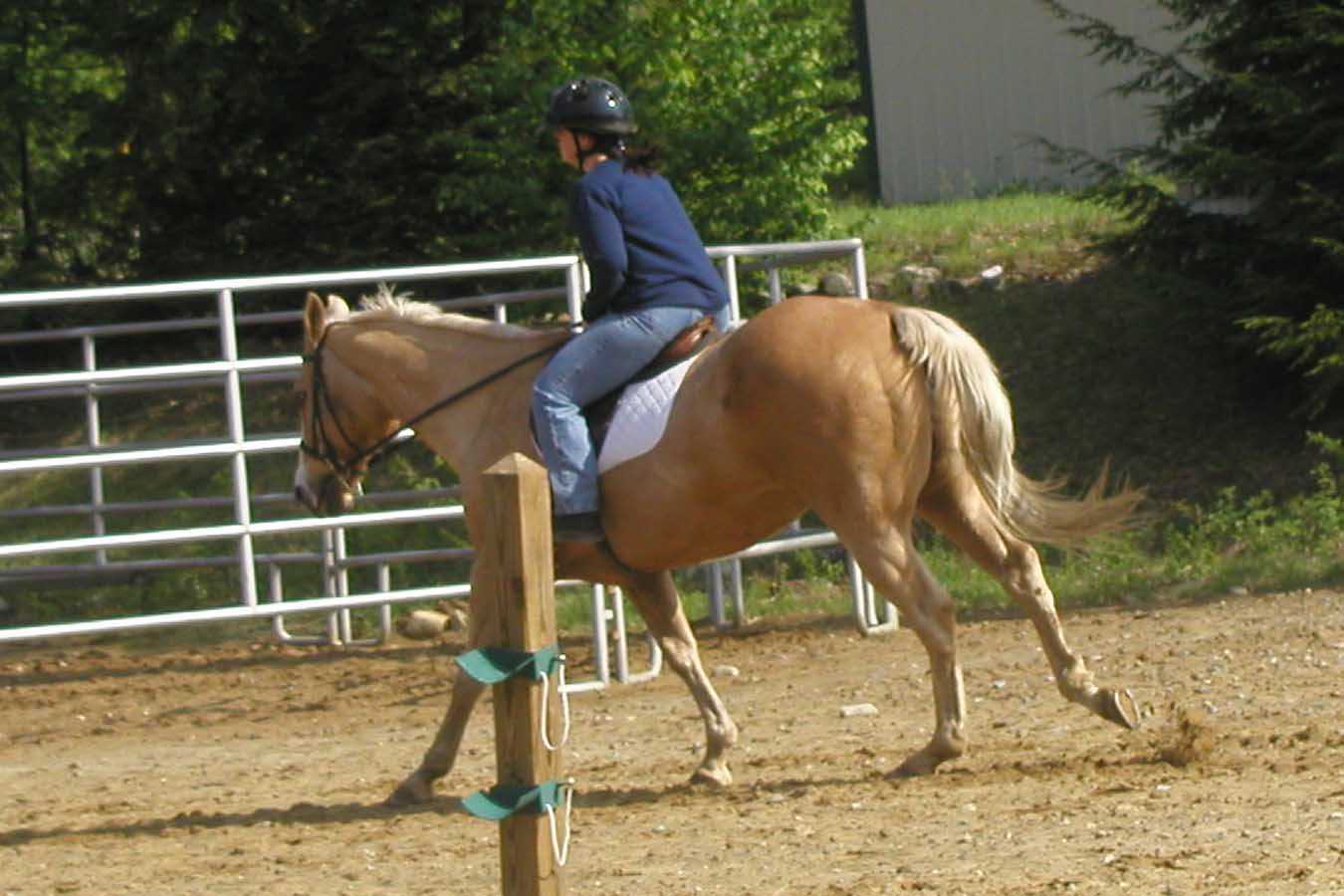
The canter requires a further forward angle from the hips to account for wind shear. The horses head may rise hence requiring an adjustment of the reins to maintain contact (feather to coke can light). The stirrups for a beginner are like a plank upon which they must maintain their weight at all times. An expert rider should be able to forgo stirrups because the lenth of their leg from inseam to heel holds them in place instead of a stirrup.
As you lean forward from the pelvis, the heel will come up and back. As you lean back, your heel will go in front of your body.
A normal stance will be when your heels are down and even with your head. You may feel a sense of being forward then back. It is your resposibility to find the normal postion, standing on the plank, through a continuous feedback loop. First this will feel like gross oscillations and then gradually reduce to a stable stance.
Each gate has a unique stable stance. |
|
|
|
|
 |
|
|
|
|
|
|
|
|
|
|
|
Trot, don't worry about stopping. Just hold on and stay light at all times.
-Pelvis forward and back
-Rotation of legs from the hip rotate leg out feel heels come in to the side and apply coke can to feather light pressure. Normal stance relaxed and straight in the saddle. |
|
|
|
|
|
|
Now that you have acquired light hands and light leg aid in all three gates, the final step is transitions. This becomes easy when we consider each gate as simply a different stance. One no different from the other gates. You should be as relaxed at the canter as at the walk. Hence transition occurs by changing your stance. The horse will feel your body and cause his body to match your feel. When cantering fast, leaning far forward, you can sit back to a trot and then to a walk position. As you become better at each stance you will be able to transition from the canter to the walk smoothly. If you fail to transition smoothly, remember you have the balance and knowledge of the feedback loop to stay in a particular gate for a long time. Hold on, if necessary, but do not sacrifice your lightness to acheive an abrupt change in pace. This will upset the horse. If you're working with a runaway, teach flex the head, circle and stop. This empowers the horse to decide when he will give up on futile circling, and come to a complete relaxed stop. If we're talking about horses with hangups, then I'd say shame on you for not following the carnal rules -
people safety
horse safety
horse health and
fun.
|
|
|
|
|
 |
|
|
|
|
|
Rotate legs in for jumping position and to hold tight to the saddle in the case of "wind shear."
Wind shear is the falling back of the rider as the horse transitions to a faster speed. The rider must compensate with their body by leaning their weight forward more or less depending on the speed.
For the horse, the concept of the trot is that the legs are a pendulum. As the horse moves forward more of the shoulder lengthens hence increase the legth from shoulder to toe. The horse covers more ground and sinks down while not increasing the speed of the pendulum. |
|
|
|
|
|
|
 |
|
|
|
 |
|
|
|
|
posting trot - beginners commonly insert too much energy from their body into the post. They rise high and plunk back hard on the horse's back. The post, when correctly performed --the horse's outside front leg will roll you up out of the saddle you should coke can to feather rise and coke can to feather sit concentrating on the lack of pressure on the horses back while still rising consistently with the motion of the faster moving leg.
|
|
|
|
|
|
|
During the lesson, You have received constant positive cues as to how you need to adapt your body mechanics to acheive stabilization in the feedback loop stance for each gate. You should feel relaxed and happy You should progress through the steps at your own pace and with lots of encouragement. When making a difficult transition from walk to canter try to imagine all of the actions twice in your mind and then begin the exercise. This visualization will help alleviate potential anxiety generated by the unstable oscillations inevitable in learning a new stance. Examples of encouragement: "You need to look ahead with your eye;" "Good with your heel good with your heel. Lean forward lean back lean forward good good good."
|
|
|
|