
Slightly saline water: from 1,000 to 3,000 ppm
Moderately saline water: From 3,00 to 10,000 ppm
Highly saline water: 10,000 to 35,000
*Ocean water contains approx. 35,000 ppm

|
|
|
|
|
|
|
|
|
|
|
|
|
|
|
|
|
|
|
|
|
|
|
|
|
|
|
| Ocean vs Fresh water | ||||||||||||||||||||||||||
| Our planet is covered with water. However, not all of it is exactly the same. In fact, most of the water isn't pure. Most of it is combined with NaCl, or more commonly known as salt. The amount of salt in the water is called the salinity of the water, the concentration of the dissolved salt in the water. The salt is measured by parts per million. For and example, let's say that the concentration of the water has 10,000 ppm of dissolved salt in it. Therefore, the percentage of salt in the water by wieght is one percent (10,000 divided by 1,000,000). | ||||||||||||||||||||||||||
| Measuring Salinity | ||||||||||||||||||||||||||
| Fresh Water: less than 1,000 ppm Slightly saline water: from 1,000 to 3,000 ppm Moderately saline water: From 3,00 to 10,000 ppm Highly saline water: 10,000 to 35,000 *Ocean water contains approx. 35,000 ppm |
||||||||||||||||||||||||||
|
||||||||||||||||||||||||||
| Fresh Water | ||||||||||||||||||||||||||
| Although it is called fresh water, it is not entirely fresh. It still contains a very little bit of salt. 1,000 parts per million to be exact. It isn't acidic and it isn't alkelenic. It is neutral, which means that it has a pH of about 7. | ||||||||||||||||||||||||||
|
||||||||||||||||||||||||||
| Ocean | ||||||||||||||||||||||||||
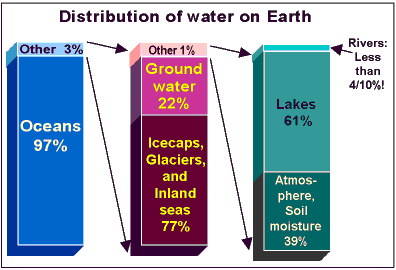
| As you know, water is what covers 75% of Earth's surface. And of that 75%, 95% of it is ocean water. Which means that practically all of the water on the planet is saturated with NaCl. Scientists estimate that there is about 50 quadrillion tons, or 50 million billion tons, of dissolved salts. To get a rough idea on how much NaCl that actually is, if all of the ocean's salt was poured out across the earth's surface, it would be approxiamately 500 feet thick and have a height equal to a 40-story building. Now that's a lot of salt. The concentration of ocean water is 35,000 ppm. 35 times saltier than just regular fresh water. | ||||||||||||||||||||||||||
| There are many tales of how the oceans came to be salty. But of course, chemistry had to had something to do with it. It's really pretty simple actually. Rain water falls from the sky, whichs contains particles of dissolved carbon dioxide. When water combines with carbon dioxide, it forms carbonic acid, which therefore makes the water acidic. When the rain water hits land, rocks in particular, the rocks get eroded and the eroded ions are then carried off to steams and rivers, which of course lead to the ocean. | ||||||||||||||||||||||||||
|
||||||||||||||||||||||||||
| Home | ||||||||||||||||||||||||||