 |
|
|
|
|
|
|
|
|
|
|
|
|
|
|
|
|
|
|
|
|
|
|
|
|
|
|
|
|
|
|
|
|
Acid Rain |
|
|
|
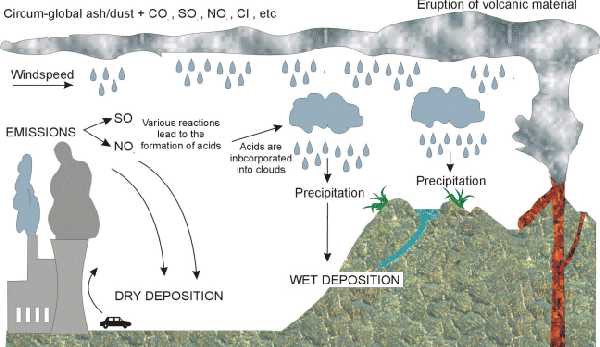
I'm sure you've heard the term "acid rain" used before, but arn't really sure what it is exactly. Actually, a more precise term for acid rain would be "acid deposition", which had two parts: wet and dry. |
|
|
|
Wet Depostion: This refers to acidic rain, fog, and snow. As the acidic water flows over and through the ground, it affects a variety of plants and animals. The strength of the effects depend on many factors, including how acidic the water, the chemistry and buffering capacity of the soils involved, and the types of fish, trees, and other living things that rely on water to survive. |
|
|
|
Dry deposition: This refers to acidic gases and particles. About half the acidity in the atmosphere falls back to earth through dry decomposition. The wind blows these acidic particles and gases onto buildings, cars, homes and trees. Dry deposited gases and particles can also be washed from trees and other surfaces by rainstorms. When that happens, the runoff water adds those acids to the acid rain, making the combination more acidic than the falling rain alone. |
|
|
|
*These two descriptions from: |
|
www.epa.gov/airmarkets/acidrain/ |
|
|
|
What causes acid rain? |
|
|
| Acid rain is mainly caused by humans their lack of care for pollution that is emitted into the air. Huge factories that burn coal and oil will release sulfur into the atmosphere, which will combine with oxygen to form sulfur dioxide. Then, nitrogen oxides are released into the air from the exhasts of cars. The sulfur dioxide and the nitrogen will then react to form airborne sulfuric acids and nitric acids. These of course can be very harmful to all living things. These acids can then be dissloved in the water vapor in the air. Then it will fall from the sky and do some serious damage. Winds have been known to carry these toxans for many, many miles, which is why forests and lakes that isn't anywhere close to an urban area, where the toxans originate, are effected by acid rain. |
|
|
|
 |
|
|
|
 |
|
|
What are the effects of acid rain? |
|
|
|
|
|
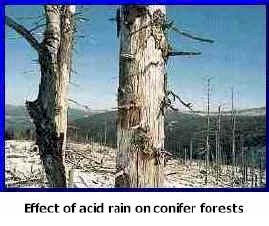
Acid rain is one the main causes for the destruction of forests, lakes, groundwater, and buildings, plus much more. Evergreen forests are particularly sensitive to acid rain, for times more than leafy forests. The acid rain disrupts the evergreens process of photosynthesis because it affects the amount of minerals that the needles need to complete the process. Instead of bringing the magnesium and calcium that is needed, the acidic soil brings aluminum.In this way, acid rain can destroy entire forests very rapidly. For example, in 25 years, acid rain killed half of the red spruce forests in the Adirondack Mountains. Acid rain also disturbs the aquaic life of lakes all over the world. As the |
|
|
|
|
acidity of the water increases, meaning it's pH level gets lower and lower from 7 which is normal water, the entire food chain from plankton to the largest fish are affected. Acid rain kills tons of marine life in lakes all over the world Lastly, acid rain also increases the rate of building degradation and can destroy, over a few years, buildings that have been around for centuries. Buildings such as the Great Pyramids and the Parthenon. |
|
|
 |
|
|
|
|
|
|
The Parthenon |
|
|
|
Home |
|