
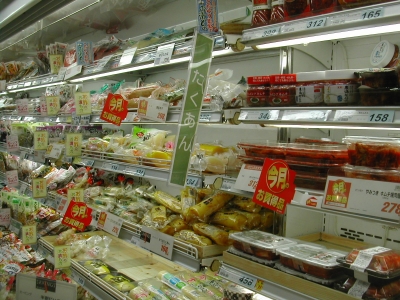
Most miso paste has fish in it in regular supermarkets. You can get fish-free miso from Warabemura, Tengu, and Natural House and it is amazing. Good quality traditional miso should be enjoyed regularly while in Japan!
Tofu
No problems here. The only disappointment is that they don't have the extra firm variety we're used to that doesn't break into a million pieces when you throw it at a wall. There are also lots of tofu shops in Japan that sell tofu and other soy products like yuba and okara. Usually found in markets and worth a visit.
Okara
Okara is a by-product of the soy milk making process and has a moist desiccated coconut texture and a fairly neutral taste. You can get it from supermarkets and tofu shops and is excellent made into burgers with soy milk, spices and some finely chopped vegies.
Yuba
Another soy milk by-product. Yuba is fun to cook with. Look for some recipes on the net.
Soy milk
Japanese soy milk doesn't taste very nice and usually contains cow milk derivatives. If you want Japanese soy milk, go for the certified organic one with the JAS symbol. I prefer Edensoy from Natural House or international grocery stores. It's 400 yen a litre but it tastes heaps better and is Vitamin B12 and Vitamin D fortified.
Soy yoghurt
I've only seen one brand, Soya Farm, and it unfortunately contains gelatine.
Margarine
Vegan margarine can be found at Natural House. Supermarket margarine almost always contains animal fats and cow milk derivatives. Margarine is bad for you anyway, so go with oil!
Bread
Supermarket and convenience store bread usually contains animal fat and cow milk derivitives. Better to get it from a small bakery. Ask before you buy though.
Potato chips (crisps)
Best avoided. Most brands contain milk powder and have some kind of powdered animal as an added extra - pig, fish, cow or chicken.
Salad dressing
This is something you would think would be safe but alot of the bottled ones have some sort of animal extract in them - usually chicken or fish.
Nuts
Some salted nuts from the supermarket and convenience stores contain powdered animal! How bizarre! Most are ok but check before buying.
Nori
Most seaweeds - nori, wakame, hijiki etc.- are fine for vegans. Some nori brands contain fish though.
Natto
Natto is stringy fermented soy beans and most people either love it or hate it. Get JAS certified organic natto because the others are usually fermented on beef. Most supermarkets carry at least one organic brand. But, don't use the soy sauce-ish stuff in a little packet inside because it's got fish in it. The mustard is ok though. Natto is yummy with chopped shallots and shoyu and mustard! Some people have it in pasta or on pizza!
Kim Chee
Kim Chee is a pickled Korean vegetable mix made with chilli and garlic and vegetables: usually Chinese cabbage and one or two others. Most brands in the supermarket have fish in it but there is usually one or two brands that are fish free.
Umeboshi plums
Umeboshi are small, usually sour, pickled plums that taste excellent on top of rice. Supermarket varieties are sometimes made with katsuo (bonito fish). Check the pack before buying. The best ones are the ones without artificial colouring etc. made in the traditional way.
Pastries
For those that are tempted by convenience store and supermarket pastries, don't be. Apart from the obvious non-vegan ingredients, they usually contain lard.
Convenience store food
Most of it is inedible but there are a couple of things that vegans can eat. Inari zushi (deep-fried tofu pockets with rice inside) is sometimes ok, as is kombu and ume varieties of onigiri (a rice triangle covered with seaweed). They occasionally have some kind of fish ingredient be it dashi or something else so its good to ask or check the ingredients first.