
Not out of hope of heaven for me
Nor fearing not to love and be
In the everlasting burning.
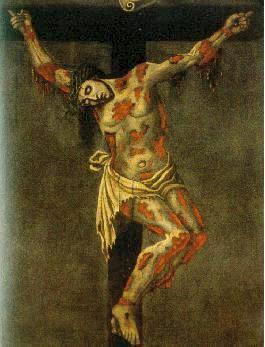
Thou, thou, my Jesus, after me
Didst reach thine arms out dying,
For my sake sufferedst nails, and lance,
Mocked and marred countenance,
Sorrows passing number,
Sweat and care and cumber,
Yea and death, and this for me,
And thou couldst see me sinning:
Then I, why should not I love thee,
Jesu, so much in love with me?
Not for heaven's sake;
not to be out of hell by loving thee;
Not for any gains I see;
But just the way that thou didst me
I do love and I will love thee:
What must I love thee, Lord, for then?
For being my king and God. Amen.
translated by Gerard Manley Hopkins, S.J.
O Deus, ego amo Te!
nec amo Te, ut salves me,
aut quia non amantes Te,
aeterno punis igne:
Tu, Tu, mi Iesu, totum me
amplexus es in cruce.
tulisti clavos, lanceam
multamque ignominiam.
I nnumeros dolores,
sudores et angores,
ac mortem: et haec propter me,
ac pro me peccatore!
Cur igitur non amem Te,
o Iesu amantissime?
Non ut in caelo salves me,
aut ne aeternam damnes me.
Nec praemii ullius spe;
sed sicut Tu amasti me.
sic amo et amabo Te,
solum quia Rex meus es,
et solum quia Deus es.
The other hymn begins with:
O Deus ego amo te,
Nam prior tu amasti me;
En libertate privo me
Ut sponte vinctus sequar te.
"has four additional stanzas in similar rhythm, the last three being apparently a paraphrase of part of a prayer in the "Contemplatio ad amorem spiritualem in nobis excitandum" of St. Ignatius Loyola's Spiritual Exercises: "Take, O Lord, my entire liberty � whatever I have or possess you have bestowed on me; back to thee I give it all, and to the rule of thy will deliver it absolutely. Give me only thy love and thy grace and I am rich enough; nor do I ask anything more"" *
* Quotes from �The Catholic Encyclopedia�, Volume XI ( Robert Appleton Company, 1911)
If you are interested more on this hymn and on the other version of it in �The Catholic Encyclopedia�, Volume XI Online Edition at this address