Plants
Bull Kelp
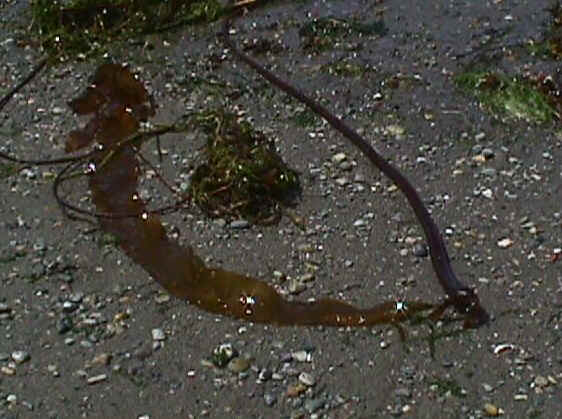 Nereocystis luetkeana is another brown
seaweed. It is commonly known as "bull kelp." One of the
distinctive characteristics of bull kelp is its long stipe, sometimes up to
twenty-five meters long. On the end of the stipe is a bladder which keeps
it upright in the water. Extending from the bladder are many leaf-like
structures called blades. At the bottom is a holdfast that keeps the kelp
stationary.
Nereocystis luetkeana is another brown
seaweed. It is commonly known as "bull kelp." One of the
distinctive characteristics of bull kelp is its long stipe, sometimes up to
twenty-five meters long. On the end of the stipe is a bladder which keeps
it upright in the water. Extending from the bladder are many leaf-like
structures called blades. At the bottom is a holdfast that keeps the kelp
stationary.
The world's best kelp forests are in the Pacific
Ocean. Kelp has many uses. It is harvested for uses in commercial
ice cream, toothpaste, and many other products.
Back to the Top
Fucus
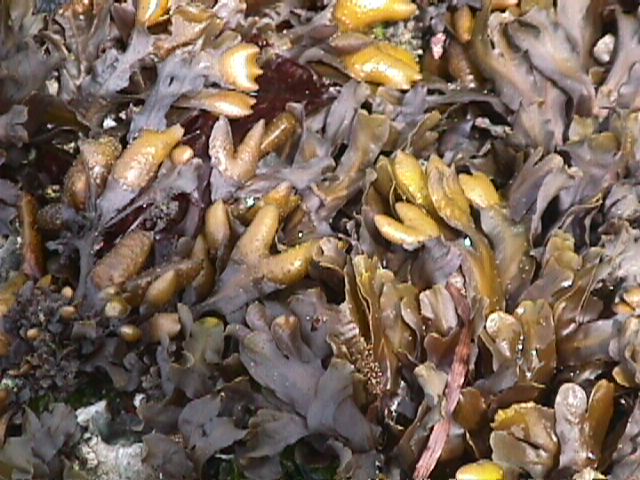 Fucus is a brown seaweed commonly known as
rockweed because it grows on rocks. Fucus is brown because it contains the
accessory pigment fucoxanthin. The fucoxanthin helps attract sunlight to
the chloroplasts which contain chlorophyll. Chlorophyll mixes sunlight and
carbon dioxide to create the energy the plant needs to live. The carbon
dioxide and other nutrients are brought to the algae by the ocean water.
Fucus is a brown seaweed commonly known as
rockweed because it grows on rocks. Fucus is brown because it contains the
accessory pigment fucoxanthin. The fucoxanthin helps attract sunlight to
the chloroplasts which contain chlorophyll. Chlorophyll mixes sunlight and
carbon dioxide to create the energy the plant needs to live. The carbon
dioxide and other nutrients are brought to the algae by the ocean water.
Since fucus lacks a system of internal tubes to
transport water and materials, the ocean gives all nutrients directly to the
cells.
Back to the Top
Back to Homepage