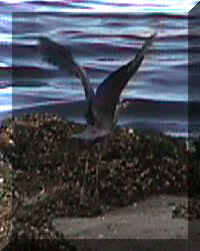
 The
blue heron or Ardea herodias is a majestic bird. It is native to North
America. It has a wingspan of six feet or more.
The
blue heron or Ardea herodias is a majestic bird. It is native to North
America. It has a wingspan of six feet or more.| Bald Eagle | Bonaparte's Gull | Glaucous-Winged Gull |
| Blue Heron | Crow | Loon |
Haliaetus leucocephalus is better known as the bald eagle, our national bird. It is about 40 inches long with a brown body and a white head and tail. The immature eagle is mostly brown with a few white feathers. It typically nests in trees near water. The preferred food of the bird is fish, which they often steal from other birds.
There are two subspecies of Haliaetus leucocephalus. The northern subspecies is numerous in Alaska and northern Canada. The southern subspecies is only popular in Florida.
The
blue heron or Ardea herodias is a majestic bird. It is native to North
America. It has a wingspan of six feet or more.
The Great Blue Heron is very good at catching fish. It patiently stands like a statue in shallow water waiting for fish to come by to hide in the shade of its wings. When a fish does so, the heron quickly thrusts its beak into the water and captures its prey. Besides fish, the heron also feeds on frogs and other aquatic animals.
Herons typically nest in colonies called heronries. The colonies are usually made of sticks and are in bushes or trees near water. If humans continue to develop all land near water, the species could become threatened or extinct.
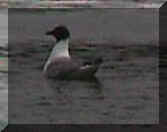 Larus philadelphia is a seagull commonly known as
Bonaparte's Gull. It is characterized by its dark head and bill and
pinkish legs.
Larus philadelphia is a seagull commonly known as
Bonaparte's Gull. It is characterized by its dark head and bill and
pinkish legs.
Bonaparte's Gulls eat a wide variety of foods including mollusks, crustaceans, worms, garbage, fish and insects, with insects being their favorite.
Larus philadelphia build nests in trees. Like many seagulls, it will often live inland and eat from ponds instead of the sea in the summer and then move towards the ocean in the winter.
In the early 1900's many gulls were hunted for their feathers almost to the point of extinction. The gulls on the west coast of the United States have made a good comeback while these gulls are still rare on some parts of the East coast.
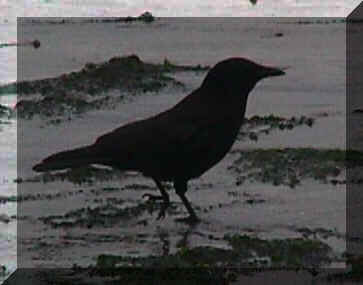 The name "crow" is used for many
species of birds. The scientific definition of "crow" is,
"Any of several black birds belonging to the family Corvidae."
All crows are black and about fifty cm long.
The name "crow" is used for many
species of birds. The scientific definition of "crow" is,
"Any of several black birds belonging to the family Corvidae."
All crows are black and about fifty cm long.
Crows eat a wide variety of foods. In the wild they eat grain, eggs of other birds, insects, and berries as their main source of nutrition. In cities they can be found rummaging through garbage, often spreading it over the street before doing so. Many people consider crows nuisances both for this reason and the fact that they eat crops. However, crows are necessary for the ecosystem because they eat harmful insects and carcasses of animals, many of those from unfortunate animals who were not able to get out of the road in time.
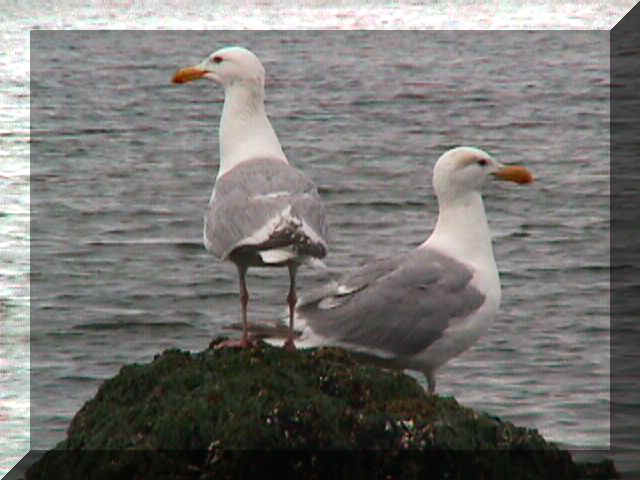 The
glaucous-winged gull is the most common bird
in the Puget Sound. The easiest way to tell the glaucous-winged gull from
other gulls is by the absence of black tail feathers.
The
glaucous-winged gull is the most common bird
in the Puget Sound. The easiest way to tell the glaucous-winged gull from
other gulls is by the absence of black tail feathers.
When glaucous-winged gulls are young they are often killed, but not eaten by adult birds. Immature gulls are brown and gray. Adult gulls have a white body with gray wings and a yellow beak.
Glaucous-winged gulls eat various fishes, crabs, mollusks, starfish, and anything else they can find. In the winter they migrate south, some as far as California.
The common names "loon" and "diver" refer to the four birds in the genus Gavia. The species Gavia immer is common to North America. The other species are common to the artic and Eurasia. The name "loon" comes from the eerie sounds the birds produce. The name "diver" comes from its feeding habits.
Loons feed by diving into the water and catching fish. They can dive to depths of two hundred feet. Loons will also feed on insects and crustaceans.
Since loons are built for flying and swimming their nests are usually near the water so they don't have to walk to them.